Table of Contents
Introduction
Real estate website development is the process of creating a website for buying, selling, or renting properties. This involves designing and developing a website that provides a user-friendly interface for real estate agents, property owners, and potential buyers to search and browse properties, view details, and interact with each other. A well-designed real estate website can help agents and owners to showcase their properties, reach a wider audience, and streamline the buying and selling process.
What is Real Estate Website Development
Real estate website development is the process of creating and designing a website for real estate agents, property managers, or property owners to showcase their properties and services to potential buyers and renters. A real estate website developer plays a crucial role in designing and developing a user-friendly platform that provides easy access to property listings, virtual tours, map search, and detailed property information. The website may also include tools for property management, marketing, and lease/sales agreements. The ultimate goal of a real estate website is to provide a platform that is easy to use and navigable for potential buyers and renters, while also providing a professional and attractive online presence for real estate agents and property managers.
Understanding the Real Estate Market

The reasons to invest in a commercial real estate website design are numerous and can have a significant impact on the success of your business. Investing in property website development ensures your platform is tailored to showcase properties effectively, attract potential clients, and streamline business operations. Here are some of the key benefits:
Enhanced Credibility
A professionally designed commercial real estate website can help establish your reputation as a trustworthy and reliable real estate agent or property owner. A well-designed website with easy-to-use features and a visually appealing design can boost your credibility and build trust with potential clients.
Increased Visibility
A commercial real estate website can increase your online visibility, making it easier for potential clients to find you and your properties. With a team of real estate web development experts and a well-designed website, you can reach a wider audience and increase your chances of attracting more clients.
Cost-Effective Marketing
A commercial real estate website can be a cost-effective marketing channel compared to traditional marketing methods, such as print ads and billboards. A well-designed website can help you reach a larger audience without incurring the high costs of traditional marketing methods.
24/7 Availability
A commercial real estate website is available 24/7, allowing potential clients to access your properties at any time and from any location. This means that you can provide your clients with convenience and flexibility, which can be a key factor in closing deals.
Better User Experience
A user-friendly Realty website design can improve the user experience, leading to higher engagement and conversion rates. A well-designed website can help you attract and retain clients by providing them with an enjoyable and efficient user experience.
You can achieve a better user experience even with little skill. Tools like DropInBlog make it easy to keep your website updated with fresh content, which helps attract more visitors and potential clients. Regular updates can also boost your search engine ranking, making it easier for people to find your business online.
Competitive Advantage
Real estate website Development plays a crucial role in enhancing your visibility and credibility in the market. By investing in a professionally designed website, you can effectively showcase your properties, highlight your unique selling points, and provide valuable resources to potential clients.
Improved Lead Generation
A commercial real estate website can help you generate more leads and potential clients. With a well-designed website, you can provide potential clients with the information they need to make informed decisions, and you can also capture their contact information for future follow-up.
Streamlined Communication
A commercial real estate website design can streamline communication with Of course! I’d be happy to continue the conversation in the same input language. Please feel free to provide more prompts or questions, and I’ll do my best to respond in a helpful and informative manner.
Time-Saving
A commercial real estate website can save you time by providing a centralized platform for managing your properties, clients, and transactions. With a well-designed website, you can easily access and update property listings, client information, and transaction history, reducing the need for manual data entry and minimizing errors.
Improved Coordination
A commercial real estate website can improve coordination between different teams and stakeholders, such as property managers, leasing agents, and accounting departments. With a shared platform, team members can collaborate more efficiently, reduce misunderstandings, and improve overall performance.
How to Build a Real Estate Website

In today’s competitive real estate market, having a professional website is crucial. A well-built website helps agents showcase properties, generate leads, and strengthen their brand presence. Building a real estate website may seem challenging, but with a clear plan, it can be a straightforward process.
1. Define Your Goals
Start by identifying the primary purpose of your website. Are you focusing on generating leads, displaying property listings, or sharing market insights? Understanding your goals ensures your website is designed to meet your specific business needs and attract the right audience.
2. Choose a Website Builder or Platform
Select a platform that fits your technical expertise and budget. Options like WordPress with real estate themes, Wix, or Squarespace offer flexibility and pre-built templates. Look for features such as MLS/IDX integration, SEO optimization, and mobile responsiveness to ensure your site performs well.
3. Design a User-Friendly Layout
Your Real Estate website development should be easy to navigate, visually appealing, and optimized for user experience. Include clear menus, prominent calls-to-action, and high-quality images. Ensure the homepage highlights your brand and top properties, while other pages focus on detailed listings, contact information, and resources for clients.
4. Add Essential Pages
Include critical pages such as Homepage, Property Listings, About, Contact, Blog/Resources, Testimonials, and FAQ. Each page should serve a specific purpose, helping visitors learn about your services, browse properties, and get in touch with you effortlessly.
5. Integrate Lead Capture and Tools
To ensure your new site effectively converts traffic, you can integrate a real estate virtual assistant to manage live chats, respond to inquiries instantly, and maintain the 24/7 responsiveness that modern home buyers expect.
6. Optimize for SEO and Mobile Devices
While a responsive site is essential, many firms choose to further enhance their mobile presence by investing in professional real estate app development services to offer clients a more immersive and personalized property search experience.
7. Test, Launch, and Promote
Before launching, test your website for functionality, load speed, and responsiveness. Once live, promote it via social media, email campaigns, and online ads to attract visitors and generate leads.
Why Every Real Estate Professional Needs a Website

In today’s digital-first world, having a professional website is no longer optional for real estate agents—it’s essential. A website serves as the foundation of your online presence, allowing potential clients to find you, learn about your services, and engage with your brand 24/7.
Builds Credibility and Trust
A well-designed website instantly builds credibility. Clients are more likely to trust agents who have a professional online presence. By showcasing your experience, client testimonials, property listings, and achievements, a website reinforces your expertise and reliability.
Showcases Properties Effectively
Websites allow agents to display properties with high-quality images, virtual tours, and detailed descriptions. Unlike social media, your website acts as a centralized platform where clients can explore listings at their own pace, increasing the likelihood of inquiries and conversions.
Generates Leads Around the Clock
A website works 24/7, capturing leads even when you’re unavailable. Features like contact forms, chatbots, and call-to-action buttons allow potential clients to reach out instantly. By integrating lead capture tools, you can nurture prospects automatically and convert them into clients faster.
Enhances Online Visibility
Search engine optimization (SEO) ensures your website appears in search results when potential clients look for real estate services in your area. A strong online presence not only attracts more visitors but also positions you ahead of competitors who rely solely on social media or offline marketing.
Supports Branding and Marketing Efforts
A Real Estate website development is a hub for all your marketing efforts. From blog posts and email campaigns to social media integration, it helps reinforce your brand message consistently. It also allows agents to communicate unique value propositions, differentiating themselves in a competitive market.
Provides Valuable Insights
Web analytics track visitor behavior, popular listings, and conversion rates. This data helps refine marketing strategies, improve property presentation, and make informed business decisions.
Importance of Real Estate Website Development Services

Real estate website development services play a crucial role in today’s digital age, offering numerous benefits to real estate professionals, agencies, and clients alike. Here are some key reasons why these services are important:
1. Online Presence
In a digital-first world, having a strong online presence is essential for real estate businesses to reach a wider audience. A well-designed website serves as a virtual storefront, allowing potential clients to explore listings, learn about services, and contact agents conveniently from any device.
2. Showcasing Properties
A professionally developed real estate website enables agents to showcase properties effectively through high-quality images, detailed descriptions, virtual tours, and interactive maps. This immersive experience helps prospective buyers or tenants get a comprehensive understanding of available properties without physical visits.
3. Enhanced User Experience
User experience (UX) is paramount in website development. A user-friendly interface, intuitive navigation, and responsive design ensure that visitors can easily browse listings, search for specific properties, and access relevant information without frustration. This positive experience encourages engagement and increases the likelihood of conversions.
4. Mobile Compatibility
With the proliferation of smartphones and tablets, a mobile-responsive website is no longer optional—it’s imperative. Real estate website services ensure that websites are optimized for various screen sizes and devices, allowing users to access property listings on the go. Mobile compatibility enhances accessibility and convenience, catering to the preferences of modern consumers.
5. Lead Generation
Real estate websites serve as powerful lead generation tools. Integrated contact forms, inquiry buttons, and call-to-action prompts encourage visitors to express interest, schedule viewings, or request more information about properties. These inquiries provide valuable leads for agents and agencies to follow up with potential clients and close deals.
6. Market Insights and Analytics
Through advanced analytics tools and tracking mechanisms, real estate websites provide valuable insights into user behavior, traffic patterns, and property preferences. By analyzing this data, agents can refine their marketing strategies, tailor their offerings to meet market demands, and optimize their website performance for better results. Commercial real estate website designs are crucial for attracting and engaging potential clients in this competitive market.
7. Credibility and Brand Building
A professionally designed website instills credibility and trust in potential clients. It reflects positively on the brand image of real estate agencies and agents, positioning them as reputable and reliable professionals in the industry. With the expertise of real estate web experts, consistent branding, compelling content, and testimonials further reinforce trust and encourage clients to choose their services over competitors’.
8. Competitive Advantage
In a competitive real estate market, having a well-optimized website sets businesses apart from their competitors. It allows them to stay ahead of industry trends, adapt to changing consumer preferences, and capitalize on emerging opportunities. By leveraging innovative features and technologies, such as virtual reality (VR) tours or augmented reality (AR) applications, Real Estate Website Development can offer unique selling propositions that attract and retain clients.
9.Scalability and Flexibility
real estate web development are scalable and adaptable to the changing needs of the business. They can easily accommodate new listings, updates, and features as the business grows, providing flexibility and scalability for long-term success.
Reasons to Invest in a Commercial Real Estate Website Design

Investing in a meticulously crafted commercial real estate website offers an array of compelling advantages that can significantly elevate your business:
1. Professional Image and Trustworthiness
A meticulously designed website exudes professionalism, instantly instilling trust and confidence in potential clients and investors. By showcasing a polished online presence, you signal to visitors that you are serious about your business and committed to providing top-notch service.
2. Brand Identity Reinforcement
Your website serves as a digital extension of your brand, providing a platform to reinforce brand identity through consistent use of logos, colors, fonts, and messaging. This cohesive branding strategy helps solidify your brand image in the minds of visitors, fostering brand recognition and loyalty over time.
3. Enhanced Search Engine Visibility
A strategically optimized website can significantly improve your visibility in search engine results, making it easier for potential clients to discover your business online. By implementing effective SEO tactics such as keyword optimization, meta tags, and relevant content creation, you can increase organic traffic to your site, expanding your reach and attracting qualified leads.
4. Superior User Experience
A user-centric Realty website design prioritizes the needs and preferences of visitors, delivering an exceptional user experience that keeps them engaged and satisfied. Intuitive navigation, clear layout, and fast loading times are just a few elements that contribute to a seamless browsing experience, encouraging visitors to explore your site further and ultimately take action.
5. Immersive Property Showcases
Your website serves as a powerful platform to showcase your properties in all their glory. Through stunning imagery, detailed descriptions, interactive maps, and virtual tours, you can captivate potential buyers or tenants, allowing them to envision themselves in the spaces you offer. This immersive experience not only piques interest but also facilitates informed decision-making, driving conversions. With expert real estate website development, you can ensure seamless functionality and user-friendly navigation, enhancing the overall browsing experience and maximizing engagement.
6. Efficient Lead Generation and Conversion
Integrated lead capture forms and calls-to-action strategically placed throughout your website facilitate seamless lead generation and conversion. By making it easy for visitors to express interest or request more information, you can capture valuable leads and nurture them through the sales funnel, ultimately converting them into loyal clients or tenants.
7. Mobile Responsiveness and Accessibility
With the proliferation of mobile devices, ensuring that your website is fully responsive across various screen sizes is paramount. A mobile-friendly design ensures that your site looks and functions flawlessly on smartphones and tablets, providing a consistent experience for users regardless of the device they use. This accessibility enhances engagement and encourages on-the-go visitors to explore your offerings.
8. Actionable Insights through Analytics
Harnessing the power of web analytics tools provides valuable insights into visitor behavior, preferences, and trends. By tracking key metrics such as traffic sources, user engagement, and conversion rates, you can gain a deeper understanding of your audience and make data-driven decisions to optimize your website performance and marketing strategies.
9. Competitive Edge in the Market
In a crowded marketplace, a professionally designed website sets you apart from competitors with outdated or subpar online presences. By investing in a visually appealing, user-friendly website, you position yourself as a leader in the industry, earning the trust and admiration of clients and stakeholders alike.
10. Scalability for Future Growth
A scalable Realty website design accommodates the evolving needs of your business, allowing for seamless expansion and adaptation as your real estate portfolio grows. Whether you’re adding new properties, expanding your services, or targeting new markets, a flexible real estate website development architecture ensures that your online presence remains robust and effective, supporting your long-term growth objectives.
Types Of Real Estate Websites To Build
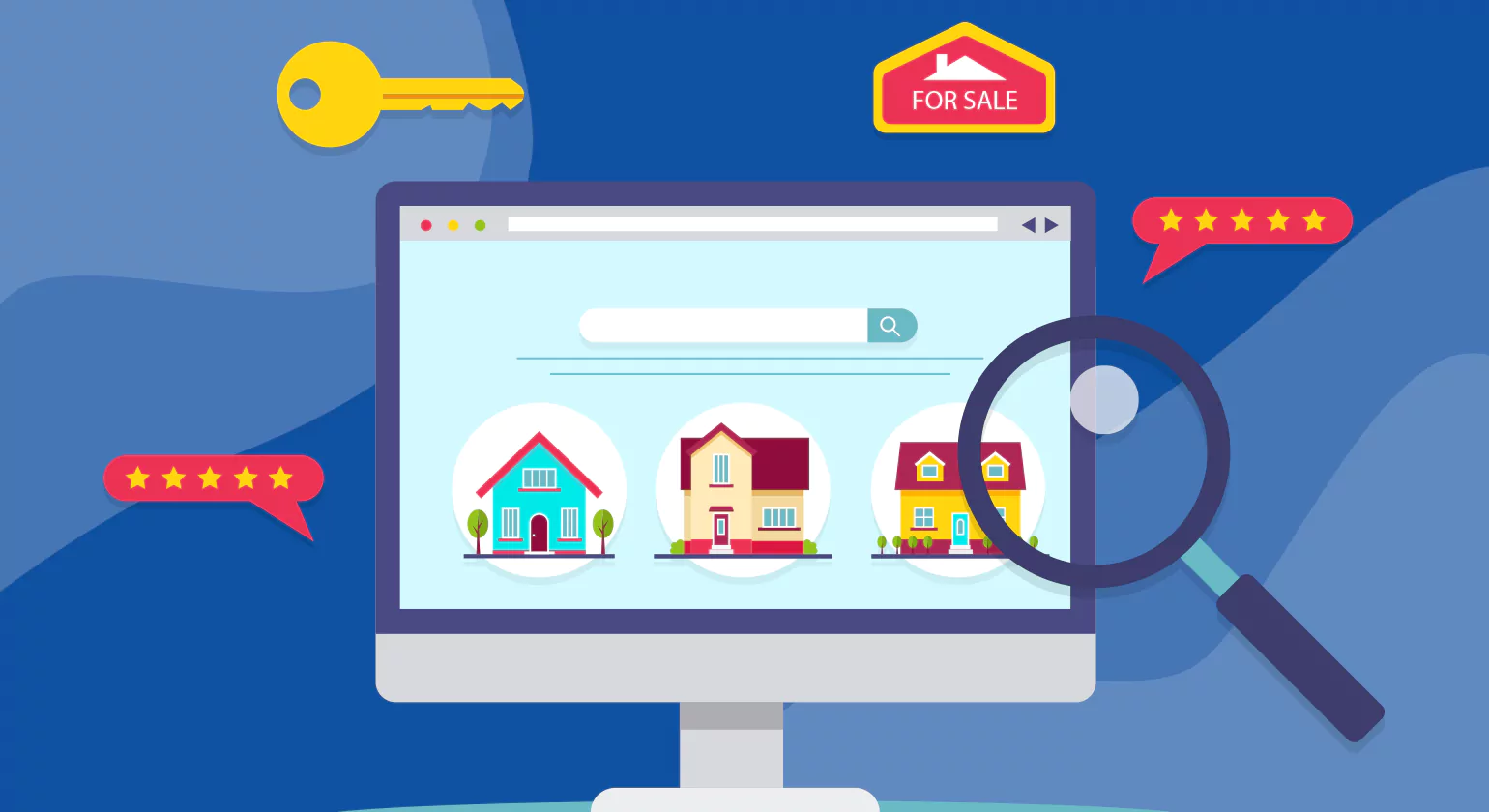
Investing in a meticulously crafted commercial real estate website offers an array of compelling advantages that can significantly elevate your business:
1. Property Listing Portal
This type of real estate website development focuses on aggregating listings from various agents, brokers, and property owners. Users can search for properties based on their preferences such as location, price range, property type, and amenities. These websites typically provide detailed descriptions, photos, and sometimes virtual tours of the properties. They often include features like saved searches, email alerts for new listings, and contact forms to connect with agents or property owners.
2. Real Estate Marketplace
A real estate marketplace website facilitates transactions between buyers, sellers, and sometimes even renters directly. It may include features like online bidding, negotiation tools, and secure payment gateways. Users can list their properties for sale or rent, set prices, and communicate with potential buyers or tenants through the platform. These websites often incorporate rating systems and user reviews to build trust among users.
3. Real Estate Investment Platform
This type of website caters to investors interested in real estate opportunities such as rental properties, commercial real estate, or real estate crowdfunding. It provides access to various investment opportunities, analytics tools, and resources for making informed decisions. Users can browse through different investment options, track their portfolios, and connect with other investors or professionals in the real estate industry. These platforms may offer features like due diligence reports, financial projections, and investment calculators.
4. Neighborhood and Community Information Hub
Rather than focusing solely on property listings, this type of real estate website design serves as a comprehensive resource for information about neighborhoods, communities, and local amenities. It provides details about schools, transportation, restaurants, parks, crime rates, and other factors that influence property values and quality of life.
Basic Requirements for Making a Real Estate Agent Website
Creating a real estate agent website involves several key components to ensure it effectively showcases properties and services. Here are some basic requirements to consider:
Domain Name and Hosting
Choose a memorable domain name that reflects your brand or business name. Secure reliable hosting services to ensure your website is always accessible. With the expertise of real estate web experts, you can establish a strong online presence and effectively showcase your properties to potential clients.
User-Friendly Design
Design your website with a clean layout and intuitive navigation. Users should be able to easily find properties, contact information, and other relevant content. Commercial real estate website designs are crucial for attracting and engaging potential clients in this competitive market.
Property Listings
The heart of any Real Estate Website Development is property listings. Ensure your site features detailed descriptions, high-quality images, videos, and virtual tours. Search filters by location, price, and property type help visitors find exactly what they want, improving engagement and conversions.
Search Functionality
website development for real estate services encompasses implementing robust search functionality that allows users to filter properties based on criteria such as location, price range, property type, and features. Our goal is to create an intuitive platform that streamlines the property search process for potential buyers or renters, enhancing their experience and increasing engagement with your website
Mobile Responsiveness
With most property searches happening on smartphones, mobile responsiveness is non-negotiable. A responsive design ensures your website adapts seamlessly to all screen sizes, offering smooth navigation, fast loading, and an excellent user experience that keeps visitors engaged and reduces bounce rates.
Contact Information and Forms
Easy communication is essential in real estate. Display your contact details prominently and include user-friendly forms for inquiries, property viewings, or consultations. Quick-access buttons like “Call Now” or “Schedule a Visit” improve lead generation and encourage potential clients to take immediate action.
About You/Your Agency
An “About” section builds trust by sharing your story, experience, and mission. Clients want to know the person or team behind the business. Highlight your expertise, professional background, and achievements to show credibility and establish a strong personal connection.
Testimonials and Reviews
Positive feedback from past clients can be a powerful selling tool. A dedicated testimonials or reviews section demonstrates your reliability and customer satisfaction. Real stories create social proof, encouraging potential buyers and sellers to choose your services with confidence.
Blog or Resources Section
A blog enhances your authority and boosts SEO. Share tips on buying, selling, financing, and market trends. Regularly updated content helps attract organic traffic, engages visitors, and positions you as a knowledgeable real estate expert in your area.
Social Media Integration
Linking your website with social media platforms like Facebook, Instagram, and LinkedIn expands reach. Add share buttons and live feeds so visitors can connect easily. Social media integration also allows you to promote properties more effectively and drive more traffic to your website.
SEO Optimization
To be found online, your website must be search engine optimized. Use relevant keywords, fast-loading pages, mobile-friendly design, and meta descriptions to improve rankings. Local SEO, like optimizing for “real estate agent near me,” ensures your site appears to nearby clients.
Security
Clients share sensitive information like addresses, phone numbers, and financial details. Secure your site with SSL certificates, strong hosting, and data protection practices. A secure website not only builds trust but also ensures compliance with industry standards.
Legal Compliance
Your website must meet legal requirements. Include disclaimers, privacy policies, and terms of service. Ensure property information is accurate and compliant with local real estate regulations. Legal transparency protects your business and reassures clients.
Analytics
Tracking performance is crucial for growth. Integrate tools like Google Analytics to monitor visitor behavior, page performance, and lead generation. Analytics provide insights into what works and what needs improvement, helping refine marketing and sales strategies.
Essential Pages Every Real Estate Website Needs

A professional real estate website Development is more than just a collection of property listings—it’s a tool to build credibility, attract clients, and drive conversions. To achieve these goals, your site must include key pages that serve both visitors and your business objectives.
1. Homepage
The homepage is the first impression visitors get. It should highlight your brand, showcase featured properties, and provide clear navigation to other pages. A clean design with strong visuals, a compelling tagline, and call-to-action buttons encourages visitors to explore further.
2. About Page
Your About page builds trust by telling your story. Include your experience, qualifications, awards, and team information. This helps potential clients understand who you are and why they should work with you, creating a personal connection.
3. Property Listings Page
This is the core of any real estate website. Include detailed property descriptions, high-quality images, virtual tours, and pricing. Advanced features like search filters, map views, and MLS/IDX integration make it easy for visitors to find their ideal property.
4. Contact Page
A clear and accessible Contact page ensures leads can reach you easily. Include phone numbers, email addresses, a contact form, office location, and social media links. Adding a live chat or Messenger integration can improve immediate engagement.
5. Blog or Resources Page
A blog or resources section establishes you as an industry expert. Share tips, market insights, guides, and local community news. This not only attracts visitors via search engines but also keeps them engaged with your brand over time.
6. Testimonials or Reviews Page
Client testimonials and reviews build credibility and trust. Showcase success stories and positive client experiences to encourage new visitors to reach out and work with you.
7. FAQ Page
An FAQ page addresses common client questions about buying, selling, or renting properties. It reduces inquiries for basic information and positions you as a helpful, knowledgeable professional.
Choosing a Smart Domain Name for Commercial Website

Choosing a smart domain name for a commercial website is crucial for establishing a strong online presence and attracting potential customers. Here are some tips to help you select the perfect domain name:
Keep it short and simple
A domain name should be easy to remember and type. Long or complicated names increase the risk of typos and reduce accessibility. Short, simple names are more professional and easier for customers to recall. For example, “ShopBright.com” is far more effective than “ShopForAllYourBrightIdeasOnline.com.” Keeping it concise ensures customers can quickly find your website without frustration.
Make it easy to spell
Complex words, unusual spellings, or excessive use of numbers and hyphens can confuse users. If visitors struggle to spell your domain correctly, they may land on the wrong site—or worse, your competitor’s. Always choose a domain name that can be spoken and typed without needing clarification.
Reflect your brand
Your domain name should represent your brand identity clearly. Ideally, it should align with your business name, core values, or the services you provide. A real estate websites development strong brand-focused domain builds recognition and trust. For instance, if you run a digital agency called “NextStep Solutions,” a domain like “NextStepAgency.com” reinforces your brand identity and services.
Avoid hyphens and numbers
Choose a memorable domain name that reflects your brand or business name. Secure reliable hosting services to ensure your website is always accessible. With the expertise of real estate web experts, you can establish a strong online presence and effectively showcase your properties to potential clients. Remember, avoiding hyphens and numbers in your domain name can make it easier to remember and more user-friendly.
Check for availability
Finally, verify your domain’s availability using trusted registrars like GoDaddy, Namecheap, or Google Domains. If your preferred domain is taken, explore variations or different extensions (.com, .net, .co). Always prioritize .com for commercial websites, as it’s the most recognized and trusted by users worldwide.
Consider the extension
While .com is the most popular and widely recognized domain extension, consider other options like .net, .org, or country-specific extensions if they better suit your business or if your desired .com domain is unavailable during the real estate website development
Think about future expansion
Your business will grow, and your domain should grow with it. Avoid overly narrow names that limit your offerings. For instance, if you start with “BestShoesOnline.com,” it may feel restrictive if you later expand to clothing or accessories. Choosing a broader name allows flexibility for new products, services, and markets without rebranding.
Avoid trademark infringement
Using a domain name that violates trademarks can lead to costly legal battles and damage your reputation. Always conduct a trademark search before registering a domain. Ensure your chosen name is unique, original, and free of conflicts. Not only does this protect your business legally, but it also safeguards your credibility and long-term branding.
Make it memorable
A memorable domain increases the likelihood of repeat visits and word-of-mouth marketing. Think of iconic brands like Amazon or Google—short, unique, and unforgettable. Consider using creative word combinations, industry-related keywords, or catchy phrases that stay in your audience’s mind. A memorable name gives your brand a competitive edge.
Get feedback
Before finalizing your domain, ask for feedback from trusted peers, potential customers, or colleagues. What seems catchy to you may not resonate with your audience. Feedback helps uncover possible misunderstandings or unintended meanings. Sometimes, external perspectives reveal insights that ensure your domain is appealing, professional, and marketable.
Must-Have Features of a Real Estate Website

Here are some must-have features for a real estate website:
Property Search Functionality
A robust search tool is the backbone of any real estate web development. Buyers should be able to filter properties by location, price, type, size, and other criteria. This feature ensures users quickly find homes that match their preferences, making the search process efficient and user-friendly.
Detailed Property Listings
Comprehensive listings provide all the information a potential buyer needs. High-quality images, property descriptions, floor plans, and neighborhood details help users visualize the property. The more detailed and transparent the listing, the higher the chances of converting visitors into leads.
Responsive Design
With most users browsing on mobile devices, responsive design is non-negotiable. Real estate website designs must adapt seamlessly to desktops, tablets, and smartphones. Mobile-friendly navigation improves accessibility and ensures users stay engaged regardless of the device they use.
Interactive Maps
Interactive maps add immense value to real estate websites. They allow users to view properties within specific areas, neighborhoods, or near amenities like schools and shopping centers. This feature enhances decision-making by combining property search with location-based insights.
User Accounts
Allowing visitors to create accounts makes the experience personalized. Registered users can save searches, bookmark favorite properties, and receive tailored recommendations. This feature also enables agents to capture leads more effectively while building lasting customer relationships.
Contact Forms
Easy-to-use contact forms encourage inquiries and direct engagement with agents. Placing forms on property pages, about sections, and contact pages ensures customers can quickly reach out. Including chat support or chatbot integration further improves accessibility.
Agent Profiles
Real estate website development services include creating profiles of real estate agents with their contact information, specialties, and client reviews. These comprehensive agent profiles help users make informed decisions when selecting an agent to assist them in their property transactions, fostering trust and transparency in the process.
Mortgage Calculator
A built-in mortgage calculator simplifies the decision-making process for buyers. By estimating monthly payments based on property price, interest rates, and loan terms, users gain clarity about affordability. This feature adds transparency and builds trust with potential buyers.
Social Media Integration
Social media integration expands a website’s reach and boosts engagement. Sharing property listings on platforms like Facebook, Instagram, and LinkedIn helps attract more buyers and drive traffic back to your site. It also provides credibility through social proof and brand visibility.
Property Alerts
Automated property alerts keep users engaged even after they leave your website. By setting preferences, buyers can receive email or SMS notifications for new listings that match their criteria. This feature increases return visits and accelerates the sales cycle.
Localized Content
Commercial real estate website design services cater to specific regions or neighborhoods to provide relevant information to users. Whether you’re targeting a bustling urban district or a tranquil suburban area, our designs ensure that your website effectively showcases properties and amenities tailored to your target market.
Testimonials
Customer testimonials build trust and showcase your credibility. Featuring positive reviews and success stories reassures new visitors about your services. Testimonials can be displayed on the homepage, property pages, or a dedicated section to enhance brand reputation.
Blog Section
A blog adds long-term value to your real estate website. Articles on market trends, buying guides, and neighborhood spotlights establish your brand as an industry expert. Blogs also improve SEO, driving organic traffic and attracting potential leads.
Security Features
Security is crucial for any real estate website. Protecting sensitive client data like personal details and financial information builds trust. Implement SSL certificates, data encryption, and secure payment gateways to safeguard transactions and ensure safe browsing for users.
Multilingual Support
Real Estate Website Development often attracts international buyers, making multilingual support a valuable feature. Offering property listings and website content in multiple languages helps reach a broader audience. It improves accessibility, ensures inclusivity, and enhances user experience for global clients exploring properties in your market.
Clear Call-to-Actions
Clear call-to-actions (CTAs) guide visitors toward desired actions, whether scheduling a viewing, contacting an agent, or signing up for property alerts. Strategically placed CTAs on property pages and forms increase conversions. Using concise, action-driven language ensures users don’t just browse—they engage and take the next step.
Advanced Features of a Commercial Real Estate Website Developer

Advanced features for a commercial Real Estate website developer can significantly enhance user experience, boost engagement, and drive sales. Here are some advanced features to consider:
Personalized Recommendations
Implement algorithms to suggest products or content based on users’ browsing history, preferences, and purchase history. This can enhance user satisfaction and increase conversion rates. Additionally, personalized recommendations help build customer loyalty, improve engagement, and reduce bounce rates by presenting relevant options, making the shopping experience more intuitive and efficient for each user.
Advanced Search Functionality
Incorporate advanced search filters, autocomplete suggestions, and natural language processing to help users find products or information quickly and accurately. These features enhance user experience by reducing search time, improving relevance, and providing smarter recommendations, making navigation seamless and ensuring users access exactly what they need with minimal effort.
User Account Management
Provide users with the ability to create accounts, save preferences, track orders, and manage subscriptions. Enable social login options for convenience and ease of access. Additionally, offer personalized dashboards, secure data storage, and email notifications to keep users informed and engaged, enhancing their overall experience and satisfaction.
Dynamic Pricing
Utilize dynamic pricing algorithms to adjust product prices based on factors like demand, inventory levels, and customer segments. Offer personalized discounts or promotions to maximize sales. Integrate real-time analytics and competitor pricing data to stay competitive, while ensuring pricing strategies boost customer loyalty and optimize revenue opportunities.
Integrated Analytics
For a comprehensive real estate website development, consider integrating robust analytics tools to track user behavior, monitor conversion funnels, and analyze sales data. Use insights to optimize marketing strategies, improve website performance, and enhance user experience.
Multichannel Integration
Seamlessly integrate your website with various marketing channels such as social media, email marketing, and mobile apps. Enable cross-channel synchronization to provide a unified experience across all touchpoints. Leverage customer data to deliver consistent messaging, track engagement, and personalize interactions, ensuring higher conversion rates and stronger brand loyalty.
Live Chat Support
Offer real-time customer support through live chat functionality. Provide assistance, answer queries, and address concerns promptly to improve customer satisfaction and resolve issues effectively. Integrate AI-powered chatbots for instant responses and escalate complex issues to human agents, ensuring continuous support and enhancing trust and user experience.
Visual Product Customization
Allow users to customize products with interactive tools such as 3D product configurators or virtual try-on features. This enhances product personalization and increases purchase intent. Additionally, provide real-time previews, save customization options, and shareable designs to engage customers, boost confidence in their choices, and drive higher conversion rates.
Subscription Services
Allow users to customize products with interactive tools such as 3D product configurators or virtual try-on features. This enhances product personalization and increases purchase intent. Additionally, provide real-time previews, save customization options, and shareable designs to engage customers, boost confidence in their choices, and drive higher conversion rates.
Secure Payment Processing
Ensure secure payment processing by integrating trusted payment gateways and SSL encryption. Offer multiple payment options, including credit/debit cards, digital wallets, and alternative payment methods. Additionally, implement fraud detection, PCI compliance, and tokenization to protect customer data, build trust, and provide a seamless, reliable checkout experience.
Content Management System (CMS)
Utilize a robust CMS to manage website content efficiently, update product listings, publish blogs, and create landing pages. Enable collaboration features for multiple content contributors. Additionally, incorporate version control, workflow approvals, and SEO tools to streamline content management, maintain consistency, and optimize visibility across search engines.
Mobile Responsiveness
Ensure that the website is optimized for mobile devices with responsive design principles. Provide a seamless browsing experience across various screen sizes and resolutions. Additionally, optimize loading speed, touch interactions, and mobile-friendly navigation to enhance usability, reduce bounce rates, and improve overall user engagement on smartphones and tablets.
Localization and Internationalization
Cater to global audiences by offering multilingual support, localized content, and currency conversion features. Adapt the website to different cultural preferences and regional regulations. Additionally, implement region-specific SEO, local payment methods, and compliance with international privacy laws to enhance user trust, accessibility, and engagement worldwide.
Social Proof Integration
For a comprehensive real estate website development, consider incorporating social proof elements such as customer reviews, ratings, and user-generated content to build trust and credibility. Showcase testimonials and endorsements to reinforce the value proposition.
Augmented Reality (AR) Integration
Implement AR technology to enable virtual product visualization, allowing users to preview products in real-world environments before making a purchase decision.
By incorporating these advanced features, you can create a compelling and competitive commercial website that delivers exceptional user experiences and drives business growth.
Steps of Real Estate Web Development

Real estate website development involves several key steps to ensure its success. Here’s a simplified breakdown:
Planning and Research
Understand the goals of the website, target audience, features required, and competitor analysis. Determine the platform, technologies, and design elements to be used.
Domain Registration and Hosting
Choose a domain name that reflects your brand and is easy to remember. Select a reliable hosting provider that can handle the expected traffic and offers good security features.
Design and Layout
Design a user-friendly interface with a focus on easy navigation and intuitive user experience. Incorporate branding elements, such as logos and color schemes, to create a cohesive look.
Content Creation
Develop compelling content for the website, including property listings, descriptions, images, and videos. Ensure that the content is informative, engaging, and optimized for search engines.
Development
Build the website using appropriate programming languages and frameworks. Implement features such as property search functionality, interactive maps, contact forms, and secure payment gateways (if applicable).
Testing
Real estate web experts thoroughly test the website for functionality, compatibility, and performance across different devices and browsers. Fix any bugs or issues that arise during testing.
Optimization
For a comprehensive website development for real estate, consider optimizing the website for speed, accessibility, and search engine visibility. Implement SEO techniques such as keyword optimization, meta tags, and mobile responsiveness to improve rankings and attract more visitors.
Launch
Once the website is fully developed and tested, launch it to the public. Promote the launch through social media, email newsletters, and other marketing channels to generate traffic and awareness.
Maintenance and Updates
Regularly monitor the website for any issues or security vulnerabilities. Keep the content up-to-date and make improvements based on user feedback and analytics data.
Marketing and Promotion
Continuously promote the website through online and offline channels to attract visitors and potential customers. Utilize digital marketing strategies such as PPC advertising, content marketing, and social media engagement to increase visibility and drive conversions.
Lead Generation
Implement lead capture forms strategically throughout the website to collect contact information from interested users, enabling follow-up communication and nurturing potential leads.
Social Media Integration
Integrate social media sharing buttons and feeds to allow users to easily share property listings and engage with your brand on platforms like Facebook, Twitter, and Instagram.
How to Choose a Best Real Estate Website Builders

Selecting the Best Real Estate website builders for your real estate business can feel overwhelming. With so many options available, it’s essential to focus on features, ease of use, and scalability to ensure your website meets both current and future needs.
Identify Your Goals First
Before evaluating tools, clearly define your website goals. Are you looking to showcase property listings, capture leads, or provide resources for buyers and sellers? Knowing your objectives helps narrow down builders that cater specifically to real estate professionals.
Ease of Use and Customization
A good website builder should be intuitive, even if you have limited technical knowledge. Look for drag-and-drop editors, pre-designed real estate templates, and customization options. This ensures you can quickly design a professional-looking site that reflects your brand without hiring a developer.
MLS and IDX Integration
For real estate website development, MLS (Multiple Listing Service) or IDX (Internet Data Exchange) integration is crucial. It allows you to display property listings directly on your site. Make sure the builder supports seamless integration with your local MLS to provide accurate, real-time property information to your visitors.
Mobile Responsiveness and SEO
Most property searches happen on mobile devices, so your website must be mobile-friendly. Additionally, SEO-friendly features like customizable URLs, meta tags, and fast loading speeds ensure your site ranks well in search engines, helping attract organic traffic.
Lead Capture and CRM Tools
Your website should help generate leads effectively. Choose a builder that supports forms, chatbots, or newsletter subscriptions, and integrates with CRM tools to manage and nurture prospects. Automated lead capture ensures you never miss potential clients.
Scalability and Support
Your website should help generate leads effectively. Choose a builder that supports forms, chatbots, or newsletter subscriptions, and integrates with CRM tools to manage and nurture prospects. Automated lead capture ensures you never miss potential clients.
Tech Trends In Real Estate Website Development

Several tech trends are shaping the development of real estate websites, enhancing user experiences and improving efficiency in the industry. Here are some notable trends:
1. Virtual and Augmented Reality (VR/AR)
In real estate website development, the Integration of VR and AR technologies allows users to experience properties remotely, offering virtual tours and immersive experiences. VR enables potential buyers or tenants to virtually walk through properties, inspecting details and layouts as if they were physically present. AR, on the other hand, overlays digital information onto real-world environments, providing additional context and data about properties when viewed through a smartphone or tablet camera.
2. Artificial Intelligence (AI) and Machine Learning
In website development for real estate, AI-powered tools are used to analyze vast amounts of real estate developer websitees data, helping users find properties that match their preferences more accurately. Machine learning algorithms can predict property values, recommend listings based on past behavior, and personalize search results. AI chatbots are also being employed to provide instant assistance to users, answering questions, scheduling viewings, and even negotiating deals.
3. Blockchain Technology
Blockchain technology is revolutionizing real estate developer websitees transactions by offering transparent, secure, and immutable record-keeping systems. Smart contracts powered by blockchain enable automated execution of agreements between buyers and sellers, eliminating the need for intermediaries and reducing transaction costs. Additionally, blockchain-based property registries provide a tamper-proof record of ownership, preventing fraud and disputes.
4. Responsive Design and Mobile Optimization
With the increasing use of smartphones and tablets for browsing the internet, real estate website designs are prioritizing responsive design and mobile optimization. Websites are being optimized to provide seamless experiences across various devices and screen sizes, ensuring that users can easily search for properties, view listings, and contact agents on their mobile devices. Mobile apps are also gaining popularity, offering additional features and convenience to users on the go.
Conclusion
In conclusion, the realm of real estate website development offers immense potential for businesses to thrive in the digital landscape. By understanding market dynamics, embracing innovative features, and following a strategic development process, real estate professionals can carve a distinctive online presence and unlock new opportunities for growth and success.
FAQs
1. How to build real estate website?
build a real estate website involves several steps. Start by selecting a domain name and hosting provider. Choose a platform like WordPress or Squarespace, and install a suitable theme or template. Customize the design, add property listings, integrate search functionality, and optimize for mobile responsiveness and SEO.
2. What website do realtors use?
Realtors use professional websites with property listings, lead capture forms, and MLS/IDX integration. Popular platforms include WordPress, Squarespace, Wix, and specialized real estate solutions like Placester and Real Geeks to showcase listings and attract clients effectively.
3. How long does it take to develop a real estate website?
The development timeline for a create a real estate website can vary depending on factors like complexity, features, and customization. Generally, it may take anywhere from a few weeks to a few months to complete.
4. What technologies are commonly used in real estate website development?
Common technologies used in real estate website development include HTML, CSS, JavaScript, PHP, MySQL for database management, and frameworks like WordPress or Django for content management and customization.
5. What is the best website builder for real estate?
The best website builders for real estate include WordPress with real estate themes, Wix, Squarespace, and dedicated platforms like Placester or Real Geeks. Look for MLS/IDX integration, mobile responsiveness, SEO support, and lead capture features to maximize results.
6. How can I optimize a real estate website for search engines?
To optimize a real estate website for search engines, focus on keyword-rich content, meta tags, image alt text, fast loading speeds, mobile-friendliness, and regularly updating property listings. Additionally, consider local SEO strategies to target specific geographic areas and attract relevant leads.
7. What is the best website for real estate agents?
Several websites cater specifically to real estate agents, offering features like property listings, lead generation tools, and marketing resources. Among these, platforms like Zillow, Realtor.com, and Redfin are popular choices for their comprehensive services and wide-reaching audience.
8. How can I ensure my real estate website is SEO-friendly?
To make your real estate website SEO-friendly, focus on strong keyword integration, optimize page load speeds, ensure mobile responsiveness, and create high-quality content that addresses user queries. Additionally, utilizing local SEO strategies can help attract potential clients in your target market.
9. What are the essential steps to plan the structure and features of a real estate website?
To plan a real estate website’s structure and features, identify target users, define key functionalities like property listings and search filters, create a sitemap, design intuitive navigation, and ensure mobile responsiveness for a seamless user experience.
10. What are the most common mistakes to avoid when developing a real estate website?
Common mistakes in real estate website development include poor navigation, slow loading speeds, lack of mobile optimization, inadequate property details, and missing search filters. Avoiding these issues ensures a user-friendly experience and boosts engagement with potential clients.