Table of Contents
Want more guests booking directly on your website? Our Hotel Website Development services make that happen. We turn visitors into paying guests. Our Direct Booking Strategy cuts commission costs. It helps you earn more from every booking. Your website becomes your best salesperson. It shows off what makes your hotel special. And it gets guests to book on the spot.
What is Hotel Website Development?
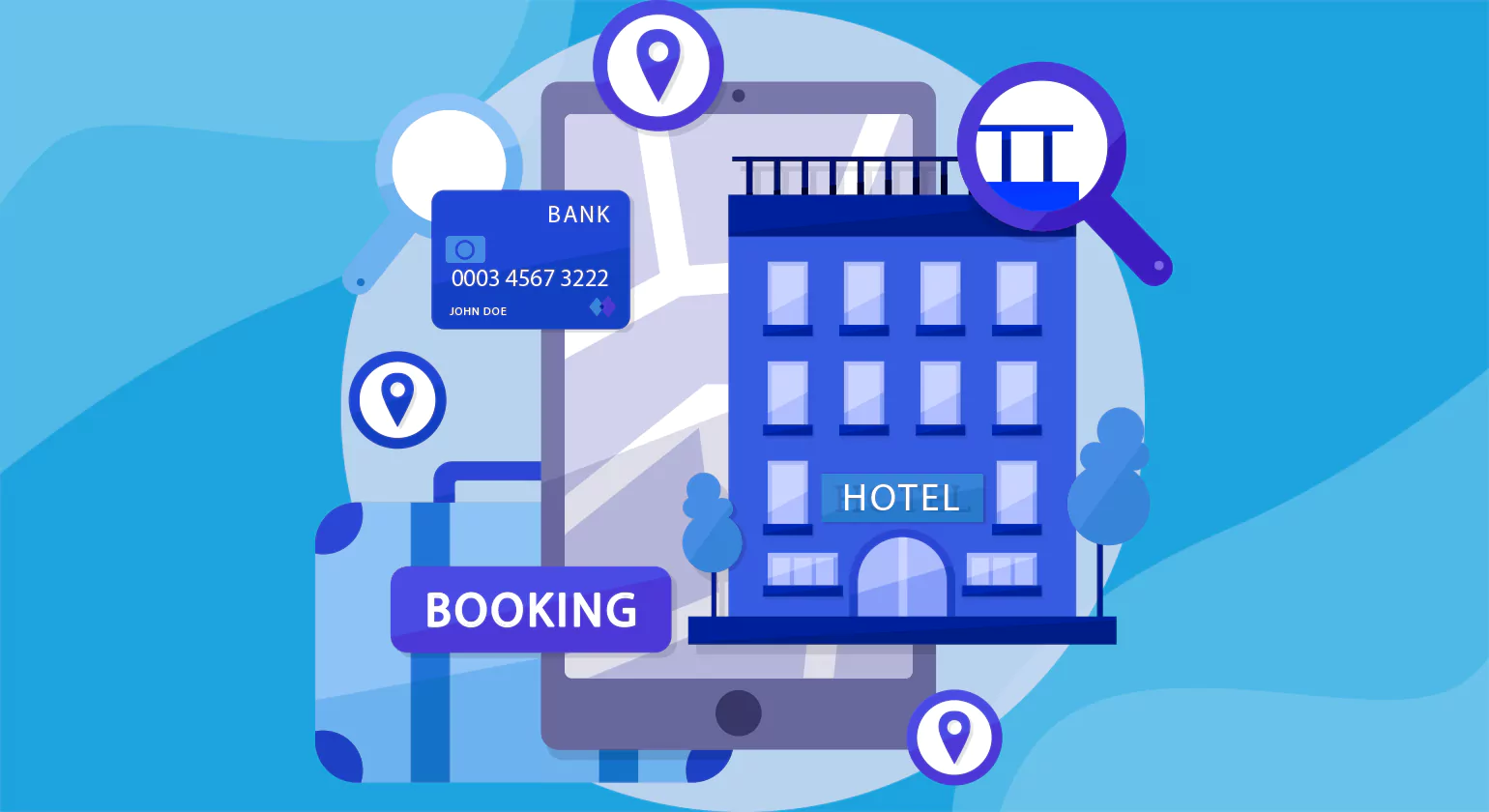
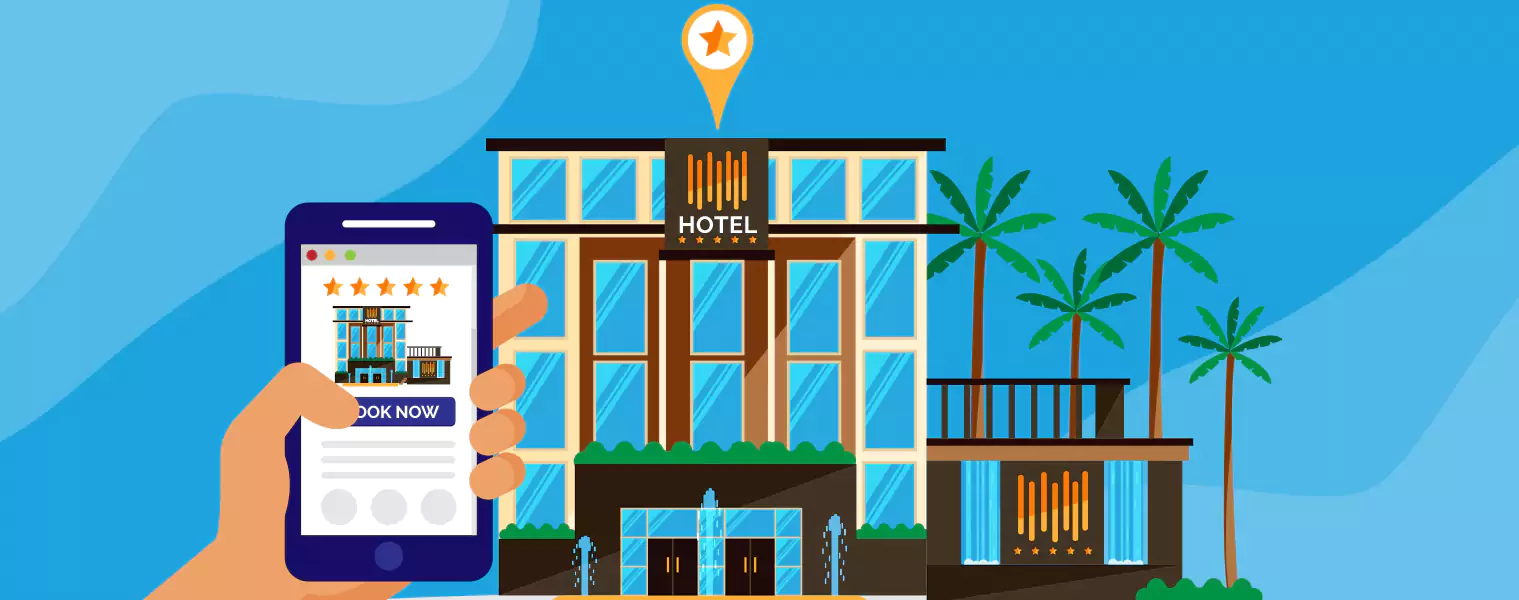
A potential guest might be looking to book a beach vacation and come across your property. However, due to the ten-second load time of your website, or worse, the inability to click the “Book Now” button with their phone, the guest leaves and goes to a competitor. Hotel website development In 2026 your website is not just a digital brochure sitting on the internet. It is your hardest working employee, running around the clock and never taking a day off. Its only job is to turn visitors into confirmed guests.
Why Every Hotel Needs a Professional Website
- Direct Booking Control – You own the entire booking process. You control what guests see, what they experience, and how they book. No third party calling the shots.
- Brand Credibility – More than 75 percent of travelers look up a hotel’s own website after finding it on a booking platform. They want to make sure you are the real deal. A professional site gives them that confidence.
- Commission Savings – Every direct booking means no middleman taking a cut. That money stays with you and goes straight back into your business
How Can You Create a Professional Hotel Website Easily?
1. Choose Your Domain & Hosting
Your domain will be your digital address. It has to be easy to remember and reflect your location or your area of expertise.
- Your goal should be to acquire a domain in the format [HotelName].com.
- If the above format is unavailable, your next best choice would be to acquire a domain in the format [HotelName][City].com.
- Never use hyphens or numbers in your domain, as it will lead to a 15% increase in typos.
Hosting Requirements:
- Your hosting provider has to offer “Managed Hosting” and SSL certificates (HTTPS).
- By the year 2026, 53% of your customers will leave your website if it doesn’t
2. Select the Right Platform
| Platform | Best For | Pros |
| Wix / Squarespace | Beginners | Drag-and-drop; stunning templates; “Wix Hotels” for easy booking. |
| WordPress | Customization | Infinite plugins (like MotoPress); full SEO control; ownership of data. |
| Amenitiz / roommaster | All-in-One | Built specifically for hotels; includes PMS and Channel Manager out of the box. |
3. Design Essential Pages
- Homepage – This is your first impression and you only get one shot at it. Use a high-resolution image or video that instantly captures the feel and personality of your hotel.
- Rooms and Suites – Give guests everything they need to say yes. Write clear descriptions and include at least 5 images for every room category. Let the visuals do the selling.
- Location and Gallery – Embed a Google Map so guests know exactly where you are. Add a local travel guide to help your SEO and give guests a reason to get excited about the destination.
- Booking Page – This is the most important page on your entire website. It needs to be fast, clean, and completely secure. Any friction here and you lose the booking.
4. Integrate a Booking System
Every time a guest books through Expedia or Booking.com you hand over up to 20% in commission fees. That is a significant chunk of your revenue gone before you even see it. The fix is simple.
- Direct Integration – Tools like Little Hotelier and Cloudbeds connect your website straight to your room inventory in real time. No double entry. No overbooking. Just a seamless booking experience for your guests. This is where strong Backend Development Services come in, enabling a smooth booking engine, inventory, and payment processing.
- Payment Gateways – Make it as easy as possible for guests to pay. Support one-tap payment options like Apple Pay and Google Pay. This simple addition can boost mobile conversions by 20–30%. The easier you make it to pay the more bookings you will get.
5. Launch Checklist
- Before going live, perform this last audit:
- Mobile Audit: Is the “Book Now” button working perfectly on mobile?
- Speed Test: Run through Google Page Speed Insights (Score > 90).
- Form Testing: Is the email for the “Contact Us” form arriving in your inbox?
- SEO Basics – Are Page Titles and Description less than 60 characters?
- Legal – Do we have a Privacy Policy and a GDPR compliant Cookie Banner?
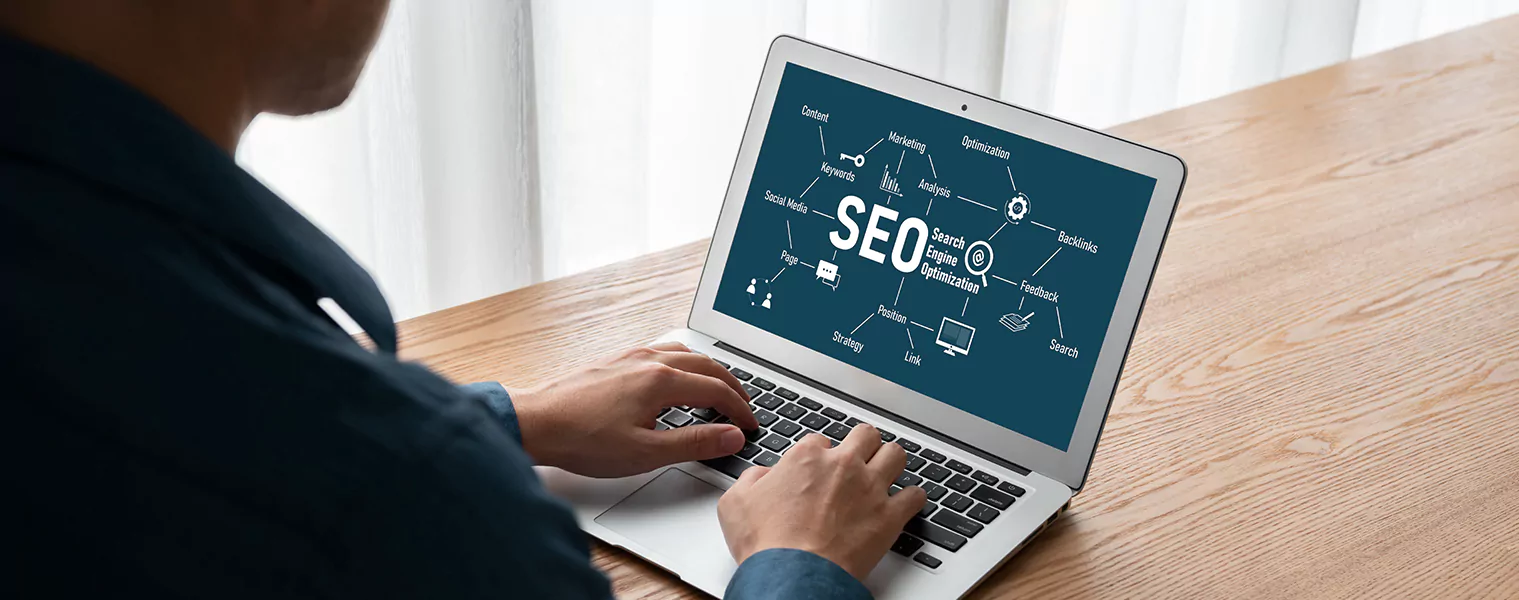
How to Optimize a Hotel Website for SEO and Direct Bookings
1. Local SEO with Google Business Profile
Your Google Business Profile (GBP) is the digital front door to your hotel. Your GBP is frequently the first thing a person will see when searching for a hotel in a particular location. Well-thought-out hotel website development will ensure your technical website structure follows the same information as your GBP to maximize your local search results.
- Claim and Verify: This will help you control the information displayed.
- Encourage Reviews: Answer both positive and negative reviews promptly.
- Utilize Google Posts: This will help you share seasonal offers and local events.
2. Developing a Winning Keyword Strategy
“Intent-based” keywords are those such as “Boutique hotel in [City]” or “Best hotel with a pool near [Landmark].” Studies have found that long-tail keywords have a 2.5 times higher conversion rate compared to general keywords.
Turning Visitors into Guests
The next part of the battle is not only getting the traffic to your website but also getting them to book with you. A smooth booking engine is vital in reducing the bounce rate. Hotel website development today focuses on the “Mobile First” strategy to reach the 60% of customers who book their travel through their smartphones.
Create Urgency with Scarcity: These would be phrases such as “Only 2 rooms left for these dates” or “Special rate ends in 4 hours.”
3. Google Hotel Ads Basics
Google Hotel Ads (GHA) enables you to display your room pricing alongside your organic listing. This is the missing link between the initial search and the final booking engine.
Google Hotel Ads is a highly qualified lead generation tool since it shows live pricing and availability. Hotels using GHA can expect a 20% increase in direct bookings compared to organic search.
Essential Pages Every Hotel Website Needs to Increase Bookings
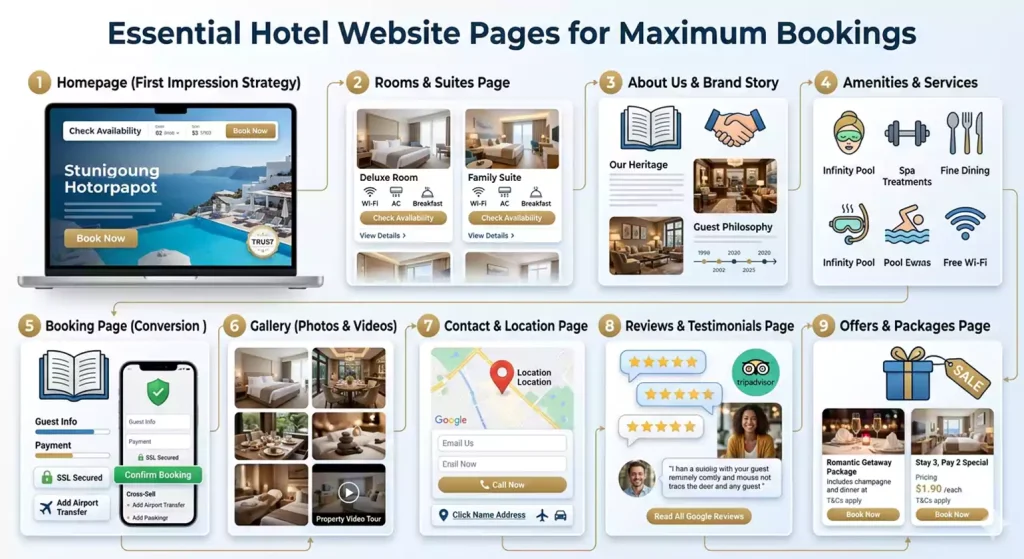
A hotel website is a digital storefront built to turn lookers into bookers through thoughtful content and user experience. It is the main way for travelers to make direct reservations, bypassing high commission fees for third-party booking sites. Serious hotel website development involves crafting a user-friendly experience that is both visually appealing and high-performance.
1. Homepage
The homepage is your digital lobby and the beginning of the guest’s journey. You have 0.05 seconds to make a positive impression before the visitor either stays or goes. Good hotel website development services will make sure that your page loads fast and luxury is conveyed quickly.
- Hero Visuals: High-definition video or images of your best view or room.
- Clear Value Proposition: Tell exactly why you are better than everyone else.
- Persistent Booking Engine: Make sure your ‘Book Now’ button is visible at all times without having to scroll.
2. Rooms & Suites Page
This page is where the actual “shopping” takes place. Guests need to visualize themselves in the space, so details matter most on this page than on any other.
Detailed Specs: List the bed size, room size, and occupancy limits.
Tiered Options: A grid is best for comparing Standard, Deluxe, and Suite options.
3. About Us & Brand Story
Travelers today want authenticity and connection. Use this section to tell the heritage of your hotel, your mission, and your involvement in the community.
- History: Tell the history of the property to create an emotional response.
- The Team: Including your team can make a personal connection with your reader before they even arrive.
4. Amenities & Services
Amenities can often be what tips the balance if someone is choosing between two very similar places to stay. Don’t just list your amenities, promote what they can offer to your guests.
Standard Essentials
- List your Wi-Fi, parking, and breakfast options.
- Premium Perks
- Highlight your special features such as rooftop bars, spas, and/or fitness centers.
5. Booking Page (Conversion Focused)
The booking page is the final step in the conversion funnel. Any difficulties faced in this step would cause “cart abandonment.” Therefore, successful hotel website design involves the implementation of the “two-click” booking system to avoid user frustration.
- Mobile Optimization: The booking process must be smooth for mobile devices too because mobile accounts for more than 50% of the total online booking sales.
- Security Trust Signals: Display the SSL certificates and icons for the payment system.
- Minimalist Design: Do not display unnecessary sidebar links that might confuse the user.
6. Gallery (Photos & Videos)
Travel is a visual product. The gallery is the most powerful sales tool. This is because images are digested 60,000 times faster than text.
- Variety: Include images of the exterior of the hotel, lobby, dining areas, and “lifestyle” images of the hotel guests enjoying themselves.
- Video Tours: Short videos of the rooms, lasting about 30 seconds, can give the customer an idea of the scale of the rooms.
7. Contact & Location Page
A hotel’s location is often its greatest strength. This page should offer logistical clarity and help with local navigation.
- Interactive Maps: Consider adding a Google map with markers for nearby transportation centers and landmarks.
- Direct Contact Info: Offer a phone number, email, and even a live chat function for instant queries.
- Transportation Tips: Provide clear directions from the nearest airport or train station.
Conclusion
Breaking free from OTA dependency starts with your own website. When the right pages are built well, your site becomes your strongest booking tool. Most hotels know the problem: OTAs take a cut, control the guest relationship, and keep you at arm’s length. The fix isn’t complicated. Good hotel website development — clear information, a smooth booking flow, and an honest feel for your property — quietly shifts things back in your favor
FAQs
What role does the speed of the website play in hotel website development?
Speed is an essential factor in the user experience and SEO. Faster sites minimize the chances of users leaving the website, thus boosting the direct booking conversion rate.
How can I minimize "Cart Abandonment" on my booking page?
The booking process should be easy, there should be no hidden costs, and there should be various payment gateways.
How much does hotel website development cost?
Costs typically range from $3,000 for basic templates to over $50,000 for custom, high-end builds with integrated booking engines and advanced features.
How long does it take to develop a hotel website?
A standard site takes 4 to 8 weeks. Complex, custom builds with deep integrations can take 3 to 6 months to fully design, develop, and test.
How do I handle online payments securely?
Use PCI-DSS compliant payment gateways, implement SSL encryption, and utilize tokenization to ensure guest financial data remains protected throughout the entire transaction process.