Table of Contents
Key Takeaways
- Outsourced dental bookkeeping keeps money records clear while you stay in the clinic and lead your team each long day, without distractions from financial admin or paperwork.
- Dental practice accounting experts watch profit per chair and per provider, not just total income from the whole office, helping you spot underperforming rooms or schedules early.
- Dental accounting teams link treatment, insurance payouts, and bills so leaks show up early and never starve cash flow during slow seasons or expansion phases.
- Outsourced dentist bookkeeping and dentist payroll services cut tax risk, staff pay errors, and small fraud in big clinics as teams and locations continue to scale.
What Is Dental Bookkeeping and Why It is Essential for Your Practice?
What is dental bookkeeping?
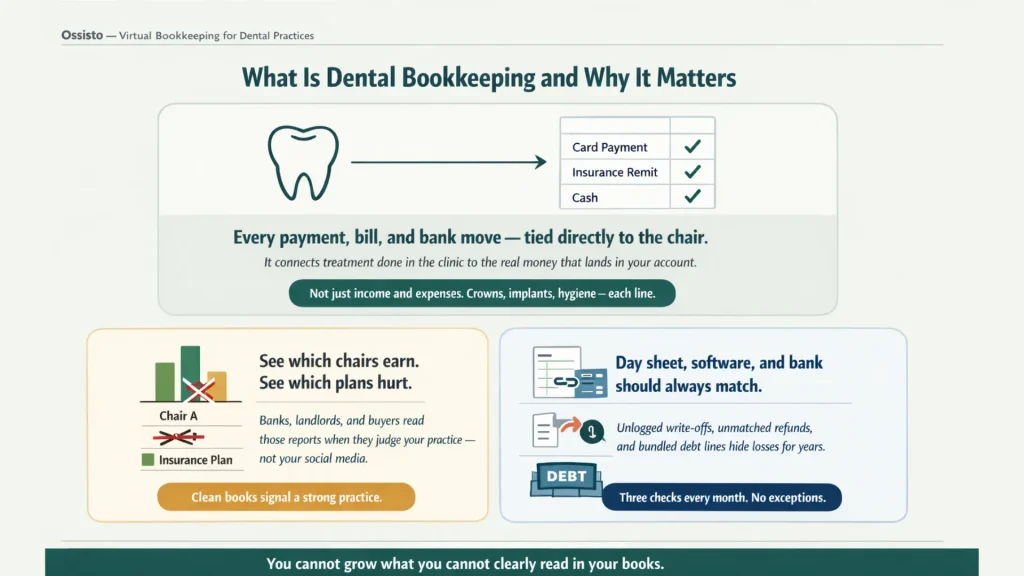
Dental bookkeeping means tracking every payment, bill, and bank move for your clinic. It links treatment done in the chair with the real money that lands in your account. It turns a messy stream of card slips, cash, and insurance remits into simple, checked lines in your books.
Dental bookkeeping vs general small business bookkeeping
General bookkeepers see “income” and “expenses” but not crowns, hygiene, or implants. Dental bookkeeping ties those clinical items to real costs, plan rules, and chair time. This lets you see not only if the clinic makes money, but exactly which types of work carry that profit.
Why is accurate dental accounting critical?
Dental accounting turns daily noise into clear stories you can read in minutes. Utilizing a dedicated virtual bookkeeping assistant allows you to see which chairs earn, which plans hurt, and if the clinic can safely grow. Banks, landlords, and buyers all look at those reports when they judge your practice strength, not at your social media.
Common bookkeeping mistakes dentists make
The first mistake is many owners never match the day sheet totals with the accounting software and the bank. Another mistake is letting staff post write offs and refunds without any log or second check. A third mistake is treating equipment loans and credit cards as one vague “debt” line, so interest leaks stay hidden for years.
Core Components of Dental Practice Accounting
Dental specific chart of accounts
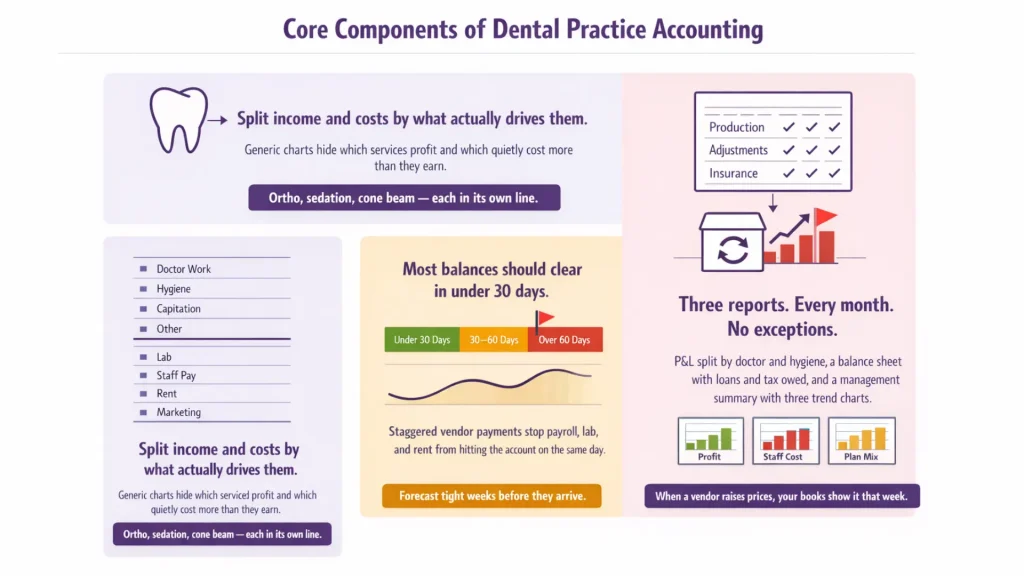
A good chart of accounts splits income into doctor work, hygiene work, plan capitation, and “other.” On the cost side, it separates lab, implants, clear aligner labs, disposables, staff pay, rent, marketing, and owner pay. Some advanced dental accounting charts even track cone beam, ortho, and sedation supply costs in their own lines for deeper planning.
Tracking income from patients and insurance
Every workday should end with a closed report that lists production, adjustments, and expected insurance parts. Dental bookkeeping teams post each deposit, match it to EOBs, and list any amount that was short paid or denied. They also keep a small note on each odd denial pattern so the front desk can update narratives and attachments for next time.
Managing expenses and overhead
In big clinics, “set and forget” supply orders are quiet cost drivers that grow month after month. Dental practice accounting support groups those bills and shows if supplies or labs now eat more than a safe share of revenue. When a vendor raises prices mid year, your reports will show the jump quickly so you can switch brands or adjust fees.
Accounts receivable, payables, and cash flow
Healthy AR in dental bookkeeping has most balances under 30 days, and very few over 60 days. Outsourced dentist bookkeeping also plans vendor payments so payroll, lab, and rent do not hit the account on the same day. They can forecast tight weeks, warn you early, and suggest small changes like moving one vendor date to smooth cash flow.
Core financial statements you should review
Each month you should see a profit and loss that splits doctor and hygiene results, keeping in line with standard financial management practices recommended for healthy businesses. You should also see a simple balance sheet that lists loans, card balances, and tax amounts the clinic still owes. Many larger practices also get a short “management summary” sheet with three charts that track profit, staff costs, and plan mix over time.
Dental Insurance Billing and Revenue Cycle Management
How does dental insurance billing fit into bookkeeping?
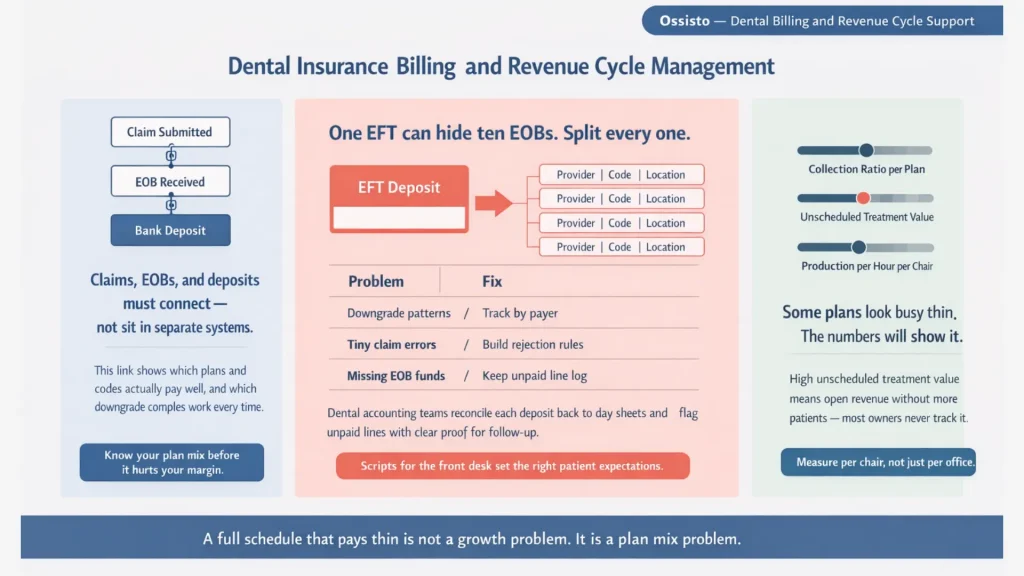
Dental insurance billing is not a side task. It sits in the center of your cash flow. Dental bookkeeping links claims, EOBs, and bank deposits so you know which plans and codes actually pay well. This link also shows when you are doing complex work on plans that always downgrade or delay, so you can adjust your mix.
Setting up efficient billing processes
Large clinics need clear rules for when to collect copay, how to talk about downgrades, and who checks remaining benefits. By bringing in healthcare virtual assistants to handle the heavy lifting, teams can effectively track which payers reduce fees, which need extra notes, and which reject claims for tiny errors. They also build scripts for your front desk, so every treatment plan talk sets the right payment expectations with patients.
Reconciling insurance payments and EFT deposits
A single EFT from one plan can hide ten or more separate EOBs. Dental accounting staff split that amount back across providers, codes, and locations so reports still line up with day sheets. They also keep a list of unpaid EOB lines that never showed in any deposit, so you can chase missing funds with clear proof.
Key revenue and collection KPIs for dental practices
You should know collection ratio per plan, not only for the full office. Some plans look busy but pay thin. You should also watch unscheduled treatment value. High numbers here mean open chances to grow without more new patients. Another helpful metric is “production per hour per chair,” which shows if a room is underused even when the schedule feels full.
Dentist Bookkeeping Systems, Software, and Daily or Monthly Routines
Choosing dental friendly accounting and practice software
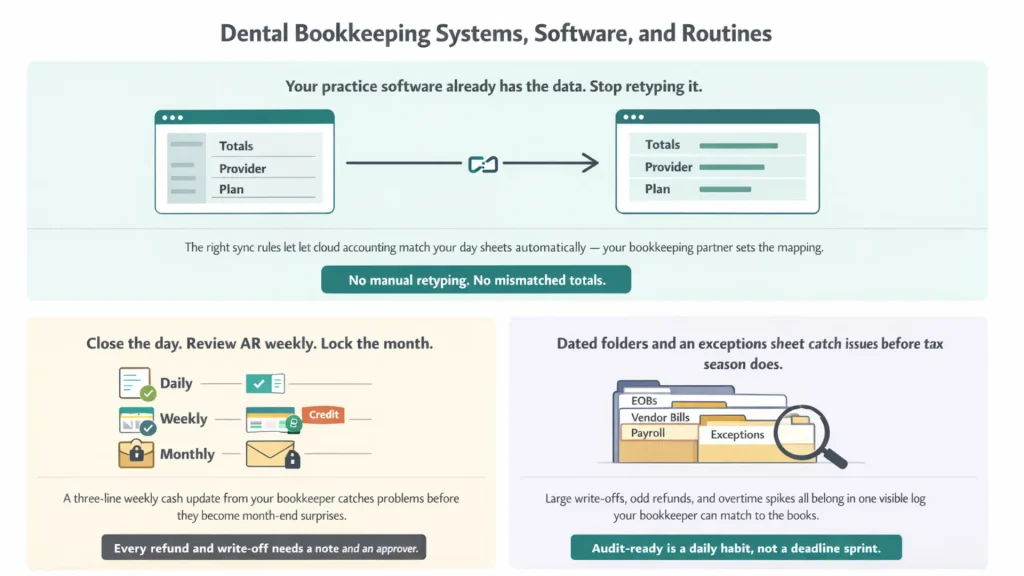
Your practice software already tracks who did what, where, and for which plan. A strong dental accounting setup lets that data feed into cloud accounting tools so totals match and do not depend on manual retyping, aligning with the practice management guidelines set by top dental associations. Your outsourced dental bookkeeping partner can suggest the exact sync rules and mapping so you are not testing settings alone at night.
Daily and weekly bookkeeping tasks for a dental office
Daily tasks include closing the day, matching deposits and card batches to the report, and checking for missed claims. Weekly tasks include reviewing AR aging, checking unapplied credits, and confirming each refund or write off has a short note and an approver. Many bigger clinics also pick one weekday where the bookkeeper sends a tiny three line update on cash, AR, and any odd items.
Monthly close checklist for dental bookkeeping
At month end, outsourced dental bookkeeping teams reconcile bank, card, and loan accounts and then lock that month. They send a packet that shows staff cost percent, supply percent, lab percent, and profit per provider in one glance. A short review call lets you ask about strange trends, like overtime spikes or sudden drops in one provider’s case acceptance.
Best practices to keep your books audit ready
Keep EOBs, big vendor bills, and payroll reports in dated folders that match your accounting months. Many owners also keep a small “exceptions” sheet where staff list unusual moves, like large write offs or odd refunds. When dental practice accounting teams see that sheet, they can match it to the books and catch issues before any tax or insurance visit.
When to Outsource Dental Accounting, Bookkeeping, and Payroll Services?
Signs your practice needs professional support
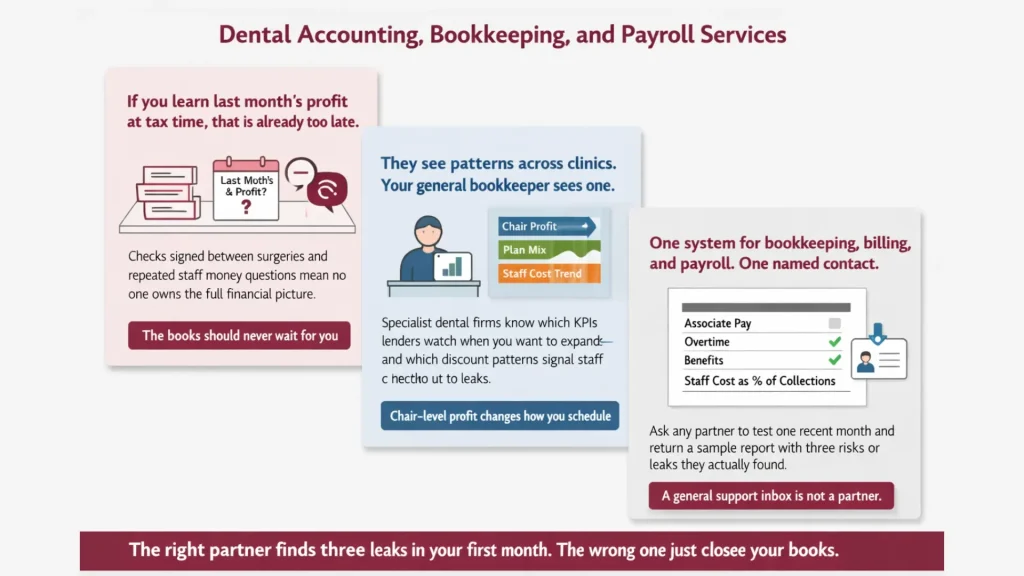
You likely need help when checks stack on your desk and you sign them between surgeries. Another sign is not knowing last month’s true profit until tax time, or guessing when a bank asks. A third sign is staff asking the same money questions every month because no one owns the full picture of dental bookkeeping.
Benefits of specialist dental accountants and bookkeepers
Specialist dental bookkeeping firms, often providing comprehensive CPA outsourcing services, see patterns across clinics, like staff adding discounts at checkout to “close” treatment. They can show you chair level profit, plan mix, and staff cost trends, then suggest specific changes that fit your setup. Because they only work with dentists, they also know which KPIs lenders watch closely when you want to expand.
Dentist payroll services and compliance
Dentist payroll services handle mixed pay models for associates, overtime rules for assistants, and benefits for part time staff. They also move tax money on time, file year end forms, and manage your employment tax compliance so you do not have to learn the changing regulations yourself. Some will even send you a one page payroll summary each cycle that shows true staff cost as a percent of collections.
How to choose the right dental bookkeeping partner?
Ask each potential partner to test one recent month and send a sample report with three risks or leaks they found. Look for a finance specialist that offers dental bookkeeping, dental insurance billing, and dentist payroll services under one joined system. Check if they give you a named contact who understands your practice, not just a general support inbox.
FAQs
1. Why should a busy dentist outsource dental bookkeeping?
Outsourcing dental bookkeeping gives you a full money team while you stay with patients and lead clinical work. You skip months of training and the stress when your only in house bookkeeper quits or takes leave.
2. How does outsourced dental practice accounting improve collections?
Dental practice accounting teams watch AR every week and chase old balances before they age into real losses. They also tie deposits back to procedures so you can see which codes or providers create the most unpaid work.
3. Can one firm handle entire dental bookkeeping, dental insurance billing, and dentist payroll services?
Yes. Many firms now package dental bookkeeping, dental insurance billing, and dentist payroll services for multi chair clinics. That single team shares data, so your production, pay, and tax numbers match without you acting as the middle person.
4. What usually changes in the first 3 months after dental bookkeeping outsourcing?
In month one, old errors show up. Expect missing write offs, odd credits, and deposits that never matched a report. By month three, you should have steady monthly packets, simple charts, and a short review call that fits between patient blocks.
5. Is my patient data safe when outsourcing dental bookkeeping?
Professional dental accounting firms use encrypted, HIPAA-compliant cloud platforms to handle your data. By outsourcing, you actually reduce the risk of internal fraud and physical data loss, as these experts follow strict security protocols and provide a clear digital audit trail for every transaction.