Table of Contents
Growing with just one brand can be hard. Multi Branding Marketing helps you reach different customer groups and cover more parts of the market. It can also increase your revenue. But without a clear plan, it can fail quickly. Here is how to manage multiple brands without them competing with each other.
What is Multi-Branding?

Multi Branding Marketing is more than just having many products. Each brand has its own name, identity, pricing, and target audience. The parent company usually stays hidden. A shopper buying Pantene and another Head & Shoulders may not know both belong to Procter & Gamble.
This is very different from a branded house like Apple or Google, where everything uses one main name. Multi-branding is the opposite. It follows a “house of brands” model, where each brand stands on its own.
Multi-Brand VS Single-Brand: When to Choose Which

Dimension | Single-Brand Strategy | Multi-Brand Strategy |
Brand Identity | One unified identity across all products | Multiple distinct brand identities |
Target Audience | Broad or overlapping audience | Different segments for each brand |
Marketing Cost | Lower (shared campaigns & assets) | Higher (separate campaigns per brand) |
Risk Management | Higher risk (one brand = all impact) | Lower risk (issues isolated per brand) |
Market Coverage | Limited positioning flexibility | Wider market penetration & niches |
When Single-Brand Wins (The “Apple / IKEA” Rule)
- Suitable for: Markets with clear differences, premium or lifestyle brands, and strong founder-led companies.
- Condition: When the brand itself should be the main advantage, not just one product.
Example – Apple: Apple uses a single brand for phones, computers, watches, and services.
Example – IKEA: IKEA uses one brand for furniture, food, lights, and other products.
Why it works: Its promise is clear—affordable design and easy use. This idea fits all its products. Using multiple brands would weaken this strong image.
Decision rule for single-brand: Choose a single brand if it stands for one clear benefit (like design or ease) across all products, and your customers are not very sensitive to price.
When Multi-Brand Wins (The “P&G / Unilever” Rule)
Best for: Low-differentiation, functional categories (detergent, shampoo, food). Retailer power is high. Different segments want different jobs to be done.
Condition: Customers are generally open to switching between Multi Branding Marketing, and a Tide user usually does not mind if the same company also makes Gain.
- Example P&G: P&G owns brands like Tide (cleaning), Gain (scent), Ariel (value), and Dreft (baby care).
- Example Unilever: Real Beauty Dove, Young Man Axe, Germ Protection Lifebuoy, Sensitive Skin Simple.
Key Benefits of a Multi-Brand Marketing Strategy
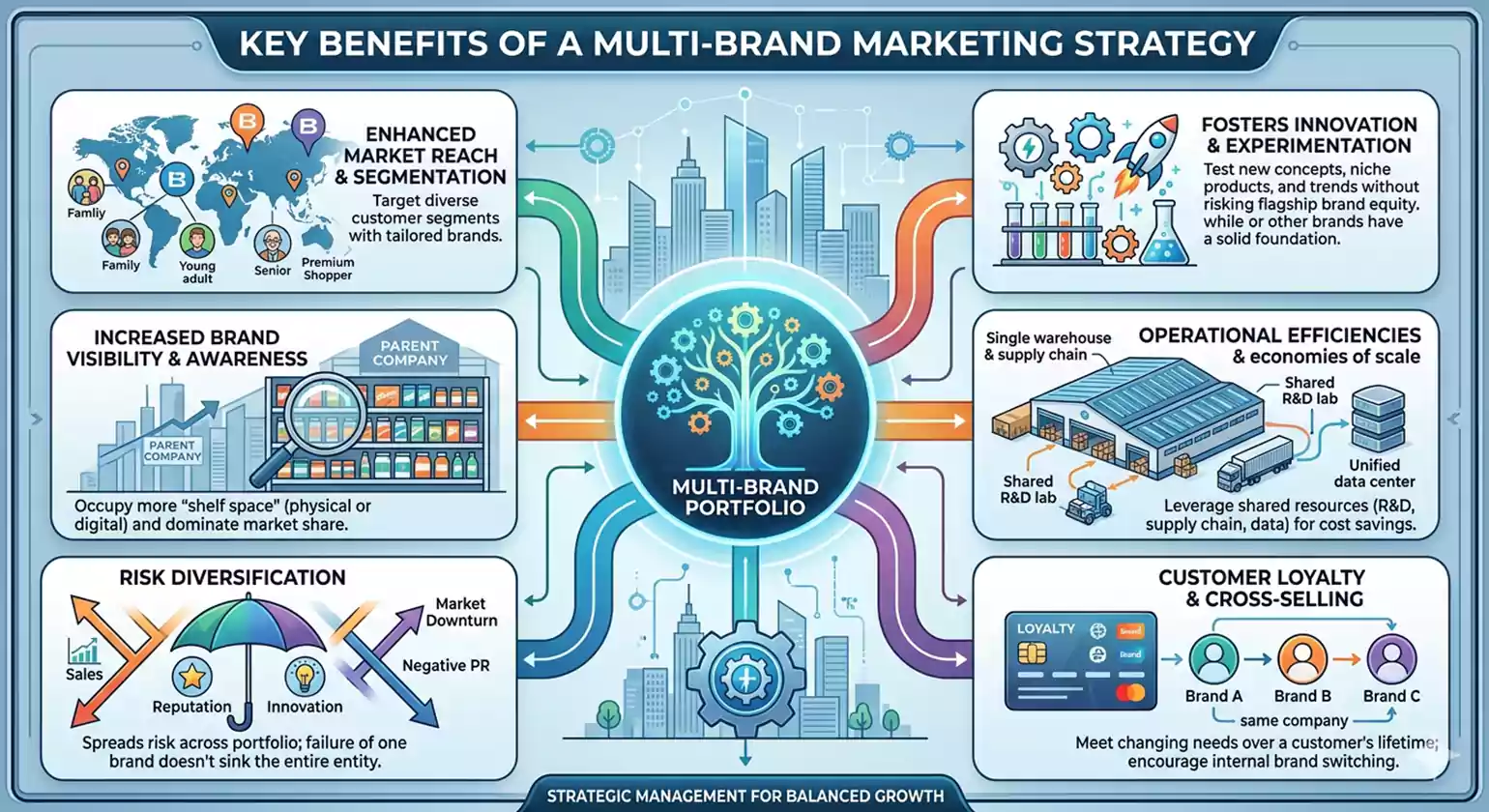
Multi Branding Marketing gives you a smart way to reach more people without putting all your risk in one place. It allows each brand to speak in its own voice, with the right price and style for the audience it’s meant to serve.
1. Market Reach Expansion
In Multi Branding Marketing, firms can appeal to varied customer groups based on demographics, pricing, and tastes. Unilever markets its products in both high-end and low-end markets using various brands.
2. Risk Management
If one brand does not perform well, other brands can support the business. This reduces overall risk and helps keep the company stable. Even Harvard Business Review supports this approach.
3. Improved Competitive Edge
Having more brands means more shelf space and stronger competition. Procter & Gamble uses this strategy to stay ahead in personal care and cleaning products.
4. Better Customization
Each brand is customized with its different perception, value, and message. This helps brands connect better with the right audience.
5. Greater Customer Engagement
People connect more with brands that match their needs. This leads to stronger loyalty over time.
They feel understood and valued, which builds trust and keeps them coming back.
Key Takeaway
Start by identifying your main customer groups. Then build brands for each group. Keep your message clear and track your results to improve your strategy.
How to Create a Multi Branding Marketing Strategy (Step-by-Step)
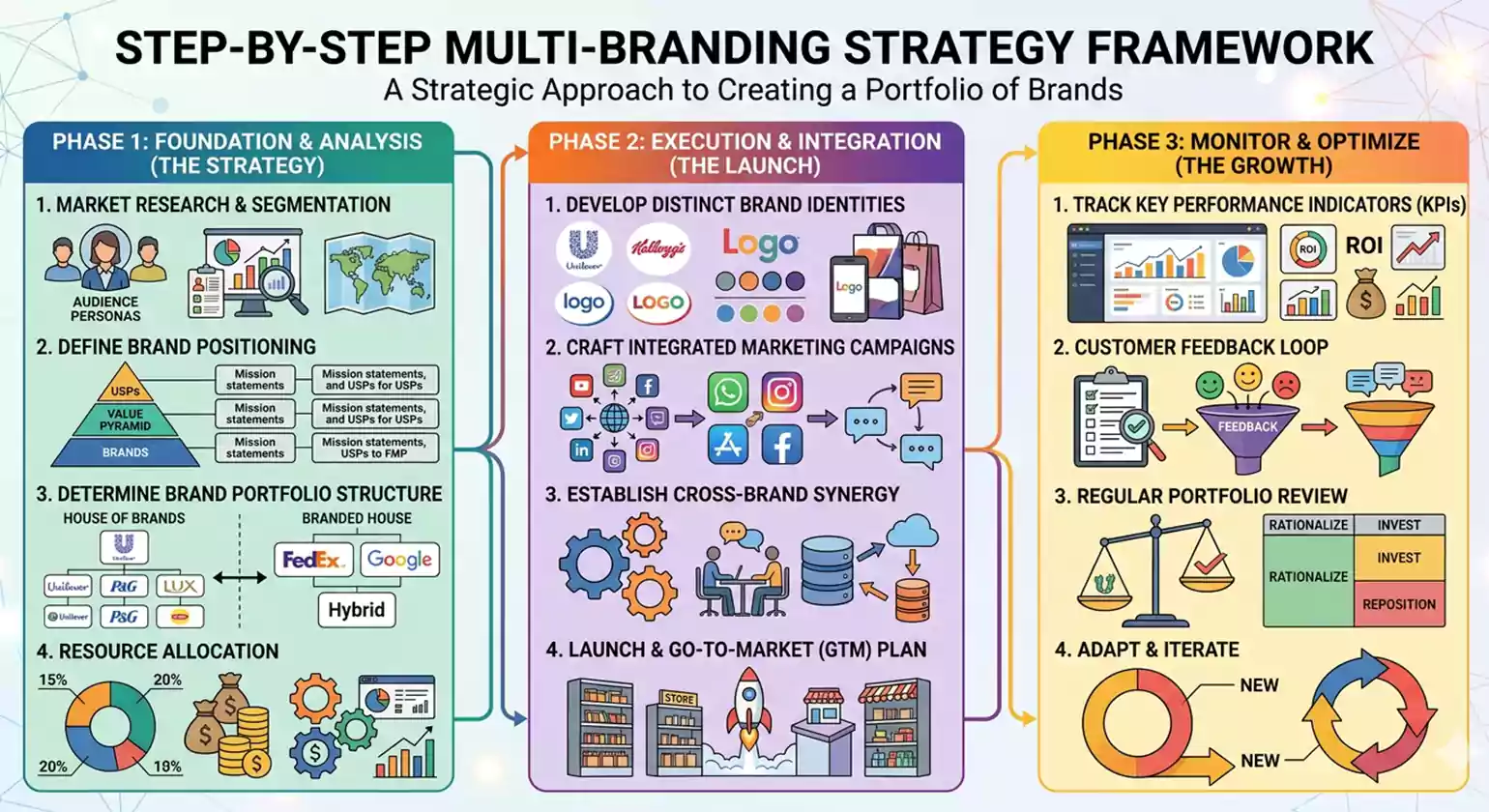
Multi Branding Marketing helps companies reach different groups of people in a simple way. It also keeps each brand strong. The crucial thing for effective multi-brand marketing is proper Corporate Branding, proper segmentation of users, and channel alignment along with budget allocation.
Step 1 – Building a Brand Architecture
The next step is to decide how your brands are linked to each other. In multi-brand marketing, you can choose a “house of brands” or a “branded house” model. Unilever markets various independent brands such as Dove and Axe.
Step 2 – Segmentation According to Brands
Split your audience for each brand based on age, behavior, and needs. This is done to create effective campaigns. As stated by Hubspot, personalizing campaigns boosts conversion by more than 200%.
Step 3 – Set Differentiated Messaging per Brand
Every Multi Branding Marketing needs to have its own personality, USP, and positioning strategy. Don’t make use of a generalized approach. For instance, Nike’s marketing message is all about performance whereas Converse markets itself in terms of its lifestyle message.
Step 4 – Market via Different Media Channels
Channel allocation is essential. Every brand needs to be marketed via that media channel where the target market can actually see it. This way you will increase the efficiency of the multi brand marketing campaign that you have launched.
Step 5 – Assign Budget Without Cannibalization
Plan your budget carefully so your brands do not fight for the same customers. It should be done with performance information and ROI monitoring. Procter & Gamble is a good example of how this is done with many multi brand marketing under one company. They allocate their budgets according to market share and future growth.
Step 6 – Establish Clear Brand Positioning Rules
Set simple and clear rules for each brand’s role, tone, image, and position. This keeps your brands consistent and easy to understand. It also helps your multi-brand marketing strategy run smoothly and stay effective.
Step 7 – No Audience Overlap Among Different Brands
Make sure your brands do not target the same people. If offers overlap, it can confuse customers and lower results. Use CRM and analytics tools to keep each brand’s audience clear and separate.
Step 8 – Centralise Your Data
Keep all your data in one place so it is easy to manage. At the same time, let each brand run its own campaigns. McKinsey says companies that use data well are 23 times more successful at getting new customers.
Step 9 – Execute A/B Tests for Each Brand Separately
Test each brand on its own. Try different messages, designs, and channels with A/B testing. Do not copy what works for one brand to another. Each brand is unique, so test and improve them separately.
Step 10 — Measure What’s Working
Track results for each brand using simple metrics like ROI and cost per customer. Review performance often and make changes when needed. This helps your strategy stay effective and up to date in multi-brand marketing.
Actionable Takeaway
To be successful in Multi Branding Marketing, think on a small scale. Begin with just two brands, identify distinct audiences, and monitor performance independently. It’s better to play safe for success.
How to Measure Multi-Brand Marketing ROI (KPIs, Metrics & Attribution)

Measuring the return on investment for a multi-brand portfolio requires a deep dive into data and a firm grasp of the fundamentals of marketing. By tracking the right indicators, you can ensure each brand in your stable contributes effectively to your bottom line.
1. Brand Awareness & Recall
Use simple surveys to check how well people know your brand. Google Brand Lift or surveys can be used here. Tools like Google Brand Lift or basic surveys can help. Nielsen says brands that track regularly see a 23% improvement in recall.
2. Market Share by Segment
Calculate market share by each segment through CRM analysis, industry reports, and sales data. Segments can be formed on the basis of demographics or categories of products For example, a brand may do well with Gen Z but perform weakly in the premium segment.
3. Revenue Allocation Across Portfolio
Track how revenue comes from each brand and channel. Software like Google Analytics 4 or Hubspot enables journey tracking. This helps you see what works best. HubSpot says attribution models improve ROI visibility by about 20%.
4. Brand Equity Score
Check your brand strength using NPS, customer feedback, and share of voice. Tools like Brandwatch can help track what people feel about your brand. A strong brand score often leads to better loyalty and allows you to charge better prices.
5. Cannibalization Rate
Track if customers are buying from more than one of your Multi Branding Marketing over time. You can use cohort analysis at the SKU level to understand their buying patterns. One brand starts to grow while another shows a drop in sales, it may be a sign of cannibalization.
Real-World Case Studies: Multi-Brand Companies (Wins & Mistakes)

Case Study 1: Premium vs Mass Positioning
Each brand targets a different group:
- Dove → Focus on real beauty and skincare
- Axe → Focus on young men and bold style
- Lux → Focus on beauty and celebrity image
What did they do?
We created simple and clear messages for each brand. We kept ad audiences and creatives Branding separate. We also built SEO content for each brand.
Results:
- 38% increase in engagement
- Lower CPC with less audience overlap
- Better brand recall for each group
Case Study 2: Cannibalisation Like
A fashion client had two brands with similar pricing and style.
Issues we found:
- Both brands competed for the same Google Ads keywords
- They targeted the same audience
- There was no clear difference in price or value
What did they do?
We made one brand more budget-friendly. We created separate keyword strategies. We also improved website design and messaging for each brand.
Results:
- 30% increase in ROAS
- Less keyword competition
- Clear and simple customer journey
Case Study 3: Over-Expansion Failure
A D2C startup came to us after launching four brands in just 10 months.
Problems:
- Budget was split across too many brands
- No clear audience for each brand
- Weak brand recall
What did they do?
We advised them to focus on one main brand. We merged two similar brands. We also helped them build clear positioning first.
Results after 3 months:
- 2X improvement in marketing efficiency
- Stronger brand identity
- Lower CAC (Customer Acquisition Cost)
Conclusion
Multi Branding Marketing helps you grow your market share and reduce risk. It allows you to reach customers at different price points. It also turns customer switching into an advantage. Review your current brands today. Find one weak area—this could be your next growth opportunity.
FAQs
Can you give an example of Multi Branding Marketing?
Think about Unilever. They own popular names like Dove, Axe, and Lux. Each one speaks to a totally different crowd and meets different needs. Even though they feel separate, one big company runs them all.
When should you use a multi-brand strategy?
This setup works best when you want to reach different buyer groups, budgets, or new areas. The trick is giving each brand its own clear vibe and purpose. That way, they stand on their own and never fight for the same exact sales.
How to manage your multiple brands?
Keep each brand clear and different. Target separate groups of people. Use different marketing channels if needed. Track how each brand performs. Use this information to decide what to improve or change.
What is the disadvantage of multi-branding?
Multi-branding has a few downsides. It can increase marketing costs and sometimes confuse customers. Brands may also compete with each other. Managing many brands at once can be hard and needs strong planning and control.
What is brand cannibalization in a multi-brand strategy?
Brand cannibalization happens when a company’s own brands compete with each other, reducing overall sales instead of growing them. One brand steals customers from another instead of attracting new ones.