Table of Contents
Most patients can’t tell the difference between a medical assistant and a CNA. They see someone in scrubs and assume the role is the same. But here’s the truth: medical assistant vs CNA isn’t just a job title debate—it’s about who handles your medical chart versus who helps you use the bathroom. Get it wrong, and you might ask the wrong person for the wrong help. Understanding the difference matters more than you think.
Key Takeaways
Medical assistants work in clinics under doctors. They handle clinical tasks like vitals and admin work.
CNAs work in nursing homes and hospitals under nurses. They focus on hands-on daily care like bathing and feeding.
Supervision differs—one answers to providers, the other to nursing staff.
Patient interaction varies—you see CNAs for hours; medical assistants come and go.
Both roles prioritize patient safety and work under strict oversight.
What Is a Medical Assistant and Why Do You See One?
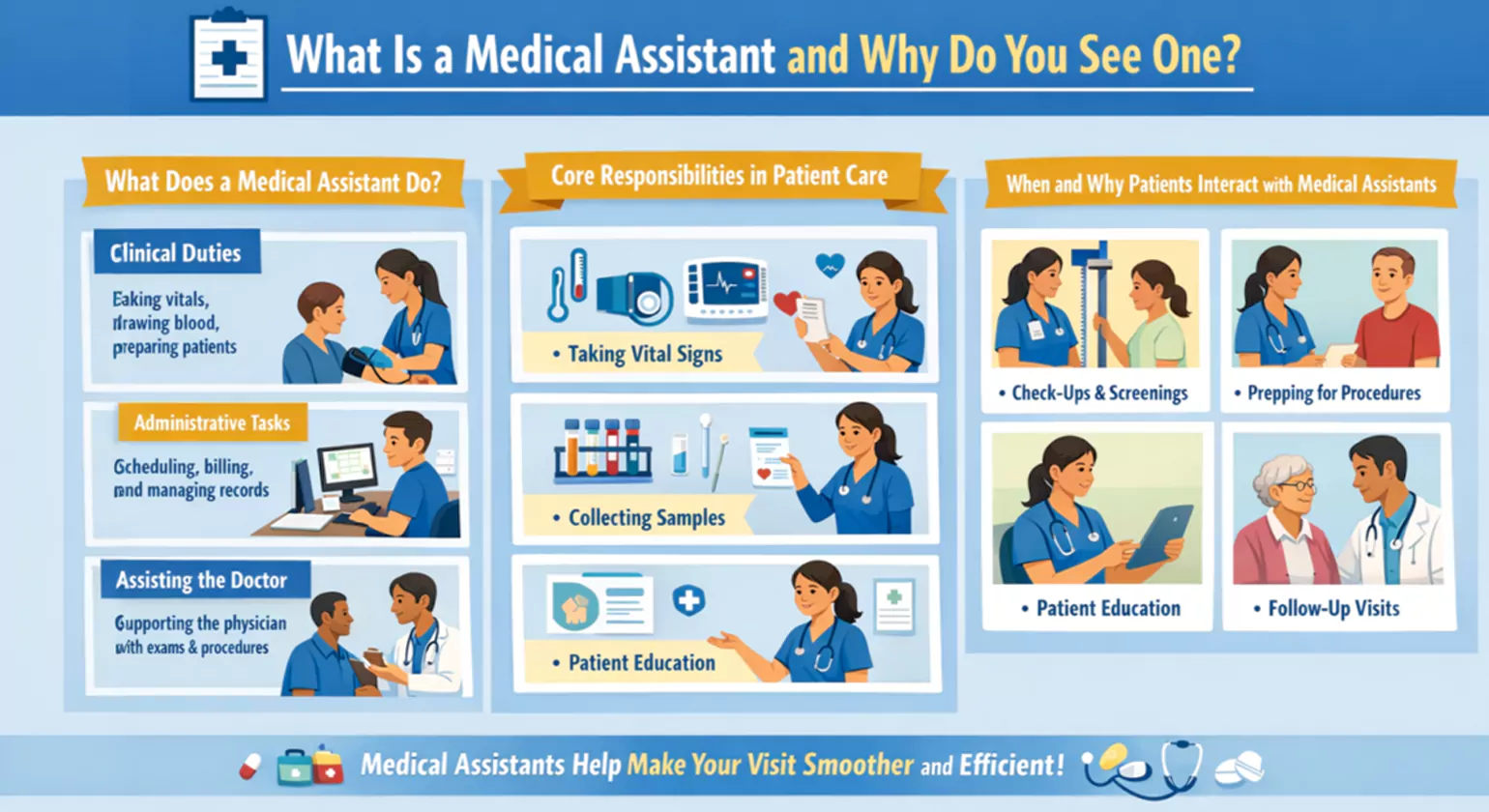
A medical assistant is usually the first person you talk to during a virtual visit. They work remotely and handle all the little stuff that keeps things moving. You see them because they help connect you with the provider. That being said, medical assistant vs Cna roles are different, but both matter when it comes to your care.
What Does a Medical Assistant Do?
Medical assistants handle clinical and administrative tasks. They take vitals, document histories, assist with exams, and manage records. Working under a physician’s supervision, they keep the office running smoothly but don’t diagnose or make treatment decisions.
Core Responsibilities in Patient Care
In a remote setting, medical assistants guide you through the intake process. They get everything ready before you talk to the provider.
- Ask about your symptoms in detail
- Confirm your current medications
- Prep your chart so nothing gets missed
- Explain what to expect during the visit
- Coordinate documentation behind the scenes
- Schedule follow-up appointments after the visit
- Answer questions you have about next steps
When and Why Patients Interact with Medical Assistants
You usually meet a medical assistant at the start of a telehealth visit. They are the ones who check you in, ask the initial questions, and make sure nothing gets missed. You interact with them because they save the provider time. That means you spend less time waiting and more time getting answers.
What Is a CNA and Where Will You Encounter One?
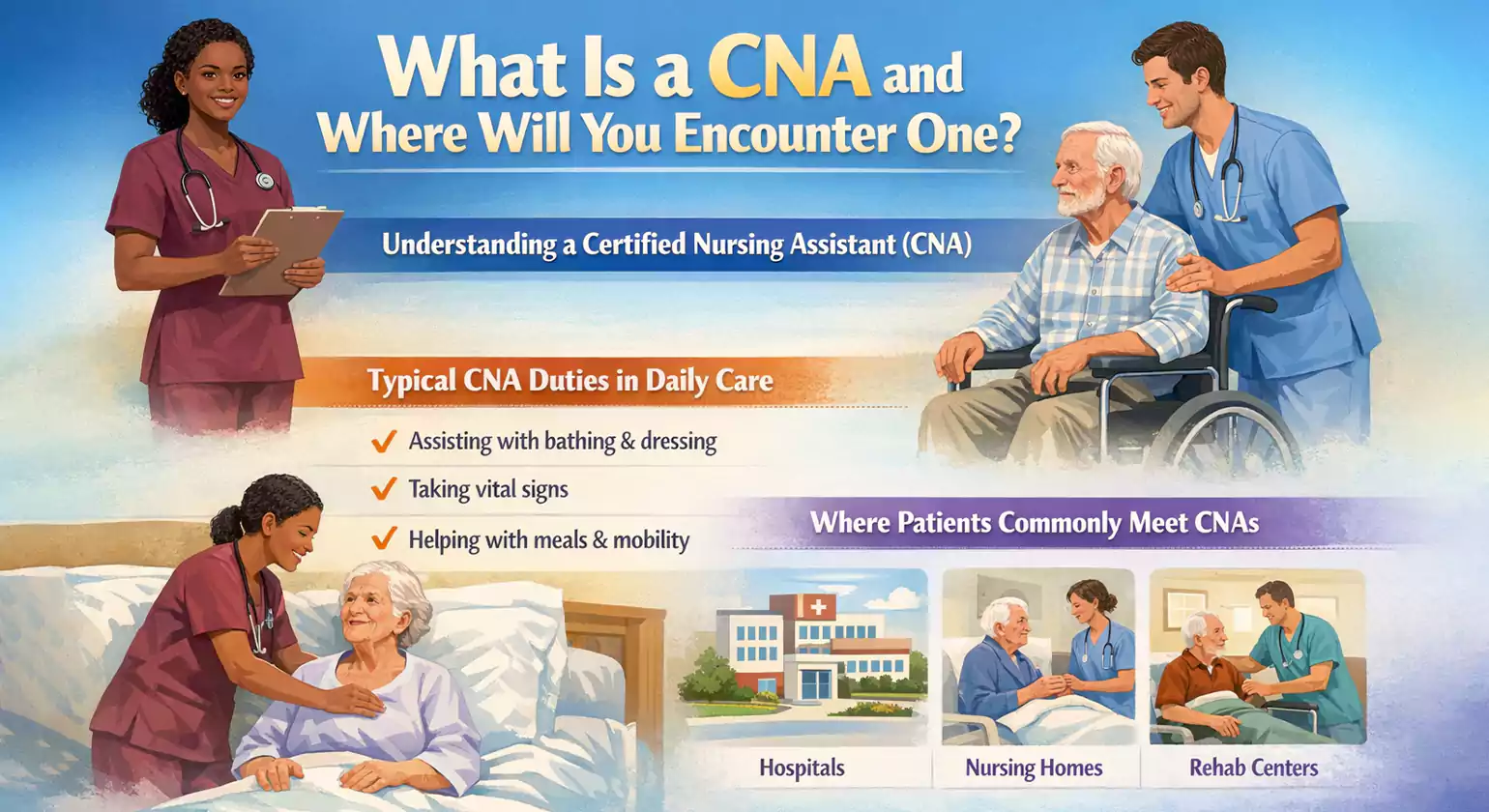
A CNA is the person who helps with the everyday stuff you can’t always do yourself. You’ll run into them in places where people need a little extra hands-on support. The difference between a medical assistant vs Cna gets questioned a lot, but honestly, they do totally different work.
Understanding a Certified Nursing Assistant (CNA)
A certified nursing assistant handles the hands-on stuff. Think about helping someone bathe, get dressed, or move from the bed to a chair. They’re usually the ones who spend the most time with patients. You won’t find them working from home—they’re right there in the room.
Typical CNA Duties in Daily Care
- Help patients bathe, brush teeth, and shave
- Get them dressed and looking put together
- Assist with bedpans, commodes, or changing briefs
- Move patients safely from bed to chair
- Help feed patients who can’t feed themselves
- Check blood pressure, temperature, and pulse
- Turn bedbound patients every two hours
- Answer call lights and see what they need
- Keep an eye on skin changes or behavior and tell the nurse
Where Patients Commonly Meet CNAs
Nursing homes. Assisted living. Hospital floors where people can’t get up on their own. Rehab centers too. Basically any place where someone needs help throughout the day. If you’re staying somewhere for care, you’ll probably see a CNA more than anyone else.
What Is The Difference Between Cna and Medical Assistant for Patients?
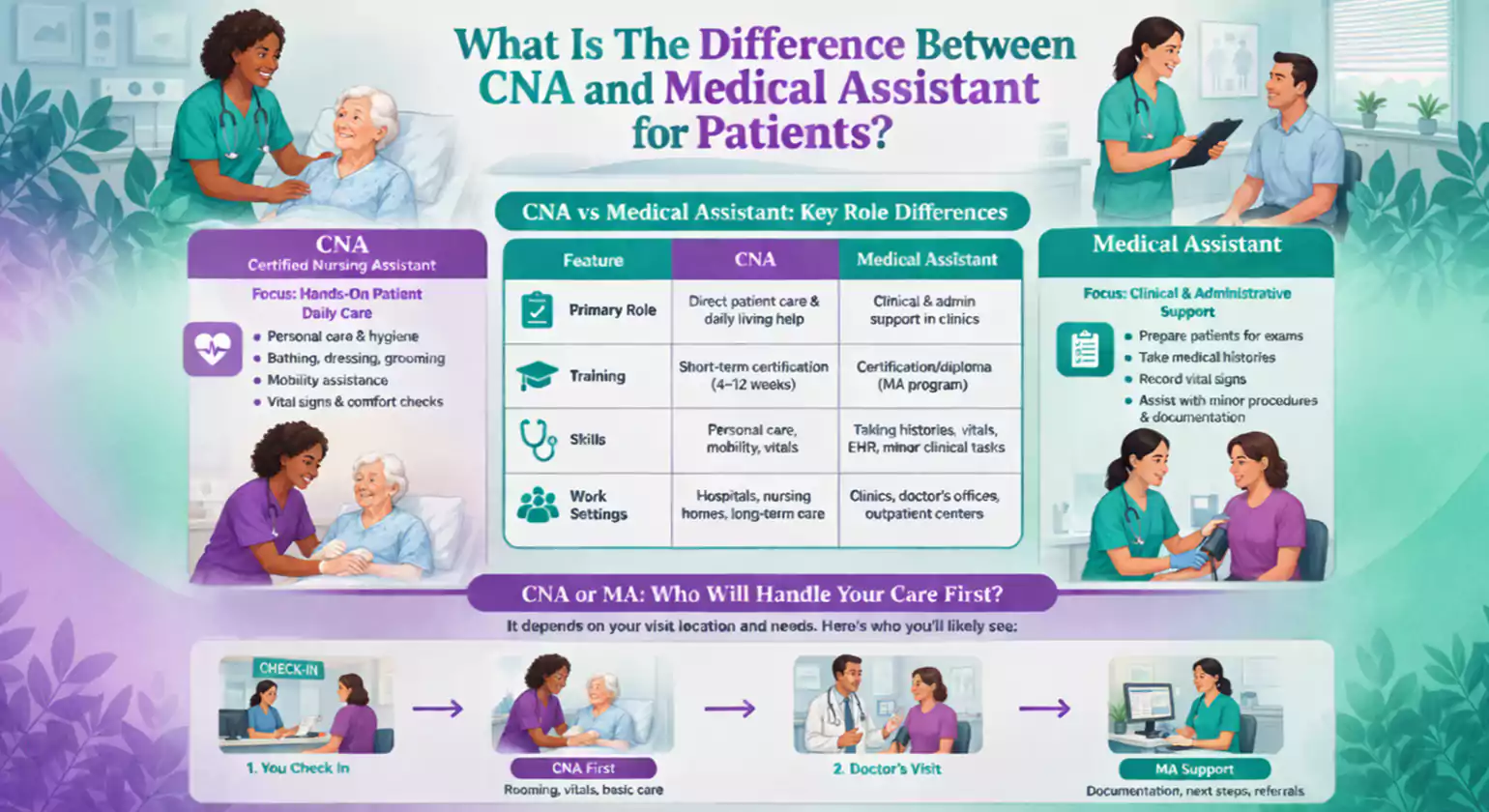
If you’ve ever been in a nursing home or done a video visit with a doctor, you’ve probably run into both of these roles. They do totally different things. One is right there in the room helping you out. The other you might only talk to over the phone or see on a screen. Knowing which is which just makes things less confusing when you’re trying to figure out who does what.
CNA vs Medical Assistant: Key Role Differences
CNA | Medical Assistant | |
Where you find them | Nursing homes, rehab centers, hospitals, assisted living places | Remote teams, virtual care, places that handle telehealth visits |
What they do day to day | Help you bathe. Get you dressed. Walk you to the bathroom. Make sure you eat. Answer your call light. | Call you before an appointment. Ask about your symptoms. Write everything down. Schedule your next visit. |
How you actually see them | Face to face. They’re in the room with you. Sometimes for hours. | Through a phone or video. You might never meet them in person. |
What matters most to them | Keeping you safe and comfortable. Making sure your basic needs are covered. | Keeping things organized so the doctor can focus on you. |
Who tells them what to do | Nurses—LPNs or RNs mostly | Doctors, nurse practitioners, or physician assistants |
Licensing & Certification: Medical Assistant vs. CNA
| Role | Certification & Courses | University Programs |
|---|---|---|
| Medical Assistant (MA) | No state license required in most regions, but certification is highly preferred by employers. Key Certifications:• CMA (AAMA) – American Association of Medical Assistants• RMA (AMT) – American Medical Technologists• CCMA (NHA) – National Healthcareer Association | Davenport University Offers programs that prepare students for CMA and RMA certification exams |
| Certified Nursing Assistant (CNA) | State licensure is required, including a competency exam and background check. Typical Pathway:1. Complete a state-approved training program2. Pass written + practical skills exam | Delta College Provides CNA training through its Health Foundations certificate program |
CNA or MA: Who Will Handle Your Care First?
It really just depends on where you’re getting care.
If you’re staying somewhere like a nursing home or a rehab place, a CNA is probably the first person you’ll meet. They’re the ones who help you get settled in. They show you where things are. They check on you throughout the day. You’ll see them a lot.
If you’re at home and you have a telehealth visit, a Healthcare assistant is usually the one who calls you first. They ask all those questions. What’s going on? What meds you take. When did it start? They write it all down so when the doctor hops on, they already know what’s up.
Sometimes you deal with both. The CNA handles the hands-on stuff. The medical assistant handles the background stuff. Either way, they’re both trying to make sure nothing gets missed.
Similarities Between Medical Assistants and CNAs
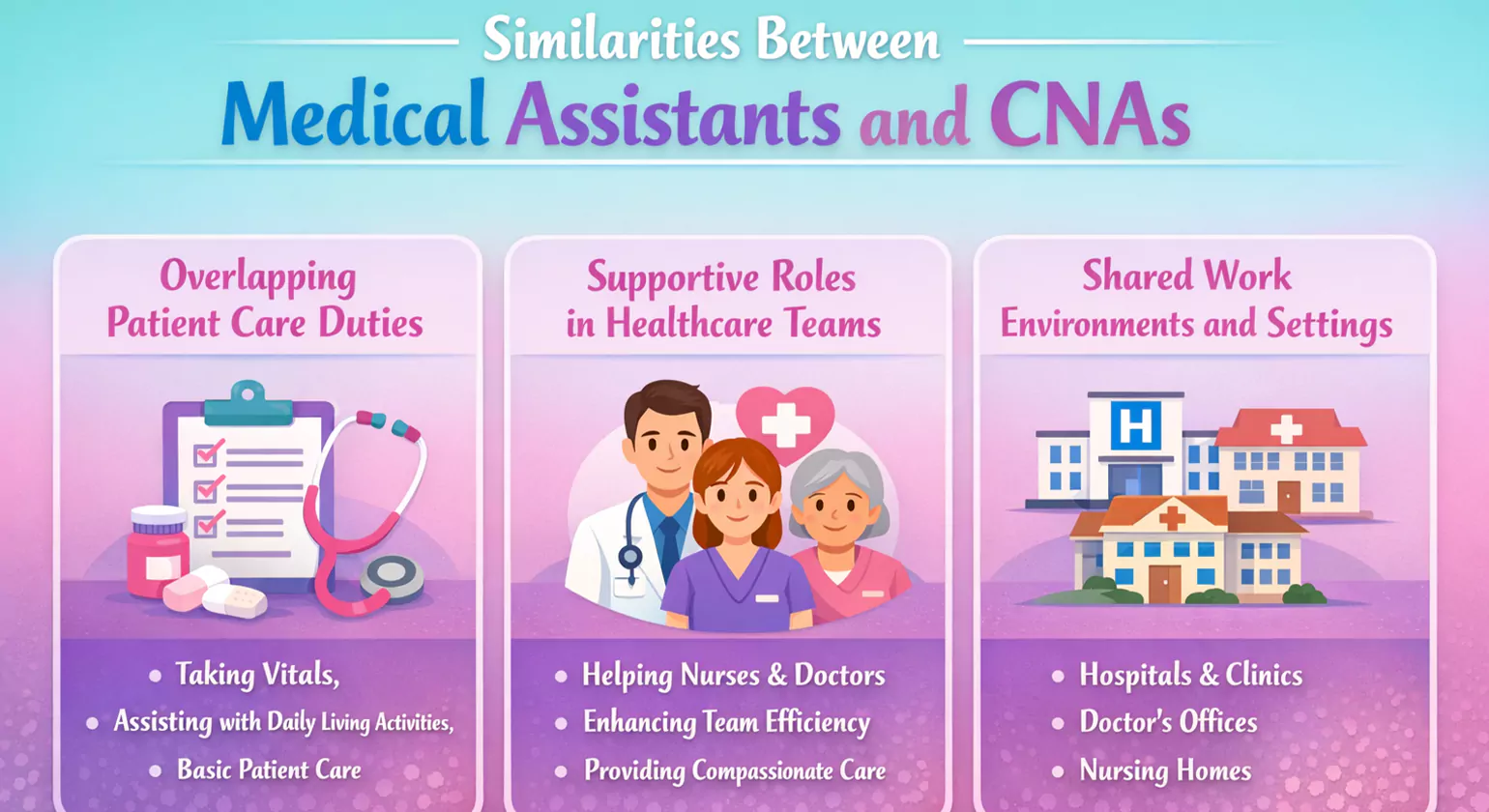
They might have different bosses and different training paths. But they actually share a lot in common. Both spend their days helping people. Both answer to someone with more experience. When you look at medical assistant vs Cna, you start to see where they overlap just as much as where they differ.
Overlapping Patient Care Duties
Both of them take vital signs. Blood pressure, temperature, pulse—that kind of thing. Both of them listen to patients and write down what they hear. Neither one makes big medical decisions on their own. They collect information and pass it up the chain. That part looks pretty similar no matter the title.
Supportive Roles in Healthcare Teams
Neither one runs the show. They support the people above them. Medical assistants support doctors. CNAs support nurses. Both help their team run smoother. If either one stops doing their work, everything slows down fast. They’re not the stars of the team, but the team falls apart without them.
Shared Work Environments and Settings
You can find both of them in hospitals. Also in nursing homes and Hospitals. The big difference is medical assistants also work remotely sometimes. CNAs don’t. But in a hospital setting, they might be on the same floor. Walking the same hallways. Helping the same patients. The medical assistant vs Cna comparison gets blurry when you see them side by side.
Conclusion
Medical assistants and CNAs both help patients, but in different ways. MAs work remotely or behind the scenes. CNAs are right there in the room. One takes your history over the phone. The other helps you get dressed. Medical assistant vs Cna comes down to where they work and who they answer to. Both matter. Both keep you safe. You just see them at different times.
FAQs
What is better CNA or medical assistant?
Depends what you like doing. Medical assistants sit at computers and take histories. CNAs move around and help people bathe or walk. Different strokes. One isn’t better than the other. Just different.
Is medical assistant the same as CNA?
Nope. Not even close. One works remote. One works in a nursing home. Different training. Different bosses. Different daily tasks. People mix them up but they’re totally different roles.
Who gets paid more medical assistant or CNA?
Medical assistants usually take home a little more. Not a ton more. Maybe a couple bucks an hour. Depends where you live and how long you’ve been doing it. Some CNAs get close.
Will I see a medical assistant or a nurse at my doctor's appointment?
If it’s a video call, you’ll talk to a medical assistant first. If you’re in a hospital, you’ll see a CNA and a nurse. The nurse calls the shots. The others help out.
Can a medical assistant perform procedures on me, or are they only for paperwork?
They do small stuff. Blood pressure. Temperature. Maybe draw blood if the state allows it. But no big procedures. That’s doctor or nurse work. Most of what they do is paperwork and phone calls.