Table of Contents
Technology has transformed education dramatically. Students now widely rely on virtual assistants, AI-powered tutors, and digital learning platforms for personalizing their educational experience and quickly finding answers or automating tasks – these tools provide quick responses, automate tasks, and offer customized study plans – but the question arises about whether students rely too heavily on these technologies for academic success; are they truly learning or becoming dependent upon AI to complete their assignments?
Many students turn to virtual assistants such as virtual grammar-checking assistants or math problem solvers as shortcuts for checking grammar, summarizing texts, or solving math problems. Some even rely on AI-generated solutions for assignments – bypassing problem-solving and critical thinking altogether!
When students are having trouble writing their papers they may turn to online resources like Writepaperfor.me for automated advice. Notwithstanding the fact that these tools are incredibly helpful, they shouldn’t take the place of the actual learning process because excessive reliance on them can erode critical thinking creativity and the capacity for autonomous problem-solving. In education teachers are crucial because they can offer more in-depth explanations promote dialogue and offer emotional support that artificial intelligence cannot match.
Furthermore, teachers foster curiosity in their students identify when extra help may be needed, and design captivating learning experiences—all of which are not possible with virtual assistants or AI-powered learning solutions. Today’s challenge lies in finding a balance between using technology effectively for education while simultaneously engaging students actively in their studies.
Virtual Assistants in Education

Virtual assistants have revolutionized education by providing instant support and specialized learning paths. As the demand for remote education grows, many professionals are specializing in specific virtual assistant niches, ensuring that students no longer need to wait for teacher availability or search through textbooks for answers, adaptive learning capabilities, and personalized study recommendations that make them invaluable companions at all levels of study. If used properly, AI provides an exceptional support system for education.
Virtual assistants offer one of the primary benefits of AI: instantaneous access to information. Be it solving math equations, explaining historical events, or summarizing scientific concepts – AI delivers quick responses. This enables students to reinforce their understanding outside the classroom and study at their own pace outside of class. AI also adapts itself to students’ strengths and weaknesses through personalized learning – many online platforms use machine learning algorithms to adjust difficulty levels, recommend additional exercises, and tailor content according to individual needs.
Virtual assistants also provide 24/7 availability, meaning students can find support whenever they need it. Unlike live teachers who follow schedules, AI-powered tutors are readily accessible at any time, making studying easier. AI tools also increase efficiency by automating repetitive tasks such as organizing notes, setting reminders, and checking grammar in essays – virtual assistants should be seen as tools that enhance rather than replace learning processes. Additionally, students looking for writing assistance often turn to services that write a papers for me, ensuring their academic work meets high standards.
Why Live Teachers Remain Essential

Virtual assistants offer convenience; but live teachers offer something invaluable: human connection and real-time interaction. Teachers go beyond simply providing answers; they engage students in meaningful discussions, foster curiosity, and adapt their methods according to different learning styles. AI may provide information, but AI cannot create the classroom atmosphere necessary for true understanding and personal growth.
Teachers provide personalized instruction like AI cannot. A live teacher can quickly recognize when a student is struggling and adjust their teaching accordingly – whether that means explaining concepts more simply or providing real-life examples to make learning relatable, teachers have the flexibility to cater their approach according to student needs and provide extra assistance for subjects which pose greater difficulty than usual. This human touch is especially invaluable for subjects that present additional obstacles.
Teachers play an essential role in developing critical thinking and problem-solving abilities in students. While AI offers straight answers, teachers encourage their pupils to analyze concepts, question assumptions, and think independently. Class discussions, group projects, and debates help children acquire real-world skills needed for real situations. Teachers provide emotional support for their pupils by motivating, building confidence, and keeping them engaged with learning – unlike AI which only understands emotions; their emotions are understood by understanding perseverance & creating a love for learning!
Understanding the Dangers of Technology Dependency

Technology dependence in the classroom is becoming a bigger issue. Over time students’ critical thinking and problem-solving abilities deteriorate when they depend more on artificial intelligence (AI) than on active learning activities.
This may impede cognitive development and creativity. Avoiding challenges is a sign of over-reliance especially if students use AI to finish assignments without actively participating in them. This is particularly harmful in science and math classes where using reasoning skills is essential for success.
To mitigate risks associated with AI use, students should employ it responsibly – using it for enhanced learning rather than replacing independent thought or active participation in education.
Discovering a Balance Between AI and Teachers
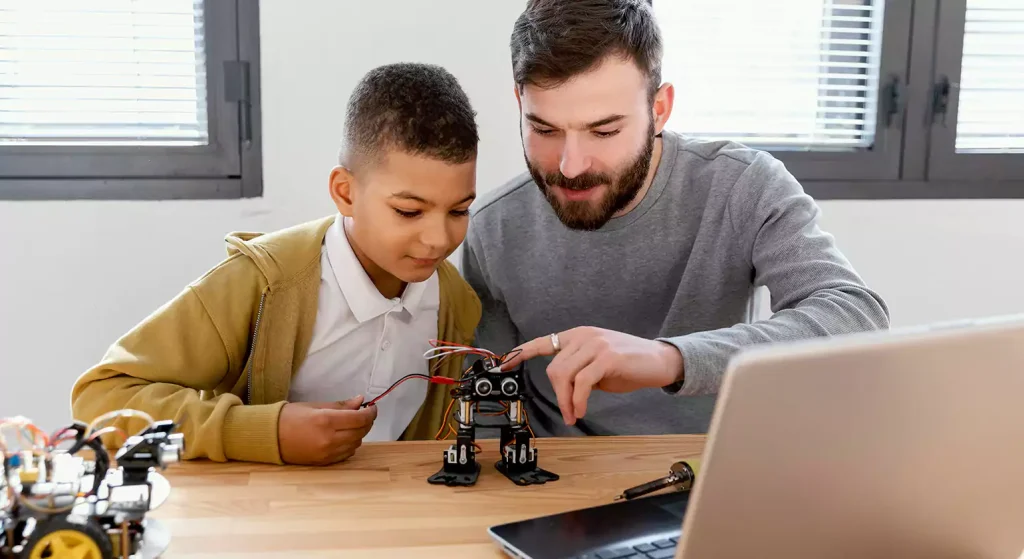
For an optimal learning experience, students must strike a delicate balance between AI assistance and teacher-led instruction. Technology should supplement learning rather than replace effort; when used effectively, AI can reinforce knowledge while teachers foster deeper comprehension and critical thinking development.
An effective balance is to use AI for practice, quizzes, and study guides while teachers facilitate discussions and provide personalized feedback. AI may assist with grammar and writing suggestions while teachers refine ideas and foster creativity.
Students should develop independent learning habits by trying problems before seeking AI assistance, to foster critical problem-solving and analytical abilities. This ensures they achieve balance when developing these essential abilities.
Read more >>>>>
20 Virtual Assistant Tools To Boost Productivity in 2026
Top In-Demand Virtual Assistant Niches for Businesses in 2026