Table of Contents
Quick Overview
- Metadata management tools organize and track data about data for better governance.
- The companies use these tools to maintain data integrity while meeting regulatory requirements and producing dependable business insights.
- The system includes data catalogs and lineage tools and governance platforms which include Collibra and Alation as its components.
- The system enables organizations to enhance their ability to find information while working together and meeting legal requirements and improving their analytical capabilities.
- The process of manual management presents multiple problems because it leads to mistakes and operates with slow performance while becoming increasingly challenging to manage.
What are Metadata Management Tools?

Metadata management tools are software solutions designed to organize and maintain metadata, descriptive information about an organization’s data. The system creates a unified data asset directory which includes asset definitions, asset classifications, and usage statistics of data assets. The tools provide organizations with data lineage tracking and relationship mapping features which enable them to trace data origins and monitor data movements between different systems. This process enables users to find and understand the correct data which they need to execute business operations.
The tools establish fundamental elements for data governance and compliance through their ability to monitor data ownership rights and access permissions and data quality requirements. The systems maintain data accuracy and consistency while securing data protection, which decreases operational risks and efficiency losses. The tools for metadata management enable organizations to enhance their data analytics capabilities because they increase the ability to locate and access data throughout various business departments.
Why Metadata Management Tools Matter Now ?

Understanding the Explosion of Data
Metadata assists organizations in managing their data because its volume and variety and speed continue to increase beyond control.
Ensuring Regulatory Compliance
Metadata management tools enable organizations to track data usage and data lineage and data ownership which simplifies their compliance with regulations such as GDPR and CCPA while protecting them from expensive compliance violations.
Enabling Faster Decision-Making
Metadata provides both context and quality indicators which enable decision-makers to find reliable data sources that speed up their analytical processes and business intelligence operations.
Supporting Data Collaboration Across Teams
All departments achieve shared understanding through standard metadata definitions which minimize errors and promote better teamwork on projects that require data analysis.
Future-Proofing Data Architecture
Organizations need strong metadata management systems because these systems help them prepare for future AI and advanced analytics and emerging technologies by providing accessible and trustworthy and properly supervised data assets.
Top 10 Enterprise Metadata Management Tools You Need in 2026

Effective metadata management software is crucial for organizations aiming to harness the full potential of their data assets. As of 2026, several tools have emerged as leaders in this domain, offering robust features to streamline data governance, discovery, and utilization. Here are ten top metadata management tools you should consider:
1. Informatica
Informatica Intelligent Data Management Cloud (IDMC) stands out as a comprehensive platform designed to empower organizations with advanced data governance, Metadata Management Tools, and data quality capabilities. As businesses continue to generate vast amounts of data, IDMC offers a robust solution to streamline and simplify complex data ecosystems.
One of IDMC’s key strengths lies in its extensive data discovery and profiling capabilities, enabling organizations to identify, understand, and classify data assets efficiently. Its lineage tracking feature ensures clear visibility into data origins, transformations, and usage, promoting transparency and enhancing trust in data-driven decisions. Additionally, IDMC excels in integration capabilities, allowing seamless connectivity across diverse data sources and platforms, facilitating smooth data movement and management.
The platform supports centralized master data management, ensuring data consistency and accuracy across the organization. Its built-in compliance and governance tools help organizations adhere to regulatory requirements while maintaining data integrity and security.
With a user-friendly interface and AI-driven automation, IDMC simplifies metadata management software tasks, making it an ideal solution for enterprises aiming to maximize the value of their data assets. Overall, Informatica IDMC is a leading choice for businesses seeking a reliable, scalable, and intelligent metadata management solution in 2026.
2. Dataedo
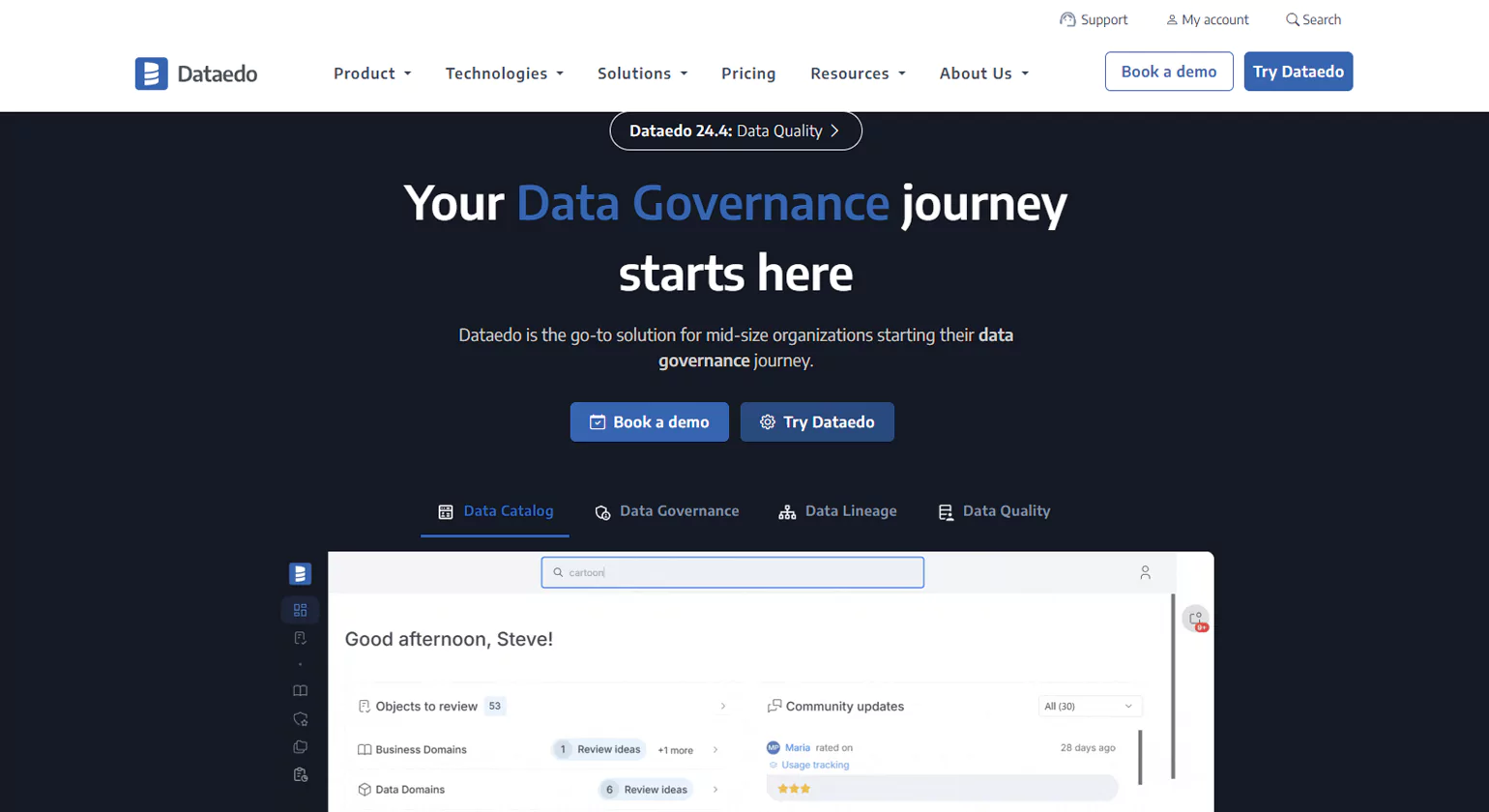
Dataedo is a powerful Metadata Management Tools designed to simplify database development, maintenance, and documentation. Recognizing that documentation is often overlooked or treated as an afterthought, Dataedo transforms this process by integrating documentation into every stage of the software lifecycle. Whether you’re designing, developing, or maintaining databases, Dataedo ensures that documentation happens seamlessly, eliminating the tedious manual work often associated with it.
Dataedo empowers teams to build and manage comprehensive data catalogs, document data assets, and track data lineage effortlessly. Its intuitive interface allows users to describe data structures, add meaningful context, and classify data assets—all in one centralized platform. Key features include Auto AI Documentation, Business Glossary creation, Data Lineage visualization, and Data Profiling, helping teams understand and manage their data effectively.
By reducing complexity and automating much of the documentation process, Dataedo ensures that teams can focus more on innovation and less on administrative tasks. It promotes better collaboration, improved data understanding, and enhanced decision-making
For organizations aiming to streamline their data processes while ensuring that documentation is always up-to-date and accessible, Dataedo is an invaluable tool. It’s not just about managing data—it’s about making data management smarter and simpler.
3. Alation
Alation is at the forefront of transforming how organizations approach data management by fostering a culture where data is easily discoverable, understandable, and trusted. As the pioneer of the modern data catalog, Alation has evolved into a comprehensive data intelligence platform, empowering enterprises to unlock the full potential of their data assets.
The platform is designed to simplify data discovery, enhance governance, and ensure data accuracy across the organization. By integrating AI and machine learning, Alation automates metadata management solutions, streamlines data curation, and provides actionable insights to drive informed decision-making. Its intuitive interface encourages collaboration among data teams, helping users easily locate and interpret data while ensuring compliance with governance policies.
What sets Alation apart is its commitment to building a thriving data culture. It not only offers powerful tools for data cataloging but also fosters trust by providing context, lineage tracking, and data stewardship features. This approach ensures that data is not only accessible but also reliable and relevant.
Ideal for businesses seeking to improve data literacy and maximize data value, Alation is a trusted partner for enterprises striving to achieve data-driven success in 2026 and beyond.
4. Oracle

Oracle Enterprise Metadata Management (OEMM) is a robust and comprehensive platform designed to streamline metadata management across diverse data ecosystems. OEMM excels at harvesting and cataloging metadata from virtually any provider, including relational databases, Hadoop environments, ETL engines, BI platforms, data modeling tools, and more.
Beyond serving as a central metadata repository, OEMM offers interactive features that enhance data understanding and governance. Users can perform advanced metadata searches, explore data assets, and conduct in-depth analysis, including data lineage tracking, impact analysis, semantic definition, and semantic usage analysis. These capabilities provide organizations with clear visibility into how data flows from its source to reports and vice versa.
One of OEMM’s standout features is its advanced algorithmic approach to metadata stitching. It intelligently integrates metadata from various sources, creating a cohesive and comprehensive view of data pathways. This ensures seamless data tracing, enhances data integrity, and supports better decision-making.
OEMM’s compatibility with a broad spectrum of metadata providers—ranging from CASE tools to EAI environments—makes it a versatile solution for enterprises aiming to optimize their metadata management software strategy. With OEMM, organizations can gain deeper insights, improve data governance, and ensure accurate, reliable data usage across their operations.
5. Alex Solutions
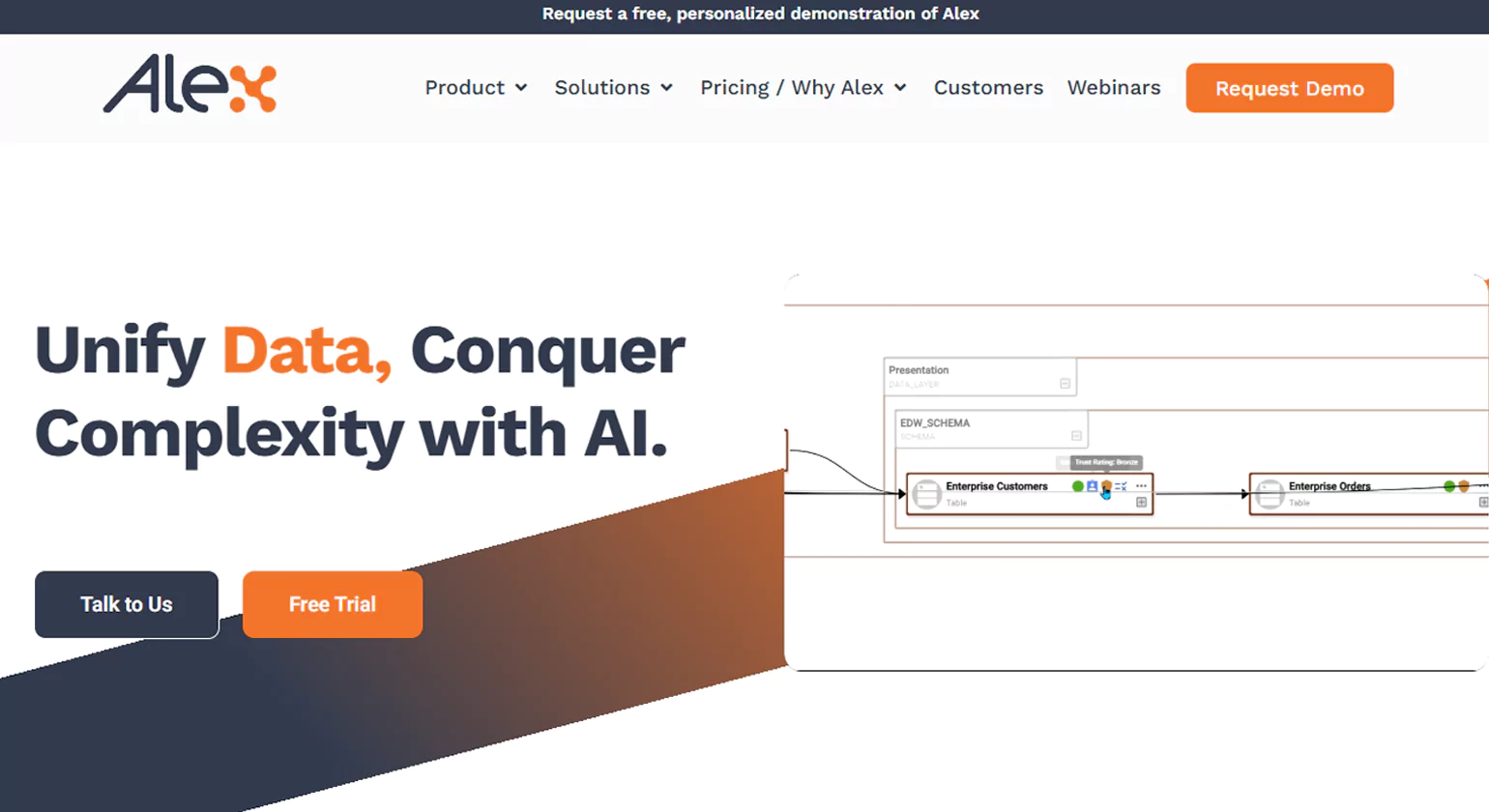
Alex Solutions is redefining enterprise data management with its industry-leading Metadata Management Solution, supporting one of the world’s largest data catalogs. Renowned for empowering organizations to manage, govern, and maximize the value of their data assets, Alex Solutions is at the forefront of enabling a data-driven future.
Their comprehensive platform offers advanced capabilities in data cataloging, governance, lineage tracking, and metadata enrichment, ensuring enterprises can seamlessly navigate complex data ecosystems. By enhancing data discoverability and governance, Alex Solutions helps organizations maintain compliance, improve data quality, and drive informed decision-making.
What sets Alex Solutions apart is its diverse and passionate team, dedicated to innovation and excellence. This team’s expertise and vision are integral to building cutting-edge solutions that not only meet today’s data challenges but also shape the future of data management. Their commitment to fostering a collaborative and inclusive environment fuels continuous advancements in their technology.
By combining robust technology with a strong team ethos, Alex Solutions is not just managing metadata—they are empowering enterprises to harness the full potential of their data assets, fostering growth and innovation in an increasingly data-driven world.
6. Atlan
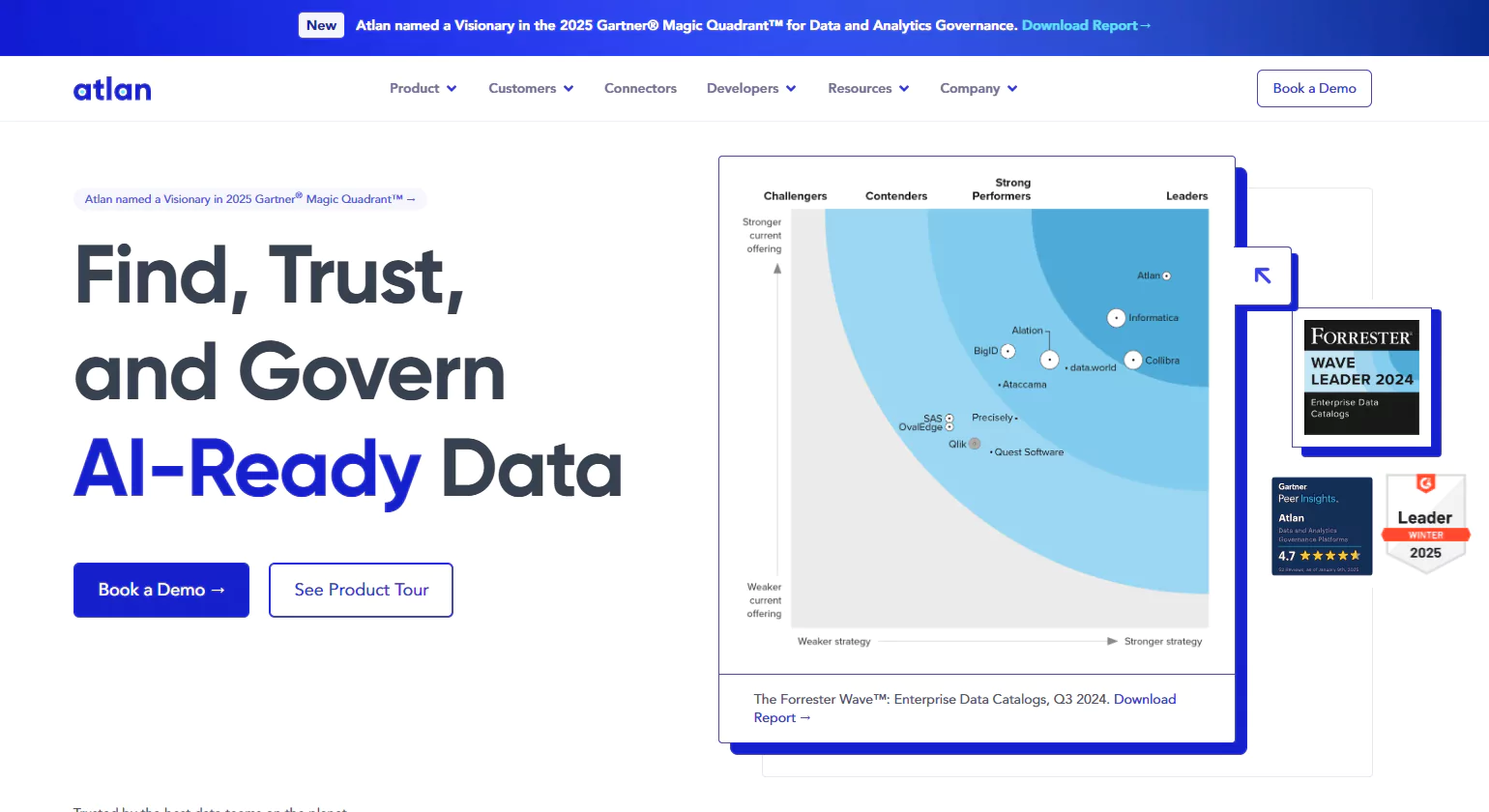
In the evolving world of data, diversity is key. Analysts, engineers, scientists, business leaders, and product managers—each bring unique perspectives, skill sets, and tools to the table. Atlan recognizes this diversity and provides a collaborative data workspace that empowers these distinct roles to come together seamlessly.
Atlan is more than just a Metadata Management Tools; it’s a modern data collaboration platform designed for the “humans of data.” It bridges the gap between diverse data professionals by providing a unified space where they can discover, trust, and govern data effortlessly. Its intuitive interface, automation features, and seamless integrations with popular tools make it adaptable to various workflows, promoting efficiency and clarity.
From enabling data discovery to ensuring data governance, Atlan’s mission is to simplify data processes and foster collaboration. By breaking down silos and empowering cross-functional teamwork, Atlan plays a pivotal role in turning ambitious ideas into reality—whether it’s innovating for self-driving technology, medical breakthroughs, or business growth.
In this decade of data, Atlan is driving the momentum by putting people first. It champions the humans behind the data, ensuring they have the tools, trust, and transparency needed to shape the future.
7. erwin
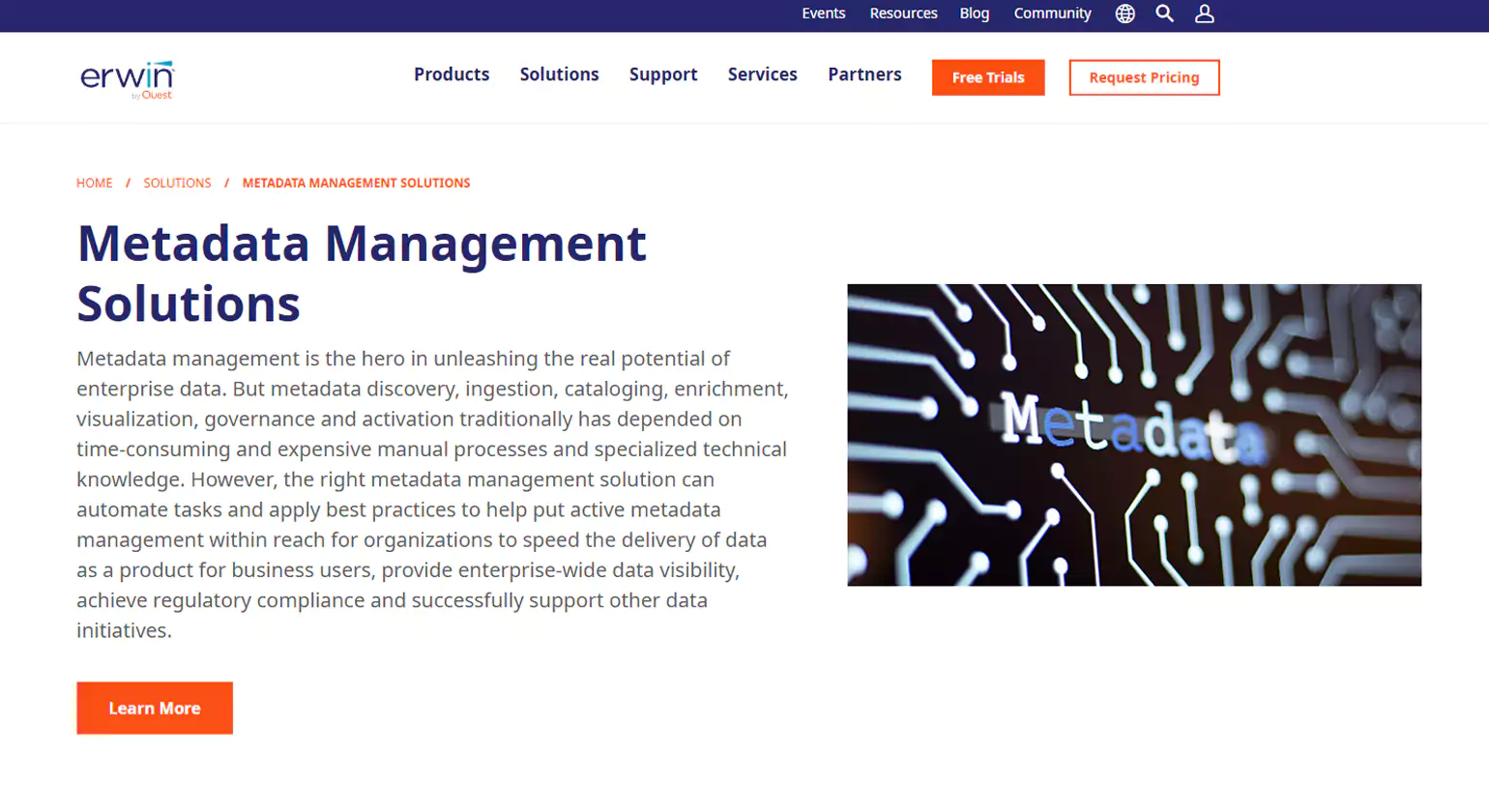
erwin Data Intelligence stands out as a leading metadata management software , designed to simplify and automate the complex processes of metadata discovery, ingestion, cataloging, enrichment, visualization, governance, and activation. Traditionally, these tasks required specialized technical expertise and significant manual effort, making them time-consuming and costly. However, erwin transforms this landscape by offering an integrated platform that automates these processes, accelerating data delivery and enhancing enterprise-wide visibility.
With erwin, organizations can streamline the management of their data assets, ensuring accurate data lineage tracking, robust cataloging, and enriched metadata insights. Its advanced automation capabilities empower businesses to activate metadata efficiently, reducing reliance on manual interventions while ensuring metadata management best practices are applied. This enables faster data access, better decision-making, and improved support for initiatives like data governance, regulatory compliance, and data productization.
Moreover, erwin enhances data transparency and ensures that organizations maintain control over their data assets, helping to meet regulatory requirements and improve data quality. By simplifying complex Metadata Management Tools tasks, erwin not only reduces operational costs but also enhances business agility and scalability.
For enterprises looking to unlock the full potential of their data, erwin Data Intelligence provides a powerful, efficient, and future-ready solution.
8. Octopai
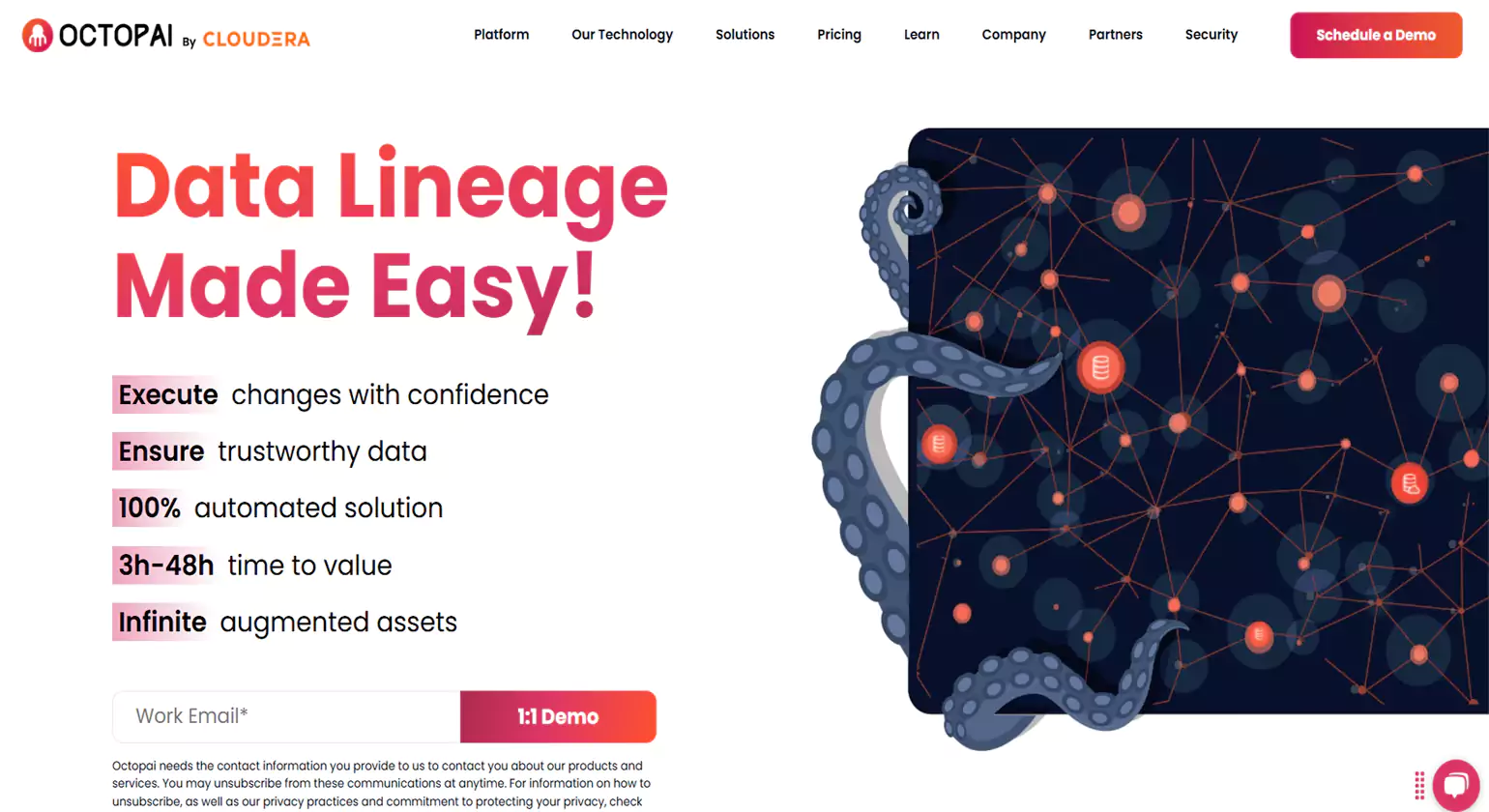
Octopai emerged from the real-world frustrations of two data professionals who, while working on large-scale “Big Data” projects, recognized the immense challenges organizations face in understanding and managing complex data systems. The difficulties in tracing data origins, understanding data flow, and ensuring data accuracy are common hurdles for data professionals today.
To address these challenges, they developed Octopai—an advanced, automated metadata management lineage platform designed to provide unparalleled visibility into data ecosystems. Octopai integrates seamlessly with over 50 market-leading databases, ETL (Extract, Transform, Load) tools, and analytics solutions. This extensive integration capability allows organizations to map, track, and visualize their data’s entire journey with remarkable precision.
What sets Octopai apart is its ability to automate data lineage processes, reducing manual effort and minimizing errors. This not only accelerates data discovery but also enhances data governance and compliance. With Octopai, data professionals can quickly pinpoint data sources, understand transformation logic, and ensure accurate reporting, making it an invaluable tool for organizations striving for data accuracy and efficiency.
9. Collibra
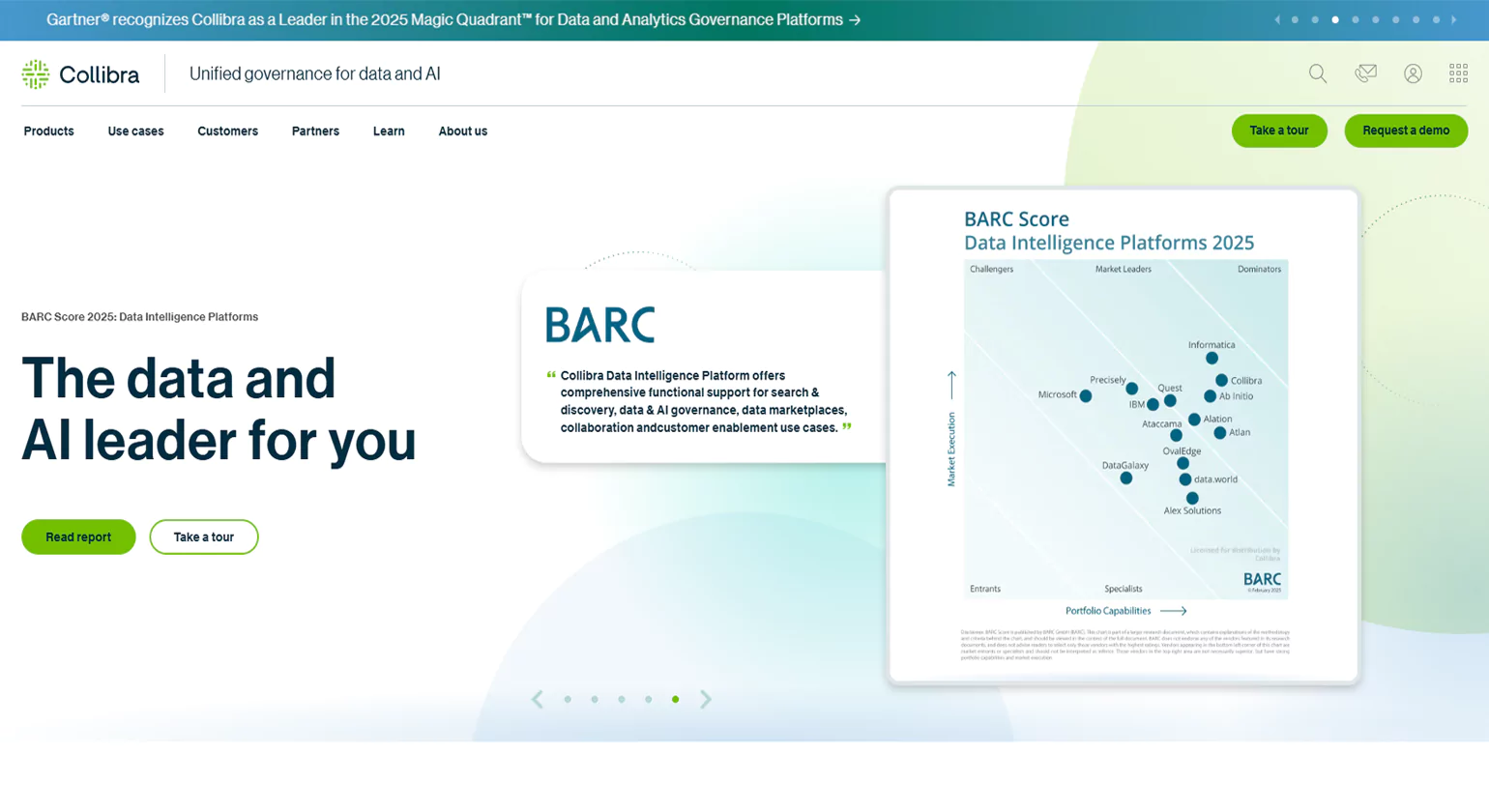
Collibra Data Intelligence Cloud stands out as a leading cloud-based Metadata Management Tools, empowering organizations to unlock the full potential of their data. Designed to streamline data governance, Collibra offers comprehensive features that ensure data accuracy, consistency, and compliance.
One of its core strengths is data lineage tracking, which enables organizations to visualize the flow of data across various systems. This helps in understanding data origins, transformations, and usage, ensuring transparency and facilitating better decision-making. Additionally, Collibra’s robust metadata management capabilities allow businesses to catalog, classify, and organize their data assets effectively.
Collibra also emphasizes policy enforcement, ensuring that data governance standards and regulatory requirements are consistently met. This feature helps maintain data integrity while reducing risks associated with non-compliance. The platform promotes collaboration by providing a centralized space where data stewards, analysts, and business users can easily access and manage data assets.
With its intuitive interface and scalable architecture, Collibra supports businesses in creating a data-driven culture. Whether for enhancing data quality, supporting analytics, or ensuring regulatory compliance, Collibra is a versatile tool that meets diverse organizational needs. For companies aiming to maximize data value while ensuring governance, Collibra Data Intelligence Cloud is an essential solution.
10. OvalEdge
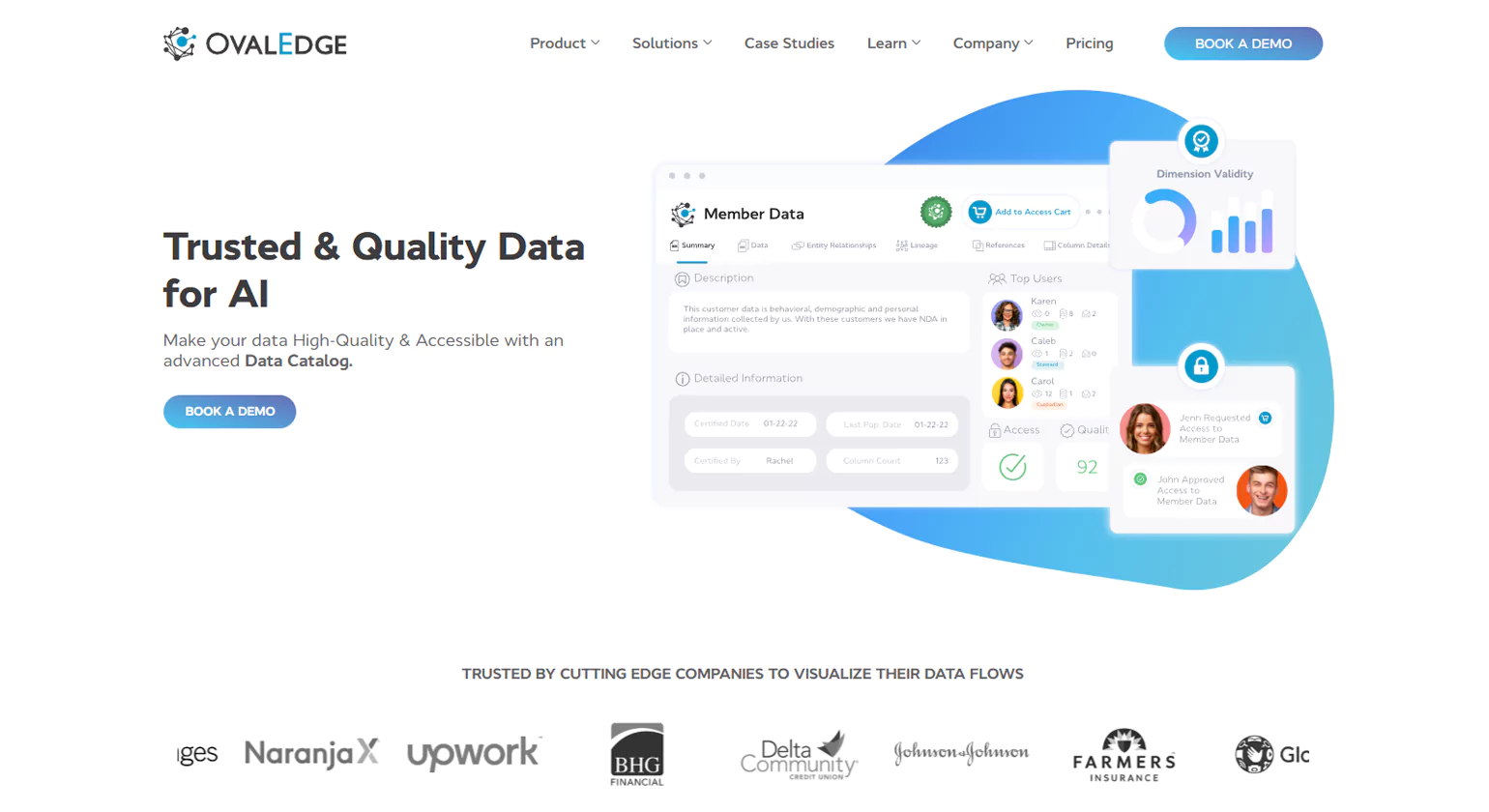
Founded in 2013, OvalEdge set out with a mission to democratize data, making it accessible and actionable for all employees, regardless of their department. Recognizing that teams—from marketing and sales to IT and HR—could enhance their strategies and decision-making with better data insights, OvalEdge developed a solution to bridge the data accessibility gap.
OvalEdge offers a powerful data catalog and governance tool that virtually centralizes an organization’s data into a single, unified repository. This intuitive platform empowers users, even those with basic Excel skills, to explore data trends, identify business opportunities, and uncover deeper insights with ease. For more advanced users, OvalEdge provides the capability to build sophisticated recommendation systems and predictive models, enhancing data-driven decision-making across the organization.
With its focus on data democratization, OvalEdge simplifies the process of finding, understanding, and utilizing data, ensuring that insights are not confined to data experts alone. Its comprehensive approach to data governance ensures that data is secure, compliant, and efficiently managed.
OvalEdge stands out as a transformative tool for organizations aiming to maximize their data potential, promoting a culture where data-driven insights fuel innovation and business growth.
10 Types of Metadata Management Tools

Metadata management tools are essential for organizing, governing, and optimizing data within an organization. Here’s an in-depth look at ten types of metadata management tools, their functionalities, and their roles in enhancing data-driven strategies.
1. Data Catalogs
Data catalog tools centralize and organize metadata, providing a searchable inventory of an organization’s data assets. They allow users to easily discover, access, and understand datasets, enhancing data accessibility and transparency. Key features include data indexing, classification, and tagging. Tools like Alation and Collibra empower organizations to promote data democratization while maintaining governance.
2. Data Lineage Tools
These tools help trace the origin, movement, and transformation of Metadata Management Tools across systems. They provide a visual representation of data flow, enabling organizations to understand how data is transformed over time. This is crucial for troubleshooting data errors, ensuring data integrity, and maintaining compliance. Examples include Apache Atlas and IBM InfoSphere.
3. Business Glossary Tools
Business glossary tools define and standardize business terminology across an organization. By creating a unified language, they ensure consistency and eliminate confusion, fostering better collaboration between business and technical teams. Tools like Informatica Axon help maintain clarity and consistency in data definitions.
4. Data Profiling Tools
These tools analyze datasets to assess their structure, quality, and content. Data quality management tools identify anomalies, duplicates, and incomplete data, helping ensure data accuracy and reliability. They are essential for data quality assessments and cleansing processes. Tools like Talend Data Quality offer robust profiling features.
5. Data Governance Tools
Data governance tools focus on enforcing data management policies, ensuring data security, and maintaining compliance with industry regulations. They help define roles, responsibilities, and rules for data usage. Tools like Collibra and OvalEdge enable organizations to establish strong data governance frameworks.
6. Metadata Repositories
Metadata repositories are centralized systems that store and manage metadata information. They serve as a reference hub, allowing users to access, retrieve, and analyze metadata efficiently. These tools help maintain consistency and accuracy across data ecosystems. Examples include Oracle Metadata Management Tools and Erwin Data Modeler.
7. Master Data Management (MDM) Tools
MDM tools focus on managing critical business data, such as customer or product information, ensuring accuracy and consistency across systems. They link and consolidate data from multiple sources, providing a “single source of truth” for organizations. Leading tools include Informatica MDM and SAP Master Data Governance.
8. Data Integration Tools
These tools enable seamless integration of data across multiple sources and systems while managing associated metadata. They ensure data consistency, streamline workflows, and support real-time data processing. Examples include Talend and Apache NiFi.
9. Cloud Metadata Management Tools
With the increasing use of cloud platforms, these Metadata Management Tools and govern metadata in cloud environments. They ensure scalability, security, and easy access to metadata across distributed systems. Examples include Microsoft Azure Purview and Google Cloud Data Catalog.
10. Automated Metadata Extraction Tools
These tools automatically collect and catalog metadata from various data sources, reducing manual efforts and improving accuracy. They enable organizations to maintain up-to-date metadata repositories, supporting efficient data discovery and governance. Tools like Dataedo and Ataccama excel in automated metadata management .
Data Quality and Metadata Management Tools
Improving Data Accuracy and Consistency
Metadata management tools enable organizations to track and maintain data integrity across various systems because they help establish common data standards which ensure all information remains accurate, current, and identical across different systems.
Tracking Data Lineage
The tools enable users to trace data from its source through its various transformations until its final state, which assists teams in tracking the data path while identifying problems and enabling transparent recordkeeping for audits and reports.
Facilitating Data Governance
The organization uses metadata management tools to implement rules and policies which assist in classifying and protecting data while enforcing compliance requirements, thus enabling efficient data governance throughout the entire organization.
Enhancing Analytical Insights
Analysts can locate suitable high-quality data through extensive structured metadata, which leads to enhanced accuracy and dependable business intelligence results together with advanced analytical outcomes.
Integration with Modern Data Ecosystems
The current metadata tools provide seamless operation with cloud systems and big data platforms and AI technologies, which enable organizations to manage their data in one system while creating new methods for analytics and machine learning development.
Benefits of Using Metadata Management Tools

Metadata management tools are essential for modern organizations seeking to optimize data utilization, improve governance, and drive strategic decisions. Here’s an in-depth look at the key benefits these tools offer.
1. Enhanced Data Discoverability
Metadata management tools centralize information about data assets, making it easier for users to discover, access, and understand data. By providing searchable catalogs and classifications, they eliminate data silos and streamline the process of finding relevant data across various sources. This accelerates productivity and enables users to gain insights faster.
2. Improved Data Quality
These tools help profile, classify, and monitor data to identify errors, inconsistencies, and redundancies. By flagging data quality issues early, they enable organizations to cleanse and maintain high-quality data, ensuring accuracy and reliability. This leads to more trustworthy analytics and better business outcomes.
3. Strong Data Governance and Regulatory Compliance
Metadata management tools support data governance by enforcing policies, roles, and access controls. They provide audit trails, data lineage, and documentation necessary to comply with regulations such as GDPR, HIPAA, and CCPA. This reduces the risk of non-compliance, fines, and data breaches while enhancing data security.
4. Streamlined Data Integration
Organizations often manage data from multiple sources and systems. Metadata tools simplify data integration by maintaining consistent definitions and structures, ensuring smooth data flow across platforms. This consistency enhances data accuracy and reliability during migration or integration processes.
5. Increased Operational Efficiency
By automating metadata collection, classification, and documentation, these tools reduce the manual effort involved in managing data assets. Automation accelerates processes, minimizes errors, and allows data teams to focus on higher-value strategic initiatives rather than repetitive tasks.
6. Enhanced Decision-Making
Enhance decision-making with geospatial tech in virtual assistants. Leverage location intelligence for real-time insights, personalized interactions, and smarter AI responses, improving accuracy and user experience with local data. Geospatial tech integration also strengthens contextual awareness, supports predictive analytics, optimizes resource allocation, and enables hyper-personalized services for enhanced engagement.
7. Facilitates Collaboration Across Teams
By creating a unified and well-organized data environment, website management tools promote collaboration between departments. Teams can easily share, understand, and utilize data, ensuring consistent and aligned decision-making across the organization. They also reduce redundancy, minimize errors, improve data quality, and provide transparency, helping organizations maximize value from their data assets.
8. Faster Troubleshooting and Issue Resolution
When data issues arise, metadata management tools simplify the troubleshooting process by providing detailed lineage and context. This allows teams to quickly identify the root cause of data discrepancies and resolve issues efficiently. Additionally, they enhance accountability, support audit readiness, and ensure compliance by maintaining clear records of data sources, transformations, and usage history.
9. Improved Data Security
These tools allow organizations to classify data based on sensitivity and set access controls accordingly. By managing who can access or modify specific data, organizations enhance security and mitigate risks related to unauthorized access or data leaks. They further support regulatory compliance, streamline permission management, and foster trust by ensuring that sensitive information is handled with consistency and transparency.
10. Supports Scalability and Future Growth
As organizations grow and data volumes increase, metadata management tools ensure scalable and efficient data handling. They accommodate new data sources and systems, ensuring consistent Metadata Management Tools without compromising efficiency. They also future-proof data strategies, enabling seamless integration with emerging technologies, supporting advanced analytics, and maintaining reliability as business needs evolve.
Challenges of Manual Metadata Management
1. Time-Consuming and Inefficient
Manual entry, updating, and validation of meta data management tools can take hours or even days, especially in data-rich organizations. This repetitive process drains resources that could otherwise be invested in analysis, innovation, and decision-making. Automation within metadata management tools eliminates manual inefficiencies, accelerates updates, reduces human errors, and frees teams to focus on strategic initiatives.
2. High Risk of Human Error
Human involvement increases the likelihood of errors such as typos, incomplete entries, or mislabeling. Even small inconsistencies in metadata software can create major complications in data retrieval, reporting, and integration. Automated metadata management ensures accuracy, consistency, and standardization, minimizing risks while improving data reliability, usability, and overall organizational decision-making efficiency.
3. Scalability Limitations
As businesses expand, the volume of data grows exponentially. Manual metadata software management cannot keep pace with this growth, leading to delays and inefficiencies. Large enterprises, in particular, find it nearly impossible to scale manual methods to meet their evolving needs. Scalable metadata management tools address this challenge by automating processes, supporting diverse data sources, and ensuring agility to adapt to organizational growth.
4. Inconsistent Standards
Without automation, different teams or individuals may apply varying rules and formats to metadata. This inconsistency disrupts taxonomy, complicates data searches, and diminishes the accuracy of insights derived from data. Automated metadata management enforces standardized rules, maintains uniform taxonomy, enhances data discoverability, and ensures reliable, consistent insights across the organization.
5. Poor Data Discovery and Accessibility
Ineffective metadata software makes it harder for employees to locate and utilize valuable data assets. This often results in duplication of efforts, wasted time, and missed opportunities for leveraging critical business insights. Efficient metadata management tools streamline data discovery, reduce redundancy, optimize resource use, and enable teams to extract actionable insights more effectively.
How to Choose the Right Metadata Management Tool

Choosing the right metadata management tool is essential for effective data governance, compliance, and strategic decision-making. Here’s an in-depth guide to selecting the best tool for your organization:
1. Define Business Needs and Objectives
Start by identifying your specific goals. Are you looking to improve data quality, ensure compliance, or enhance data discovery? Understand what types of meta data management tools you need to manage—technical, business, or operational—and determine the required functionalities like data lineage tracking, cataloging, or governance features.
2. Evaluate Scalability and Integration
Choose a tool that can scale your organization’s data growth. It should integrate effortlessly with various data sources, including cloud platforms, on-premises systems, and third-party applications. Check for APIs and connectors to ensure smooth data flow and compatibility with existing infrastructure.
3. User Experience and Accessibility
A tool with an intuitive interface enhances user adoption. Features like automated metadata management services discovery, customizable dashboards, and advanced search capabilities streamline operations. Additionally, ensure the tool supports multi-user access with role-based permissions for collaboration.
4. Data Governance and Security
Additionally, the tool should provide real-time monitoring, detailed reporting, and automated compliance checks to minimize risks. Integration with existing security protocols and regular updates to meet evolving regulations further strengthen data protection, ensuring organizations maintain both accountability and trust while efficiently managing sensitive information.
5. Collaboration and Workflow Management
Moreover, features like role-based access, version control, and notifications ensure transparency and accountability. By promoting seamless communication and coordinated efforts, the tool helps teams leverage data collectively, reduce errors, and accelerate decision-making across departments.
6. Cost Analysis and Vendor Support
Consider scalability and integration capabilities as well, ensuring the tool can grow with your organization. Assess return on investment by measuring efficiency gains, reduced errors, and improved data utilization to make a well-informed, cost-effective decision.
7. Vendor Reputation and Community
Additionally, evaluate the vendor’s innovation roadmap, responsiveness to feedback, and commitment to security standards. Direct conversations with existing clients can reveal practical experiences, helping you choose a reliable solution that aligns with your organization’s needs and long-term data strategy.
Key Considerations When Choosing a Metadata Management Tool
1. Ease of Integration
The tool should seamlessly integrate with your existing data sources, platforms, and applications. Whether you use databases, cloud storage, or enterprise applications, compatibility ensures smooth data flow and prevents silos.
2. Automation Capabilities
Manual metadata management is time-consuming and error-prone. Look for tools that offer automation features, such as automatic metadata capture, tagging, and updates. Automation reduces human error, improves efficiency, and ensures consistency across the organization.
3. Scalability
As your organization grows, the volume and complexity of data will increase. Choose a metadata management solution that can scale effortlessly, handling large datasets and multiple data sources without compromising performance.
4. Data Governance and Compliance
The tool should support robust data governance policies, including role-based access, data lineage tracking, and audit capabilities. Compliance with regulations such as GDPR, HIPAA, or industry-specific standards is critical for avoiding penalties and maintaining data security.
5. User-Friendly Interface
A complex tool can create adoption challenges among employees. Look for a solution with an intuitive interface, easy navigation, and visual dashboards. This encourages widespread use and enables teams to quickly access, manage, and analyze meta data management tools.
Step-by-Step Guide to Implementing Metadata Management Tools

1. Define Objectives and Requirements
- Start by clearly defining the objectives for implementing the metadata management tool. Consider:
- Business Goals: What outcomes do you expect—better data governance, enhanced data discovery, or regulatory compliance?
- Types of Metadata: Identify whether you need to manage technical (e.g., schema, data types), business (e.g., definitions, usage context), or operational metadata (e.g., data lineage, data quality).
- Functional Requirements: List necessary features like data cataloging, automated discovery, data lineage, access controls, and reporting capabilities.
2. Assess Current Data Landscape
- Before implementation, conduct a thorough audit of your current data systems:
- Identify Metadata Sources: Determine where metadata resides (databases, cloud platforms, data lakes).
- Evaluate Existing Processes: Understand how metadata is currently managed and highlight existing challenges.
- Data Gaps and Risks: Identify inconsistencies, missing metadata, or potential data governance risks.
3. Select the Right Tool
- Choose a Metadata Management Tools that meets your requirements and aligns with your technical ecosystem:
- Integration Capabilities: Ensure it can integrate with your data platforms, whether on-premises, cloud, or hybrid.
- Scalability: The tool should accommodate data growth and evolving business needs.
- Security Features: Look for features like role-based access, encryption, and audit trails.
- User-Friendliness: A user-friendly interface ensures broader adoption across technical and business teams.
4. Plan for Integration
- Develop a detailed integration roadmap:
- Map Data Sources: Identify all systems and databases the tool will connect to.
- Plan for APIs and Connectors: Verify available APIs or connectors for seamless integration.
- Establish Governance Rules: Define standards for metadata creation, updates, and maintenance.
5. Data Migration and Configuration
- Carefully migrate existing Metadata Management Tools and configure the tool for optimal use:
- Data Cleansing: Standardize and clean metadata to ensure consistency.
- Set Up Metadata Models: Configure classifications, hierarchies, and relationships for better organization.
- Implement Security Controls: Set access permissions to safeguard sensitive data.
Conclusion
Metadata management tools are essential for ensuring effective data governance, enhancing data quality, and enabling efficient data discovery. These tools help organizations organize, track, and manage metadata across various data sources, ensuring consistency, compliance, and better decision-making. Choosing the right tool involves assessing business needs, evaluating scalability, ensuring integration capabilities, and prioritizing user-friendly interfaces.
FAQs
1. What is a Metadata Management Tool?
A metadata management tool helps organizations organize, store, and govern metadata—data that describes other data. It enables efficient data discovery, lineage tracking, governance, and compliance, ensuring consistent and accurate information across systems.
2. What is the tool used to store Metadata?
Metadata is typically stored in a metadata repository, managed by metadata management tools like Collibra, Alation, or Apache Atlas. These tools centralize metadata storage, ensuring easy access, organization, and governance.
3. How to manage Metadata?
To manage metadata, establish a metadata strategy, use a reliable metadata management tool, and define data governance policies. Regularly update, audit, and classify metadata for accuracy and compliance, ensuring consistency across systems.
4. How to implement Metadata Management?
Start by defining objectives, assessing existing data, and selecting a suitable metadata tool. Plan integration, migrate metadata, configure the tool, train users, and establish governance protocols. Continuously monitor and optimize the process.
5. How can I improve my Metadata?
Improve metadata by standardizing data definitions, ensuring consistent tagging, automating metadata discovery, and conducting regular audits. Implement clear governance policies and train users for consistent Metadata Management Tools and quality.
6. what is the best Metadata automation apps for Data teams?
The best metadata automation apps for data teams include Alation, Collibra, Informatica, Talend, and DataHub. These tools streamline metadata capture, improve data governance, enhance discovery, and ensure accuracy, enabling teams to manage data efficiently and make informed decisions.