Table of Contents
Quick Overview
- Customer communication tools enable businesses to engage with their customers through multiple channels which include email, chat, social media, and messaging applications.
- Customers now demand support that provides instant answers together with personalized assistance through multiple channels.
- Mainstream platforms which include CRM systems and help desks and AI chat solutions provide businesses with omnichannel inboxes and automated workflow systems and analytics dashboards and software application links.
- AI powers chatbots which perform sentiment analysis, enable smart routing, predictive responses and personalized services that decrease response times while enhancing accuracy and customer satisfaction.
What are Customer Communication Tools?

Customer communication tools are software solutions which allow businesses to communicate with their customers through various channels. The tools enable organizations to handle customer inquiries together with support requests and feedback and customer engagement in a streamlined process. The integration of all communication channels into one platform enables businesses to achieve faster response times while their messaging remains consistent and they can monitor their customer interactions for optimal relationship management.
These tools enable businesses to observe customer behavior patterns together with their product preferences. Various platforms provide analytics and reporting functions which monitor response time together with customer satisfaction and engagement rate metrics. Companies use this data to create customized communication approaches while they enhance service delivery and pinpoint specific areas where they need to enhance customer support.
Why Customer Communication Tools Matter More Than Ever in 2026?
- Customers want immediate help which should be 24/7 through various channels including chat and email and social media and messaging apps. The business loses customers because it takes too long to answer their inquiries.
- Buyers at the present time use multiple devices and platforms to make their purchases. Businesses require integrated systems which enable them to manage customer interactions throughout all their contact points.
- Digital communication platforms serve as essential tools for businesses because they need these platforms to maintain customer accessibility and compete in their respective markets.
- The advanced systems use machine learning and data analysis to deliver customized responses and solution recommendations and develop personalized customer interactions.
- Centralized communication systems enable distributed teams to work together effectively while they uphold their service delivery standards.
- Modern customer communication tools deliver analytical data and insights which help organizations to enhance their service performance through better understanding of response times and satisfaction scores and operational trends.
- AI-based automation technology decreases the need for human work while it improves support quality and reduces operational expenses through faster problem solving and better service delivery.
Customer Communication Tools vs Traditional Support Channels
1. Speed & Accessibility
The use of telephone and email as traditional customer support methods results in slow service and restricted capabilities. The time required for phone support results in long waiting times for customers while email responses take between several hours and multiple days to deliver.
The customer communication tools enable customers to interact through live chat support which provides immediate answers and operates through live chat outsourcing that is available at all times. Customers can access support services through their mobile devices from any location which enables them to get help whenever they need it.
2. Scalability
The use of traditional support channels requires businesses to recruit extra employees when their customer base expands which results in increased operational expenses. The process of expanding these channels requires organizations to increase their workforce according to the rise in demand.
The customer communication tools use automation technology to process common inquiries which decreases their requirement for additional staff members. The system enables one agent to handle several chat sessions at once which helps companies grow their operations without requiring extra personnel. For teams operating across distributed locations, pairing communication tools with the right remote workforce tools — covering HR automation, performance tracking, and secure access management — ensures that scaling customer support doesn’t compromise team coordination or compliance.
3. Personalization
The traditional channels restrict customer access to their history which creates a need for staff members to search for information before customers can see their complete history. Customers end up repeating their information several times which creates obstacles to efficient service delivery and decreases their level of happiness.
Customer communication tools provide businesses with integration capabilities that connect their systems to CRM systems which maintain records of customer purchasing behavior and preferences and previous interactions. Businesses can use real-time data to create personalized responses which enhance the customer experience through customized interactions.
Main Types of Customer Communication Tools

Businesses use various customer communication tools to interact with their customers effectively. These tools enhance engagement, streamline support, and ensure seamless interactions across multiple channels. Here are the five main types of customer communication tools that help businesses build strong relationships and provide excellent service:
1. Live Chat & Chatbots
Live chat tools enable real-time customer support, allowing businesses to quickly resolve queries. AI-powered chatbots further enhance efficiency by handling routine inquiries 24/7, reducing response times and improving customer satisfaction. These tools ensure instant communication, making them essential for businesses aiming to provide quick and effective support. Businesses looking to pair these tools with dedicated human support can explore the full range of virtual assistant niches — where customer support VAs work alongside live chat and AI tools to handle escalations, complex queries, and relationship-driven interactions that automation cannot replace.
2. Email Communication Platforms
Email remains a powerful tool for customer interactions, whether for support, marketing, or transactional messages. Advanced email platforms offer automation, personalization, and analytics, helping businesses craft targeted campaigns and manage large-scale customer conversations efficiently. Features like automated follow-ups and segmentation enhance engagement and improve customer retention.
3. Social Media Messaging Tools
Customers increasingly engage with brands via social media. Messaging tools integrated with platforms like Facebook Messenger, WhatsApp, and Instagram help businesses provide timely responses, manage inquiries, and automate replies. These tools also support customer engagement by allowing brands to interact with audiences in a more casual and approachable way.
4. Customer Relationship Management (CRM) Systems
Customer Relationship Management (CRM) platforms centralize customer interactions, tracking conversations, purchase history, and preferences. These systems enhance communication by providing insights that allow businesses to personalize interactions and offer better support. By integrating with other tools, CRMs streamline workflows and improve efficiency, ensuring a seamless customer experience.
5. Phone & VoIP Solutions
Despite digital advancements, phone support remains vital for personalized, in-depth customer communication. VoIP (Voice over Internet Protocol) solutions enhance traditional phone systems with features like call recording, analytics, and integration with CRM tools. These solutions ensure high-quality customer interactions, especially for complex queries that require human assistance.
Top 15 Customer Communication Tools for Businesses
Effective customer communication tools help businesses manage interactions, improve response times, and enhance customer satisfaction. Below are some of the top platforms that offer seamless communication, automation, and integration features to ensure businesses can engage with their customers effectively:
1. Zendesk
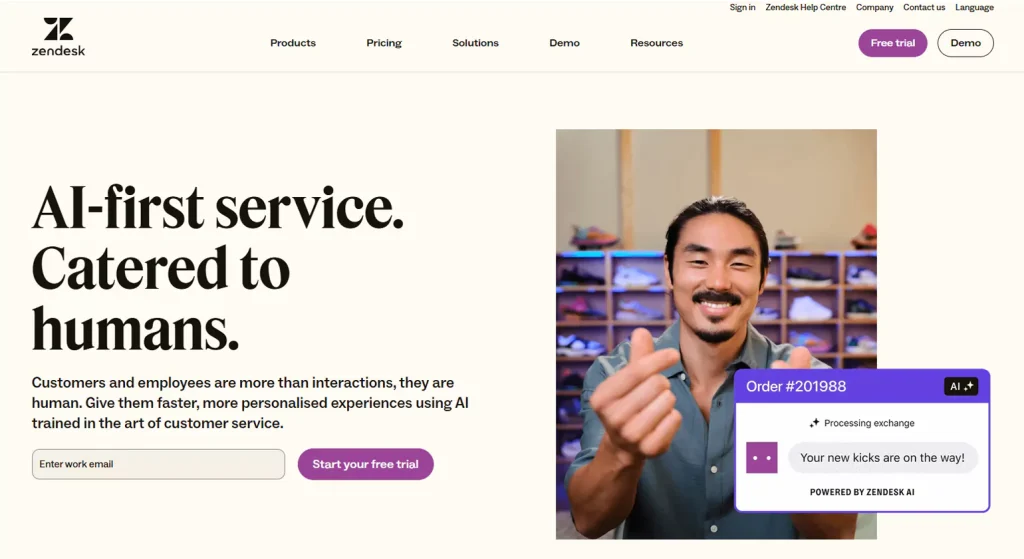
Zendesk is a comprehensive customer support platform designed to streamline communication across multiple channels. It offers a unified help desk, live chat, and AI-powered automation to enhance customer interactions. Zendesk is ideal for businesses seeking to improve their support operations with an intuitive, scalable, and efficient solution.
Key Features:
- Omnichannel support across email, chat, phone, and social media
- AI-powered chatbots for automated responses
- Robust analytics and reporting for performance tracking
- Self-service options like knowledge bases and FAQs
- Seamless CRM integrations for a unified customer view
Benefits: Faster customer resolutions, improved agent efficiency, enhanced customer experience, scalable for businesses of all sizes, detailed insights for data-driven decisions.
2. Slack
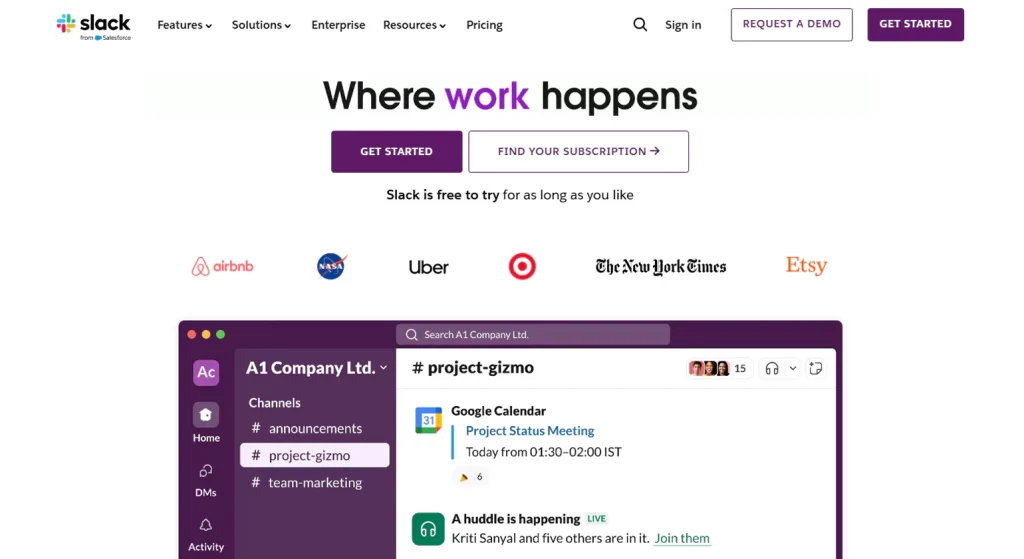
Slack is one of the best customer communication tools that enhances internal and external collaboration. It enables real-time messaging, voice/video calls, and integrations with numerous business applications. With organized channels and automation features, Slack improves workflow efficiency and keeps teams connected seamlessly.
Key Features:
- Organized communication with channels for different topics
- Direct messaging and file-sharing for quick collaboration
- Voice and video calls for real-time discussions
- Integration with third-party apps like Google Drive and Trello
- Workflow automation to streamline repetitive tasks
Benefits: Improved team collaboration, real-time communication, increased productivity, centralized knowledge sharing, seamless app integrations.
3. Asana
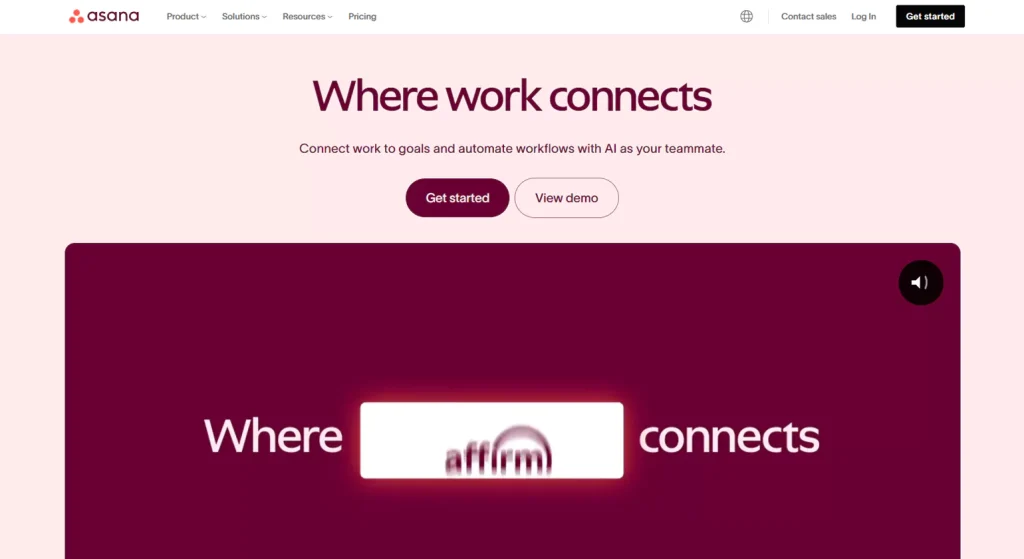
Asana is a task and project management tool that enhances communication within teams. It allows businesses to assign tasks, track progress, and set deadlines, ensuring transparency and accountability. With automation features and a user-friendly interface, Asana helps teams stay organized and efficient.
Key Features:
- Task assignments and project tracking with deadlines
- Kanban boards, lists, and calendar views for task management
- Automated workflows to reduce manual efforts
- Real-time collaboration with file sharing and comments
- Integration with Slack, Google Drive, and Microsoft Teams
Benefits: Better task management, improved team coordination, enhanced productivity, clear project tracking, streamlined workflows.
4. Zoom
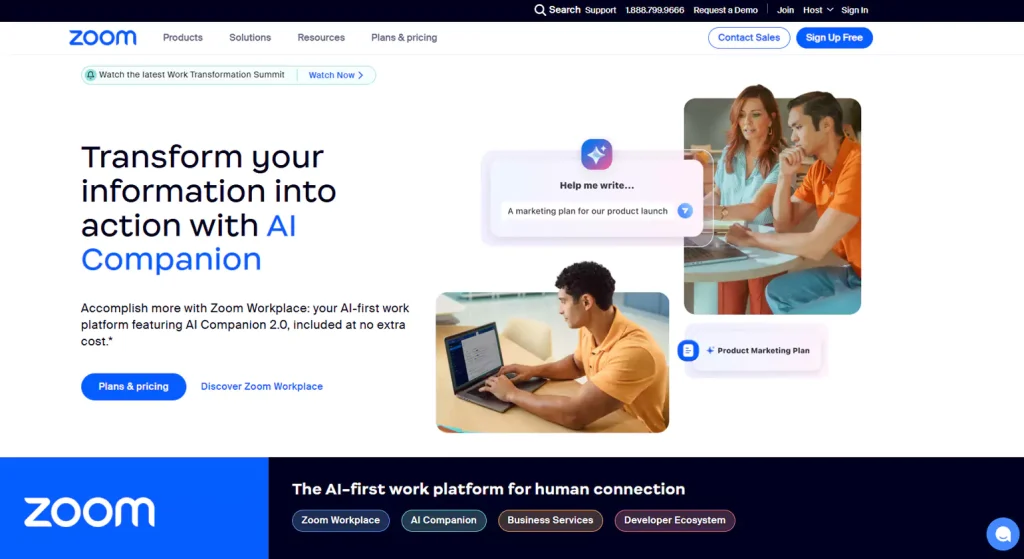
Zoom is one of the best customer communication tools and a leading video conferencing platform that facilitates seamless virtual communication. It is widely used for business meetings, webinars, and customer support interactions. With HD video, screen sharing, and recording options, Zoom enhances both internal and external communications.
Key Features:
- High-quality video and audio conferencing
- Screen sharing and virtual backgrounds for presentations
- Breakout rooms for team discussions
- Webinar hosting with interactive features
- Cloud recording and transcription for documentation
Benefits: Enhanced remote communication, seamless virtual meetings, better customer engagement, cost-effective video conferencing, improved team collaboration.
5. HubSpot Service Hub
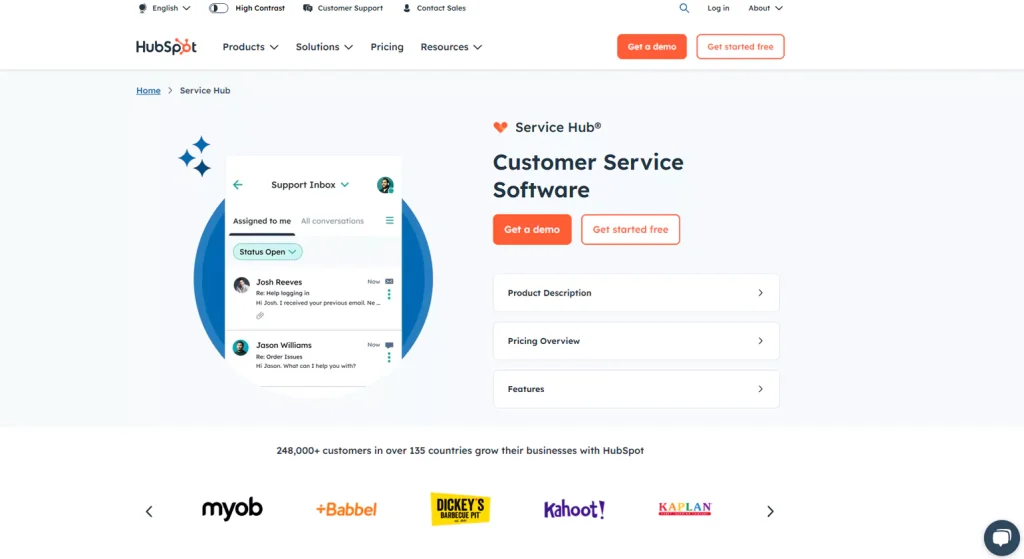
HubSpot Service Hub is a customer service software designed to streamline communication and support. It offers ticketing, automation, and self-service features, making it easier for businesses to manage customer interactions effectively. Additionally, it integrates with HubSpot’s CRM, providing a unified platform for tracking and improving customer relationships.
Key Features:
- Ticketing system for tracking customer queries
- Live chat and chatbots for instant communication
- Knowledge base creation for self-service support
- Automation tools for faster query resolution
- Customer feedback and survey tools
Benefits: Improved customer support efficiency, enhanced response times, better self-service options, seamless CRM integration, increased customer satisfaction.
6. RingCentral
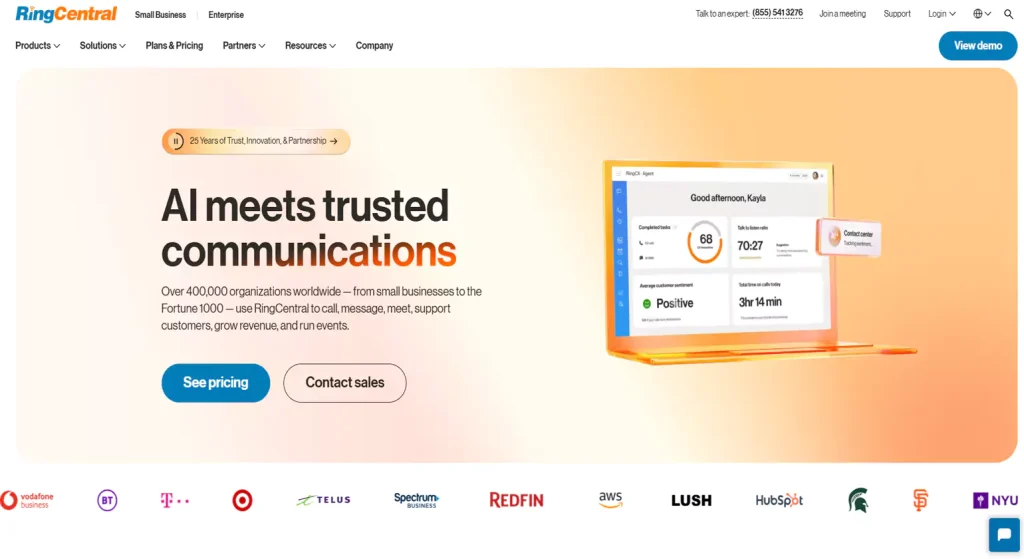
RingCentral is a cloud-based communication platform offering VoIP phone systems, messaging, and video conferencing. It is one of the top customer communication tools and helps businesses centralize their communication and improve customer interactions through seamless integrations and automation.
Key Features:
- VoIP calling with high-quality audio
- Video conferencing for remote meetings
- Team messaging for real-time collaboration
- Call analytics and reporting tools
- CRM integrations for enhanced customer management
Benefits: Reliable communication, improved team collaboration, scalable for businesses, cost-effective VoIP solutions, integrated customer interactions.
8. SurveyMonkey

SurveyMonkey is a leading survey platform that helps businesses gather customer feedback and insights. It enables companies to measure satisfaction, identify trends, and improve customer experiences through data-driven decisions. It also offers customizable templates, AI-powered analysis, and integration with various business tools, making it easier to collect and interpret valuable customer data.
Key Features:
- Customizable survey templates for different needs
- AI-powered analytics for better insights
- Integration with CRM and marketing tools
- Automated survey distribution via email and social media
- Response tracking and real-time reporting
Benefits: Improved customer feedback collection, data-driven decision-making, better customer engagement, increased service quality, easy-to-use survey tools.
9. LiveChat
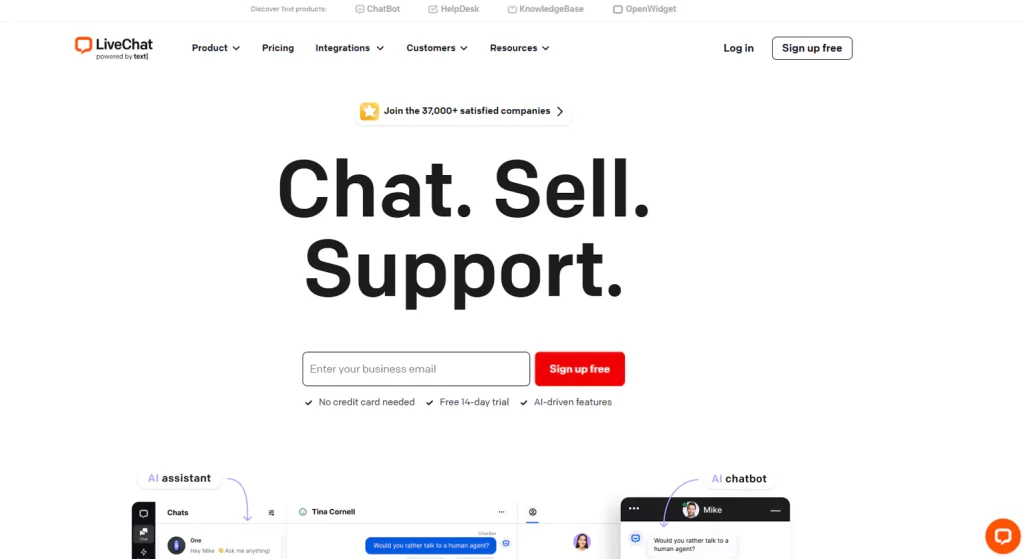
LiveChat is a real-time customer service tool that enables businesses to engage with website visitors instantly. With AI-powered Chatbot, analytics, and integrations, it enhances customer interactions and improves conversion rates. It’s widely used by e-commerce businesses, SaaS companies, and customer support teams for instant query resolution.
Key Features:
- Instant live chat for quick customer engagement
- AI-powered chatbots for automated responses
- Canned responses and chat routing for faster resolution
- Integration with CRM and e-commerce platforms
- Analytics and reporting for performance tracking
Benefits: Faster customer support, increased sales conversions, seamless website integration, improved customer satisfaction, 24/7 automated assistance.
10. Twilio
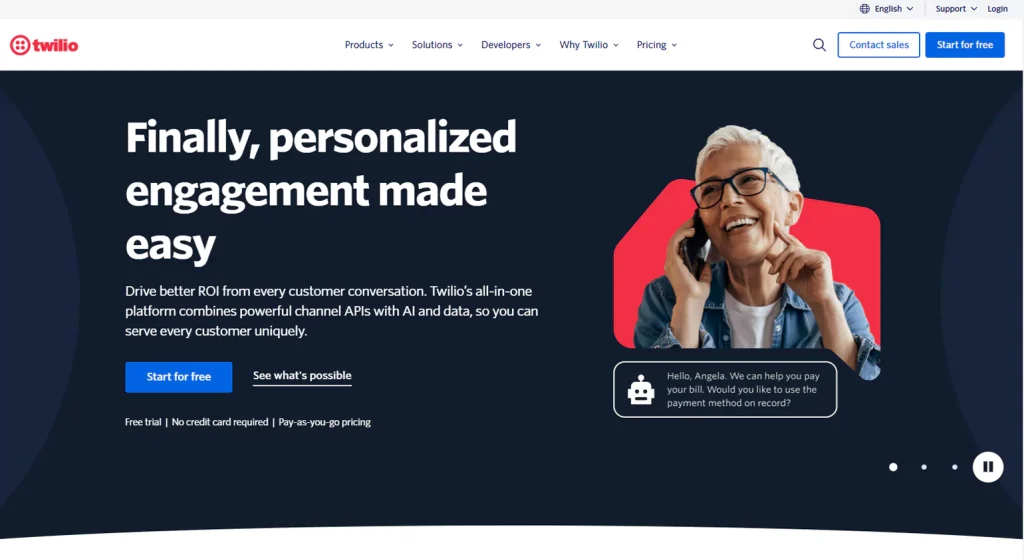
Twilio is a cloud-based communication platform that allows businesses to build customized messaging, voice, and video solutions. It supports SMS, WhatsApp, and email automation for personalized interactions. Twilio is ideal for companies looking for flexible and scalable communication solutions tailored to their needs.
Key Features:
- Programmable messaging for SMS, email, and WhatsApp
- Voice and video APIs for seamless communication
- AI-powered chatbots and virtual assistants
- Real-time call tracking and analytics
- Secure authentication services for customer verification
Benefits: Scalable communication, personalized customer interactions, omnichannel engagement, enhanced security, developer-friendly API integrations.
11. Help Scout
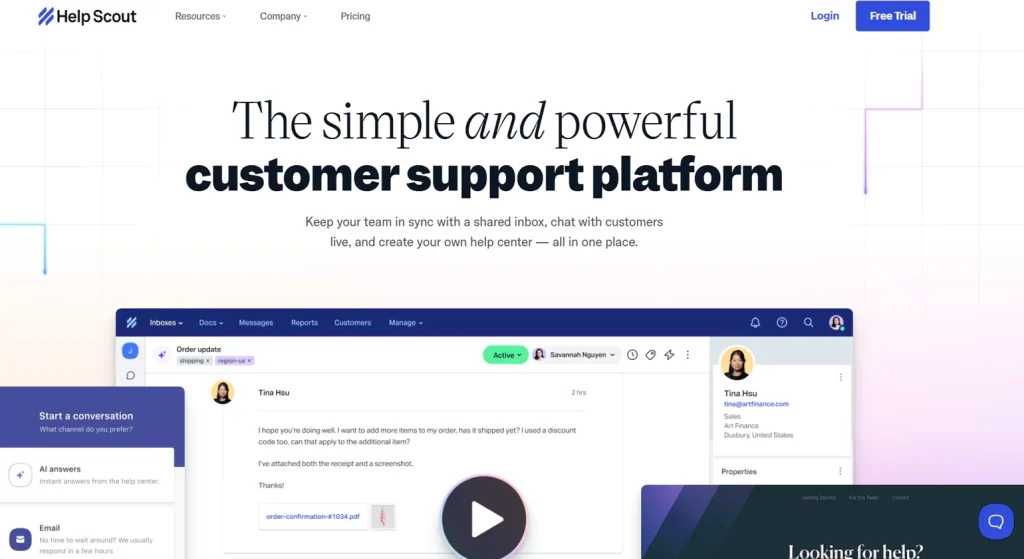
Help Scout is one of the best customer communication tools which is designed for small to mid-sized businesses, offering a shared inbox, live chat, and automation features. It provides a user-friendly support experience for both businesses and customers. Help Scout helps teams collaborate efficiently while maintaining a personal touch in customer interactions.
Key Features:
- Shared inbox for team collaboration
- AI-powered workflows for automated responses
- Customer profiles for personalized interactions
- Integrated knowledge base for self-service support
- Reporting and analytics for performance insights
Benefits: Streamlined customer support, improved team collaboration, enhanced response efficiency, personalized customer experiences, easy-to-use interface.
12. Document360
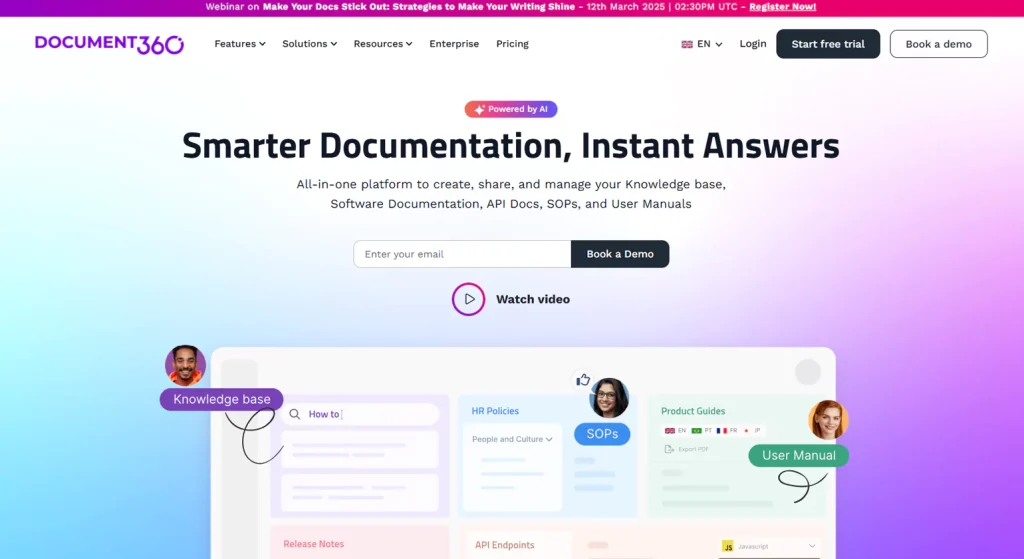
Document360 is a knowledge management platform that helps businesses create self-service customer support solutions. It enables organizations to build, manage, and optimize internal and external knowledge bases. This tool is particularly useful for businesses looking to reduce support tickets by providing easy access to information.
Key Features:
- AI-powered knowledge base creation
- Advanced search and categorization for easy navigation
- Collaboration tools for team-based content management
- Version control and content approval workflows
- Integration with chatbots and customer support platforms
Benefits: Reduced customer inquiries, improved self-service support, streamlined knowledge sharing, enhanced team collaboration, better customer onboarding.
13. Intercom
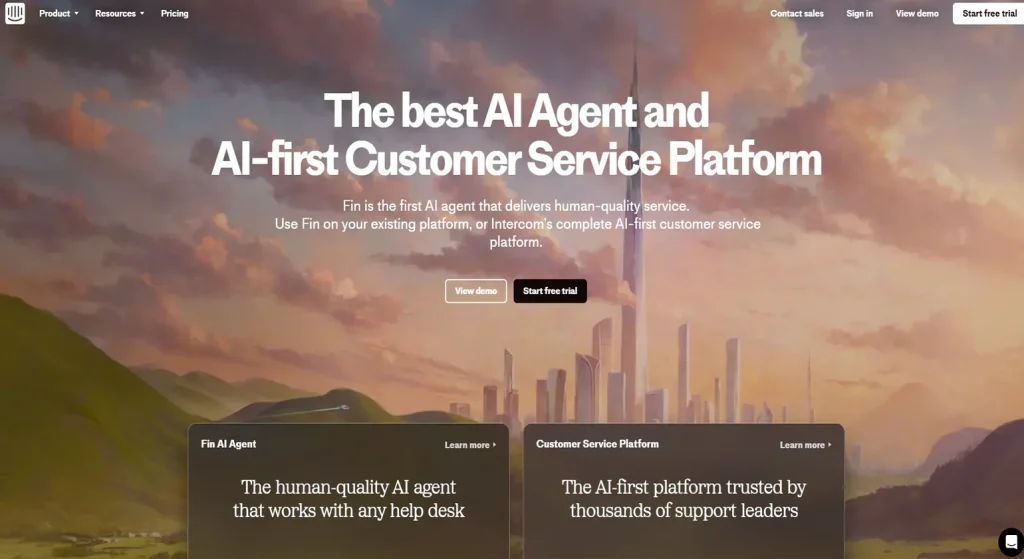
Intercom is a customer communication platform that combines live chat, chatbots, and automation to improve customer engagement. It helps businesses personalize interactions and provide proactive support. Intercom is widely used for customer onboarding, lead generation, and support automation.
Key Features:
- AI-powered chatbots for instant customer engagement
- Live chat with automation features
- Targeted messaging for personalized support
- CRM and third-party integrations for seamless workflows
- Analytics and reporting for customer insights
Benefits: Enhanced customer engagement, improved response times, proactive customer support, seamless automation, better lead conversion.
14. Front
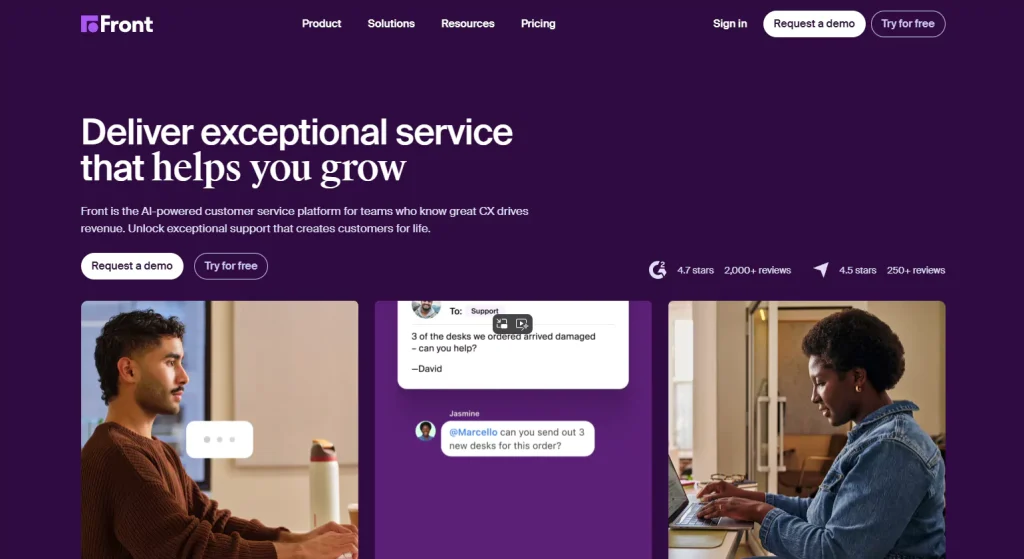
Front is a team communication and customer messaging tool that combines email, SMS, and social media messages in one collaborative inbox. It enables businesses to manage customer interactions efficiently. By organizing messages in one place, Front helps teams deliver fast, consistent, and personalized responses.
Key Features:
- Shared inbox for team collaboration
- Multi-channel messaging (email, SMS, and social media)
- Automated workflows for quick responses
- CRM integrations for personalized communication
- Analytics for tracking team performance
Benefits: Faster team collaboration, improved customer response times, centralized messaging, reduced email clutter, better workflow efficiency.
15. Salesforce
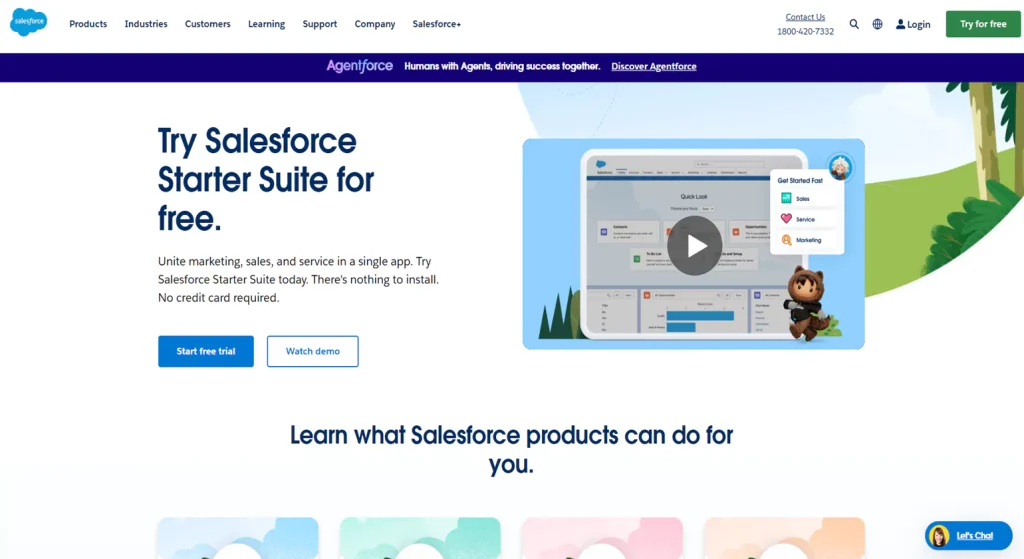
Salesforce is a leading CRM platform that helps businesses manage customer relationships, automate workflows, and streamline communication. It integrates with various customer communication tools for a complete engagement strategy. Salesforce is a go-to solution for businesses seeking an all-in-one platform for sales, marketing, and customer service.
Key Features:
- AI-powered customer insights and automation
- Multi-channel communication support
- Customizable workflows and automation
- Sales and marketing integration for lead tracking
- Detailed analytics and reporting tools
Benefits: Improved customer relationship management, streamlined sales processes, enhanced customer insights, automated marketing campaigns, scalable business growth.
The Role of AI and Automation in Enhancing Customer Experience

- They use AI chatbot for ecommerce to handle common queries because it provide instant support which decreases wait times and enhances customer satisfaction while operating continuously throughout the day.
- The process of automation enables organizations to automate their repetitive tasks which include ticket assignment and follow-up emails as well as response categorization.
- Businesses utilize advanced AI analytics to monitor customer behavior and preferences and concerns which enables them to predict future needs and deliver personalized responses that drive customer engagement.
- Automatic systems use voice recognition and NLP consulting (natural language processing) technology to process spoken language and generate responses which create human-like and real-life conversation experiences.
- The combination of AI and automation enables businesses to achieve better customer communication results through increased speed and accuracy and customized solutions which lead to higher service standards and lower business expenses.
- Companies gain a competitive advantage by utilizing marketing intelligence tools which help them manage client communication effectively for their long-term business success.
How to Successfully Implement Customer Communication Tools Without Disrupting Operations
Define Clear Objectives First
Identify which objectives you want to reach through your organizational goals. The implementation process gets simplified when organizations establish objectives.
Assess Current Workflows
Map your existing support processes and identify gaps. You can develop new tools for your team by studying their current customer communication tools.
Choose the Right Tool for Your Business Size and Needs
Avoid overcomplicated platforms. Businesses should select tools that match their operational needs because their customers and technology capabilities determine which systems they can effectively use.
Implement in Phases
The organization should introduce the new tool through a step-by-step process which begins with one department and one communication method. The phased approach reduces both danger and business operations interruption.
Train Your Team Properly
The organization needs to provide workers with practical training sessions and comprehensive documentation. The platform learns through faster adoption when employees comprehend its functions.
Create System Integration Method
The system needs to achieve complete integration with CRM and help desk and marketing and analytics tools which will eliminate data silos and workflow disruptions.
Establish Monitoring System to Collect User Feedback
The system measures three key performance indicators, which include response time and resolution rate, and customer satisfaction. The system requires customer and staff feedback, which will help improve its performance.
Create Backup Systems and Transition Plans
The organization keeps its existing systems operational during the transition period because it wants to maintain service availability. The organization uses a backup system to ensure business operations continue after unexpected events occur.
Conclusion
In conclusion, customer communication tools have become essential for businesses looking to enhance engagement, improve efficiency, and build lasting relationships. When used effectively, these tools streamline interactions, personalize customer experiences, and ensure seamless communication across multiple channels. By investing in the right tools and adopting best practices, businesses can not only improve customer satisfaction but also drive long-term growth and brand loyalty.
FAQ’s
1. What are customer communication tools?
Customer communication tools function as platforms and software systems which enable businesses to communicate with their customers through live chat and email and social media and automated chatbot systems.
2. What are the leading tools for building customer-led conversations?
Intercom, Drift, and Zendesk serve as the primary tools which enable businesses to conduct customer-led conversations through their interactive chat systems and automated messaging systems and customer support solutions.
3. Who provides real-time communication tools for customers?
LiveChat Freshdesk and Twilio serve as real-time communication tool providers which enable customers to engage with their services through live chat and video and messaging platforms.
4. What are the most recommended ai-driven tools for customer communication?
The recommended AI-based tools for customer communication which include Ada and ChatGPT and Freshchat utilize AI technology to create automated answers while delivering customized support and boosting operational efficiency in customer service.
5. Which platforms provide client communication and insights tools?
Salesforce HubSpot and Zoho platforms deliver client communication and insights tools through their combination of CRM and analytics and automation features, which help businesses improve customer engagement.