Table of Contents
Key Takeaways
B2B marketing analytics helps businesses track and analyze marketing performance using data.
It shows which campaigns, channels, and content generate the most leads and revenue.
Companies use analytics to measure metrics like lead quality, conversion rates, customer acquisition cost, and ROI.
Tools such as CRM platforms, analytics dashboards, and attribution tools help collect and interpret marketing data.
Data insights allow marketers to optimize campaigns, target the right audience, and improve decision-making.
B2B marketing analytics also helps align sales and marketing teams through shared performance metrics.
By using data-driven strategies, businesses can increase efficiency, improve lead generation, and boost overall marketing ROI.
Introduction
B2B marketing analytics is the process of collecting and interpreting data to enhance business growth. While mastering the fundamentals of marketing—such as understanding the buyer’s journey and value proposition—is essential, analytics provides the lens through which you measure if those core principles are actually converting into revenue.
What is B2B Marketing Analytics?
B2B Marketing Analytics is a term used to describe the collection and analysis of marketing data to understand how well business-to-business marketing is performing and its impact on revenue generation.
For instance, according to HubSpot, organizations that rely on data-driven marketing are six times more likely to attain higher profitability. Another example is understanding how to leverage data from customer relationship management systems to identify the source of high-quality business-to-business leads.
Actionable takeaway: The first step to leveraging B2B marketing is to connect your customer relationship management system, analytics system, and marketing systems into one unified dashboard. This allows marketers to track lead generation metrics, campaign performance, and conversion rates in real time.
Why Data-Driven Marketing Matters in B2B
The buying cycle is long and involves many decision-makers in the case of B2B. Data-driven marketing means that every decision and move in the marketing campaign is based on data rather than guesses.
As per McKinsey & Company, if an organization uses data-driven marketing strategies, it is 23 times more likely to win customers and 19 times more likely to be profitable. With the use of analytics tools and techniques, marketers can better score their leads and track the ROI of their marketing campaigns.
Tip: Instead of diving into advanced B2B marketing analytics reporting, marketers should focus on tracking the basic metrics of the campaign.
10 Best B2B Analytics Tools to Measure Marketing Performance

In the digital-first B2B landscape, data is at the core of decision-making. To stay competitive and effective, businesses must leverage powerful analytics tools that deliver insights into campaign performance, audience behavior, and conversion paths. This guide explores the most effective B2B marketing analytics tools and why they matter.
1. Google Analytics

Overview
Google Analytics is an online analytical tool that enables businesses to gain insights about how users interact with their online properties. It provides marketers with data on user behavior, traffic, and engagement, enabling marketers to effectively measure and improve marketing campaigns. It provides detailed information that enables businesses to track user behavior, thereby making appropriate decisions.
Key Features
Website Traffic Analysis: Tracks where visitors come from, such as search engines, social media, or direct visits.
User Behavior Insights: Shows how users navigate pages, time spent on site, and bounce rates.
Conversion Tracking: Measures actions like purchases, form submissions, or sign-ups.
Audience Insights: Provides data about user demographics, location, and device type.
Real-Time Reporting: Displays live user activity on the website.
Integration Capabilities: Works with tools like Google Ads and Google Search Console for deeper marketing analysis.
Pricing
Google Analytics offers a free version (Google Analytics 4) that provides essential analytics features for most businesses and websites. For large enterprises, Google Analytics 360 is available as a premium version with advanced reporting, higher data limits, and dedicated support. Pricing for Analytics 360 typically starts around $50,000 per year, depending on business requirements.
2. HubSpot
Overview
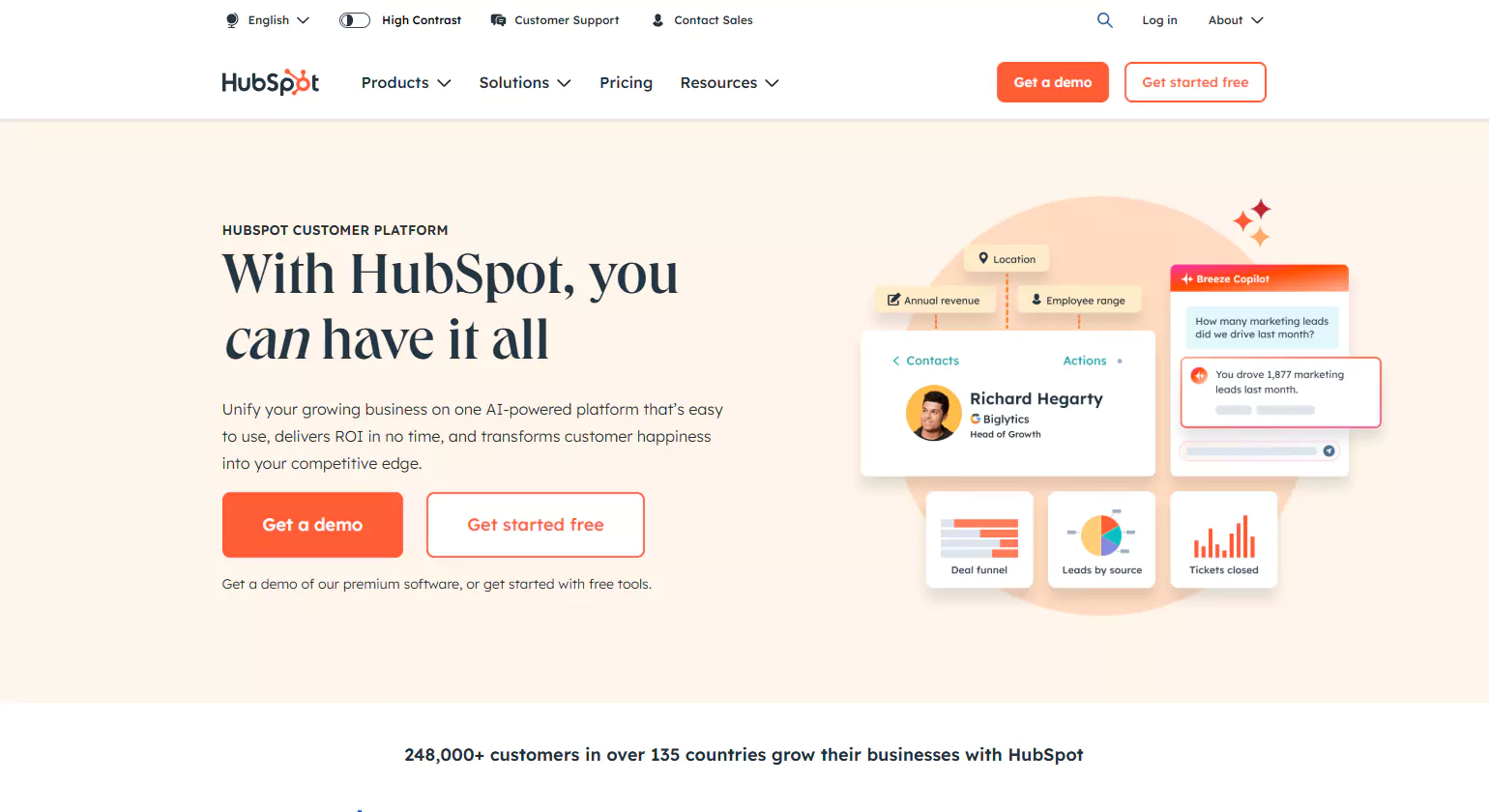
HubSpot is a marketing, sales, and customer relationship management tool that is all-in-one. It is a platform that helps businesses attract customers and convert them. It provides a platform for B2B marketing analytics, automation, lead tracking, and customer data management. Many B2B businesses use the platform to measure marketing performance, track leads through the sales funnel, and enhance customer engagement.
Key Features
CRM Integration: Stores and manages customer and lead data in one place.
Marketing Analytics: Tracks campaign performance, website traffic, and lead conversions.
Email Marketing: Create and automate personalized email campaigns.
Lead Management: Capture, score, and nurture leads throughout the buyer journey.
Marketing Automation: Automates workflows, follow-ups, and campaign actions.
Dashboard & Reporting: Provides customizable reports to monitor marketing and sales performance.
Pricing
HubSpot offers a free CRM plan with basic marketing and contact management features. Paid plans are available through different hubs (Marketing, Sales, Service, etc.). The Marketing Hub Starter typically starts around $20–$50 per month, while Professional and Enterprise plans can range from $800 to several thousand dollars per month, depending on features and the number of contacts.
3. Marketo
Overview
Adobe Marketo Engage is an advanced B2B marketing automation platform that helps businesses manage, automate, and measure their marketing campaigns. With the use of the platform, marketers are able to track their customers’ behavior and measure the performance of their campaigns. Marketo is an important platform that most B2B marketers use for effective lead generation and efficient marketing.
Key Features
Lead Management: Capture, score, and nurture leads automatically through personalized campaigns.
Marketing Automation: Automates email marketing, workflows, and customer engagement processes.
Advanced Analytics: Provides detailed reporting and insights to measure campaign performance and ROI.
Account-Based Marketing (ABM): Helps target specific high-value accounts with personalized marketing strategies.
Integration Capabilities: Easily integrates with CRM platforms like Salesforce CRM and other marketing tools.
Pricing
Marketo does not publicly list exact pricing. Costs typically depend on database size, features, and business needs. Pricing usually starts at around $895–$1,500+ per month, with higher tiers available for enterprise-level marketing automation and analytics capabilities.
4. Salesforce Pardot
Overview
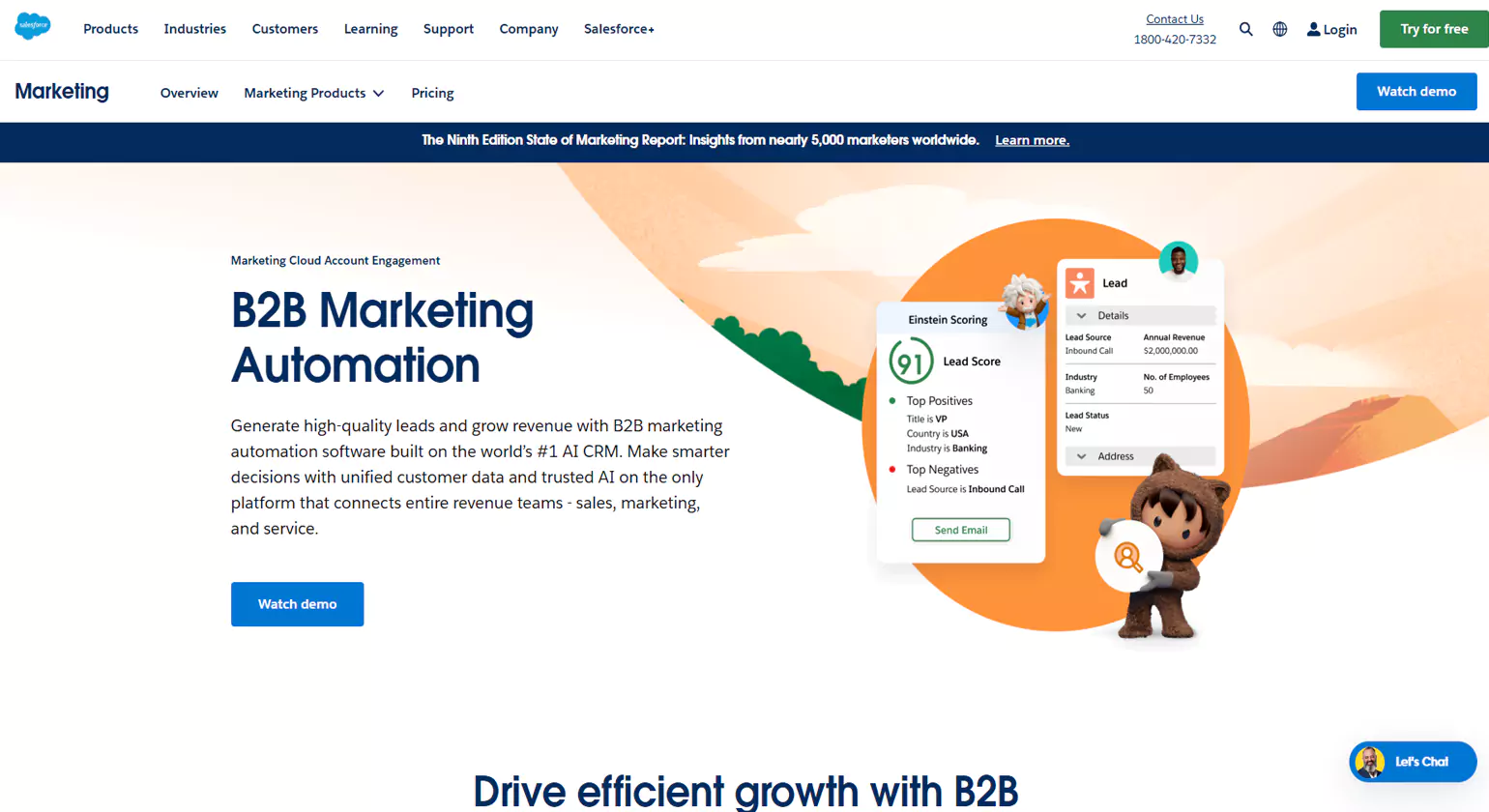
Pardot is Salesforce’s b2b marketing analytics tools-focused marketing automation tool designed to improve lead generation, tracking, and nurturing. It connects seamlessly with Salesforce CRM, offering a unified view of prospects, their actions, and campaign impact.
Key Features
Lead scoring and grading
Email automation and A/B testing
ROI tracking and reporting
Landing page builder
CRM synchronization
Why Choose
Pardot is ideal for companies already using Salesforce. It aligns sales and marketing by tracking every touchpoint and tying it back to revenue. The powerful automation and analytics capabilities ensure efficient, results-driven marketing.
5. SEMrush
Overview
Salesforce Pardot, now referred to as Marketing Cloud Account Engagement, is a B2B marketing automation solution developed by Salesforce. The solution enables businesses to automate B2B marketing analytics, campaigns, manage leads, as well as track customer interactions. The solution is highly integrated with Salesforce CRM, enabling marketing teams to align strategies with sales teams to enhance lead conversion through data-driven insights.
Key Features
Lead Generation & Nurturing: Capture, score, and nurture leads using automated workflows and targeted campaigns.
Email Marketing Automation: Create personalized email campaigns and track engagement metrics.
Lead Scoring & Grading: Evaluate leads based on behavior and profile data to prioritize sales opportunities.
CRM Integration: Seamlessly integrates with Salesforce CRM for better collaboration between sales and marketing teams.
Analytics & Reporting: Provides detailed reports to measure campaign performance and marketing ROI.
Pricing
Salesforce Pardot pricing varies based on features and business size. Plans typically start at around $1,250 per month (Growth plan) and can go up to $4,000+ per month for advanced editions with AI insights, deeper analytics, and enhanced automation capabilities.
6. Tableau
Overview
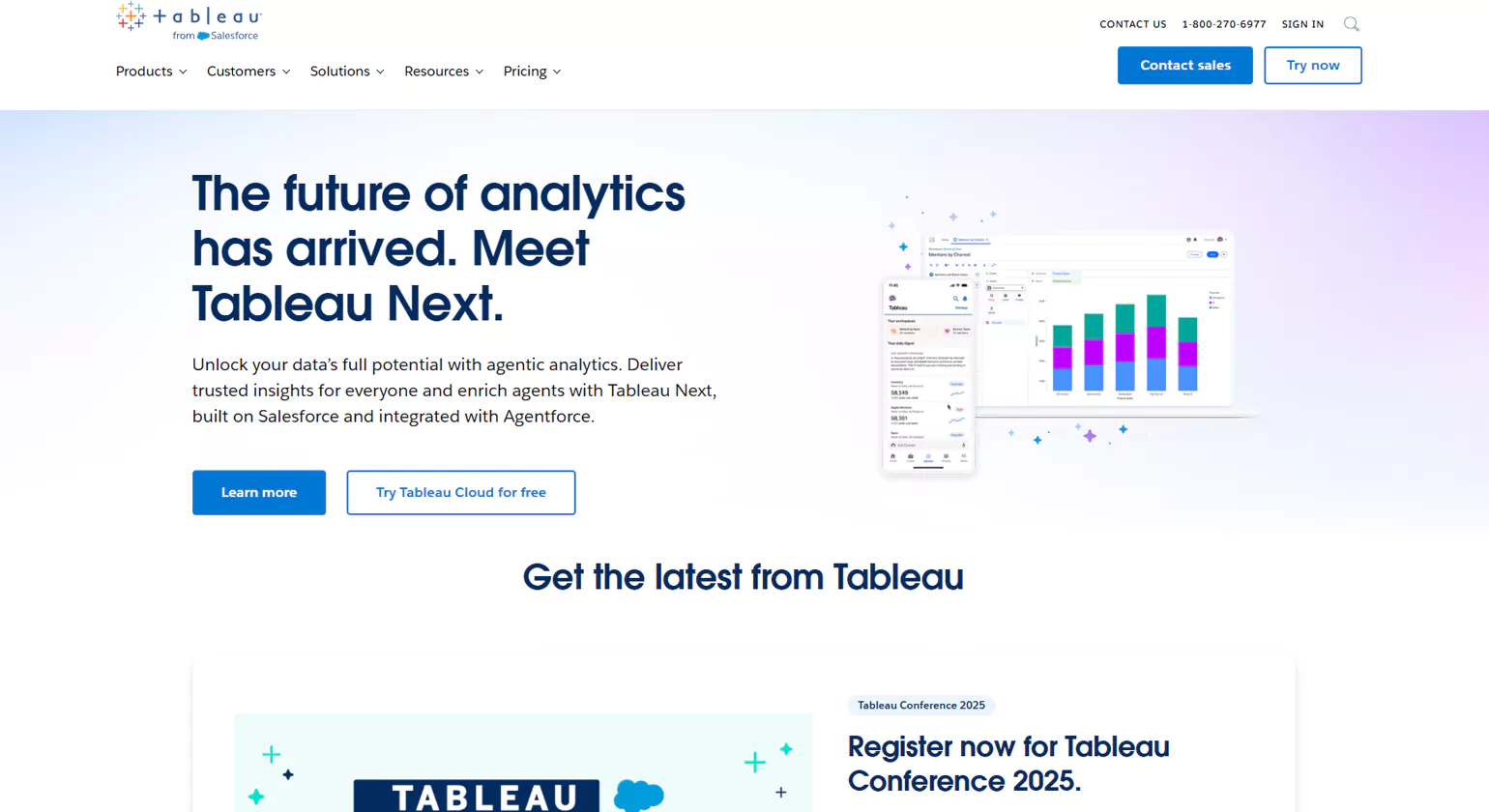
Tableau is a popular data visualization and business intelligence tool created by Salesforce. It enables organizations to transform raw data into interactive visualizations and business intelligence reports. Marketers use Tableau to analyze their marketing performance, monitor essential metrics, and make informed decisions in no time.
Key Features
Interactive Dashboards: Create visual dashboards to monitor marketing and business performance in real time.
Advanced Data Visualization: Convert complex datasets into charts, graphs, and visual insights.
Data Integration: Connects with multiple data sources such as databases, spreadsheets, and cloud platforms.
Self-Service Analytics: Allows non-technical users to explore and analyze data easily.
Collaboration & Sharing: Share reports and dashboards with teams for better decision-making.
Pricing
Tableau offers several pricing plans depending on user roles and features. Tableau Creator starts at about $75 per user per month, Explorer at $42 per user per month, and Viewer at $15 per user per month when billed annually. Enterprise deployments may have customized pricing.
7. Google Data Studio
Overview
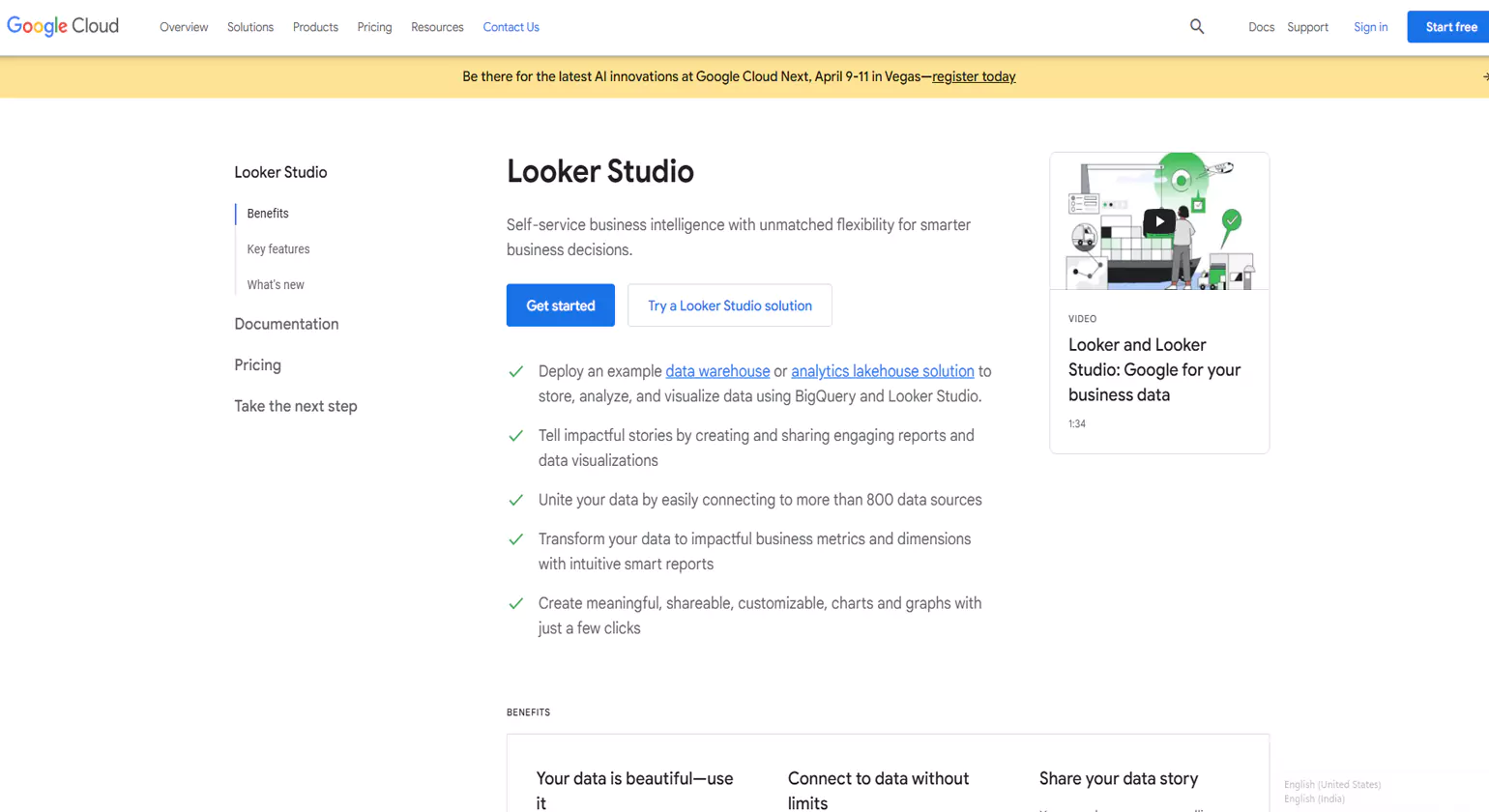
Google Data Studio, renamed Looker Studio, is a free data visualization and reporting B2B marketing analytics developed by Google. This tool is used by businesses for data visualization and reporting of raw data related to marketing and analytics. It is generally used by marketers for data analysis related to campaigns, website traffic, and customer insights in a simplified visual form.
Key Features
Custom Dashboards: Create interactive dashboards to track marketing and business performance.
Multiple Data Integrations: Connects with sources like Google Analytics, Google Ads, spreadsheets, and databases.
Real-Time Reporting: Displays updated data automatically for accurate performance tracking.
Easy Data Visualization: Build charts, graphs, and reports without advanced technical skills.
Collaboration: Share dashboards with teams and stakeholders through simple links.
Pricing
Looker Studio offers a free version with core reporting and visualization features. For enterprise-level capabilities, Looker Studio Pro starts at around $9 per user per month, offering advanced collaboration, governance, and support features.
8. Adobe Analytics
Overview
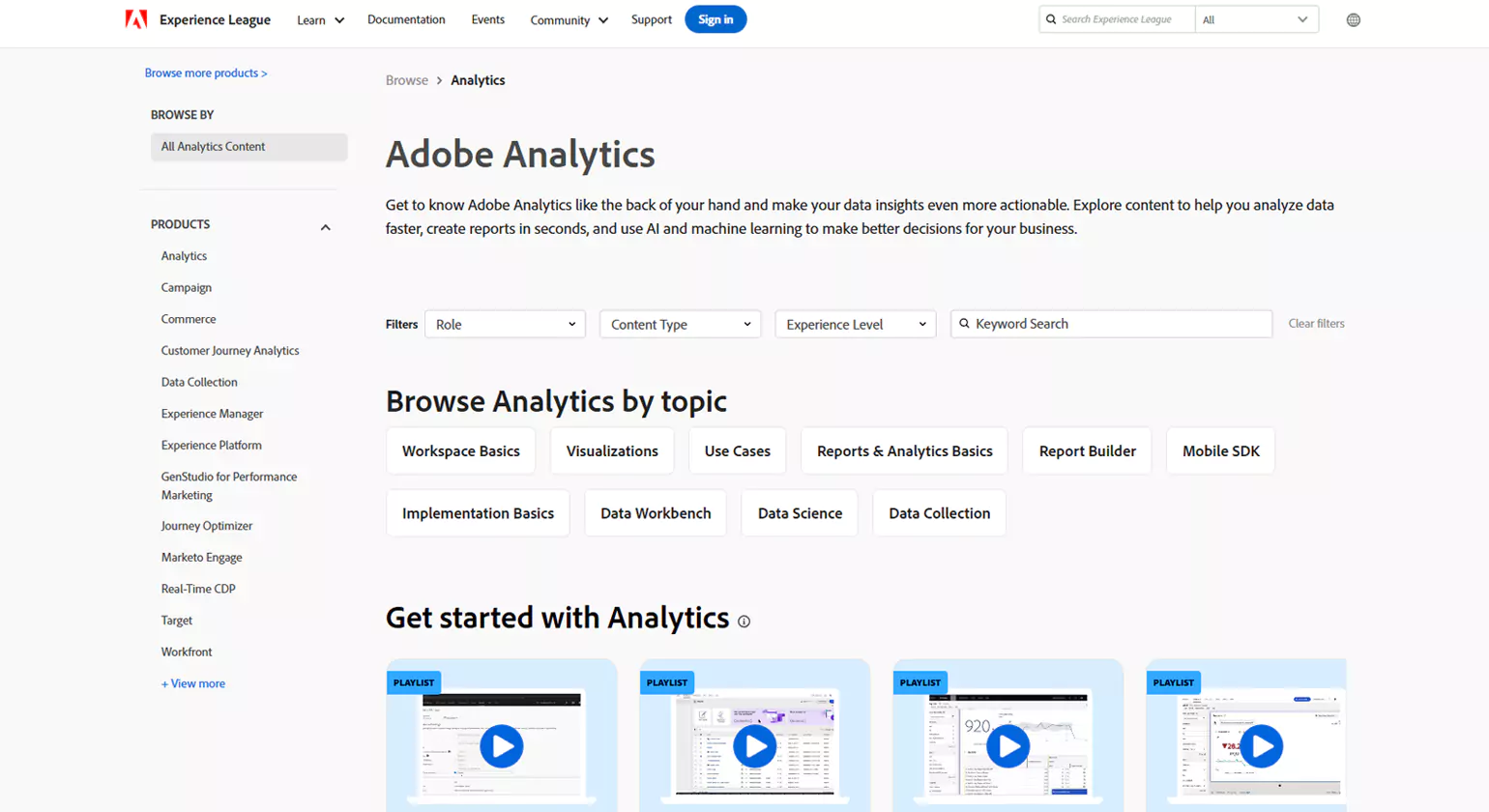
Adobe Analytics is a sophisticated web and B2B marketing analytics created by Adobe. It assists businesses in understanding the behavior of customers across websites, mobile applications, and digital platforms. It provides in-depth analytics that enable marketers to understand the user experience and measure the performance of various marketing campaigns.
Key Features
Advanced Customer Insights: Tracks user behavior and engagement across multiple digital channels.
Real-Time Data Analysis: Provides instant insights to monitor campaign and website performance.
Custom Dashboards & Reports: Create tailored reports to track important marketing metrics.
Customer Journey Analysis: Understand how users interact with different touchpoints before conversion.
Integration with Adobe Tools: Works seamlessly with platforms like Adobe Experience Cloud for deeper marketing insights.
Pricing
Adobe Analytics does not publish fixed pricing publicly. The cost usually depends on business size, data volume, and required features. Pricing typically starts at around $2,000+ per month for enterprise-level analytics solutions, with customized plans available for larger organizations.
9. Kissmetrics
Overview
Kissmetrics is a customer analytics solution that enables businesses to track customer interactions and understand how customers are interacting with the products or websites. This solution is based on people analytics rather than page views, enabling marketers to understand the whole customer journey and improve conversion rates.
Key Features
Customer Journey Tracking: Tracks individual user actions across websites and applications.
Behavior-Based Analytics: Provides insights into how users interact with products and marketing campaigns.
Conversion Funnel Analysis: Helps identify where users drop off in the sales funnel.
Segmentation: Enables marketers to segment audiences based on behavior, demographics, or actions.
Cohort Reports: Analyze customer retention and engagement over time.
Pricing
Kissmetrics offers custom pricing based on business needs and data volume. Plans generally start at around $299 per month for basic analytics features, while advanced plans with deeper reporting, support, and integrations can cost significantly more for larger businesses.
10. Dreamdata
Dreamdata is a revenue attribution and marketing analytics solution for businesses, enabling them to understand the impact of marketing on revenue. It integrates data from marketing, sales, and CRM sources to deliver a comprehensive picture of customer journeys. This allows marketing teams to measure and optimize marketing strategies based on revenue impact.
Key Features
Revenue Attribution: Tracks how different marketing channels contribute to pipeline and revenue.
Customer Journey Analysis: Maps the entire B2B buyer journey across multiple touchpoints.
Data Integration: Integrates with tools like Salesforce CRM, HubSpot, and advertising platforms.
Pipeline Analytics: Provides insights into how marketing activities influence sales pipeline growth.
Custom Dashboards: Visualizes marketing performance and revenue metrics in easy-to-understand reports.
Pricing
Dreamdata offers customized pricing based on company size, data sources, and features required. Pricing typically starts at around $999 per month, with higher-tier plans available for larger organizations needing advanced analytics and integrations.
Key Components of B2B Marketing Analytics

B2B Marketing Analytics refers to the processes and systems used in measuring the performance of the marketing activities, understanding the buying behavior of the customers, and improving the results in terms of revenues. It refers to the use of various systems and processes in understanding the buyer journey of the customers in the B2B industry.
According to HubSpot, organizations using analytics-based marketing are 6 times more likely to achieve profitability in their business. Based on research conducted by Salesforce, 76% of marketers use analytics in improving their targeting and campaign decisions. These statistics show the importance of using lead tracking and analytics in improving the B2B marketing strategies.
Actionable Takeaway: Creating a strong analytics foundation entails combining various processes and systems in collecting data, attributing leads, measuring campaign performance, and using revenue analytics. These processes and systems help in improving the B2B marketing strategies.
Data Collection and Integration
The first aspect of analytics is data collection from various sources such as CRM systems, website analytics tools, marketing automation systems, and social media sites. By integrating data from these sources, a single view of marketing activities is achieved.
For instance, Google Analytics is used to analyze website visitor behavior and traffic. Similarly, customer relationship management systems are used to collect data on lead activities and sales progression. By integrating these data sources, customer journey analysis, marketing data integration, and lead tracking are improved.
Lead Tracking and Attribution
Lead tracking allows marketers to know the source of prospects and those that contribute to conversions. On the other hand, attribution modeling measures the value associated with each touch point along the buyer’s journey through the various stages in the B2B sales funnel.
For example, a lead may be generated after seeing an ad on LinkedIn, then reading a whitepaper, and finally attending a webinar before becoming a marketing-qualified lead.
Campaign Performance Measurement
Campaign measurement is used to assess how well marketing campaigns are performing across various marketing channels such as email marketing campaigns, advertisements, webinars, and content marketing. Some of the major metrics used in campaign measurement include conversion rates, click-through rates (CTR), cost per lead (CPL), and marketing-qualified leads (MQLs).
This analysis will help marketers know which campaigns are producing the best results in terms of B2B lead generation.
Customer and Revenue Analytics
Customer and revenue analytics tie marketing activities directly into pipeline growth and revenue generation. For example, customer acquisition costs, customer lifetime value, and pipeline velocity enable businesses to track the financial impact of marketing activities.
Marketing analytics can be directly related to CRM sales data, enabling businesses to easily identify revenue-generating campaigns.
How Do You Measure Success with B2B Marketing Metrics?

The success of a B2B Marketing Analytics is gauged by monitoring certain metrics, which help in understanding the marketing efforts, leads, and revenue generated. These metrics help businesses understand and improve the marketing campaign and its alignment with sales.
Studies by HubSpot show that businesses that often track marketing metrics are more likely to show marketing ROI and improve lead conversion. A study by Gartner also showed that data-driven marketing teams achieve significantly higher campaign efficiency and pipeline growth.
1. Lead Generation Metrics
Lead generation metrics are a means of measuring the efficiency of marketing campaigns at attracting potential customers. The metrics may include metrics like website traffic, form submissions, content downloads, webinars, etc.
Lead generation metrics help to identify which marketing channels are most effective at piquing potential B2B customers’ interest. By tracking metrics like these, it is easier to refine marketing strategies for acquiring leads.
2. Marketing Qualified Leads (MQL) vs Sales Qualified Leads (SQL)
The distinction between MQLs and SQLs is critical to understanding lead quality.
A Marketing Qualified Lead (MQL) is a lead that has been qualified through interaction with marketing content. For example, a lead who has downloaded a whitepaper or attended a webinar is considered an MQL. On the other hand, a Sales Qualified Lead (SQL) is a lead that has been deemed qualified to be contacted by a sales representative.
Companies can gauge the success of lead nurturing strategies by monitoring the number of MQLs that convert to SQLs.
3. Customer Acquisition Cost (CAC)
The Customer Acquisition Cost (CAC) is a measure of the cost of acquiring a new customer for a given business. It includes costs associated with marketing campaigns, advertising, and technology.
Lowering the Customer Acquisition Cost is a good indicator of a better marketing performance.
4. Customer Lifetime Value (CLV)
Customer Lifetime Value (CLV) measures how much revenue a business can expect from a customer throughout the entire customer relationship.
If CLV is substantially higher than CAC, it means that the marketing strategy is not only sustainable but also profitable. CLV analysis is used by businesses to improve customer retention strategies, account-based marketing, and growth strategies.
5. Conversion Rates and Pipeline Metrics
Conversion metrics monitor the movement of potential customers through the B2B sales funnel. The conversion metrics are:
Lead to MQL conversion rate
MQL to SQL conversion rate
Opportunity to customer conversion rate
Pipeline metrics are also used to monitor deal velocity, deal values, and win rates.
Top 5 Benefits of Data Analysis in B2B Marketing
1. Improved Decision-Making
B2B Marketing Analytics allows you to access real-time information to help you make decisions on strategies based on data rather than guesswork. McKinsey reports that data-driven organizations are 23 times more likely to attract customers. Instead, focus on tracking ROI, lead quality, and conversion trends to make better marketing decisions.
2. Better Lead Targeting
Data analysis also helps to identify the high-intent prospects. According to HubSpot, using behavioral data analysis can increase the conversion of leads by up to 20%. Use the analytics tools to analyze the behavior of the buyers.
3. Higher Marketing ROI
Using analytics, you can identify which marketing campaigns are producing the greatest number of qualified leads and ROI. For instance, you can use analytics to determine whether LinkedIn Ads are more effective than email marketing. By fine-tuning marketing campaigns through data analysis, businesses can save marketing dollars and increase ROI.
4. Increased Customer Journey Insights
Analyzing data helps you understand how customers interact with your marketing touchpoints before becoming customers. By using data analysis, you can understand how your marketing campaigns or touchpoints are impacting customer purchases.
5. Faster Strategy Optimization
With B2B Marketing, teams can quickly identify underperforming campaigns and adjust strategies. According to Forrester, companies using marketing analytics improve campaign performance visibility by 20%. Regular performance reviews help marketers adapt quickly and scale successful campaigns.
How to Implement B2B Marketing Analytics: A Step-by-Step Guide

The steps in the implementation of B2B Marketing Analytics include the establishment of marketing goals, the collection of data from various channels, the use of analytics tools, and the continuous optimization of the campaigns. The aim of the entire exercise is to link the campaigns directly to the revenue and pipeline performance of the company.
As per HubSpot, the firms that use data-driven marketing strategies are 6 times more likely to be profitable year over year. A B2B SaaS company was able to track the multi-channel attribution of their campaigns and realized that webinars produced 40% of the qualified leads.
The key to the entire exercise is the establishment of the structured process. With the incorporation of analytics into the day-to-day activities of the firm, the marketing teams will be able to scale the successful strategies.
Step 1: Define Clear Marketing Goals
First, define the measure of success for your marketing efforts. With B2B Marketing Analytics, the most common measures of success tend to be related to lead generation, pipeline growth, conversion rates, and revenue attribution.
For instance, an organization might set a goal to increase its marketing-qualified leads by 25 percent within the next six months. Proper goals will allow your analytics efforts to be focused on the metrics that will have the most direct impact on the business.
Action tip: Make sure that the marketing goals align with the sales goals so that both teams measure the same success.
Step 2: Identify Key Metrics and KPIs
Once the objectives have been determined, the metrics used to measure success can be determined. Common metrics used include CPL (Cost Per Lead), CAC (Customer Acquisition Cost), Lead-to-Customer Conversion Rate, and ROI.
Organizations that align their marketing metrics with their financial objectives can achieve a 20 percent increase in campaign efficiencies, as stated in a Gartner report.
Action Tip: Focus only on the most important metrics. It’s easy to get caught up in tracking a lot of metrics, which can confuse rather than enlighten.
Step 3: Choose the Right Analytics Tools
The right tools can also facilitate the collection, analysis, and visualization of marketing data. Tools that can be used in marketing data collection and analysis include CRM, marketing automation, and web analytics.
For example, businesses can track the entire customer journey from first website visit to closed deal if they can integrate CRM and marketing automation tools.
Action tip: Tools that can easily integrate with existing technology stacks can be very useful.
Step 4: Integrate Marketing Data Sources
Moreover, marketing data is usually found across different channels like ad platforms, email tools, CRM software, web analytics tools, etc. Integration of data is a must for proper reporting.
As per Forrester research, organizations that integrate their sales and marketing data can see 15% faster top-line growth.
Action tip: Use APIs or data warehouses to consolidate data.
Step 5: Build Marketing Dashboards and Reports
Dashboards transform raw data into actionable insights. In B2B Marketing Analytics, dashboards typically track traffic sources, lead conversions, campaign ROI, and pipeline contribution.
Research from Databox shows that companies using real-time dashboards respond to campaign performance issues 30% faster.
Action tip: Create dashboards that focus on decision-making metrics rather than vanity metrics like page views alone.
Step 6: Analyze Results and Optimize Campaigns
Analytics is only valuable if the insights lead to improvements. Regular analysis helps identify which campaigns, channels, and content generate the best results.
For example, if analytics shows that LinkedIn ads generate 35% more qualified leads than other channels, marketers can increase investment in that platform.
Action tip: Conduct monthly performance reviews and continuously optimize campaigns based on analytics insights.
How to Build a B2B Marketing Analytics Strategy
A robust analytics strategy allows you to identify which channels are your most profitable. For many enterprises, tracking the performance of specialized partnerships like B2B affiliate marketing is crucial, as it helps determine the exact ROI of referral-based leads compared to traditional search or social ads.
1. Defining Marketing Goals and KPIs
The next step is to define marketing goals and KPIs such as the lead conversion rate, customer acquisition cost, and marketing-attributed revenue. It is stated by the LinkedIn B2B Institute that KPI alignment with revenue helps boost the efficiency of marketing campaigns by 20%. It is better to measure a few key metrics instead of a number of vanity metrics. Well-defined KPIs help in taking action on the insights delivered by B2B Marketing.
2. Selecting the Right Analytics Tools
The next step is to choose the right kind of analytics tools that integrate marketing, sales, and website data. Tools such as CRM software and marketing automation software are helpful in tracking the performance of marketing campaigns. It is stated by Gartner that the use of analytics tools helps boost the speed of marketing decisions by 25%.
3. Integrating Data Sources
Analytics involve integrating data from CRM, web analytics, emails, and ad campaigns. According to Forrester, companies that have integrated data from marketing and sales have achieved 15% growth in revenue growth. When all these data sources are integrated, marketers get an entire view of the B2B customer journey.
4. Creating Marketing Dashboards and Reports
Marketing dashboards provide clear insights into data. It is easy to track data from all sources, including traffic sources, lead conversions, and ROI. According to Databox, marketers can respond 30% faster to changes in campaign performance with real-time dashboards. It is essential to keep these simple and review reports on a weekly basis.
Best Practices for Effective B2B Marketing Analytics

For B2B Marketing Analytics to be effective, it is necessary to have clear KPIs, accurate data, and campaign optimization. Companies that use analytics in line with their revenue objectives are able to make informed decisions and maximize their ROI on marketing campaigns. According to HubSpot, companies using data-driven approaches are 23% more likely to gain customers through a process of structured analysis of their marketing performance.
1.Define Clear KPIs
Clear KPIs are at the center of every B2B Marketing Analytics activity. Some of the metrics that are tracked are lead conversion rate, pipeline contribution, customer acquisition cost, etc. According to LinkedIn B2B Institute, companies that align their KPIs to revenue see better campaign efficiency. The initial 3-5 metrics that are defined are related to marketing performance, demand generation, and pipeline growth.
2. Maintain Clean and Accurate Data
Accurate data is a prerequisite for clean analytics results. Inaccurate data may result in duplicate leads, which may show a wrong picture. According to Experian, 91% of businesses are facing challenges due to poor data quality. CRM audits are conducted to ensure accuracy in marketing data.
3. Align Analytics with Business Goals
The analytics system should be able to measure marketing efforts against the objectives of the business. Rather than using vanity metrics, the system should be able to measure the impact on revenue and the value of the pipeline. Gartner asserts that when the analytics system is linked to the objectives of the business, the speed of decision-making increases by 25%. This is because the system will improve marketing attribution and ROI measurement.
4. Constantly Optimize Campaigns
The best way to utilize the analytics system is by taking action on the insights provided. It is essential to constantly evaluate the performance of the campaigns. This will help in optimizing the marketing channels. According to McKinsey, the ROI from marketing campaigns increases by 15–20% when the campaigns are optimized using data-driven
How Can Businesses Overcome Challenges in B2B Marketing Analytics?

Businesses are able to overcome B2B Marketing challenges through data integration, attribution tracking, and reporting processes. According to a study by Gartner, data quality problems cost businesses $12.9 million annually, thus the need for structured analytics systems. The biggest hurdle to clean analytics is data silos. Implementing a seamless marketing data integration process ensures that information from your CRM, email platform, and website analytics is unified, providing a single source of truth for your attribution models and performance reports.
Data Silos and Integration Issues
Data silos are a problem when a CRM system, advertising tools, and web analytics tools are storing data separately. According to Forrester, having integrated marketing data can increase visibility by 20%. It is important that a business integrates their tools by using APIs or a data platform. Integration can greatly enhance a business’s marketing attribution, customer insights, and data-driven decision making capabilities.
Tracking Complex B2B Sales Cycles
B2B sales cycles are long and involve a lot of different stakeholders. According to LinkedIn’s B2B Institute, 95% of buyers are not ready to buy at a given time. Multi-touch attribution is a great way to track a business’s marketing. By mapping out each customer touch point within a CRM system, a business can better track its influence within a sales pipeline.
Data Accuracy and Reporting Issues
Having inaccurate data is a major problem for a business. According to Experian, 91% of businesses are affected by data quality issues. Inaccurate data can cause a business to misinterpret reports, leading to poor decision making.
Lack of Skilled Analytics Teams
Many companies struggle because marketing teams lack advanced analytics skills. According to McKinsey, organizations using data-driven decision-making are 23% more likely to acquire customers. Investing in analytics training and hiring data specialists improves reporting accuracy and campaign optimization.
Conclusion
However, it is important to note that to maximize B2B marketing analytics, a data-driven approach that includes predictive analytics, personalization, and optimization is necessary to improve marketing strategies. By embracing analytics, businesses are able to remain agile while adapting to changes in the market. Moreover, it is a sure way of ensuring that businesses grow while improving customer engagement. In a competitive market, it is important that businesses use the right tools for analytics while hiring a marketing analytics consultant to ensure that strategies are improved to achieve better results. In B2B healthcare marketing, it is important that a data-driven approach is used to ensure that key decision-makers are identified while resources are utilized optimally. By embracing analytics, businesses are able to improve their position while ensuring that returns are maximized.
Know More >>>>> Top 20 Marketing Analytics Companies to Watch in 2025
Best B2B Branding Agency to Build a Strong Brand Identity
FAQs
1. What is B2B marketing analytics and how does it work?
B2B marketing analytics is the process of collecting and analyzing marketing data to evaluate campaign performance, track customer behavior, and improve marketing ROI. By using analytics tools and dashboards, businesses can monitor lead generation, conversion rates, and sales pipeline performance.
2. What are the most important B2B marketing analytics metrics to track?
Key B2B marketing metrics include lead generation rate, customer acquisition cost, marketing qualified leads (MQLs), sales qualified leads (SQLs), pipeline value, conversion rates, and return on marketing investment (ROMI). These metrics help businesses measure the effectiveness of their marketing campaigns.
3. What are the 4 types of data in Business Analytics?
Business analytics includes four data types: descriptive (summarizes past data), diagnostic (explains outcomes), predictive (forecasts future trends), and prescriptive (recommends actions). Combined, they enable businesses to understand, anticipate, and act strategically through informed, data-driven decisions.
4. How do B2B companies use marketing analytics dashboards?
A B2B marketing analytics dashboard provides a visual overview of marketing KPIs such as website traffic, campaign performance, lead quality, and revenue attribution. These dashboards help marketing teams monitor performance in real time and make data-driven decisions.
5. What tools are commonly used for B2B marketing data analysis?
Businesses use various marketing analytics tools such as CRM systems, marketing automation platforms, web analytics tools, and data visualization software. These tools help analyze customer journeys, track marketing attribution, and measure campaign success.
6. How does predictive analytics improve B2B marketing performance?
Predictive analytics uses historical marketing data and machine learning algorithms to forecast customer behavior, identify high-quality leads, and optimize marketing campaigns. This helps businesses improve targeting and increase conversion rates.
7. What is customer journey analytics in B2B marketing?
Customer journey analytics tracks how potential buyers interact with different marketing channels during the decision-making process. By analyzing these touchpoints, businesses can improve marketing strategies and enhance the overall customer experience.