Table of Contents
Content management interoperability services—yeah, it’s a mouthful. But here’s the mess it fixes: your files are everywhere. One CMS holds contracts, another stores images, and your team can’t find anything. CMIS gives you one simple way to pull it all together. No more jumping between systems or begging IT for custom code. It just works. This guide shows you how to set it up, where it shines, and when to skip it. Real talk, no fluff.
What is CMIS
CMIS is basically a common language for content systems. Say you’ve got files in SharePoint and another pile in Alfresco. Normally, moving stuff between them means expensive custom coding. CMIS cuts through that mess. One simple standard lets different repositories share, find, and manage documents without locking you into any single vendor. Finally, something that just works.
Imagine you’ve got a bunch of filing cabinets, but each one needs its own key. Annoying, right? Content Management Interoperability Services solves that exact headache. It is a universal language that lets completely different document systems communicate and share files easily.
Why CMIS Was Created
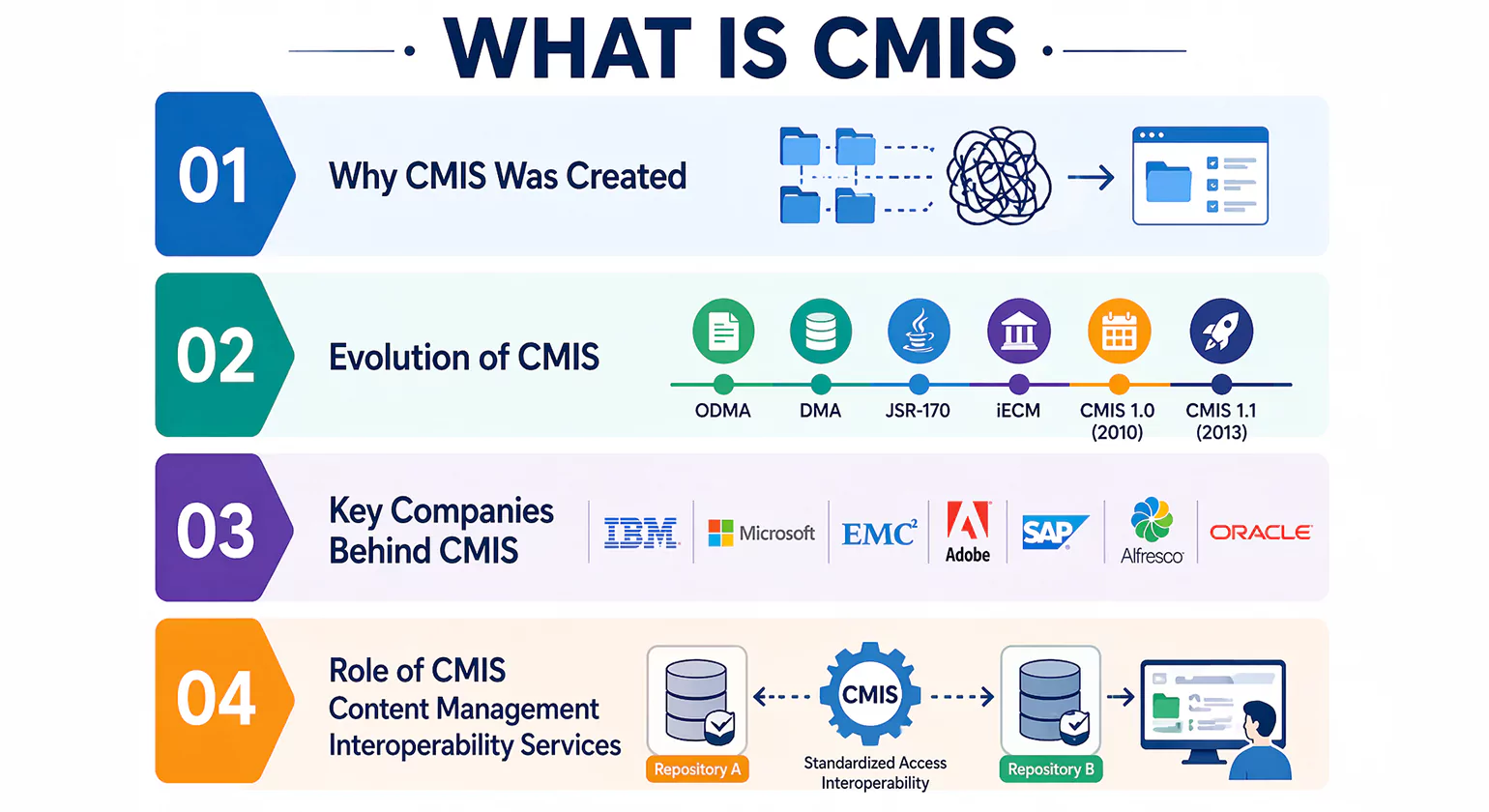
Years ago, large businesses had a huge mess on their hands. Every time they bought a new software tool to store their files, it locked their data inside. CMIS was built to tear down these digital walls so teams could move documents freely without paying for expensive custom code.
Evolution of CMIS
It started as a simple idea in 2008 to connect basic file folders. Over time, it grew much smarter. Today, the system handles complex tasks like tracking document versions, setting firm security rules, and organizing massive digital libraries across the globe.
Key Companies Behind CMIS
This brilliant idea did not come from just one person. Believe it or not, big tech rivals actually came together to build this. We’re talking IBM, Microsoft, EMC—all working as a team. They figured out that helping customers share files safely mattered way more than trapping them in a single brand forever.
Role of CMIS Content Management Interoperability Services
Today, the main job of Content Management Interoperability Services is to act like a universal translator for your entire business. If your sales team uses one app and your legal team uses another, this standard ensures everyone can still search, read, and edit the exact same files without any stressful tech headaches.
How Content Management Interoperability Services Work
Understanding Content Management Interoperability Services is simple. It acts as a universal translator for your files. Instead of different systems fighting, it lets them talk smoothly. This standard ensures your team can easily find, share, and edit company documents across any software platform without missing a beat.
CMIS Data Model
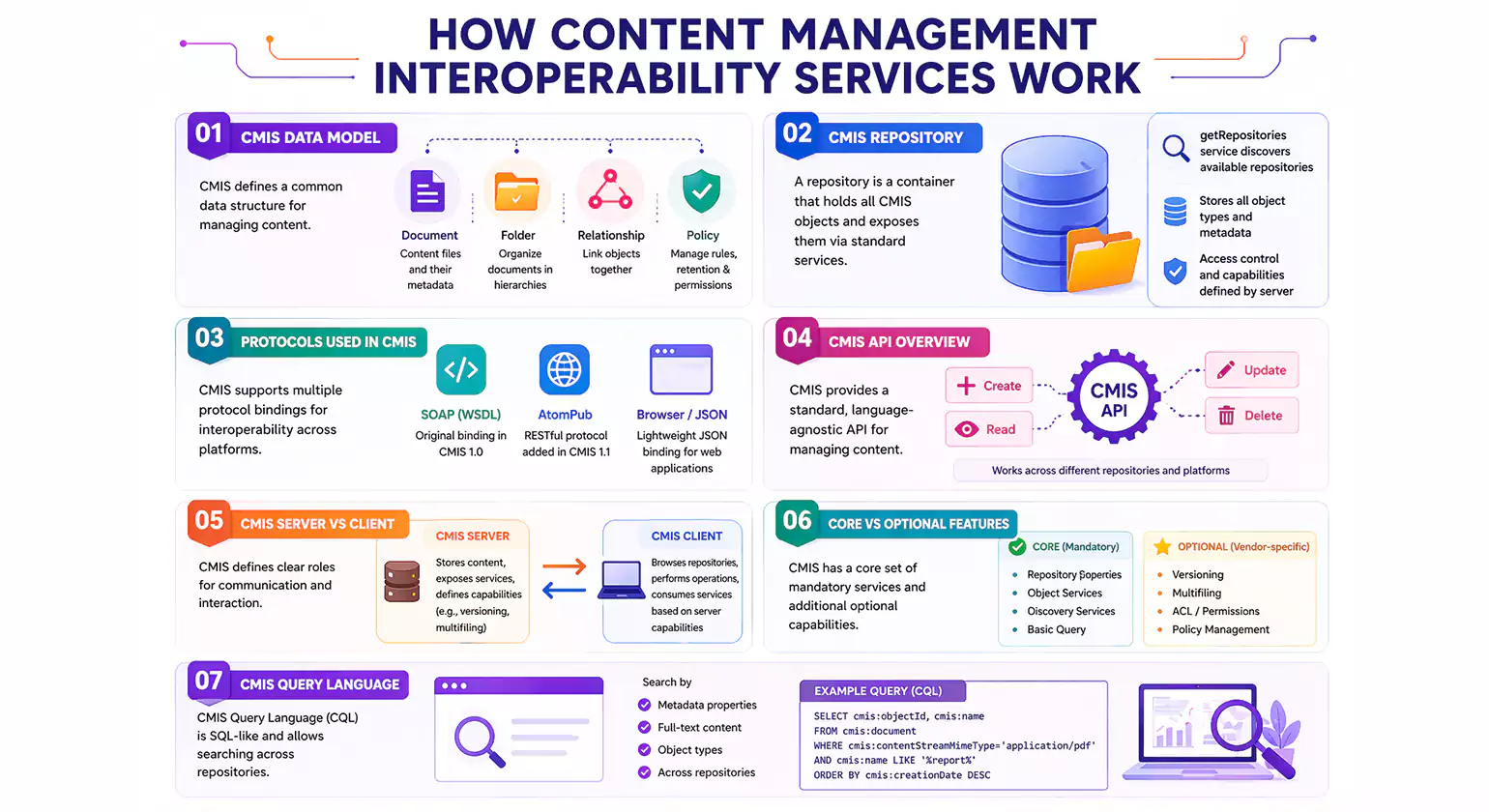
Think of this model like a giant digital filing cabinet. Everything goes into neat folders, documents, and relationship links. Plus, each file gets a clear label—like who wrote it and when. That way, your system always knows exactly what every piece of data is.
CMIS Repository
The repository is the actual digital vault where all your files live securely. It is the central storage space managed by Content Management Interoperability Services. This vault holds all the folders and documents, keeping everything totally organized and ready for you to pull up instantly.
Protocols Used in CMIS
To share files fast, this system uses common web languages. It relies on everyday internet protocols like REST and SOAP to move your data around. Picture them like reliable highways—your documents zip between different software programs without getting lost or messed up along the way.
CMIS API Overview
An API is just a secure bridge between two apps. This specific bridge lets your everyday software reach into the file vault safely. Developers use it to build custom tools that easily search, upload, or delete documents without needing to learn complex new coding rules.
CMIS Server vs Client
The server is the heavy lifter that actually stores and guards the files. The client is the app you use on your computer to view them. The client asks for a specific document, and the server safely hands it over to you in seconds.
Core vs Optional Features
Every system must have the core basics, like adding and reading files. Optional features are extra perks, like saving old file versions or handling strict security locks. You get the essential tools guaranteed, but you can add the fancy extras if your business needs them.
CMIS Query Language
So basically, it’s the search tool you use when you’ve lost a file and need it back fast. Works just like searching a regular database. Type in what you remember, a file name, a date, anything, and it’ll instantly scan that giant vault to pull up the exact document you’re after.
Business Benefits and Use Cases
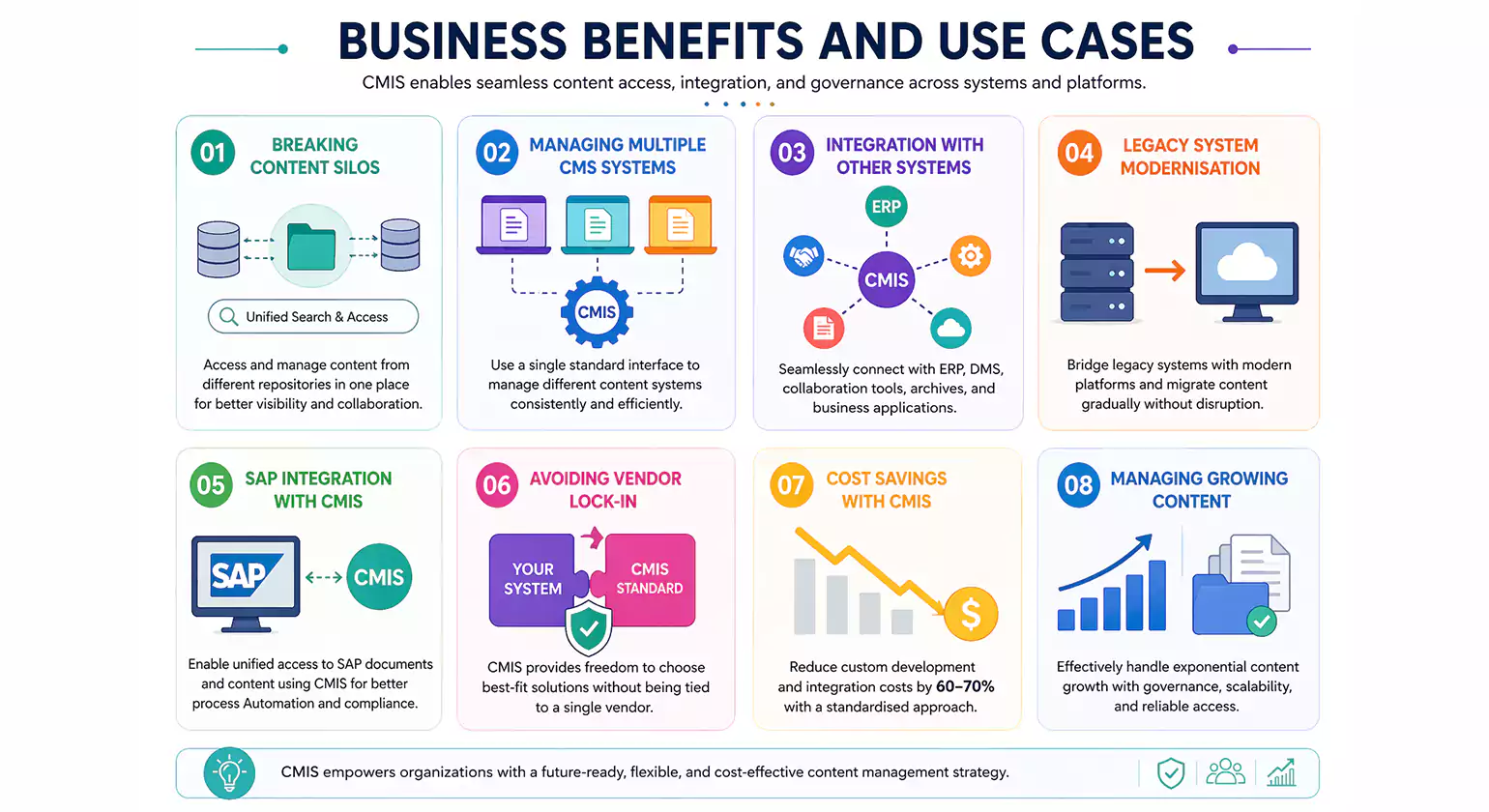
Let us explore how Content Management Interoperability Services can totally change your daily work. This smart standard connects your scattered tools, saves you serious money, and makes your team much faster. Here are the biggest ways it helps your business grow smoothly.
Breaking Content Silos
Are your files stuck in different departments? It is frustrating when teams cannot find what they need. By linking everything together, anyone can grab the right document instantly. You finally get one clear view of all your company data without endless searching.
Managing Multiple CMS Systems
Juggling five different publishing tools is a massive headache. So instead of logging into each system separately, you just connect them all. Your team handles every website page and blog post from one central place—saving hours of wasted effort and cutting down on Misinformed mistakes.
Integration with Other Systems
Your business runs on many different apps, like sales trackers and design tools. They need to talk to each other to work well. Content Management Interoperability Services acts like a universal translator, letting all your separate daily software share files perfectly.
Legacy System Modernisation
Old, clunky software slows everyone down. But replacing it all at once is scary and expensive. You can slowly upgrade your old systems by connecting them to fresh, modern tools. This keeps your old data safe while giving your team faster, better features.
SAP Integration with CMIS
Big company systems like SAP hold vital business data. Linking them directly to your main file storage makes life much easier. Employees can grab invoices or contracts straight from SAP—no more digging through cluttered folders or bugging the IT team for help.
Avoiding Vendor Lock-in
Nobody likes feeling trapped by one software brand. If a tool becomes too costly, you should be able to leave easily. Open standards let you move your massive file library to a brand new platform smoothly, giving you total freedom to switch anytime.
Cost Savings with CMIS
Stop paying for duplicate software licenses. When your tools work together, you can drop the apps you no longer need. Plus, your team works much faster when files are easy to find, cutting down on wasted hours that drain your daily budget.
Managing Growing Content
As your business expands, your pile of digital files grows massive. Keeping track of millions of photos and texts gets Amazing. A connected setup automatically sorts and stores this endless wave of new files smoothly, so your system never crashes or slows down.
Content Management Interoperability Services Implementation Guide
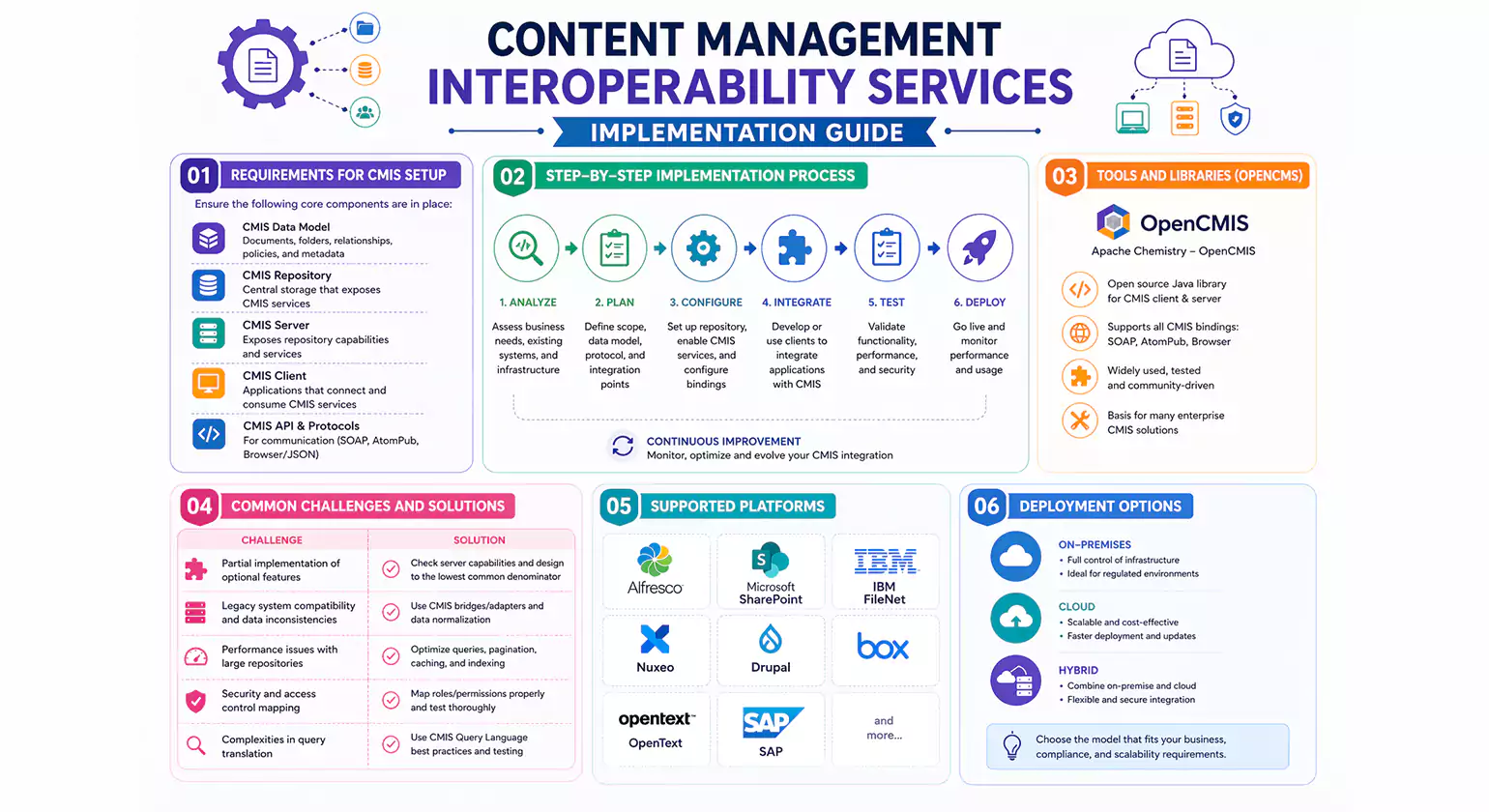
Setting up Content Management Interoperability Services can feel tricky at first. However, linking different file systems together saves your team hours of boring work. This simple guide will show you exactly how to get your document platforms talking to each other smoothly today.
Requirements for CMIS Setup
Before you jump in, just check what you’re already working with. Make sure your target server gets along with standard web protocols like REST or SOAP. You also need full admin access to both file systems and proper network security clearance to allow safe data sharing.
Step-by-Step Implementation Process
How do you actually build this connection? First, map out exactly which folders need to be shared. Next, configure the network endpoints on your main server. Finally, test a tiny file transfer to confirm the bridge works before moving your massive daily data loads.
Tools and Libraries (OpenCMIS)
Do not write all the code from scratch! Developers love using Apache Chemistry OpenCMIS. It is a free, ready-to-use library that does the heavy lifting for you. It provides pre-built Java code to quickly connect your custom apps to standard enterprise repositories safely.
Common Challenges and Solutions
Missing metadata is a huge headache during transfers. If tags do not match, files get lost in the shuffle. Fix this by mapping your data fields perfectly before hitting start. Also, slow networks can cause timeouts, so always run big syncs during the night.
Supported Platforms
Almost every major corporate platform plays nicely with these standard connections. By using Content Management Interoperability Services, you can easily link giant systems like SharePoint, Alfresco, Documentum, and IBM FileNet. This guarantees your business is never permanently locked into just one software vendor.
Deployment Options
You have total freedom on where this lives. Small teams usually pick a fast cloud setup for instant access. Big banks or hospitals often demand a locked-down, on-premise server to keep everything totally private. Just pick the path that fits your strict safety rules.
Limitations and Future of CMIS
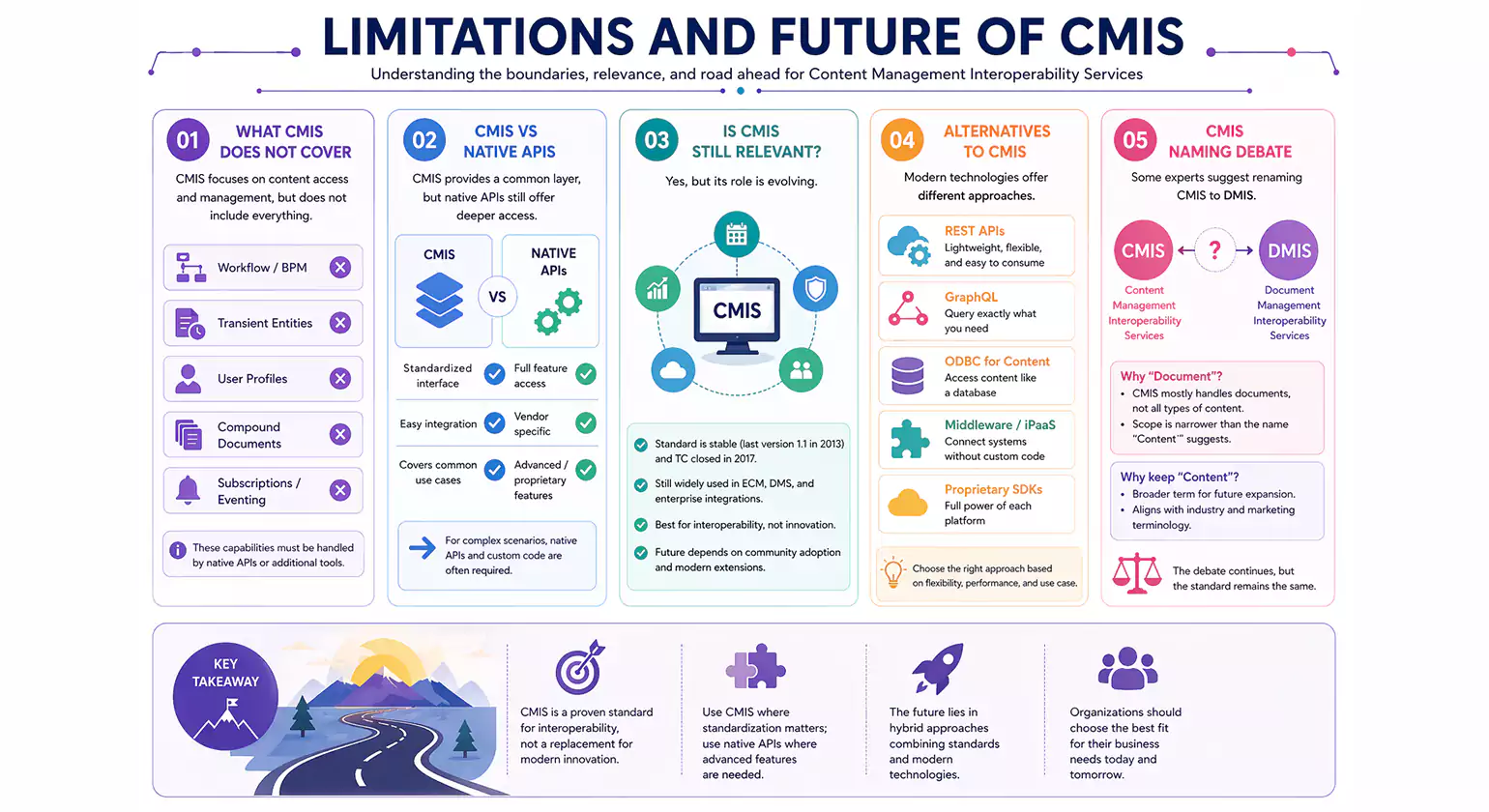
Look, CMIS was never meant to be a cure-all. Sure, it helps different systems talk, but it’s got boundaries. And understanding those boundaries? That’s how you choose the right tool. Here’s a quick, honest look at CMIS today and what’s next.
What CMIS Does Not Cover
CMIS handles basic file tasks well, but it misses specialized features. It cannot manage complex workflows, deep security settings, or specific administrative tools built into your repository. If you need to tweak high-end system settings or manage user roles, you will have to look beyond this standard.
CMIS vs Native APIs
Native APIs are built specifically for one platform, so they are fast and powerful. CMIS is a “middleman” that works across many systems but is often slower. While native tools let you use every single feature of a program, CMIS sticks to the basics to keep things compatible.
Is CMIS Still Relevant
Yes, it still matters for companies using several different storage systems. Even with newer tech rising, Content Management Interoperability Services remains a reliable way to avoid being locked into just one vendor. It is the best “safety net” for keeping your business data flexible and easy to move.
Alternatives to CMIS
Many modern developers are now moving toward RESTful APIs or GraphQL for more flexibility. Cloud-native tools like Amazon S3 and Microsoft Graph are also huge players now. These options often feel more natural for today’s web apps and offer better performance for mobile and cloud-heavy projects.
CMIS Naming Debate
People still argue about the name itself. Some say “Interoperability Services” sounds too clunky and technical for modern coding. Yeah, the name’s a bit clunky and old-school. But the real idea—getting different systems actually to play nice with each other? That’s something every developer still cares about today.
Conclusion
Content management interoperability services—look, they’re not perfect, but they actually fix a real problem. Tired of your CMSs not talking to each other? CMIS gives you a common language. Use it to break down those annoying silos, modernize old systems, and stop being stuck with one vendor. Just know when to stick with native APIs instead. For most teams juggling multiple repositories, it’s a practical, money-saving bridge that just works.
Related Blogs >>> Top Content Moderation Services Providers for Brand Protection
What Are the Fundamentals of Marketing? Concepts & Strategies
FAQs
How do content management interoperability services improve workflow efficiency?
They let different software systems chat with each other without a hitch. That means no more manual data entry between platforms—so your team saves time and avoids those expensive mistakes.
What are the security considerations in content management interoperability services?
You must ensure all connected systems use strong encryption and clear access rules. Since data moves between different apps, keeping your login credentials and file permissions tightly locked down is vital.
Can small businesses benefit from content management interoperability services?
Yes. It helps small teams connect their favorite tools without expensive custom coding. This flexibility allows you to scale your business and change software without losing access to your important files.
What industries commonly use CMIS standards today?
You’ve got government agencies, healthcare providers, law firms—all buried under piles of paperwork. Documents get lost across departments. What do they truly want? A simple, standard system to keep everything in order and finally find stuff the moment they need it.
How scalable are CMIS-based integrations for growing organizations?
They scale like Amazing. Since everything runs on a standard setup, you can just plug in new tools or storage spots as you grow. No breaking what you already have, and no tearing apart your whole workflow to make it fit.