Table of Contents
Challenges of Marketing attribution are how businesses track which ads lead to a final sale. However, tracking this exact journey is often very hard.
Today, buyers use many different apps and devices before they make a purchase. Research shows that over 60% of marketing teams struggle to connect this scattered data. When you cannot see the full picture, you waste money on the wrong ads. We will explore these common tracking problems and how you can fix them.
What Are the Biggest Challenges of Marketing Attribution?
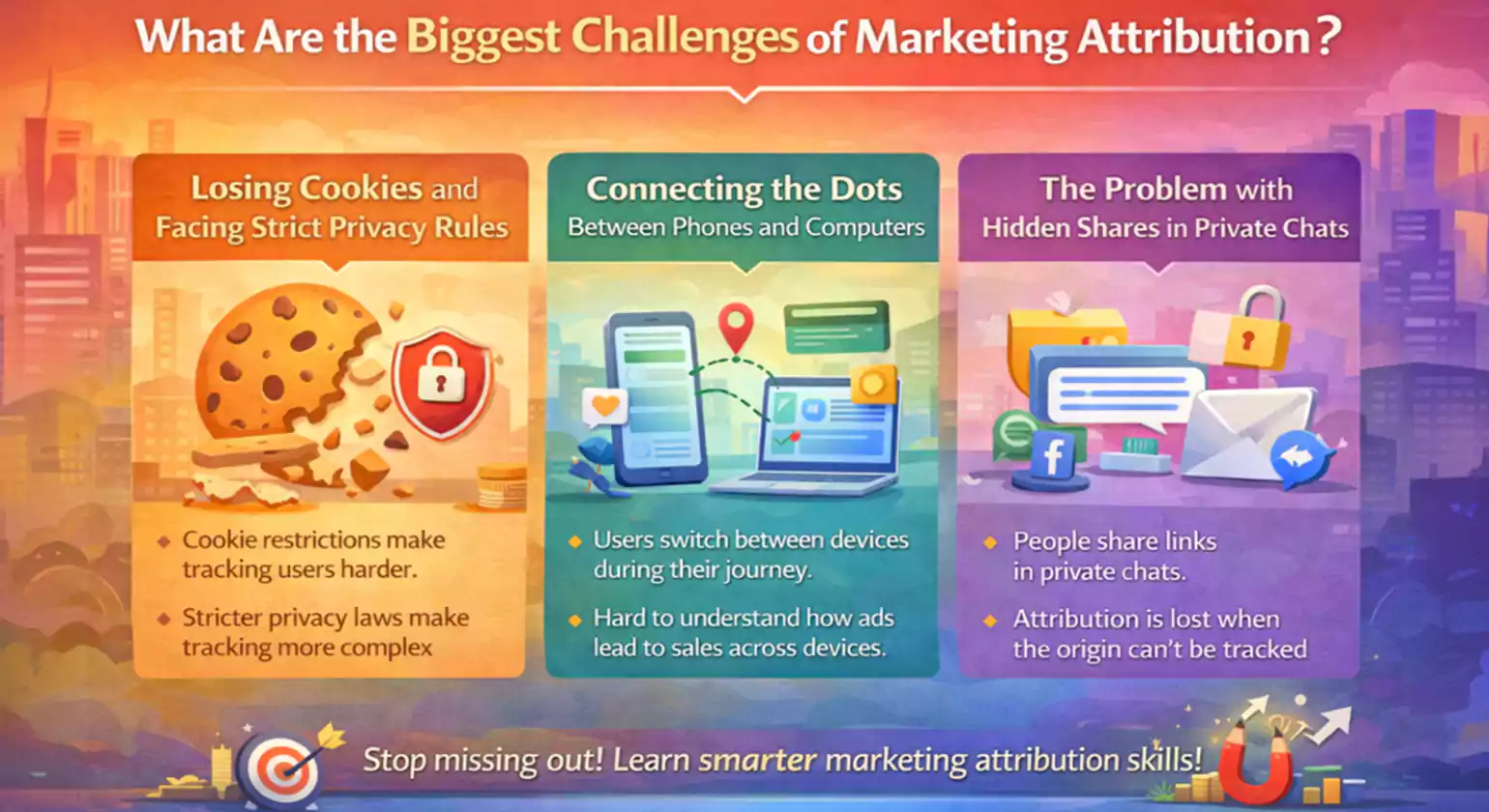
Marketing attribution is the process of tracking which specific ads or emails cause a customer to buy. The biggest challenges of marketing attribution today involve lost data. Brands constantly struggle with blocked cookies, cross-device switching, and hidden link sharing.
Losing Cookies and Facing Strict Privacy Rules
Cookies are small files that track web users. Today, strict privacy rules block over 50% of these tracking cookies. This data loss creates a huge problem. Without cookies, you cannot see if your paid ads actually lead to real sales.
Connecting the Dots Between Phones and Computers
Shoppers use many screens before they buy. A person might click an ad on a phone and buy later on a laptop. Most software counts this single buyer as two totally different people. This broken link hides the true path to a sale.
The Problem with Hidden Shares in Private Chats
People share links secretly. In fact, 84% of all shared links happen in private apps like WhatsApp or texts. Normal tracking tools cannot see inside these chats. If someone buys through a private text link, the brand completely loses the source.
Why Is Your Customer Data So Disconnected?
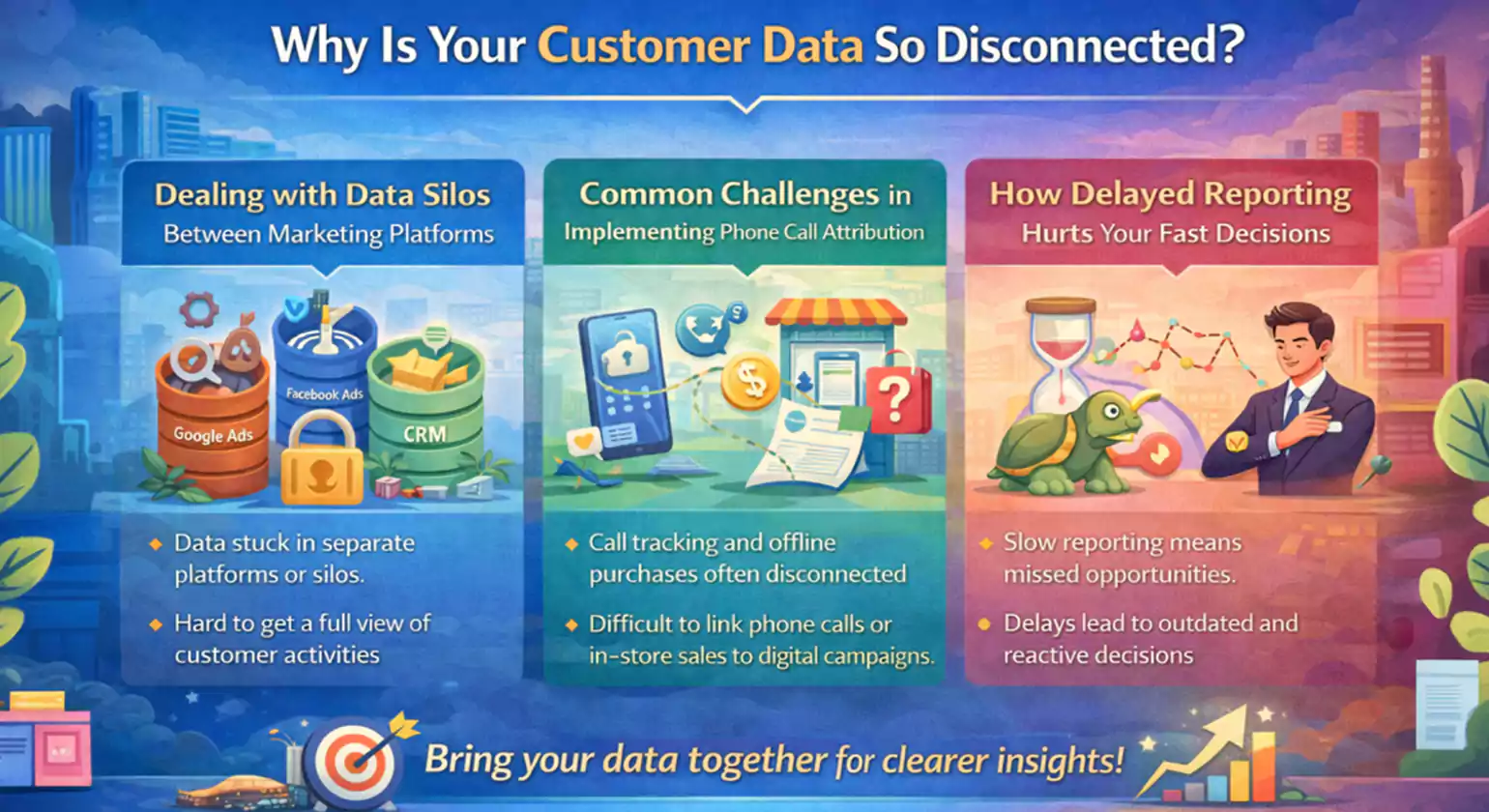
Customer data becomes disconnected when different software tools cannot talk to each other. One of the main challenges of marketing attribution is pulling all this scattered information into one clear dashboard.
Dealing with Data Silos Between Marketing Platforms
Most businesses use 10 or more separate tools to run ads, track leads, and send emails. When these platforms do not share numbers, they create data silos. Your email team cannot see what your ad team is doing. This creates a highly confusing map of the buyer journey.
Common Challenges in Implementing Phone Call Attribution and Offline Sales
Tracking online clicks is easy, but offline actions are much harder. A big problem happens when a shopper sees a web ad but decides to buy over the phone. Without special tracking tools, nearly 40% of these phone sales never link back to the original online ad.
How Delayed Reporting Hurts Your Fast Decisions
Old data leads to bad business choices. Many companies wait up to 72 hours for reports to fully update across all their systems. By the time you read the final report, your ad budget is already spent. Fast data is needed to pause failing ads instantly.
Why the Attribution Problem in Marketing Keeps Happening?
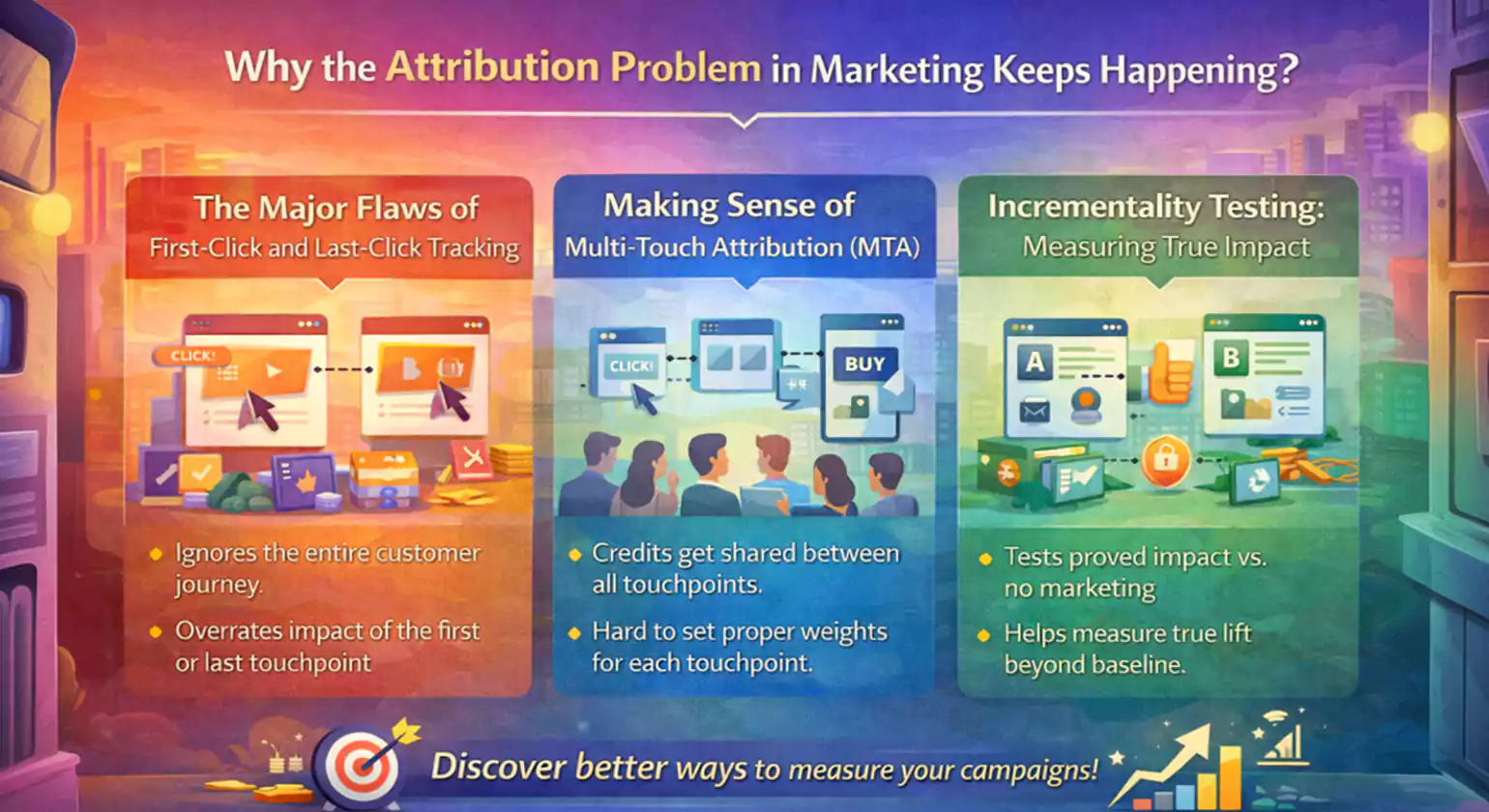
The attribution problem in marketing happens when businesses use broken rules to measure their success. One of the main challenges of marketing attribution is picking the wrong math to track your sales.
The Major Flaws of First-Click and Last-Click Tracking
These basic models give 100% of the credit to just one step. If a shopper clicks five different ads, this setup ignores four of them completely. This lazy tracking forces teams to make bad choices with their money.
Making Sense of Multi-Touch Attribution (MTA)
Multi-touch Attribution tracking splits the credit across every step a buyer takes. A standard setup divides 100% of the sale value among all the emails, social posts, and ads clicked. While it is much smarter, building this system takes real effort.
Incrementality Testing: Measuring True Impact
Incrementality testing proves if an ad actually caused a new sale to happen. Studies show nearly 60% of brands waste money showing ads to people who would purchase anyway. This smart test finds your true sales lift and saves cash.
How Can Businesses Solve These Marketing Attribution Challenges?
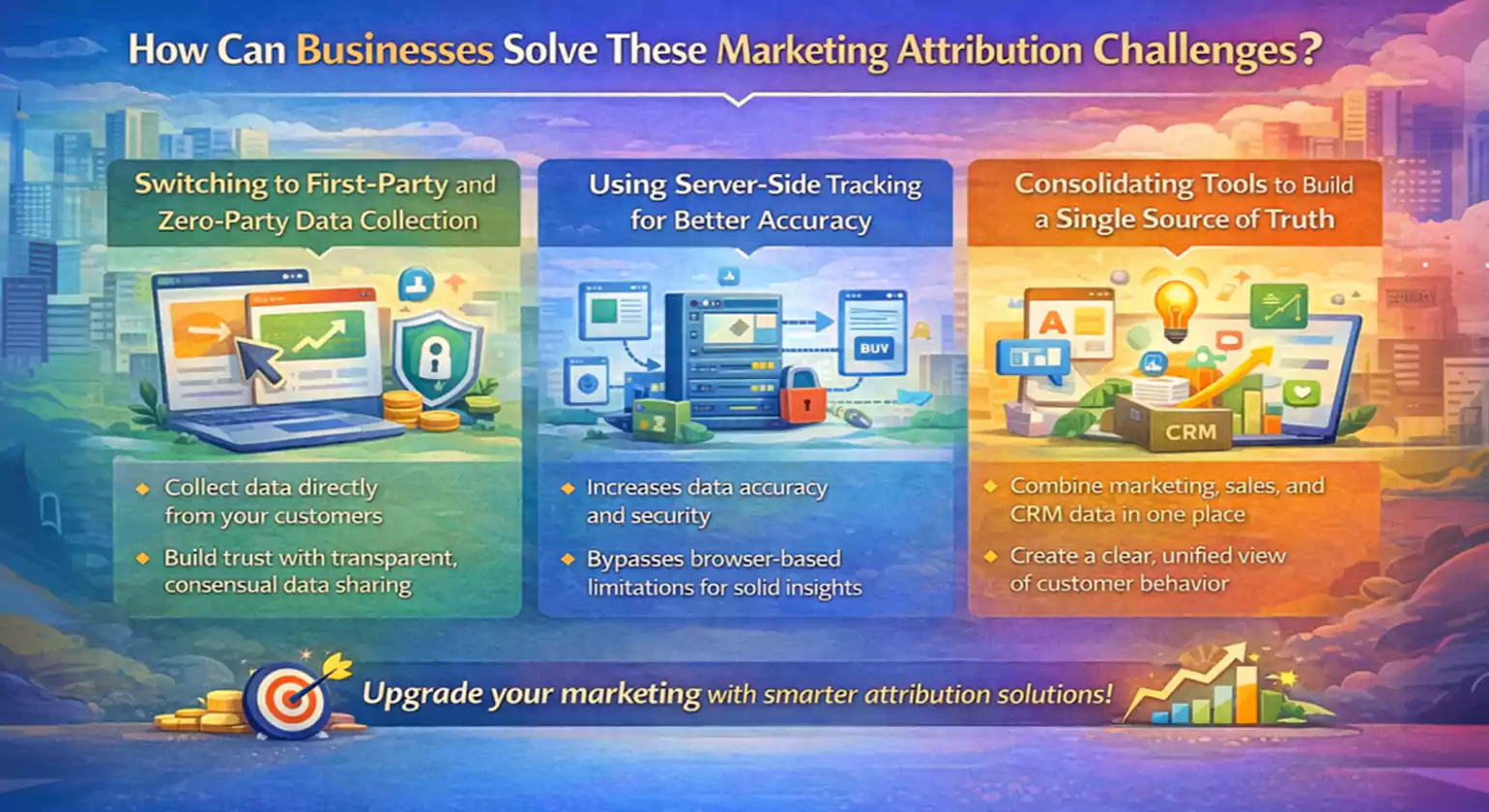
Tracking your sales is much harder now that web cookies are going away. To win, you must collect your own data and use smart tools. This helps you see the whole path a buyer takes. When you own your data, you finally know which ads really grow your business.
Switching to First-Party and Zero-Party Data Collection
The best data comes directly from your customers. You can ask shoppers quick questions through simple polls or sign-up forms on your site. This is known as zero-party data. It is very helpful because your users choose to share their own thoughts and details with you freely. Collecting your own info helps you stay accurate even when privacy rules get much tighter.
Using Server-Side Tracking for Better Accuracy
Normal tracking happens in the user’s browser, but ad blockers often stop it. Server-side tracking moves this process to your own secure server instead. This method helps you capture 20% to 30% more data that usually goes missing. It is a much more reliable way to track every click and sale.
Consolidating Tools to Build a Single Source of Truth
Many brands use too many different apps that do not talk to each other. You should move all your data into one central dashboard. This creates a single source of truth for your entire team. When all your tools are in one place, you stop guessing and start making better choices with your money.
How to Prove Marketing ROI to Your Leadership Team?

Marketing ROI is a simple math formula that shows how much money you earn for every dollar you spend on ads. Proving this value to leaders is often hard due to the many challenges of marketing attribution. You must connect your hard work directly to company sales to get more budget for your team.
Tying Every Campaign Directly to Real Revenue
To impress your boss, you must show exactly how an ad led to a sale. Stop focusing only on how many people saw your post. That number does not tell you if you made money. Instead, use special tracking links to show the truth. You can prove that one single email brought in exactly $5,000 in new sales. This direct link makes your marketing value clear to everyone.
Building Simple Dashboards That Tell the Whole Story
Great dashboards are simple. You should be able to read them in just ten seconds. Use big numbers and bright charts to show your wins clearly. A good report helps leaders see exactly where your money goes. It turns messy data into a story that anyone can understand in a flash.
Avoiding Vanity Metrics When Presenting Your Results
Vanity metrics are numbers like “likes” or “page views” that look good but do not pay the bills. Leaders care about profit, not popularity. Skip the fluff and focus on real growth. Showing 100 new paying customers is much better than showing 1,000 likes on a photo.
Conclusion
Solving the challenges of marketing attribution is the only way to prove your team’s true value. When you fix messy data and stop using basic tracking, you can finally see how people buy from you. Brands that use their own data and simple charts turn confusing numbers into real profit. Using smart tools helps you see exactly where your money is going. Stop guessing which ads work and start scaling your growth with facts.
Related Blogs >>> Exploring Top Marketing Attribution Tools for Digital Success
Top 20 Marketing Analytics Companies to Watch in 2026
FAQs
What is the average cost to fix the challenges of marketing attribution?
Small firms usually pay $500 to $2,000 every month for these tools. Big companies may spend $5,000 or more. Your total cost depends on how much data you track. Staying organized helps you see exactly where your money goes.
Are the challenges of marketing attribution different for B2B and B2C brands?
Yes. B2C sales are usually quick and simple. B2B sales take many months and involve many people. This makes it much harder for B2B teams to know which specific ad finally closed the big deal.
Will artificial intelligence completely fix our daily tracking issues?
AI helps a lot, but it’s not perfect yet. It can fill in missing data gaps and spot trends fast. However, you still need a human to check the work. You must make sure the numbers make sense.
How many months does it take to set up a reliable tracking system?
Getting everything right usually takes about three to six months. You need this time to connect your tools and gather new data. You must make sure reports are true. Patience is key to getting clean results.
Do we need to hire a data expert to manage this software?
Not always. Many new tools are very easy to use. However, if your data is very messy, a part-time expert can help you save time. They make sure your settings are correct so you do not waste money.