Table of Contents
Quick overview
- AI chatbots function as smart virtual assistants which help customers by providing answers to their questions and assisting them with their online shopping needs.
- AI chatbots increase sales through their ability to provide customized product suggestions while they also help businesses save time and deliver important information which improves their decision-making abilities.
- The company establishes protection measures through encryption methods and secure payment systems while maintaining compliance with GDPR and CCPA regulations to safeguard customer data.
- The main chatbot platforms deliver support across multiple channels while their AI systems create personalized experiences, and their analytics tools provide performance measurement.
What is an AI Chatbot for Ecommerce?
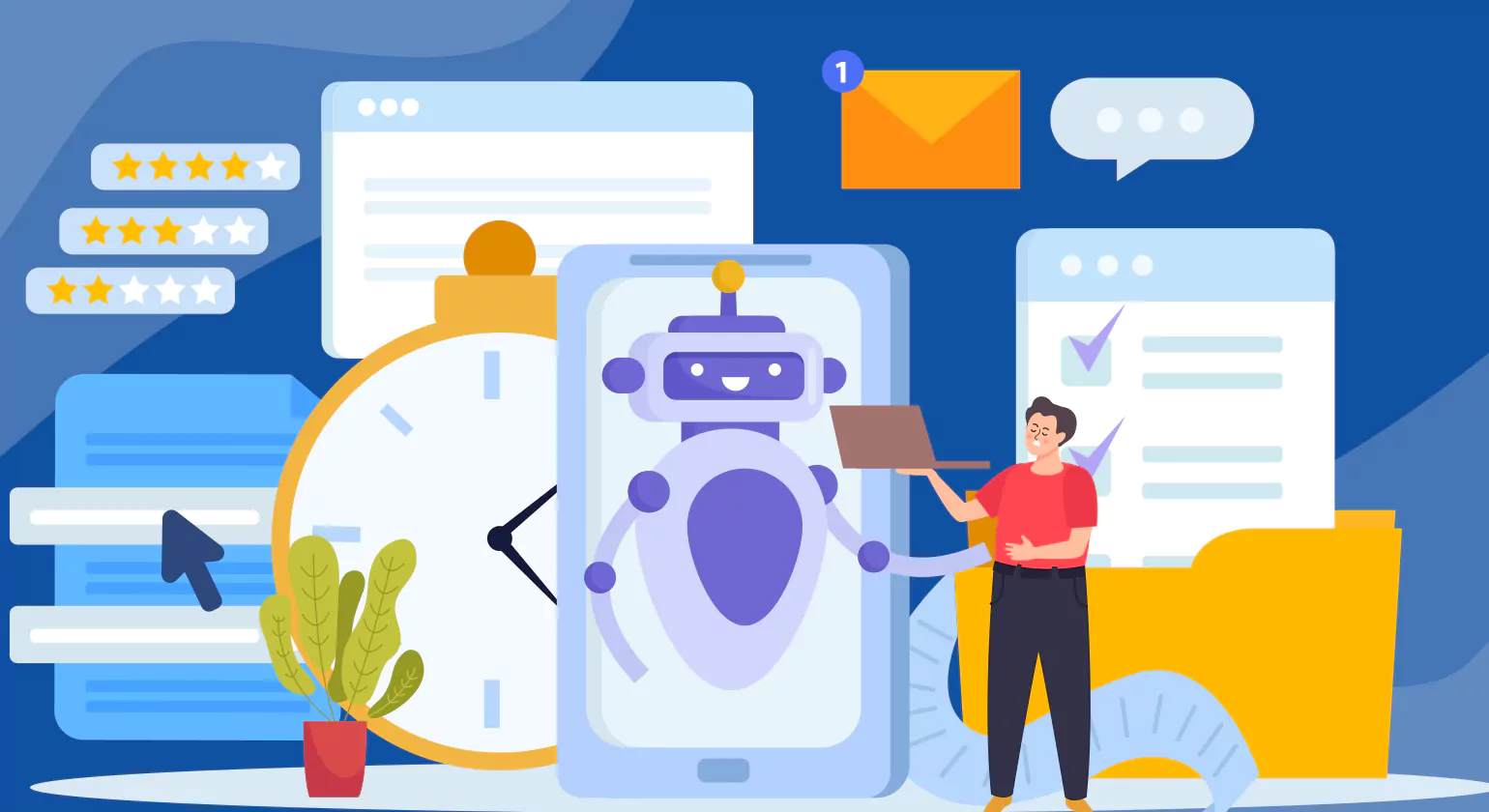
An AI chatbot for eCommerce functions as a software application which uses artificial intelligence to communicate with customers who visit online retail websites. AI chatbots exceed the capabilities of traditional chatbots because they understand natural language and use that understanding to determine user intent and create tailored responses. The system provides real-time assistance to shoppers which includes answering their questions and making product suggestions and helping them complete their checkout and managing their support needs after purchase.
The chatbots use machine learning together with data from prior interactions to enhance their response capabilities which leads to improved shopping experiences and operational efficiency. AI chatbots provide eCommerce businesses with two functions that extend beyond customer service because they act as marketing tools which generate sales and customer engagement while working continuously without requiring staff members to assist customers.
The AI chatbot for eCommerce functions as a virtual sales assistant which helps customers find products and solve problems and finish their purchases while increasing total business revenue.
Why AI Chatbots Are Essential for Ecommerce Success?

Modern customers expect quick, relevant, and personalized assistance at every touchpoint. An intelligent ecommerce chatbot platform helps ecommerce brands deliver that seamlessly. It enhances user experience, improves conversions, and reduces operational strain—all while ensuring a consistent shopping journey across platforms through an enterprise ai chatbot solution for ecommerce.
The Strategic Importance for Online Stores
- Provides instant answers to queries about pricing, product details, and delivery timelines.
- Reduces dependency on large customer support teams through automated assistance.
An AI Chatbot for Ecommerce maintains customer satisfaction 24/7 across multiple channels, including websites and messaging apps.
Key Benefits for Ecommerce Growth
- Enhanced Conversions – Quick, accurate responses minimize checkout delays and encourage faster purchase decisions.
- Improved Customer Experience – Personalized recommendations, real-time updates, and smooth interactions foster stronger engagement.
- Valuable Data Insights – Chat interactions offer actionable insights on customer intent, common pain points, and buying patterns.
How to Implement It Effectively?
- Train the chatbot with FAQs, product data, and conversational language for accurate, human-like replies.
- Integrate with CRM, CMS, and payment systems to enable order tracking, secure payments, and personalized responses.
- Build smart escalation flows so complex issues transfer seamlessly to human support agents.
Checklist for Choosing the Right Chatbot
- Easy integration with major ecommerce platforms like Shopify, Magento, and WooCommerce.
- Ability to understand customer intent and respond contextually.
- Offers multilingual support, performance tracking, and analytics for continuous improvement.
An AI chatbot for ecommerce is no longer a luxury—it’s a core enabler of efficiency, personalization, and scalability. By leveraging automation to simplify customer communication, ecommerce businesses can enhance loyalty, reduce costs, and stay ahead in a highly competitive market.
Top 10 AI Chatbot for Ecommerce Website Platforms for 2026
AI chatbots have become essential for ecommerce websites aiming to deliver instant, personalized customer service and streamline sales. In 2026, businesses are increasingly turning to AI chatbot platforms to enhance user experience, reduce cart abandonment, and boost conversions
1. IBM Watson
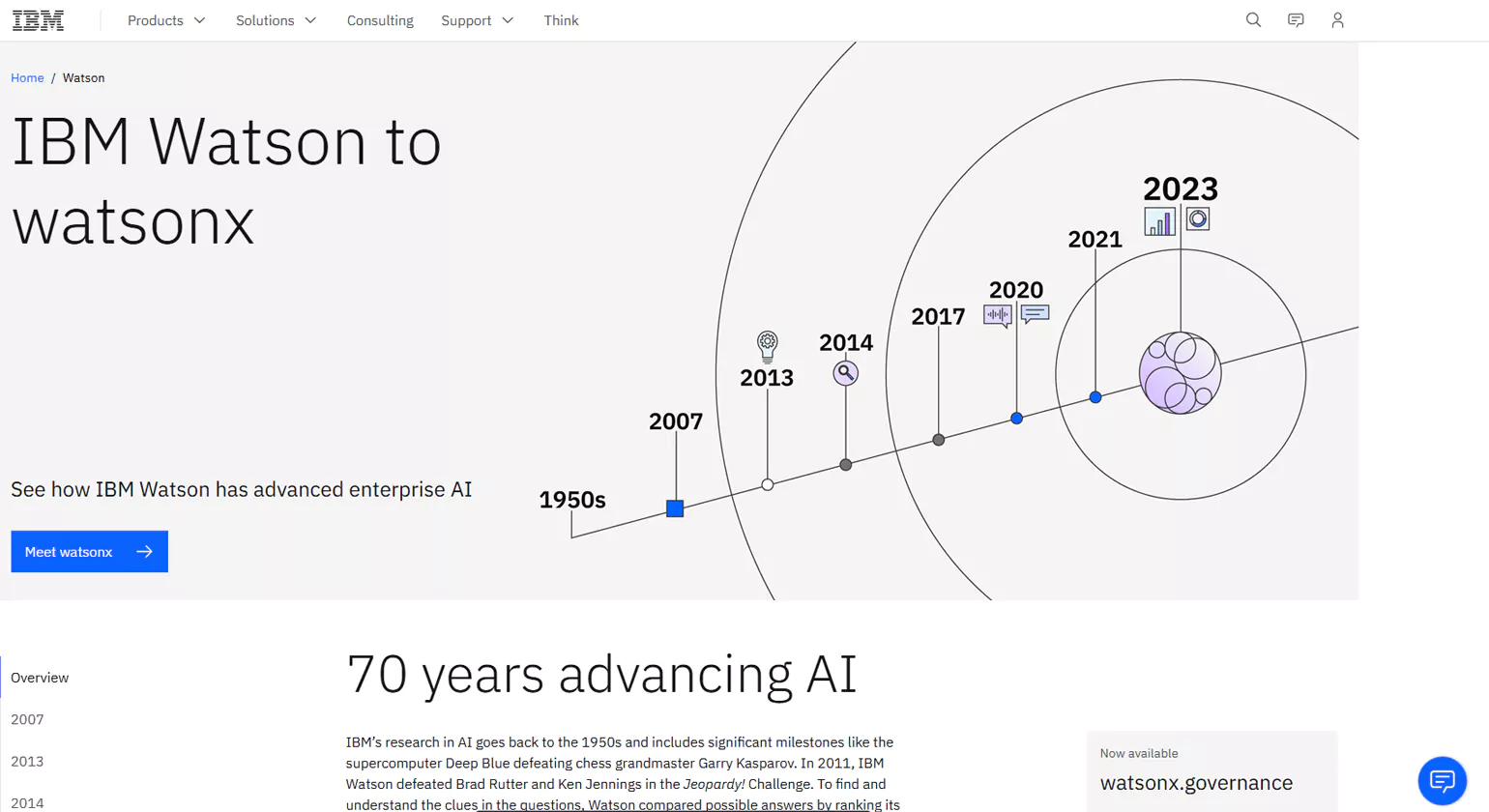
IBM Watson offers a powerful AI chatbot platform that leverages advanced natural language processing (NLP) and machine learning to provide sophisticated conversational capabilities. It enables businesses to create highly interactive chatbots that understand and respond to customer queries in a human-like manner. IBM Watson’s flexibility and scalability make it ideal for complex enterprise needs.
Key Features
- Natural Language Processing (NLP): Offers advanced NLP capabilities for understanding and responding to complex queries.
- Multilingual Support: Can engage in conversations in multiple languages, making it suitable for global businesses.
- AI Model Training: Allows businesses to train custom AI models based on their specific needs.
- Integration with IBM Cloud: Seamlessly integrates with IBM’s cloud services for enhanced performance.
- Analytics and Reporting: Provides detailed analytics on chatbot interactions to improve decision-making.
2. Google Dialogflow
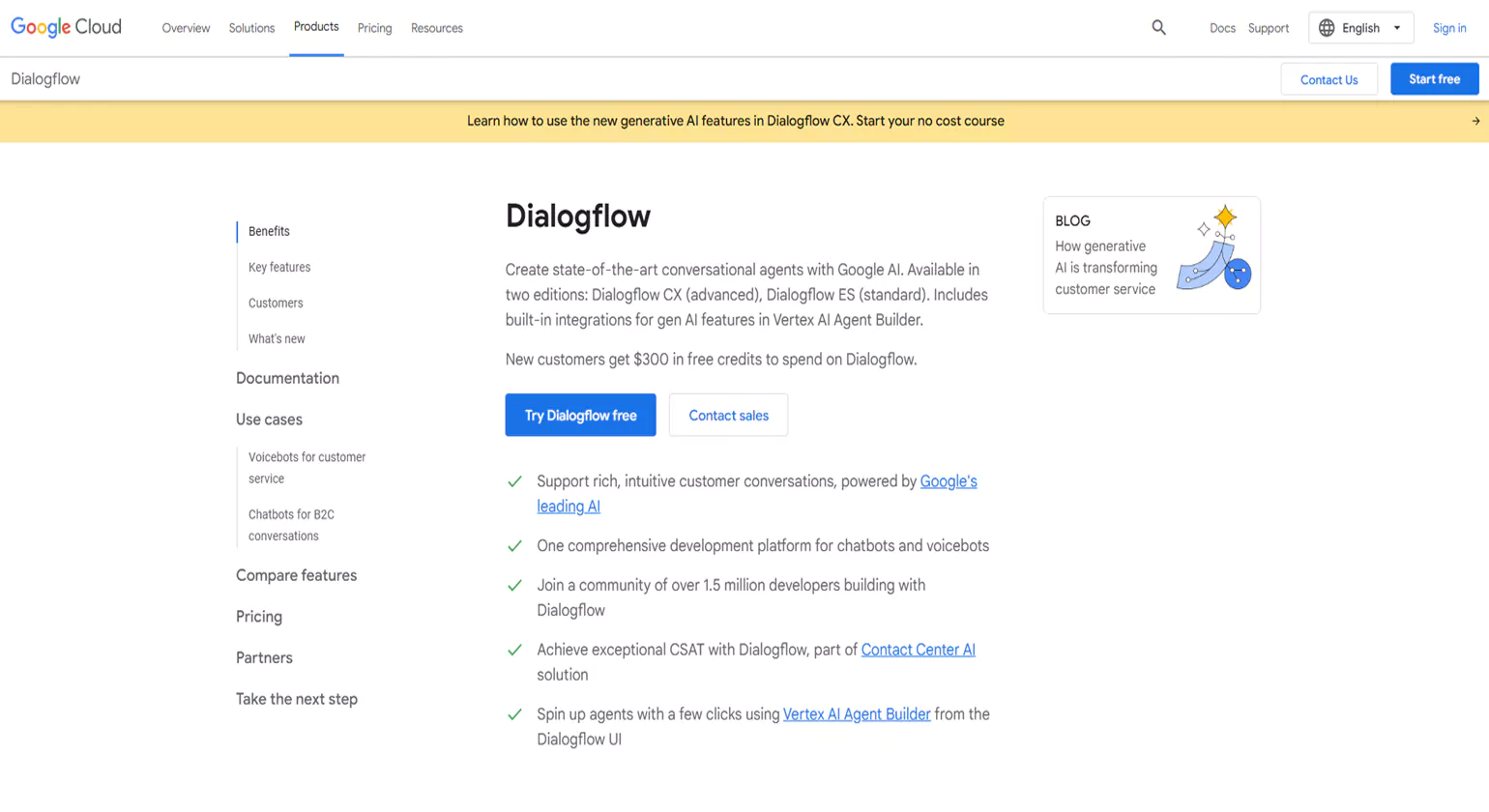
Google Dialogflow is a robust AI chatbot for ecommerce framework that utilizes Google’s machine learning and NLP technology to build conversational interfaces. It allows developers to create chatbots that can handle natural language interactions across multiple platforms. With support for voice and text input, Dialogflow integrates seamlessly with various applications and devices.
Key Features
- Context-Aware Conversations: Can handle context-switching, allowing more natural conversations.
- Integration with Google Cloud: Easily integrates with Google Cloud for scalability and security.
- Rich Media Support: Supports rich media responses like images, videos, and buttons in conversations.
- Multichannel Deployment: Enables chatbots to be deployed across multiple platforms (web, mobile, etc.).
- Pre-Built Agents: Offers pre-configured templates to accelerate chatbot deployment.
3. Microsoft Bot Framework
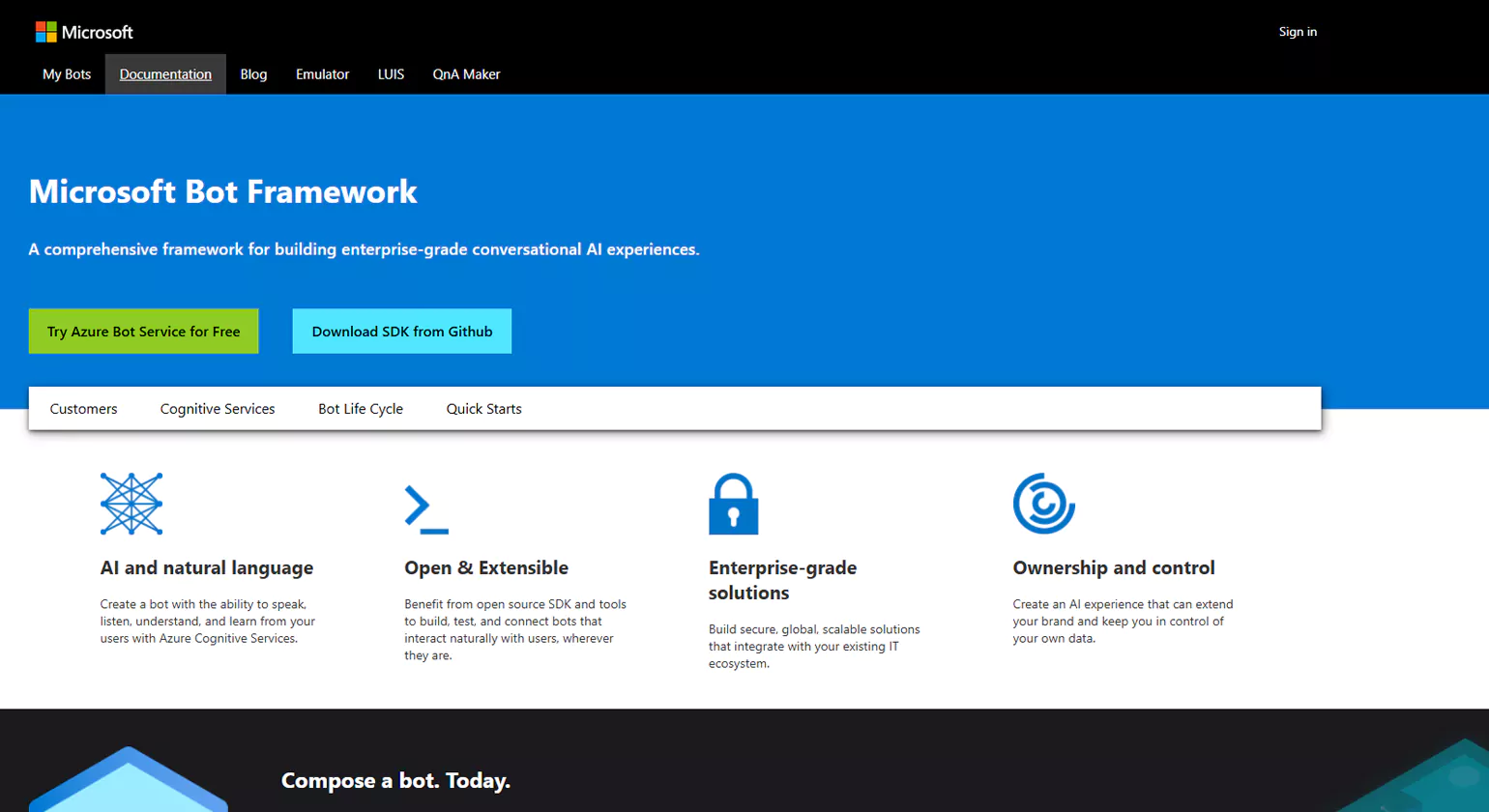
The Microsoft Bot Framework provides a comprehensive set of tools and services for building and deploying AI chatbot for e-commerce. It supports multiple programming languages and integrates with Microsoft’s cloud services to enable sophisticated conversational experiences. The framework offers scalability and robust analytics to monitor and enhance chatbot performance.
Key Features
- Cross-Platform Compatibility: An AI Chatbot for Ecommerce supports deployment on a variety of platforms, including websites, apps, and messaging channels.
- Azure AI Integration: Leverages Microsoft Azure for AI-driven capabilities like speech recognition and language understanding.
- Bot Analytics: Provides real-time insights into chatbot performance to drive improvements.
- Enterprise-Grade Security: Offers robust security features for enterprise-level deployments.
- Rich User Experiences: Supports multimedia content like images and rich cards to enhance user interaction.
4. Salesforce Einstein Bots
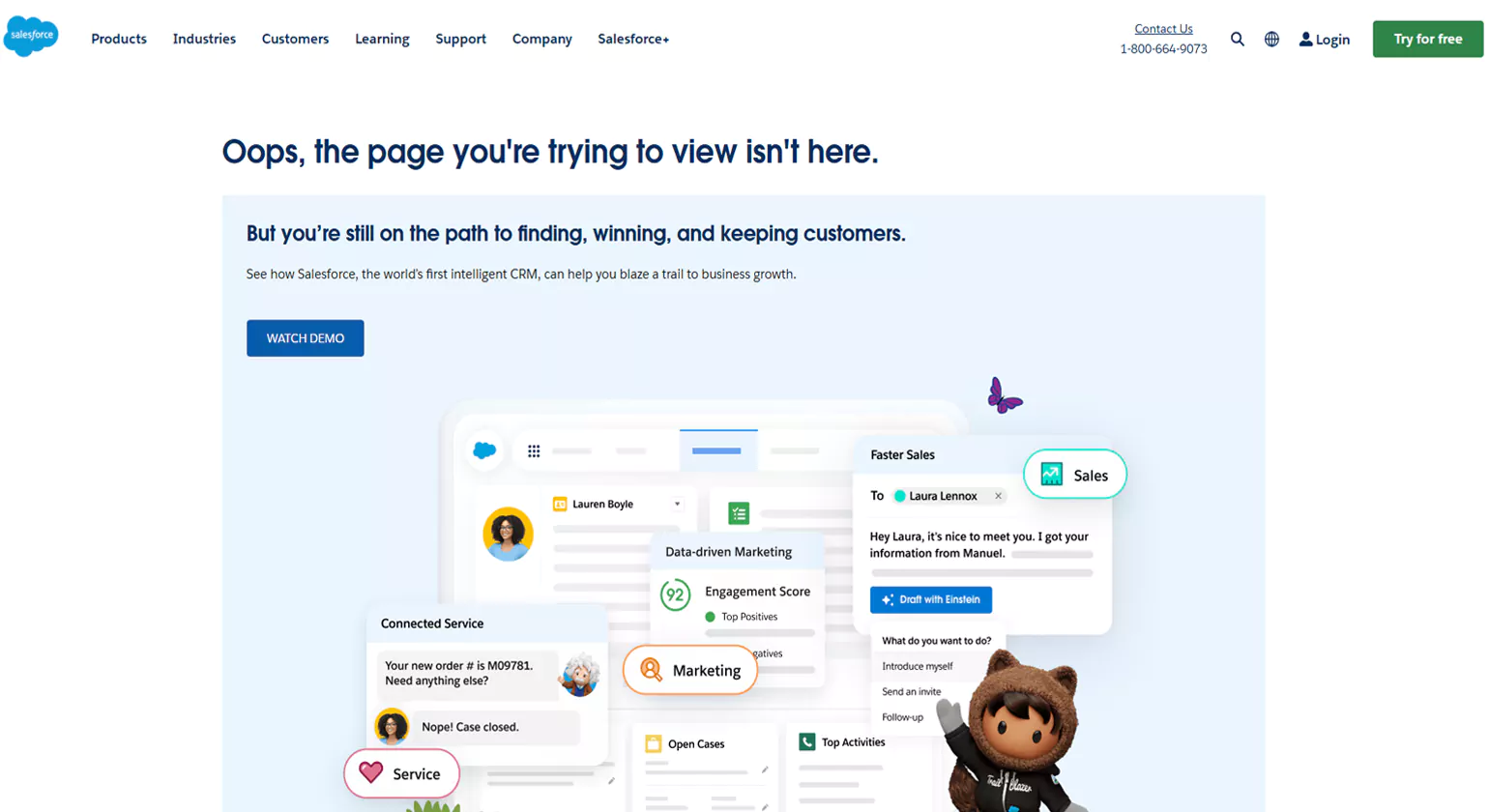
Salesforce Einstein Bots are designed to enhance customer service within the Salesforce ecosystem. As an advanced AI chatbot for ecommerce, they offer personalized interactions and automate routine tasks, such as case management and lead generation. By leveraging Salesforce’s CRM data, Einstein Bots provide contextually relevant responses and insights.
Key Features
- CRM Integration: Fully integrates with Salesforce CRM, providing context-aware customer service.
- AI-Driven Recommendations: Offers personalized responses and product recommendations based on customer data.
- Lead Generation: Helps with lead qualification and capturing valuable customer information.
- Easy Deployment: Provides a simple interface for businesses to create and manage chatbots.
- Analytics for Optimization: Uses analytics to monitor chatbot performance and continuously optimize workflows.
5. LivePerson
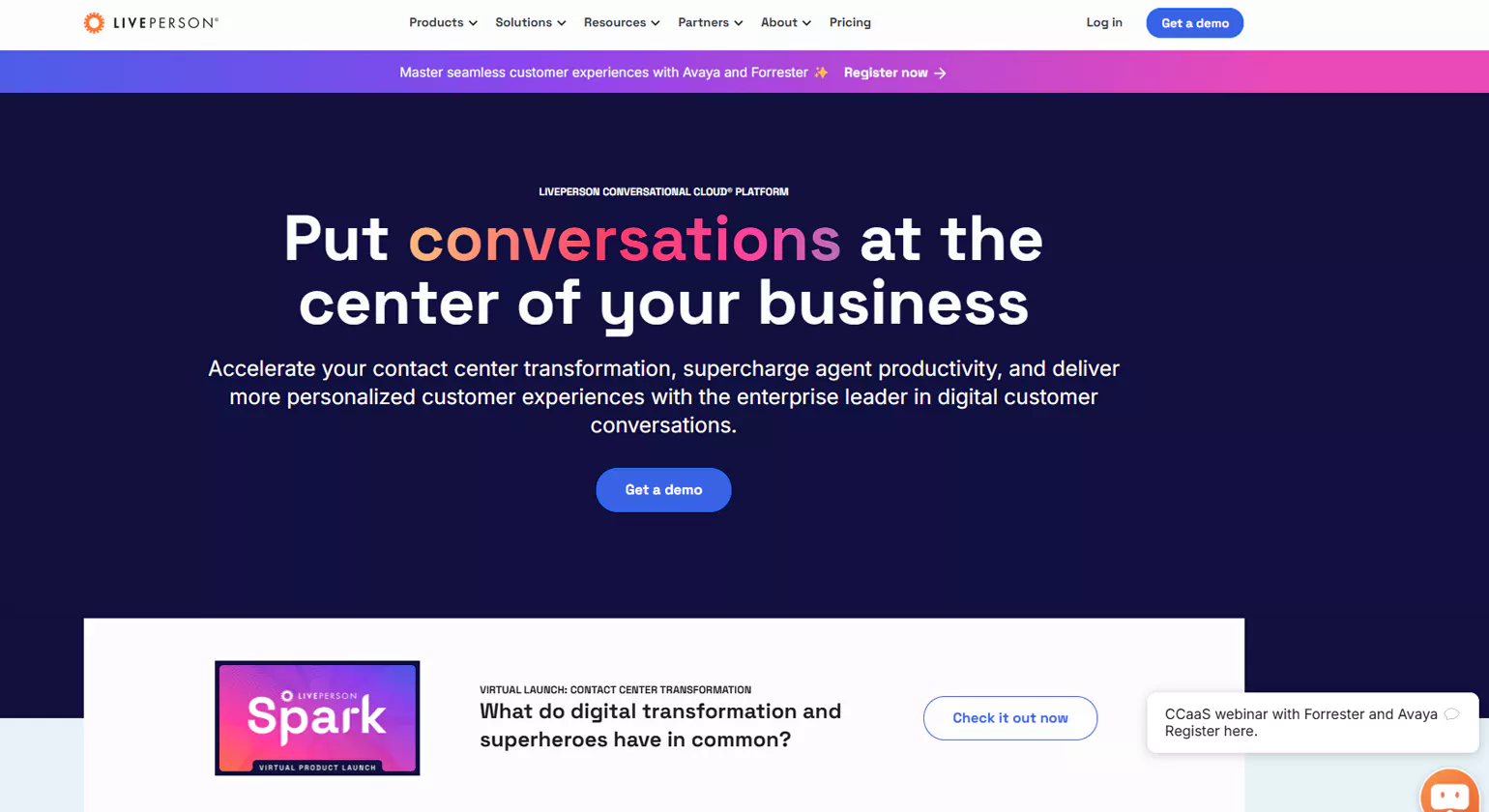
LivePerson specializes in AI chatbots that facilitate real-time customer engagement through messaging and voice channels. Their platform, recognized among the best ecommerce chatbots, offers advanced NLP and machine learning capabilities to deliver accurate responses and seamless conversations. LivePerson’s AI Chatbot for Ecommerce is also part of leading ecommerce ai bot platforms, designed to handle high volumes of interactions while providing actionable insights for businesses.
Key Features
- AI-Powered Conversations: Leverages AI to handle complex conversations and seamlessly escalate to human agents when needed.
- Multichannel Engagement: Supports a variety of messaging channels such as SMS, WhatsApp, and social media.
- Real-Time Analytics: Provides real-time data and insights on customer interactions.
- Human + AI Collaboration: Facilitates smooth collaboration between AI and human agents for optimal service.
- Proactive Engagement: Enables businesses to initiate conversations with customers based on behavior or data triggers.
6. Drift
Drift’s AI chatbot for ecommerce platform focuses on driving sales and improving customer engagement through real-time conversations. With features like lead qualification and personalized messaging, Drift helps businesses convert website visitors into customers. The platform integrates with various CRM systems to provide a cohesive customer experience.
Key Features
- Lead Generation Focus: Specializes in capturing leads through automated conversations and qualifying prospects.
- Real-Time Chat Routing: Routes conversations to the right sales or support teams based on customer needs.
- Personalization: Offers personalized interactions by using user data and behavior to customize responses.
- Integration with Marketing Tools: Easily integrates with CRM and marketing platforms like HubSpot and Salesforce.
- Conversation Analytics: Provides insights into chat performance to optimize engagement and conversions.
7. Intercom

Intercom provides a versatile AI Chatbot for Ecommerce that combines AI with human support to enhance customer service. Its chatbots can handle common queries, book meetings, and guide users through workflows. Intercom’s platform offers detailed analytics and integration with marketing and support tools to streamline customer interactions.
Key Features
- Customer Support Automation: Automates responses to customer queries, reducing the need for human agents.
- Customizable Chatbots: Offers flexibility in building bots with custom workflows and responses.
- Live Chat Integration: Combines AI chatbots with live chat features to ensure a seamless transition to human agents.
- Targeted Messaging: Allows businesses to send tailored messages to users based on behavior and characteristics.
- Help Desk Integration: Works seamlessly with customer support systems for integrated issue resolution.
8. Zendesk
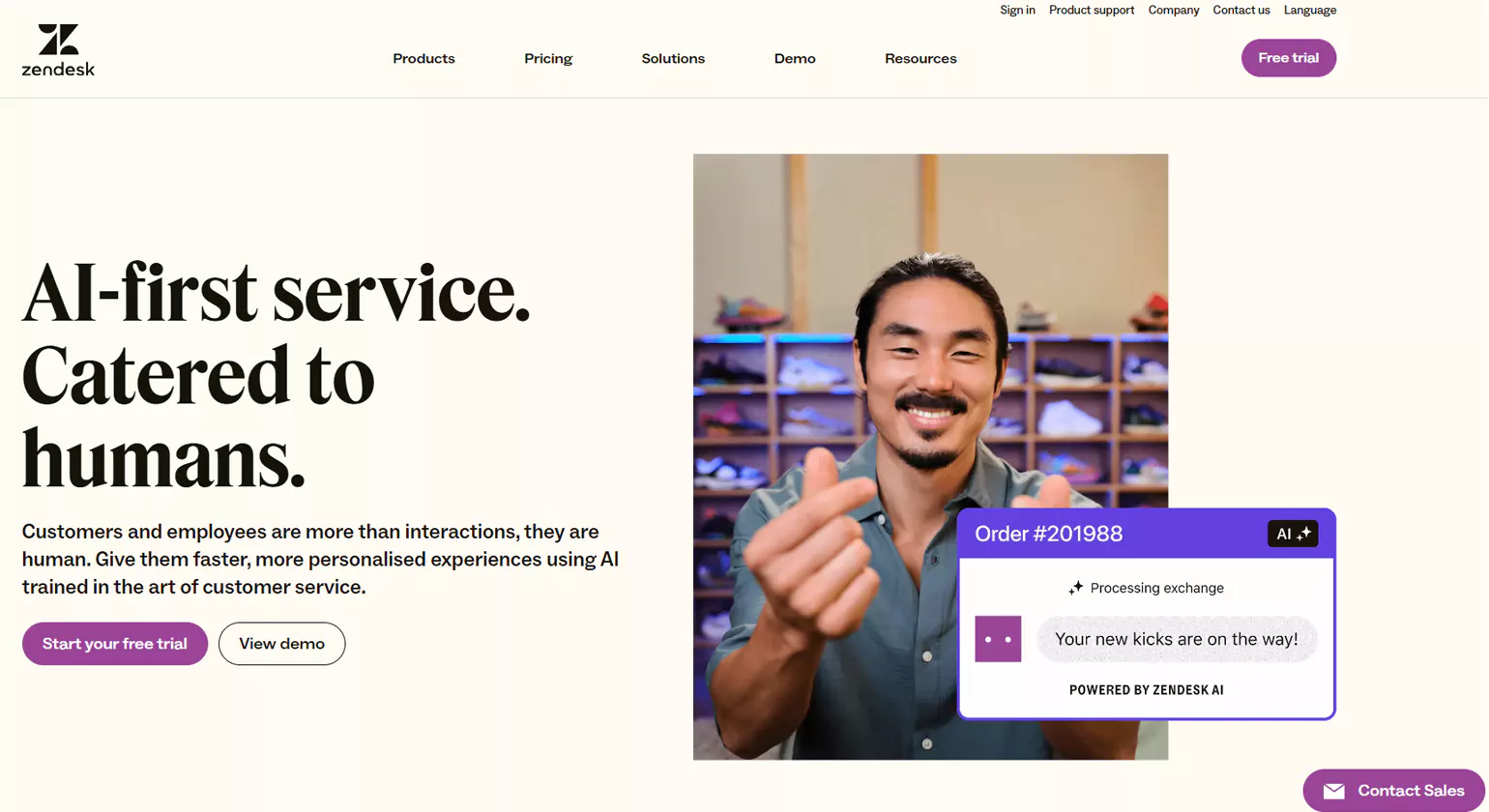
Zendesk’s AI chatbots are designed to improve customer support by automating responses and providing self-service options. As a reliable AI chatbot for ecommerce, they integrate seamlessly within Zendesk’s suite of customer service tools, offering personalized assistance and handling a variety of support tasks—enhancing overall efficiency and customer satisfaction.
Key Features
- Omnichannel Support: Supports multiple communication channels, including live chat, email, and social media.
- AI-Driven Ticketing System: Automates ticket creation and prioritization using AI.
- Self-Service Features: Offers knowledge bases and AI-powered self-service options to help customers find answers.
- Integration with Zendesk Suite: Integrates with other Zendesk products for a comprehensive customer support solution.
- Performance Insights: Provides actionable insights to help optimize customer support strategies.
9. Rasa
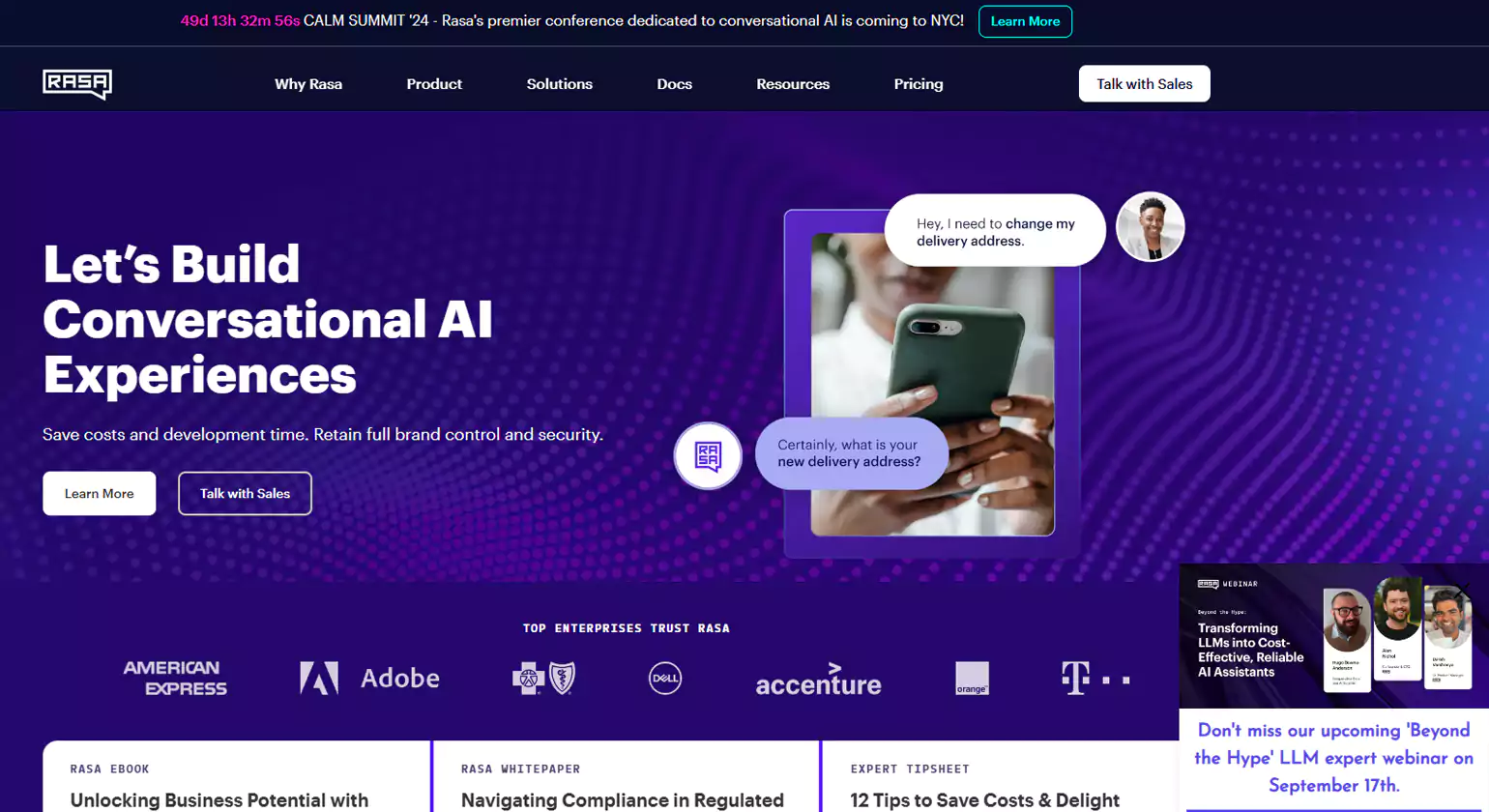
Rasa offers an open-source AI chatbot framework that emphasizes customization and control. It enables developers to build conversational agents with advanced NLP and machine learning capabilities. Rasa’s flexibility allows businesses to create tailored chatbot solutions that integrate seamlessly with existing systems and data sources.
Key Features
- Open-Source Platform: Offers an open-source framework for businesses to customize and build their own AI chatbots.
- Customizable NLP: Allows businesses to train their own machine learning models for more precise NLP capabilities.
- Privacy-Focused: Focuses on data privacy by allowing businesses to host their chatbots on-premise or in a private cloud.
- Conversational AI Framework: Provides advanced tools for building complex conversational AI systems.
- Multi-Language Support: Supports multiple languages, making it ideal for global deployments.
10. Aivo
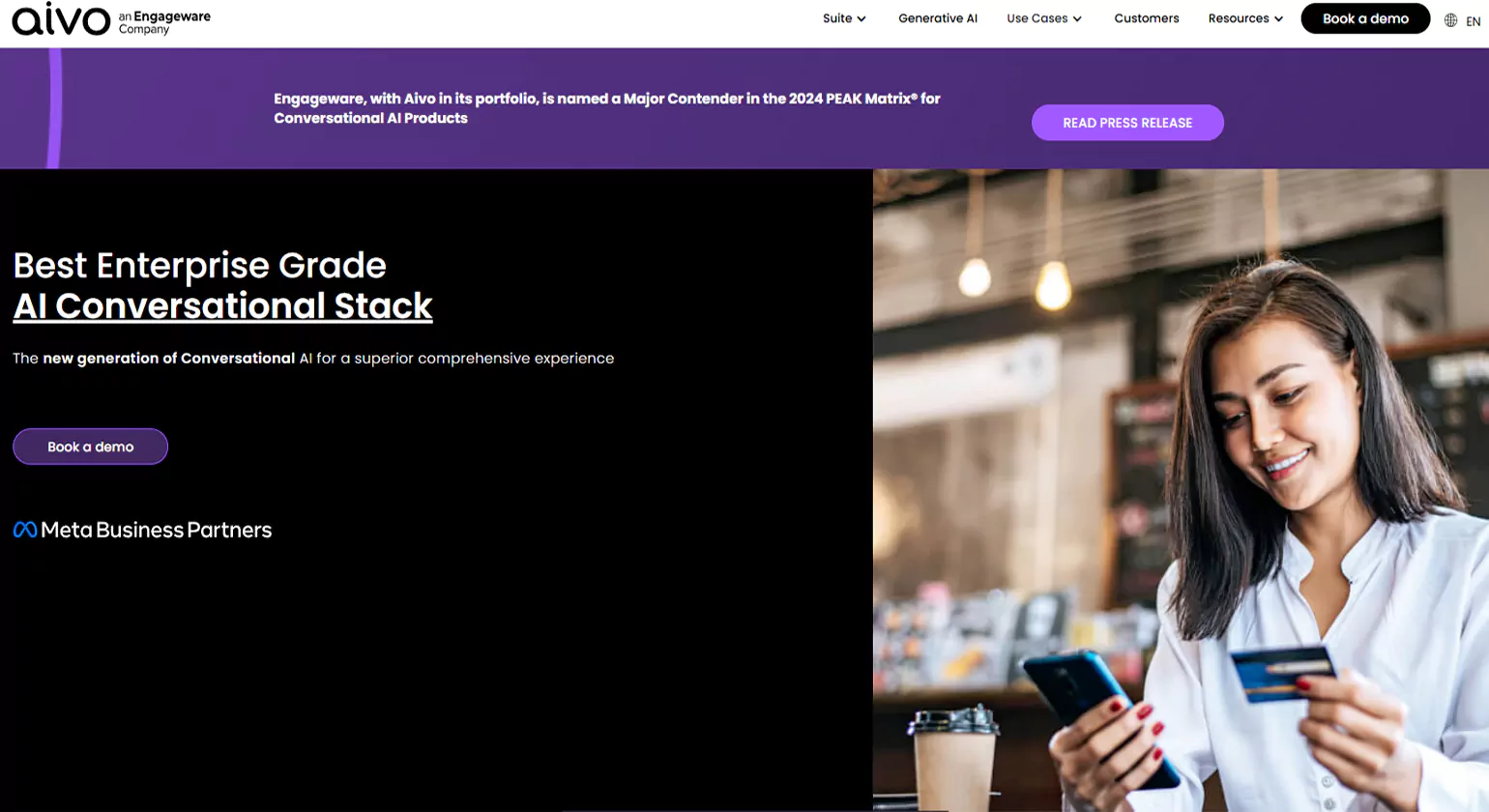
Aivo provides an AI chatbot for ecommerce that focuses on delivering high-quality customer service through natural language understanding. Their chatbots are designed to handle complex interactions and offer personalized support across multiple channels. Aivo’s platform includes tools for analytics and continuous improvement to optimize chatbot performance.
Key Features
- Omnichannel Communication: Supports communication across multiple channels such as email, social media, and voice.
- AI-Powered Customer Service: Automates customer service tasks while maintaining a high level of personalization.
- 24/7 Availability: Ensures that customers can get support at any time, reducing wait times.
- Human-Agent Handover: Easily transfers conversations to human agents when needed for more complex inquiries.
- Customizable Chatbots: Provides a high degree of customization to tailor the chatbot to business needs.
Key Benefits of Chatbots for Ecommerce Growth
Why Chatbots Matter for Modern Online Stores
An AI Chatbot for Ecommerce has evolved from being a simple support tool to a powerful solution that enhances customer experience and streamlines sales operations. With growing user expectations for instant, personalized interactions, integrating Chatbot development services can directly influence customer satisfaction, conversion rates, and retention.
Major Benefits of Chatbots in Ecommerce
Round-the-Clock Customer Support
Chatbots ensure customers receive assistance at any time of day. Whether it’s tracking orders, resolving payment issues, or answering FAQs, they provide consistent and reliable support. This accessibility builds trust and reduces response time, improving the overall user experience.
Simplified Product Discovery
Chatbots can guide users through the buying journey by understanding preferences like style, price range, and product type. The best ecommerce chatbots use intelligent filtering to help shoppers find relevant products faster, which boosts engagement and reduces drop-offs across leading ecommerce ai bot platforms.
Cart Abandonment Reduction
One of the most valuable functions of ecommerce chatbots is re-engaging customers who leave items in their carts. They can send timely reminders, share limited-time offers, or address concerns that prevented the purchase, effectively increasing conversion rates.
Personalized Recommendations
By analyzing user behavior and purchase history, chatbots can suggest complementary or frequently bought-together products. This targeted approach helps brands deliver a more tailored shopping experience and encourages repeat purchases.
Efficient Cost and Resource Management
Automating repetitive customer service tasks allows human agents to focus on complex issues. This reduces operational costs, improves efficiency, and ensures consistent communication across channels.
To see tangible results, integrate your chatbot with CRM and ecommerce analytics tools to track behavior, optimize conversational flows, and measure response effectiveness. Start with key intents like order tracking, returns, and cart recovery, then expand as data-driven insights grow.
By implementing an AI Chatbot for Ecommerce thoughtfully, businesses can strengthen customer relationships, reduce friction, and improve overall performance without increasing workload.
AI Chatbot for Ecommerce Personalization Strategies
- Dynamic Discounts & Offers – Deliver tailored promotions to users according to their shopping habits.
- Predictive Search Assistance – Help users find products faster through smart autocomplete systems which provide predictive suggestions.
- Behavior-Based Messaging – The system activates chatbot messages when users perform specific actions such as leaving their shopping cart or viewing products.
- Customer Segmentation – The process of segmenting users involves dividing them into different groups based on their preferences and demographics and their purchasing behavior.
- Natural Language Understanding – Chatbots use natural language understanding to recognize user intent and produce human–like conversational responses.
- Post-Purchase Engagement – The system provides order updates and upsell opportunities and related product suggestions to customers after they complete their purchase.
- Feedback & Reviews Collection – The system requests users to provide reviews and feedback which will help improve product recommendations and personalization.
Types of Chatbots Explained for Ecommerce Businesses
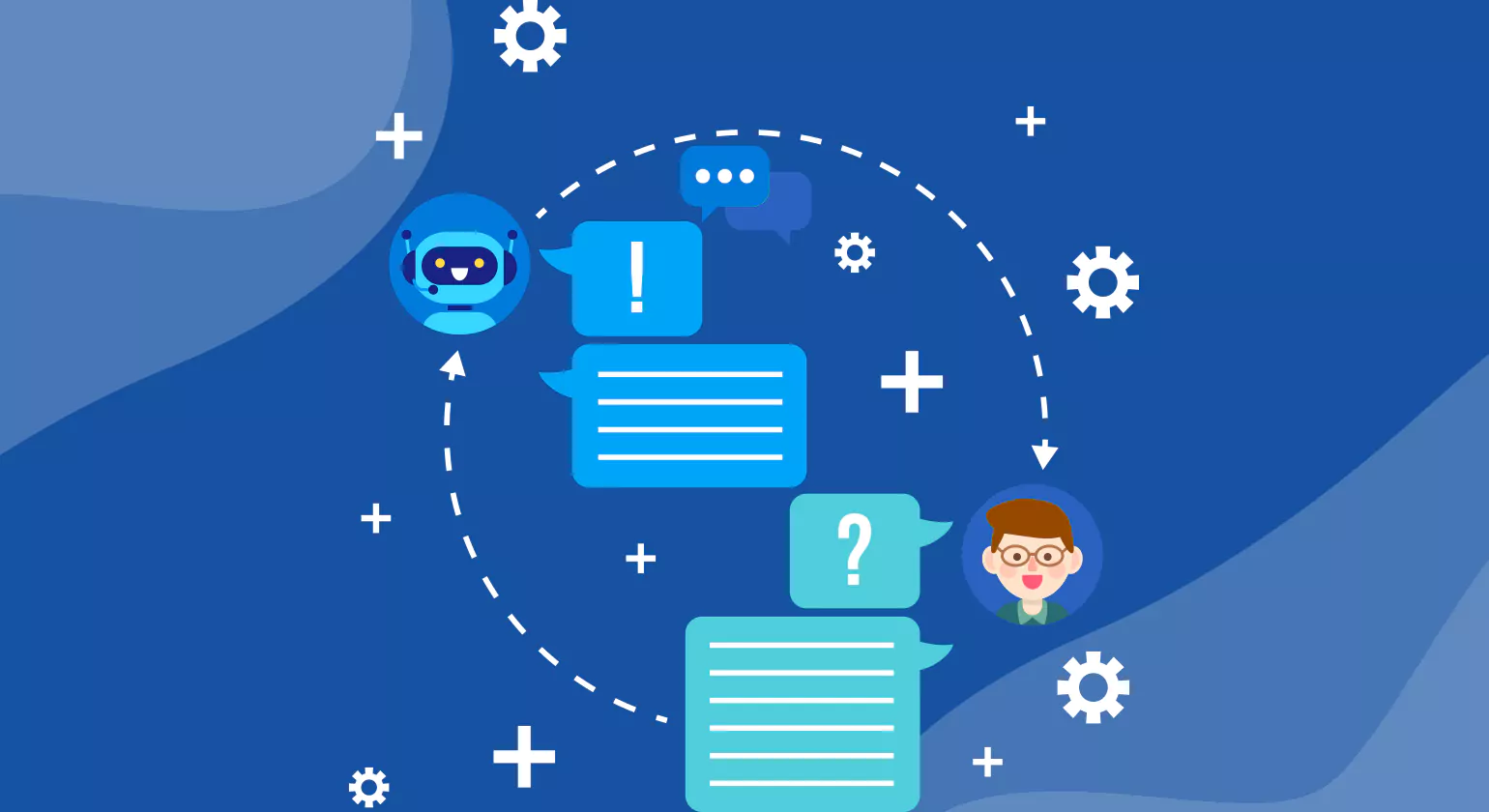
Why understanding chatbot types matters
Selecting the right chatbot determines how effectively your ecommerce store engages customers, manages queries, and boosts conversions. Each type of chatbot, including a custom chatbot, offers unique advantages depending on your business goals, complexity of customer interactions, and automation needs.
Main types of chatbots for ecommerce
- Menu or button chatbots – These are simple, structured chatbots that guide users through predefined options. Ideal for quick queries like order status, returns, or delivery tracking.
- Rule-based chatbots – Operate using fixed logic and decision trees. They’re efficient for predictable customer questions and support workflows, such as FAQs or return requests.
- Keyword recognition chatbots – Respond based on specific keywords within a query. Useful for handling repetitive questions like “refund” or “payment options,” but may struggle with complex phrasing.
- AI-powered chatbots – Use natural language processing to understand context and intent. Perfect for creating personalized interactions, recommending products, and improving customer satisfaction.
- Hybrid chatbots – Combine rule-based and AI-driven logic to balance accuracy and flexibility. A practical choice for businesses managing both routine and complex interactions.
- Voice chatbots – Enable hands-free interactions and enhance accessibility. Commonly used in mobile apps or smart devices for faster, intuitive shopping experiences.
How to select the right chatbot for your store
- Define your objectives – Identify what you want to achieve: faster support, better lead qualification, or improved customer experience.
- Assess query complexity – Use rule-based chatbots for predictable questions; AI or hybrid ones for personalized, multi-turn conversations.
- Ensure system integration – The chatbot should connect seamlessly with CRM, inventory, and payment systems for a unified experience.
- Measure impact regularly – Track key metrics such as response time, resolution rate, and customer satisfaction to optimize performance.
Integrating an advanced AI Chatbot for Ecommerce can significantly improve engagement by offering real-time, contextual assistance. As your business grows, adopting scalable chatbot solutions ensures consistent user experience across every touchpoint.
How to Integrate AI Chatbots in an Online Store
In today’s fast-paced e-commerce world, customer expectations are higher than ever. Shoppers want instant answers, personalized experiences, and smooth transactions. This is where an ecommerce chatbot platform and an enterprise ai chatbot solution for ecommerce come in. Integrating AI chatbots in your online store can enhance customer service, reduce operational costs, and boost sales. Here’s how to do it effectively.
1. Identify Your Store’s Needs
Before adding a chatbot, determine what you want it to achieve. Common goals include answering FAQs, assisting with product searches, handling order tracking, and offering personalized recommendations. Defining your needs ensures you choose the right ai chatbot solution for ecommerce.
2. Choose the Right AI Chatbot Platform
Numerous chatbot platforms integrate seamlessly with e-commerce systems like Shopify, WooCommerce, and Magento. Look for platforms with features like NLP consulting (Natural Language Processing), multilingual support, CRM integration, and analytics. Popular choices include Tidio, Drift, Intercom, and ManyChat.
3. Seamless Integration with Your Online Store
Most chatbot providers offer plugins or APIs for easy setup. Install the chatbot widget on your website so it appears on product pages, checkout pages, and support sections. Ensure the chatbot is mobile-friendly since most customers shop on smartphones.
4. Train Your Chatbot for E-Commerce Tasks
AI chatbot for ecommerce platform for ecommerce best when trained with your store’s data. Add your product catalog, FAQs, shipping policies, and return guidelines. Set up workflows for tasks like abandoned cart reminders, product suggestions, and upselling. Training the chatbot makes interactions smoother and more relevant.
5. Personalize Customer Interactions
Modern AI chatbots go beyond answering questions—they personalize shopping. By analyzing user behavior, they can recommend products, suggest bundles, or apply discounts. This increases customer engagement and improves conversions, giving your store a competitive edge.
6. Integrate with Payment and CRM Systems
To maximize value, connect your chatbot with CRM tools like HubSpot or Salesforce for tracking leads and customer interactions. Some advanced chatbot ecommerce solutions also allow secure checkout directly in chat, making the buying process faster and easier.
7. Monitor and Improve Performance
Once integrated, track chatbot performance using analytics. Measure response times, customer satisfaction scores, and conversion rates. Utilize insights to enhance chatbot scripts, introduce new features, and refine responses. Regular updates keep the chatbot aligned with evolving customer expectations.
AI Chatbot for Ecommerce Security & Data Privacy Considerations
An AI chatbot for e-commerce can enhance customer experience by providing instant support, personalized recommendations, and streamlined transaction assistance. The system implementation requires organizations to establish data privacy protection methods because chatbots need to handle sensitive customer information which includes payment details and addresses and purchase history. Organizations need to establish end-to-end encryption in addition to secure data storage systems to achieve customer trust while complying with regulatory obligations.
E-commerce platforms need to establish strong access controls together with data anonymization methods to stop unauthorized data leaks. Organizations can protect customer information through continuous audits which include monitoring and following regulations such as GDPR and CCPA. Businesses can create a secure shopping environment for customers through the combination of AI systems and effective security protocols.
Ecommerce AI Chatbot Use Cases
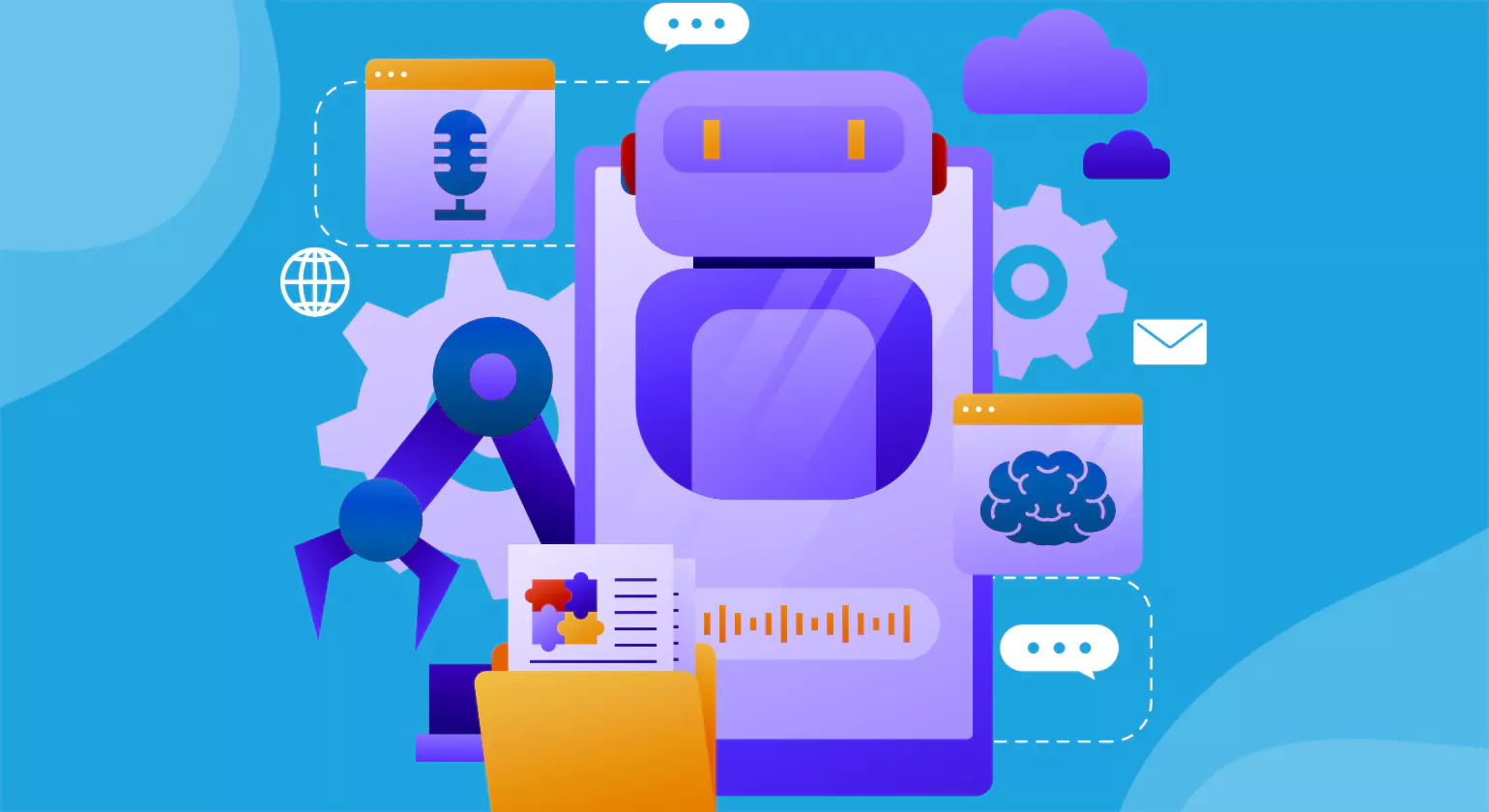
E-commerce chatbots are versatile tools that can significantly enhance various aspects of an online shopping experience. Implementing an AI sales assistant streamlines operations, boosts customer satisfaction, and drives sales through key use cases.
Customer Service
One of the primary use cases for an chatbot for ecommerce is handling customer service inquiries. Chatbots can manage a wide range of questions related to shipping policies, return procedures, and product availability. For example, if a customer wants to know the estimated delivery time for their order or the process for returning a product, the chatbot can provide instant, accurate responses. This capability ensures that customers receive timely support without having to wait for a human agent, thereby improving overall service efficiency and satisfaction.
Order Management
Virtual sales assistant are invaluable for managing orders by providing real-time tracking and status updates. The chatbot lets customers track orders, check delivery times, and resolve purchase issues, improving experience and easing the load on customer service.
Product Search
Finding the right product quickly can be a challenge in a vast online store. An AI chatbot for ecommerce can simplify this process by assisting customers in filtering search results based on their preferences. For example, if a customer is looking for a specific type of running shoes, the chatbot can guide them through various options, help refine their search based on size or color, and present relevant product choices. This capability enhances the shopping experience by making product discovery more efficient and user-friendly.
Shopping Cart Recovery
Abandon rate is a common issue in e-commerce, often leading to lost sales. Chatbots can play a crucial role in recovering abandoned carts by sending reminders or offering assistance to users who have left items in their cart. For instance, if a customer adds products to their cart but doesn’t complete the purchase, the chatbot can send a follow-up message offering help with the checkout process or providing a special discount to encourage completion of the transaction. This proactive approach can significantly boost sales and reduce cart abandonment rates.
Personalized Promotions
Chatbot in ecommerce can also be used to deliver personalized promotions and offers based on customer behavior and purchase history. By analyzing data such as previous purchases and browsing patterns, the chatbot can provide tailored discounts or special offers that are relevant to individual customers. For example, if a customer frequently buys beauty products, the chatbot might offer a discount on their next purchase of similar items. This level of personalization not only enhances the shopping experience but also drives repeat business and increases customer loyalty.
Best Practices for Using Chatbots in Ecommerce

To maximize the effectiveness of an AI chatbot for ecommerce, it’s essential to follow best practices that ensure the chatbot ecommerce solutions enhances customer experience while efficiently handling interactions. Implementing these strategies can lead to improved customer satisfaction, increased sales, and streamlined operations.
Ensure Human Backup
While AI chatbot for ecommerce are excellent for handling routine inquiries and automating responses, they may struggle with complex or sensitive issues. It’s crucial to have human agents available to take over when the chatbot cannot adequately address a customer’s needs. This hybrid approach ensures that customers receive accurate and empathetic support for more intricate queries, maintaining high service quality and preventing frustration. Providing a seamless transition from chatbot to human support helps build trust and satisfaction.
Keep It Conversational
A chatbot should engage users with a conversational and natural tone to create a more enjoyable interaction. Responses should be designed to mimic human conversation, avoiding overly formal or robotic language. By incorporating friendly and relatable language, chatbots can make interactions feel more personal and engaging. This conversational approach not only enhances user experience but also encourages users to interact more frequently with the chatbot.
Track and Optimize
Regularly tracking and analyzing AI chatbot for ecommerce interactions is essential for continuous improvement. Monitoring metrics such as response accuracy, customer satisfaction, and conversation completion rates can provide valuable insights into the chatbot’s performance. Use this data to identify areas where the chatbot may need adjustments or enhancements. Optimizing the chatbot based on real user feedback helps improve its efficiency and effectiveness over time.
Provide Clear Navigation
To avoid user frustration, ensure the chatbot offers clear navigation, guidance for human support, and defined escalation paths for a seamless experience. This clarity helps users easily transition from automated interactions to human assistance if needed, ensuring that their issues are resolved promptly and efficiently.
Conclusion
In 2026, the use of an AI chatbot for ecommerce is no longer just a trend—it’s a strategic necessity. From enhancing customer support and streamlining checkouts to delivering personalized shopping experiences, AI-powered chatbots help online businesses stay competitive in a fast-paced digital landscape. As ecommerce platforms continue to evolve, integrating the right chatbot solution can dramatically boost engagement, increase conversions, and reduce operational costs. Ready to elevate your ecommerce website? Start exploring the best AI chatbot platforms today and transform how you connect with your customers.
FAQs
1. What is AI chatbot for ecommerce?
AI chatbot for ecommerce is an AI-powered virtual assistant that engages with online shoppers in real time. It answers questions, recommends products, guides users through checkout, and resolves issues quickly. By providing instant support and personalized interactions, it enhances the overall shopping experience, increases customer satisfaction, and drives higher ecommerce sales around the clock, every day of the week.
2. Why are AI chatbots important for e-commerce?
AI chatbots are important for e-commerce because they provide instant 24/7 support, reduce cart abandonment, personalize shopping experiences, and boost conversions. They streamline operations, improve customer satisfaction, and help online stores scale efficiently in a competitive market.
3. What are the different types of e-commerce chatbots?
E-commerce chatbots include rule-based bots for simple queries, AI-powered bots using NLP for smart responses, voice-enabled bots for hands-free interaction, hybrid bots combining automation with human support, and social media bots for platform-based engagement.
4. How can an AI chatbot improve your e-commerce website?
An AI chatbot for ecommerce can improve your e-commerce website by offering 24/7 support, reducing cart abandonment, personalizing product recommendations, speeding up checkouts, and collecting customer feedback. It boosts user experience, engagement, and overall sales performance.
5. What are the best practices for using chatbots in e-commerce?
Best practices include offering personalized interactions, ensuring seamless integration with other systems, providing human backup when necessary, continuously improving chatbot capabilities, and analyzing data to refine chatbot responses.
6. What are the benefits of using an AI chatbot for customer support
An AI chatbot for customer support offers 24/7 availability, faster response times, and improved customer engagement. It efficiently handles common queries, reduces workload for support teams, and enhances customer satisfaction through personalized interactions and instant assistance.
7. What are the benefits of using an AI chatbot in e-commerce?
An AI chatbot in e-commerce enhances customer service with 24/7 support, personalized recommendations, and faster responses. It streamlines order tracking, boosts sales through proactive engagement, and reduces operational costs by handling repetitive inquiries efficiently.
8. How can I integrate an AI chatbot with my e-commerce website
You can integrate an AI chatbot with your e-commerce website by choosing a chatbot platform compatible with your CMS (like Shopify or WooCommerce), customizing it to match your brand, and connecting it via plugin, API, or script. Most tools offer simple, no-code setup options.