Table of Contents
Key Takeaways
Healthcare transparency tools reveal upfront prices, quality ratings, and provider details.
They help patients compare doctors, hospitals, and treatments before booking care.
These tools reduce surprise medical bills and improve cost awareness.
Employers and insurers use them to lower healthcare spending and boost employee benefits.
Real-time data supports smarter decisions and value-based care.
Patients gain more control, trust, and confidence in healthcare choices.
Overall, healthcare transparency tools improve affordability, accountability, and access to quality care.
What Is Healthcare Transparency?

Healthcare transparency solutions are web-based tools that offer transparent, comparable, and actionable information on healthcare pricing, quality, and provider performance. The primary objective of these solutions is to eliminate surprise billing, reduce cost confusion, and enable patients and employers to make well-informed healthcare choices.
The use of healthcare transparency solutions has been on the rise since the Centers for Medicare & Medicaid Services issued regulations that forced hospitals and insurers to make their pricing information public. The problem with the pricing information is that it is not easily understandable.
Why Healthcare Transparency Matters in Modern Healthcare

Healthcare transparency has a direct effect on patient confidence, affordability, and quality of care. With the increasing digital literacy of consumers, they demand the same level of transparency from healthcare providers as they have come to expect in other sectors. Here are the reasons why transparency is now mission-critical:
1. Builds Patient Trust
Trust is the key to successful healthcare. When healthcare professionals communicate treatment options, costs, and outcomes effectively, patients feel valued and empowered. This helps alleviate fears, build stronger healthcare professional-patient relationships, and promote patient compliance with healthcare plans. Research has shown that educated patients are more likely to adhere to healthcare professionals’ advice, attend follow-up appointments, and remain loyal to healthcare brands.
2. Reduces Surprise Medical Bills
Unanticipated medical expenses are still among the most frustrating issues for patients. Estimated costs of care enable patients to compare prices, understand their insurance benefits, and make informed Consistent Financial Reporting decisions before seeking care. Price transparency reduces disputes over medical bills, decreases the rate of cancelled appointments, and enhances collections for healthcare providers.
3. Improves Care Quality
Having public access to clinical outcomes and quality data fosters a healthy level of competition among the facilities. Those that are open with their quality data are more likely to work on improving patient safety, decreasing readmissions, and improving patient experience. This allows quality to become a public promise rather than a private goal.
4. Supports Smarter Healthcare Decisions
Today’s patients act like informed consumers. Open data enables them to make informed decisions about which providers to choose based on successful outcomes, success rates, and value for money—not just location and brand recognition. This is an encouraging trend that promotes evidence-based decision-making and ensures that patients receive care that meets their medical and financial needs.
5. Drives System-Wide Accountability
The Affordable Care Act and subsequent pricing regulations from the Centers for Medicare & Medicaid Services have forced hospitals and insurance companies to be transparent about negotiated rates and the costs of services. Such measures encourage fair competition, highlight inefficiencies, and move the healthcare industry towards a value-based model, where the focus is on outcomes rather than volume.
How Healthcare Transparency Tools Work
Healthcare transparency solutions are online platforms that provide patients and healthcare providers with complete visibility into healthcare costs, quality, and options before the care is received. These solutions leverage real-time data, contracts, and best practices to remove uncertainty from healthcare decisions.
1. They Pull Data From Multiple Sources
Transparency platforms integrate information from hospital billing systems, insurance databases, and electronic health records (EHRs). This includes:
Procedure prices and negotiated payer rates
Patient benefit details (deductibles, co-pays, out-of-pocket limits)
Historical outcomes and quality scores
This centralized data layer ensures patients see accurate, personalized estimates, not generic averages.
2. They Generate Real-Time Cost Estimates
When a patient searches for a service—like an MRI or lab test—the tool instantly calculates:
Expected total cost
Insurance-covered portion
Patient responsibility
These estimates follow pricing rules set by the Centers for Medicare & Medicaid Services, helping hospitals comply with federal price-transparency mandates while giving consumers upfront financial clarity.
3. They Compare Providers Using Quality Metrics
Modern transparency tools don’t stop at pricing. They also display provider performance indicators such as:
Patient satisfaction scores
Readmission rates
Safety benchmarks
This allows patients to compare care options based on value and outcomes, not just proximity—supporting smarter, evidence-based decisions.
4. They Protect Patient Data and Privacy
All reputable platforms operate under strict security standards defined by the Health Insurance Portability and Accountability Act. Sensitive medical and financial data is encrypted, access-controlled, and audited to maintain patient trust and regulatory compliance.
5. They Integrate With Patient Portals and Scheduling Systems
Most tools connect directly to hospital websites or patient portals, enabling users to view estimates, select providers, book appointments, and download summaries.
View estimates
Select providers
Book appointments
Download summaries
This creates a seamless experience—from research to scheduling—while reducing administrative workload for healthcare staff.
Top 10 Healthcare Transparency Tools in 2026

empower patients and providers with price comparisons, quality ratings, and cost estimations. From platforms like Healthcare Bluebook to ClearHealthCosts, these tools enhance informed decision-making, reduce surprises, and promote fair pricing in medical care. Stay ahead with the best transparency solutions!
1. Optavise
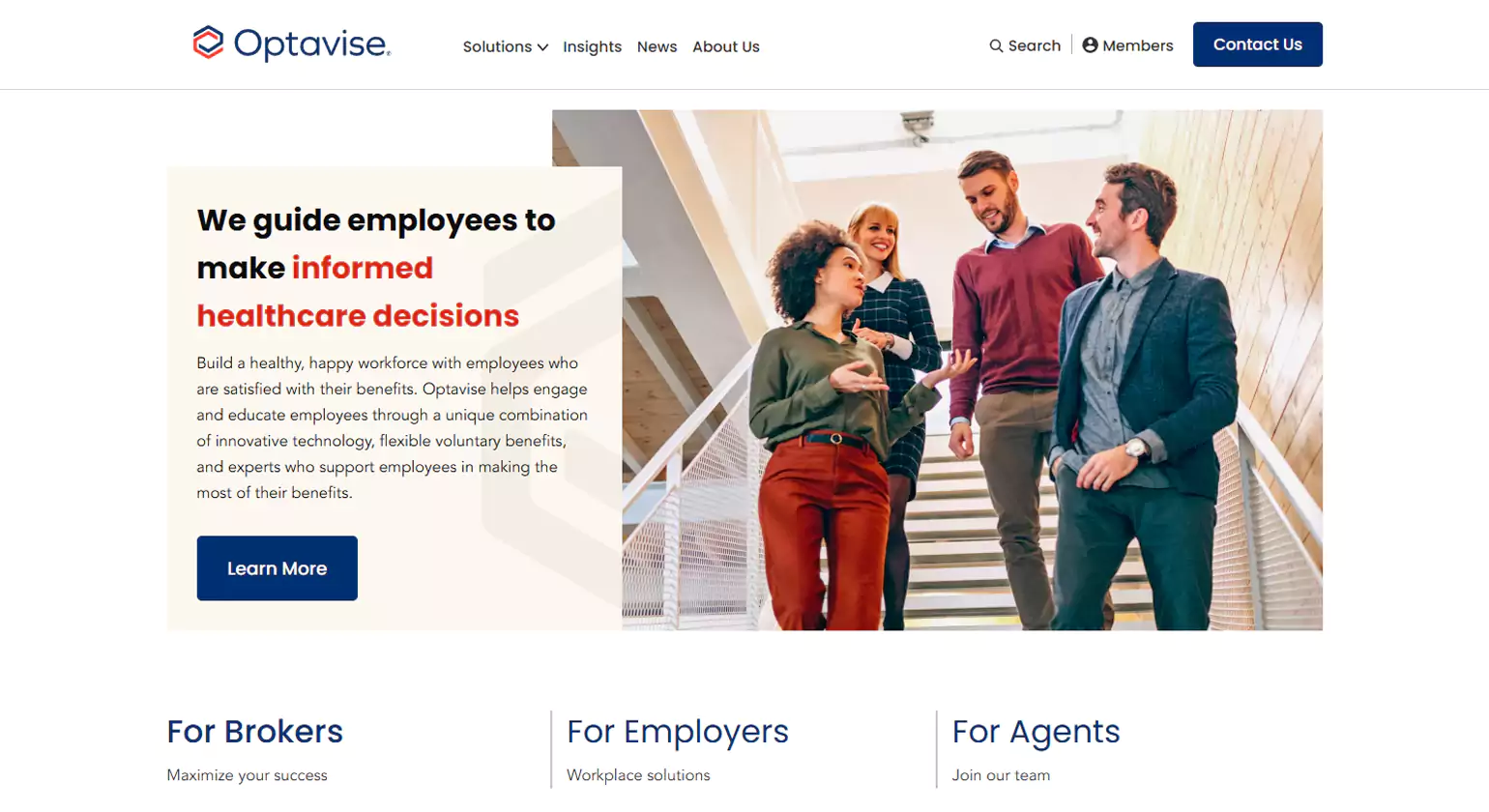
Optavise is a benefits advisory and technology firm that advises and assists employers in designing, managing, and optimizing benefits programs. The Healthcare Transparency Tools company leverages data-driven insights and hands-on consulting to enhance benefits adoption, minimize costs, and ensure compliance, making it an ideal solution for mid-to-large-sized organizations that have complex benefits portfolios.
Key Features
Benefits strategy & brokerage services
Employee education and engagement programs
Analytics-driven benefits optimization
Compliance support (ACA, ERISA guidance)
Dedicated benefits advisors
Enrollment and communication support
Pros
Strong consultative approach with expert advisors
Data-backed recommendations for smarter benefits decisions
Improves employee understanding and participation
Helpful compliance assistance
Scalable for growing companies
Cons
Pricing isn’t publicly transparent
Better suited for medium to large teams than very small businesses
Limited self-serve tools compared to pure SaaS platforms
Optavise Pricing
Optavise does not publish fixed prices. It uses custom, quote-based pricing depending on your company size, selected services (benefits admin, advocacy, communication), and support needs. There’s no free plan — you must contact their sales team for an exact quote.
2. TouchCare

TouchCare is a healthcare concierge and advocacy service that assists individuals and employees in navigating the complexities of the U.S. healthcare system. The primary mission of TouchCare is to make healthcare benefits easier to understand, more cost-effective, and assist users in saving time and frustration by connecting them with real Health Assistants
Key Features
Healthcare Navigation: Personalized support answering benefits questions, explaining plans, and clarifying coverage.
Provider Search & Scheduling: Finds in-network doctors and facilities and may help schedule appointments.
Price Transparency: Shows cost estimates for procedures to prevent overpaying.
Billing Advocacy: Reviews bills, identifies errors, and negotiates with providers on members’ behalf.
Pros
- Real human health assistants (not automated bots) to support users.
- Can potentially save members time, stress, and money on healthcare decisions.
- Comprehensive help with benefits, billing, and providers.
- High reported member satisfaction and engagement in some implementations.
Cons
- Primarily tailored to U.S. healthcare benefits — may be less relevant outside that system.
- Actual cost savings and benefits can vary by plan and user engagement; not a direct insurer or healthcare provider.
- Service quality depends on individual Health Assistants and employer plan integration.
TouchCare Pricing
- Free for Members: TouchCare’s health advocacy and benefits navigation services are completely free for members enrolled through their employer benefit plan — members pay $0 for services like bill help, provider search, cost comparisons, and benefit guidance.
- Employer/Group Cost: There’s no public per-employee per-month (PEPM) or fixed pricing listed on TouchCare’s official site — employers must request a demo or quote to get exact pricing for their group plans.
3. Healthee
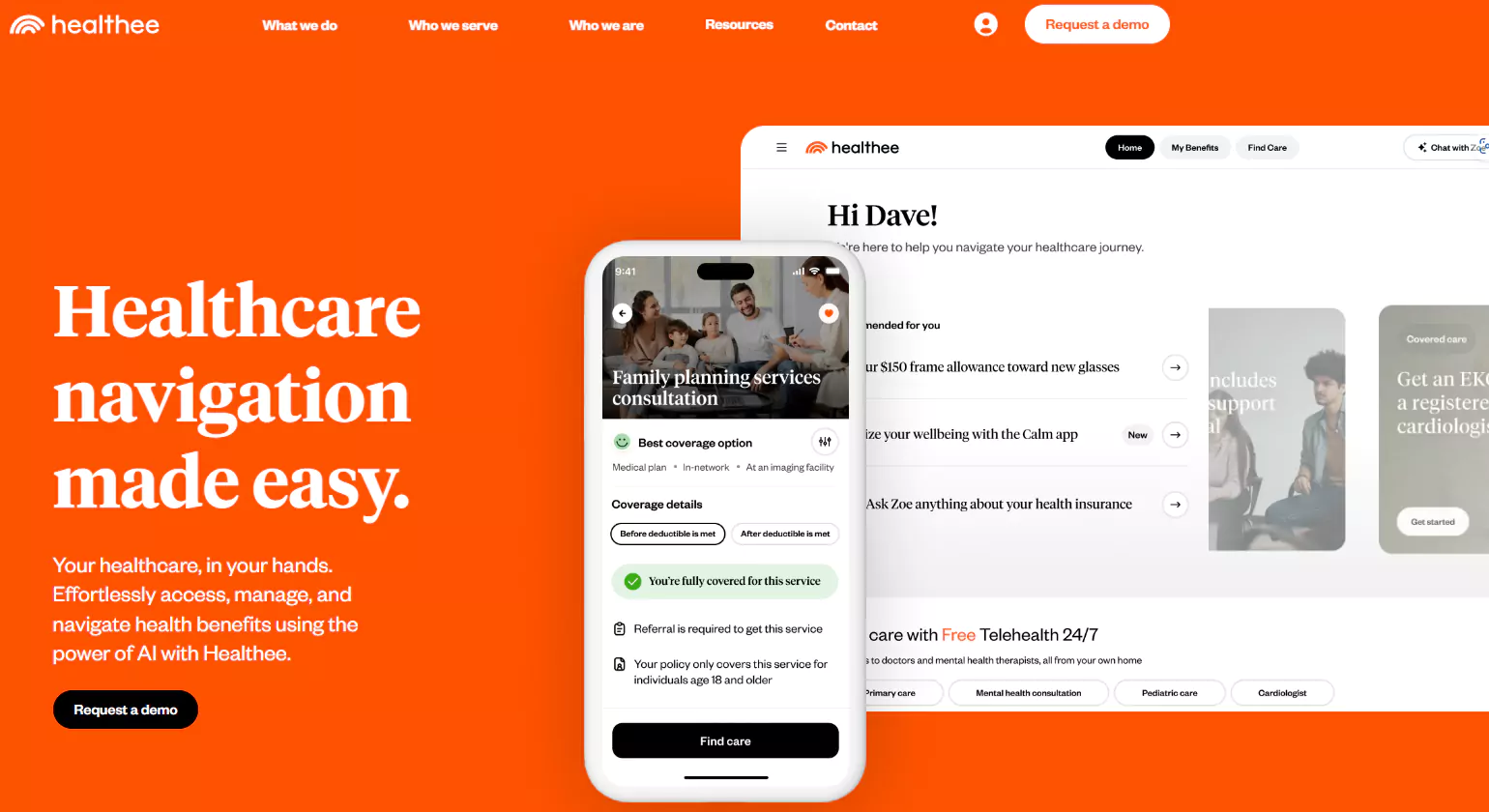
Healthee is an artificial intelligence-driven healthcare benefits navigation solution that is intended to assist employees, HR professionals, brokers, and administrators in simplifying complicated healthcare benefits and making informed care choices. The Healthcare Transparency Tools solution leverages artificial intelligence to offer personalized recommendations related to coverage, provider search, cost transparency, telehealth connectivity, and more to optimize benefits use and minimize healthcare expenses.
Key Features
AI Virtual Assistant (Zoe): Offers real-time personalized answers about coverage, costs, and benefits.
Healthcare Navigation & Provider Search: Helps employees find in-network providers and compare quality and costs.
Cost Transparency: Shows real-time price estimates for services to avoid surprise bills.
Telehealth Access: 24/7 virtual care (physical and mental health) at no extra cost.
Open Enrollment Support: Tools for comparing plans and streamlining enrollment.
Appointment Scheduling & Preventive Care: Book visits and receive reminders for routine care.
Pros
- Convenient, all-in-one platform for navigating benefits and managing healthcare.
- AI-driven support improves understanding and cuts down HR admin workload.
- Free telehealth and cost transparency tools help reduce employee expenses.
- Highly rated user experience and support.
Cons
- Dependent on users signing up and engaging with the app.
- May require initial setup and integration efforts.
- Effectiveness tied to available provider and plan data.
Healthee Pricing
- Pricing per employee: Starting at about $4 per employee per month for Healthee’s benefits navigation and healthcare-decision support services.
- Custom quote: Exact pricing and packages typically require contact with sales / demo request for larger enterprise or HCM integrations.
4. HealthCheck360
HealthCheck360 is a health and wellness platform that aims to improve the well-being of employees, manage chronic conditions, and make benefits easier to navigate. It uses technology, coaching, screenings, and incentives to help employers improve the health of their employees while also managing healthcare costs.
Key Features
Benefits Navigation & Advocacy: Helps employees understand and use their health benefits effectively, guiding them to quality, cost-effective care.
Integrated Care & Chronic Condition Management: Personalized support and programs for chronic conditions (e.g., diabetes, hypertension).
Biometric Screenings: Onsite, at home, or clinic-based biometric testing to assess health risks.
Health Coaching & Well-Being Support: Coaching for lifestyle change, mental health, and financial well-being.
Pros
- Comprehensive wellness approach: Combines navigation, coaching, screenings, and incentives under one program.
- Focus on outcomes: Designed to improve health and reduce long-term healthcare costs.
- Customizable and engaging: Incentive features and challenges encourage participation.
Cons
- Primarily employer-centric: Best suited for organizational wellness programs, not individual retail consumers.
- Effectiveness depends on engagement: Impact hinges on employee participation and program adoption.
- May require implementation effort: Employers might need time to integrate and promote the platform internally.
HealthCheck360 Pricing
HealthCheck360 offers custom, quote-based pricing depending on company size and selected wellness services. No public fixed plans — you must contact sales for an exact cost.
5. Turquoise Health
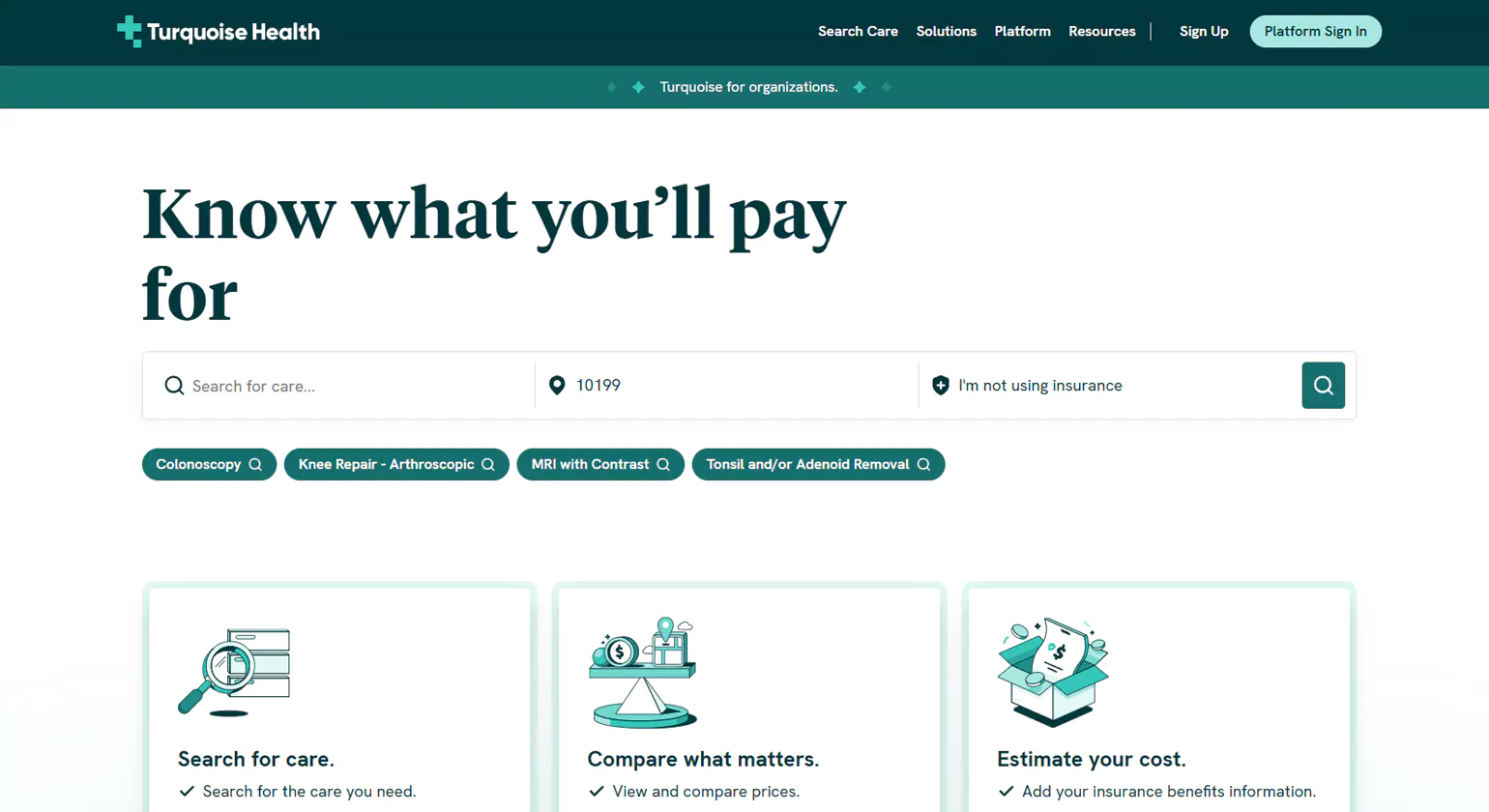
Turquoise Health is a healthcare technology and data company that aims to make medical pricing transparent, accessible, and actionable. The Healthcare Transparency Tools company aggregates and analyzes medical pricing data from hospitals, insurers, and government sources to provide patients, providers, payers, employers, and other stakeholders with a way to understand and compare the true cost of healthcare services, particularly in light of recent price transparency regulations in the U.S.
Key Features
Clear Rates Data: Access to a massive database of provider, payer, and service prices for benchmarking and decision-making.
Care Search & Cost Estimates: Tools that let users search for care, compare prices, and estimate out-of-pocket costs based on insurance details.
Contracting Tools: AI-enabled support for managed-care contract creation, negotiation, and storage.
Compliance Support: Helps providers comply with federal price transparency rules (Machine-Readable Files, good faith estimates).
Analytics & Benchmarking: Market analysis and rate benchmarking to guide strategic pricing and negotiations.
Pros
- Industry-leading price transparency: Makes complex healthcare costs understandable and searchable.
- Supports regulatory compliance: Reduces administrative burden for hospitals and payers.
- Actionable data: Enables cost comparison and strategic contract decisions.
- Beneficial for multiple stakeholders: Helps patients, employers, payers, and providers.
Cons
- U.S. healthcare focus: Most value is tied to the U.S. price transparency ecosystem.
- Enterprise pricing and integration: Best suited for organizations; may not be ideal for individuals seeking free tools alone.
- Data complexity: Users still need some healthcare literacy to interpret nuanced pricing and contractual data.
Turquoise Health Pricing
Turquoise Health uses an enterprise, subscription-based pricing model for its healthcare data, analytics, and price-transparency compliance software.
Exact prices are not publicly disclosed — you must contact sales for a custom quote.
6. Clarify Health
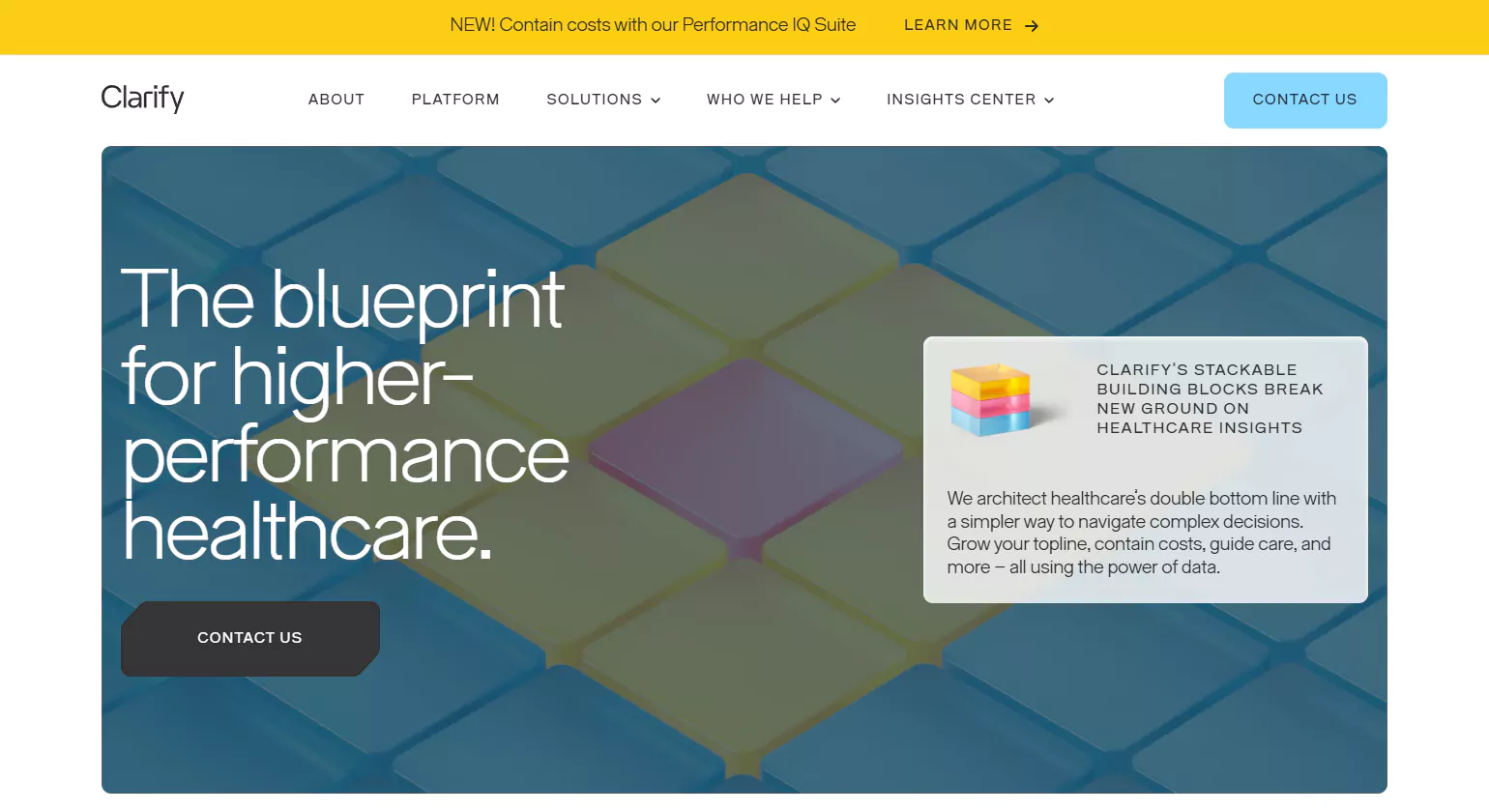
Clarify Health is an enterprise healthcare data and analytics platform that enables healthcare providers, payers (health plans), life sciences companies, and health systems to turn complex healthcare data into actionable insights to improve care delivery, control costs, and drive strategic growth. Developed on the Clarify Atlas Platform, it analyzes hundreds of millions of patient journeys and applies AI analytics to enable informed decision-making across the healthcare ecosystem.
Key Features
Clarify Atlas Analytics Platform — integrates massive healthcare datasets and delivers insights for care, cost, utilization, and outcomes.
Predictive & Cost Analytics — AI-powered predictions and benchmarking for cost containment and provider performance.
Provider Network Optimization — insight into network performance, referral patterns, and market opportunities.
Real-World Data (RWD) & Life Sciences Tools — supports drug market access, cohort identification, and research insights.
Pros
- Deep, enterprise-grade analytics with massive datasets and AI modeling.
- Recognized leader in healthcare analytics with awards from KLAS and G2.
- Actionable insights for multiple stakeholders (providers, payers, life sciences).
- Supports cost containment and value-based care initiatives.
Cons
- Primarily enterprise-focused: best suited for large providers, payers, and life sciences, not individuals.
- Requires data integration and technical setup: implementation can be complex.
- Healthcare industry complexity: users need analytical expertise to extract full value.
Clarify Health Pricing
- • $250,000 – $1,000,000+ / year (example enterprise subscription tiers)
• Custom pricing based on organization size and needs (contact sales)
7. Personify Health
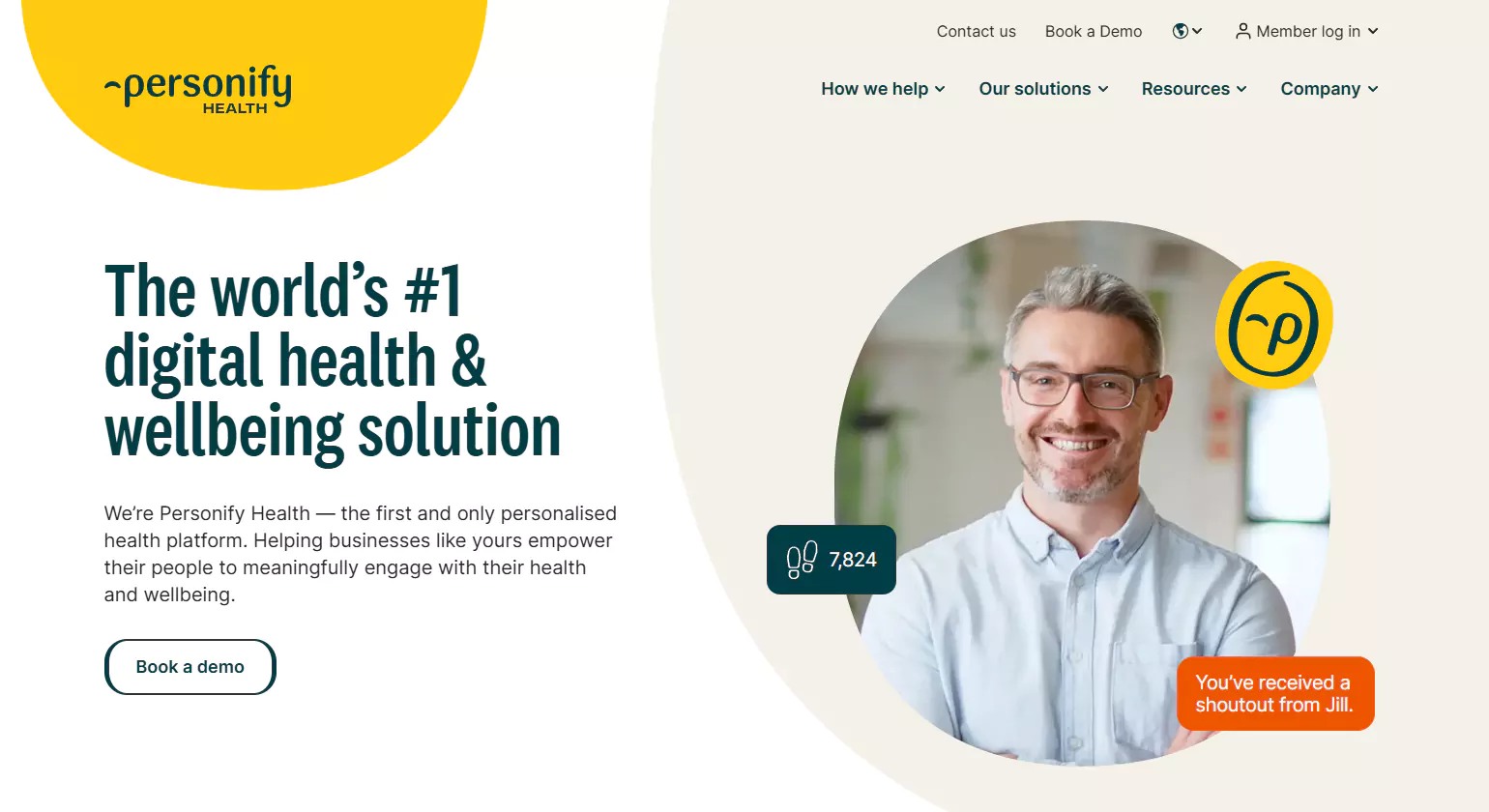
Personify Health is a health technology platform that brings together health plan management, personalized navigation & advocacy, wellbeing, and benefits solutions to support employers, health plans, and members in managing health, containing costs, and driving better outcomes. Personify Health is designed to make complex healthcare experiences easier by leveraging personalized technology and human support.
Key Features
Personalized Care Navigation: Helps users understand and use their benefits while guiding them to the right care and reducing confusion.
Benefits & Wellbeing Hub: Centralized platform for tracking health goals, benefits, and wellbeing resources.
Engagement & Rewards: Challenges, incentives, and gamification to motivate healthy behaviors.
Cost Transparency & Advocacy: Helps members see costs, optimize spending, and supports cost-effective choices.
Partner Ecosystem: Marketplace of integrated health and wellbeing partners to customize solutions.
Pros
- Holistic platform combining navigation, wellbeing, and benefits in one place.
- Highly personalized experience helps users engage more with their health.
- Motivational tools like rewards and challenges drive participation.
- Cost and care insights can support better decision-making for health and finances.
Cons
- Interface navigability can feel complex or non-intuitive for some users.
- May require onboarding and admin effort for organizations to set up and customize.
- Primarily enterprise-oriented — less optimal as a standalone consumer solution.
Personify Health Pricing
Example range mentioned: A combined wellbeing + navigation & advocacy solution may be offered in the approx. $50,000 – $75,000 range for some bundled programs (varies by company size and scope).
8. Change Healthcare
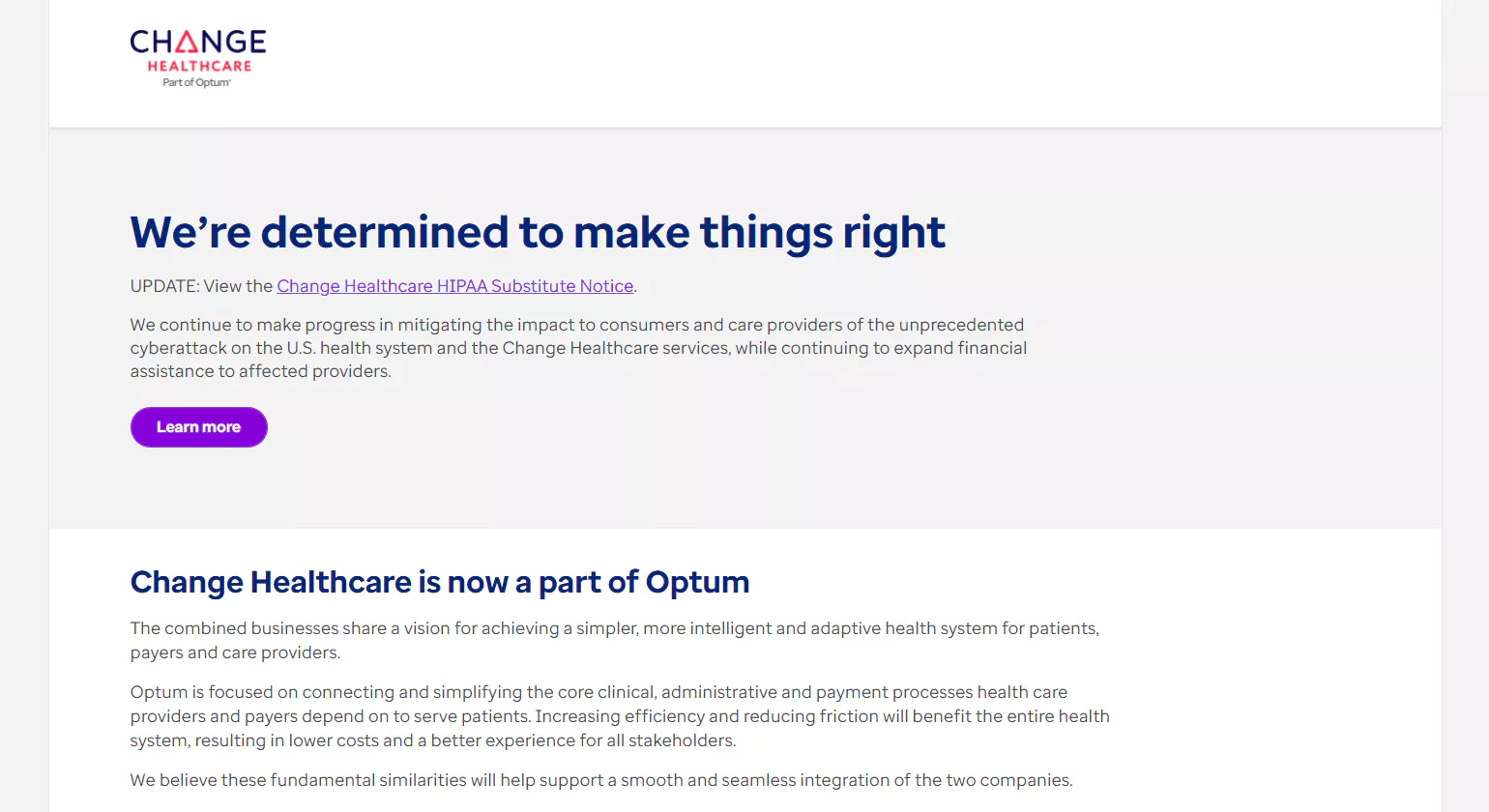
Change Healthcare is a leading U.S. healthcare technology and services firm that offers solutions to enhance administrative, financial, clinical, and engagement performance for providers, payers, and patients. The company focuses on revenue cycle management, payment solutions, claims management, and data analytics to optimize operations and facilitate value-based care. The company was acquired by UnitedHealth Group’s Optum business in 2022, integrating its strong technology platform with health services expertise.
Key Features
Revenue Cycle & Claims Management: Automates billing, claims submission, payment accuracy, and denial prevention.
Intelligent Healthcare Network: Connects hospitals, physicians, payers, pharmacies, and labs for seamless data exchange.
Data Analytics & Insights: Offers predictive models and operational analytics for cost, clinical decisions, and population health.
Clinical Workflow & Decision Support: Tools to support clinical processes and improve care delivery efficiency.
Patient Engagement & Access Solutions: Portals and price transparency tools to improve patient experience and care navigation.
Pros
- Industry-leading technology backbone: Supports large-scale claims and billing operations across the U.S. healthcare ecosystem.
- Broad interoperability: Connects diverse stakeholders through its vast network.
- Actionable data insights: Analytics help improve financial performance, care quality, and strategic planning.
- Comprehensive solutions: Combines clinical, financial, and operational tools in a single platform.
Cons
- Complex enterprise focus: Designed for large healthcare organizations, not individual consumers.
- Integration and setup effort: Requires significant technical integration and training.
- Security concerns (historical): A major 2024 cyberattack on the company disrupted services and raised scrutiny over data security and resilience.
Change Healthcare Pricing
• Basic claims clearinghouse: Free for standard submissions; optional premium support roughly $500 – $2,000/month.
• Full Revenue Cycle Management (RCM) suite: ≈ $3,000 – $6,000/month for mid-sized practices.
• Outsourced RCM services: Typically 4 – 7 % of net collections.
• Custom pricing: Larger enterprise solutions require contacting sales for exact quotes
9. Amino Health
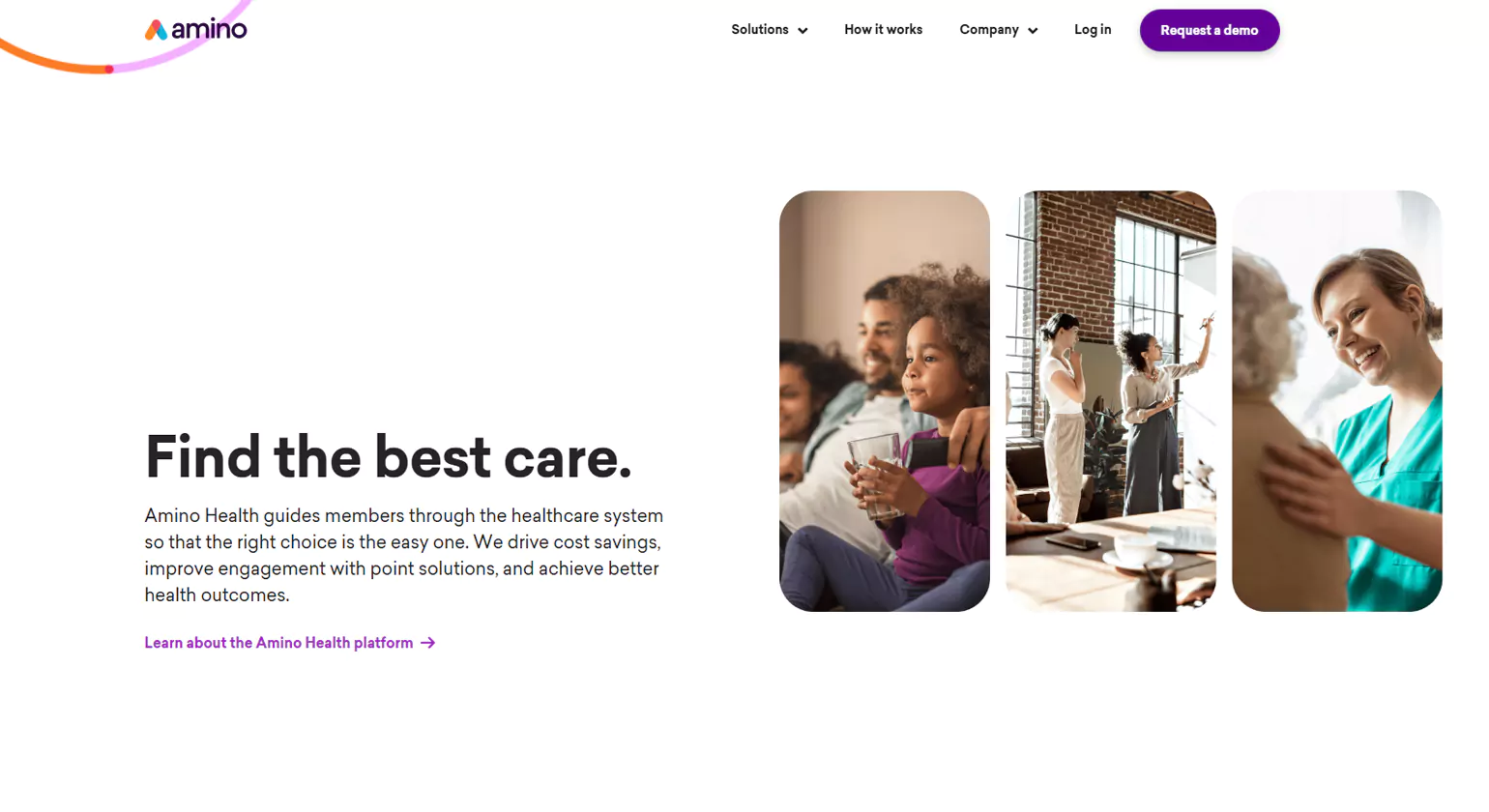
Amino Health is a U.S. company that provides a healthcare navigation and benefits guidance solution for health plan members, employees, and employers to gain better access to high-quality, in-network healthcare and a clearer understanding of healthcare costs. Amino’s solution uses its proprietary technology to aggregate large amounts of healthcare claims and pricing data to provide personalized recommendations, cost estimates, and scheduling assistance, thus making healthcare decisions less confusing and less expensive for patients. In 2025, Amino was acquired by Capital Rx and merged with its Judi Care solution.
Key Features
Healthcare Navigation: Search for in-network physicians, hospitals, and urgent care centers.
Cost & Quality Insights: Personalized cost estimates and provider cost/quality ratings.
Appointment Booking: See coverage, compare providers, and schedule visits.
Transparency Tools: Helps comply with U.S. pricing transparency rules and contextualizes cost data.
Dynamic Plan Features: APIs for dynamic copay health plans that align incentives with high-value care.
Pros
- Data-driven recommendations help users make informed care choices with real cost estimates.
- Simplifies navigation of complex insurance benefits and provider networks.
- Scalable for employers and health plans as part of a unified benefits platform.
- Supports cost transparency compliance with federal rules.
Cons
- Best suited to U.S. healthcare systems and employer plans — less relevant outside these contexts.
- Users still need some healthcare literacy to interpret quality and cost metrics.
- Platform complexity can require onboarding and integration with HR/benefits systems.
Amino Health Pricing
Amino Health offers custom, quote-based enterprise pricing for its healthcare navigation and transparency platform — there are no fixed public prices (plans are tailored to each employer/health plan).
10. Castlight Health
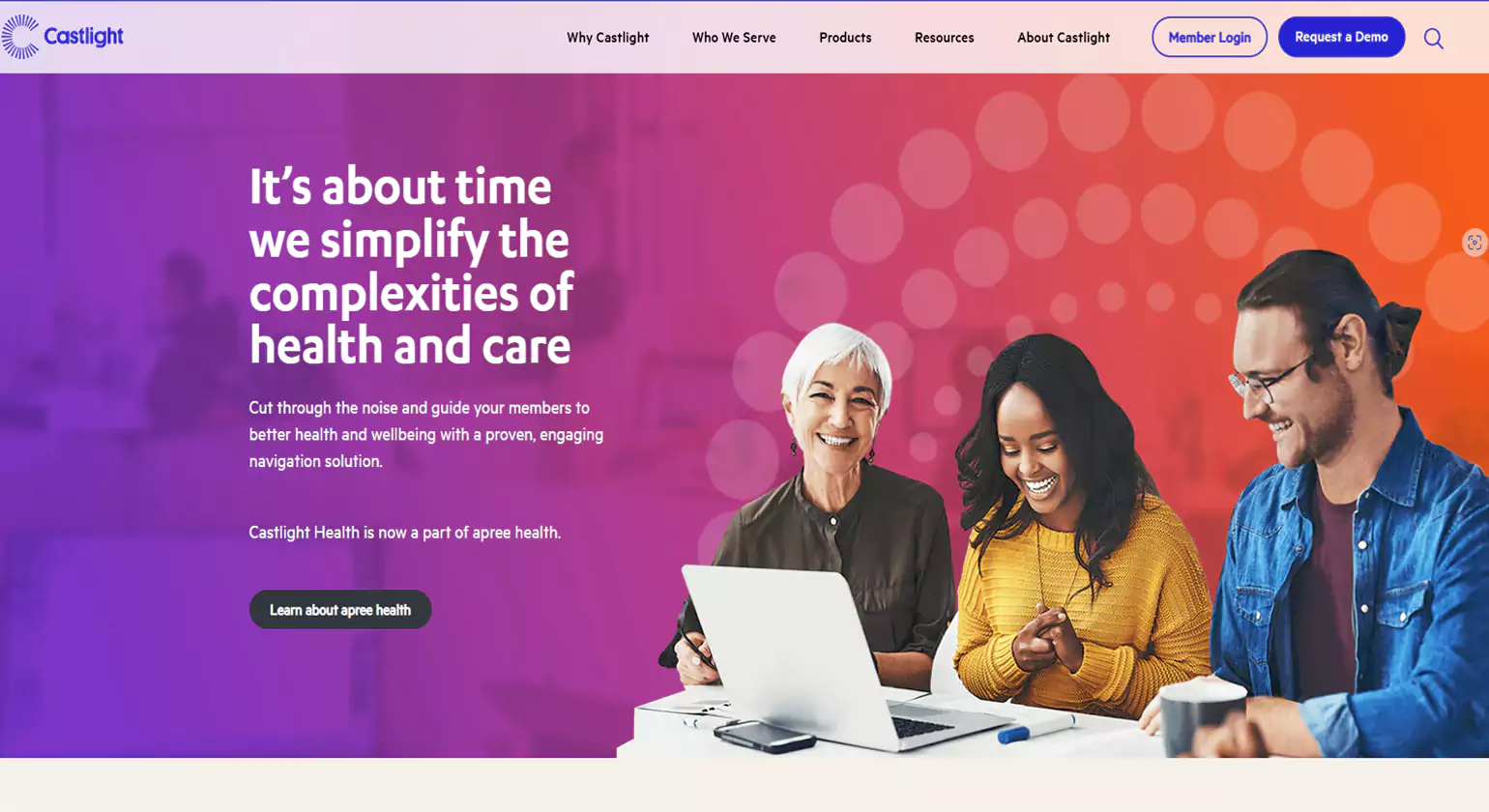
Castlight Health is a US-based healthcare navigation and benefits optimization platform that aims to simplify complex employee healthcare experiences. The company helps employers and health plans optimize benefits by providing a centralized benefits platform, navigating members to the right care, increasing engagement, and lowering healthcare costs using a combination of data-driven digital solutions and human clinical support. Castlight Health was founded in 2008 and is currently a part of the apree health family of companies.
Key Features
Personalized Healthcare Navigation: Custom recommendations for in-network providers, quality-based care, and cost comparisons.
Unified Benefits Hub: Centralizes medical, pharmacy, dental, vision, and wellness resources in one platform for easier access.
Castlight Care Guides: Real experts (benefits and clinical advocates) support members by explaining benefits, scheduling care, resolving billing issues, and addressing social determinants of health.
Cost Transparency & Decision Support: Helps members understand price and quality data to make smarter healthcare choices.
Pros
- Combines digital tools with human support for navigation and advocacy.
- Improves engagement and benefits utilization by simplifying choices.
- Strong cost and quality transparency empowers informed decisions.
- Flexible for employer and health plan integration with existing systems.
Cons
- Primarily enterprise-focused: Designed for employers/health plans, not individual consumers.
- Mixed user reviews: Some analysts note room for improvement in AI-driven personalization and recommendations.
- Implementation effort: Deployment and adoption require organizational setup.
Castlight Health Pricing
- Subscription pricing: Per-member-per-month (PMPM) model (approx. ~$7 PMPM typical reference)
- Custom quotes: Contact sales for exact enterprise pricing (no public list)
Key Features of Healthcare Transparency Tools

Price Comparison & Cost Estimation
Allows patients to compare prices for treatments among different facilities and estimate costs beforehand. This tool helps eliminate surprise bills and makes better healthcare choices by providing transparent pricing for treatments, tests, and visits.
Quality Metrics & Provider Ratings
Provides performance information such as patient outcomes, satisfaction rates, and safety scores. It is easy for users to compare doctors and hospitals based on actual data, which enables them to select quality healthcare with confidence.
Insurance Coverage Visibility
Shows what services are covered, in-network providers, copays, and deductibles in one place. This prevents confusion, speeds decision-making, and ensures patients understand their insurance benefits before scheduling care.
Patient Billing Breakdown
Provides itemized bills that clearly explain charges, fees, and adjustments. Patients can see exactly what they’re paying for, spot errors faster, and better understand medical expenses—building trust and reducing billing disputes.
Data Dashboards & Reporting
Offers visual dashboards with cost trends, utilization data, and performance insights. Healthcare organizations use these reports to track spending, improve operations, and identify opportunities for cost savings and better patient outcomes.
10 Types of Healthcare Transparency Tools

Healthcare transparency tools play a crucial role in helping patients, providers, and insurers make informed decisions. They provide visibility into medical costs, healthcare quality, insurance coverage, and provider credentials, ultimately improving affordability and accessibility. Below are ten key types of healthcare transparency tools
1. Price Comparison Tools
These tools allow patients to compare the cost of medical procedures, tests, and treatments across different providers. They help individuals find affordable healthcare options, avoid financial surprises, and negotiate better rates. Examples include insurer-provided cost estimators and independent platforms like Fair Health Consumer and Healthcare Bluebook.
2. Hospital and Provider Ratings
Platforms such as Healthgrades, Leapfrog, and Medicare’s Hospital Compare offer insights into the quality of care provided by hospitals and physicians. They analyze factors like patient outcomes, infection rates, mortality rates, and patient satisfaction scores, allowing consumers to choose high-quality healthcare providers.
3. Insurance Cost Estimators
Offered by insurance companies, these tools estimate out-of-pocket costs based on a patient’s specific plan. They take into account deductibles, copayments, and coinsurance, helping policyholders anticipate medical expenses before undergoing a procedure or treatment.
4. Drug Pricing Tools
Prescription medication prices vary widely between pharmacies. Tools like GoodRx and Blink Health allow users to compare drug prices, access manufacturer discounts, and find lower-cost alternatives, such as generic versions. These tools ensure Healthcare transparency tool in pharmaceutical pricing and help patients save money.
5. Quality Scorecards
These tools assess healthcare facilities and providers based on multiple performance metrics, including patient safety, adherence to clinical guidelines, and readmission rates. Organizations like The Joint Commission and the National Committee for Quality Assurance (NCQA) provide scorecards that help patients identify the best medical institutions and providers.
6. Procedure Cost Calculators
Medical procedures can have varying costs depending on the facility and location. Cost calculators help estimate the total cost of surgeries, diagnostic tests, and other treatments by considering hospital fees, physician charges, anesthesia costs, and related expenses. Some hospital websites and independent platforms offer these calculators to promote financial transparency.
7. Physician Transparency Tools
Patients can access information on doctors’ credentials, board certifications, specializations, malpractice history, and disciplinary actions. Websites like the Federation of State Medical Boards (FSMB) and state licensing boards allow consumers to verify a physician’s background before choosing a provider.
8. Telehealth Pricing Tools
With the rise of virtual healthcare, transparency in telemedicine pricing has become essential. These tools compare consultation fees, list covered services under insurance plans, and show provider availability. Platforms like Teladoc and MDLIVE offer pricing details upfront, ensuring patients know what to expect before booking an appointment.
9. Healthcare Billing Transparency Tools
Many patients receive medical bills with unexpected or hidden charges. Billing transparency tools provide detailed breakdowns of hospital bills, allowing consumers to check for errors, negotiate charges, and dispute overbilling. Some tools also explain medical codes and terms, making it easier for patients to understand their expenses.
10. Health Plan Comparison Tools
Choosing the right insurance plan can be complex. Comparison tools help individuals and employers evaluate different health insurance plans based on premium costs, deductibles, provider networks, and coverage benefits. Websites like Healthcare.gov, Policygenius, and insurer portals make it easier to compare options and select the best plan.
Benefits of Using Healthcare Transparency Tools
Healthcare transparency tools help patients, employers, and providers clearly understand medical costs, quality, and care options before making decisions. These platforms bring visibility to pricing, treatment outcomes, and provider performance—making healthcare smarter, fairer, and more affordable.
1. Clear Cost Visibility
One of the biggest benefits is price transparency. Users can compare procedure costs across hospitals and clinics, helping avoid surprise medical bills. This empowers patients to choose affordable care and plan expenses confidently. It also encourages fair pricing among providers, improves trust in healthcare services, and supports smarter decision-making by showing insurance coverage details, payment options, and estimated out-of-pocket costs before booking appointments.
2. Better Decision-Making
In this way, transparency sites enable patients to make informed decisions by providing them with information on the ratings of the providers, the success rates of treatments, as well as reviews from other patients. Rather than making an educated guess, patients are able to make decisions based on actual information available to them, allowing them to choose quality doctors and facilities.
3. Reduced Healthcare Expenses
When people compare prices and alternatives, competition increases among providers. This often leads to lower overall healthcare costs for individuals, families, and organizations. Providers are encouraged to improve service quality while offering fair pricing, which benefits patients. Over time, this creates a more efficient healthcare system where affordability, value, and patient satisfaction become top priorities.
4. Improved Quality of Care
Transparency drives healthcare providers to work on their performance. When quality data is available to the public, it encourages healthcare providers to work on their performance and improve the quality of healthcare by reducing waiting times and increasing patient satisfaction. When the performance of healthcare providers is transparent, they pay more attention to accountability, patient safety, and service quality.
5. Enhanced Patient Engagement
These resources empower patients to take charge of their healthcare experience. The availability of information enables patients to become more engaged in the decision-making process, resulting in improved compliance, trust, and health outcomes. Patients become more comfortable asking questions, weighing options, and understanding their care plans. This engagement enables patients to make smarter decisions for optimal health.
6. Support for Employers and Insurers
Employers use transparency platforms to analyze spending patterns, negotiate better rates, and design cost-effective benefit plans. Insurers leverage the data to improve network efficiency and value-based care models. These insights help reduce unnecessary expenses, optimize provider networks, and promote preventive care—ultimately creating smarter healthcare strategies that balance cost control with better employee health outcomes and improved patient experiences.
7. Increased Trust in Healthcare Systems
Open access to pricing and quality data builds confidence. Patients feel reassured when they understand what they’re paying for and why, reducing frustration and uncertainty. Clear communication about costs, procedures, and expected outcomes strengthens trust between patients and providers. This transparency improves satisfaction, minimizes billing disputes, and creates a more positive and reliable healthcare experience overall.
8. Faster Access to Care
With searchable provider directories and appointment insights, users can quickly find nearby services, speeding up treatment and minimizing delays. Easy access to availability, specialties, and locations saves time and reduces stress. This convenience helps patients act faster on health concerns, improves care coordination, and ensures timely access to the right providers when it matters most.
9. Encourages Preventive Care
By highlighting affordable preventive services, transparency tools promote early screenings and routine checkups—helping catch health issues before they become costly problems. Clear visibility into pricing and coverage encourages patients to schedule timely appointments. This proactive approach reduces emergency visits, lowers long-term medical expenses, and supports healthier communities through consistent, preventive care planning.
10. Data-Driven Healthcare Planning
Healthcare organizations use transparency insights to identify inefficiencies, optimize resources, and improve patient experiences through smarter operational decisions. Access to real-time data helps streamline workflows, reduce waste, and allocate staff more effectively. This data-driven approach supports faster service delivery, better care coordination, and continuous improvement across clinical and administrative processes.
How to Choose the Right Healthcare Transparency Tool
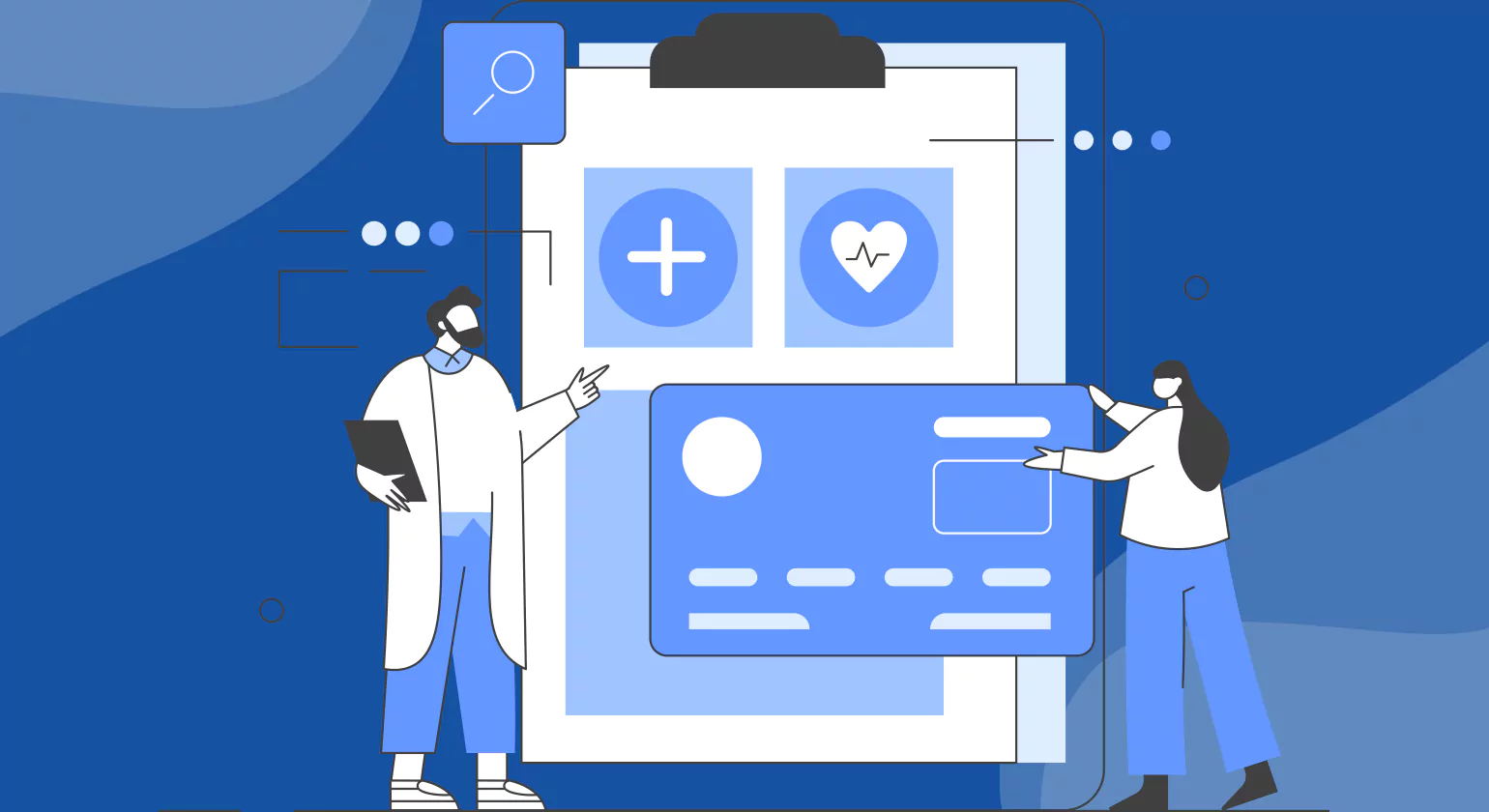
Choosing the right healthcare transparency tool is essential for making informed decisions about medical care and controlling costs. Here are key factors to consider when selecting the most suitable solution:
1. Scope of Services Covered
Make sure the tool offers pricing information for a variety of healthcare services such as doctor visits, tests, surgeries, and medications. This will enable you to compare prices across various categories of healthcare services.
2. Accuracy and Data Sources
Look for tools that use reliable, up-to-date data from credible sources like insurance claims, hospital billing records, and official healthcare pricing databases. Tools that regularly update their pricing information provide more accurate cost estimates.
3. User-Friendly Interface
A good healthcare transparency tool should be intuitive and easy to navigate. Clear search options, understandable pricing displays, and simple comparisons make it easier for users to find the information they need without confusion or extra effort.
4. Geographic Coverage
healthcare cost transparency tools can vary significantly by region. Choose a tool that covers your specific location or offers nationwide data if you plan to compare prices in different areas. This ensures the pricing information is relevant to your situation.
5. Quality and Outcome Metrics
Cost alone doesn’t tell the whole story. The best tools combine pricing information with quality indicators such as patient ratings, clinical outcomes, and provider performance scores. This helps you balance cost with quality when making decisions.
6. Insurance Integration
Consider whether the tool allows you to enter your insurance details. Tools that account for your plan’s coverage levels, deductibles, and out-of-pocket costs can provide personalized estimates, helping you better anticipate your actual expense.
7. Comparison Features
Effective tools let you compare multiple providers side-by-side, highlighting differences in price, quality, and patient feedback. Look for features like sortable tables, filters, and visual charts to quickly spot the best options.
How These Tools Improve Patient Decision-Making
Choosing the right healthcare transparency tool is essential for making informed decisions about medical care and controlling costs. Here are key factors to consider when selecting the most suitable solution:
1. Provide Clear Cost Estimates Before Treatment
Transparency tools in the healthcare system provide patients with estimated costs for procedures, tests, and consultations before seeking care. Patients can compare costs by location and provider using tools such as Healthcare Bluebook and Fair Health.
2. Enable Side-by-Side Provider Comparisons
These tools enable patients to compare different hospitals or clinics based on cost, quality ratings, and patient reviews. Rather than depending on referrals, patients can objectively compare their options and choose the ones that provide the best value.
3. Combine Cost with Quality Metrics
Contemporary transparency tools have quality indicators such as the success rate, safety, and patient satisfaction ratings. This is important in helping patients avoid the cheapest option and instead concentrate on high-value care.
4. Increase Awareness of Insurance Coverage
Many tools integrate insurance details, showing expected out-of-pocket costs after deductibles and copayments. This personalized information helps patients understand what they will actually pay, reducing billing surprises.
5. Improve Financial Planning
When patients know the estimated cost beforehand, they can arrange payment plans, use health savings accounts (HSAs), or explore alternative providers. This proactive approach lowers stress and supports better financial decision-making.
6. Encourage Preventive and Timely Care
Cost transparency reduces fear of unknown expenses, motivating patients to seek early diagnosis and preventive treatments. Early care often prevents complications, leading to better outcomes and lower long-term costs.
Role of Healthcare Transparency Tools in Cost Reduction
1. Price Visibility for Informed Decision-Making
Transparency tools in the healthcare sector assist patients in comparing the costs of medical procedures, lab work, and consultations before seeking care. Tools such as Healthcare Bluebook and Fair Health enable patients to obtain estimates of care costs based on geographic location and provider. This transparency enables patients to select cost-effective providers, thus lowering medical expenses.
2. Encouraging Competitive Pricing
When hospitals and clinics make their pricing information public, there is increased competition. Hospitals and clinics will be more likely to charge fair prices in order to attract more patients. When pricing information is made public, hospitals and clinics will be less likely to overcharge and will be able to compete fairly in the market, and this will lead to reduced healthcare cost transparency tools.
3. Reducing Billing Errors and Overcharges
Transparency tools allow patients and employers to review itemized bills and compare them with standard market prices. This helps identify billing errors, duplicate charges, or unnecessary services. Correcting these issues prevents overspending and improves trust between patients and providers.
4. Supporting Value-Based Care Models
Healthcare transparency tools promote value-based care by linking cost with quality metrics. Patients can compare not only prices but also hospital ratings, treatment outcomes, and patient satisfaction scores. This ensures money is spent on high-quality services rather than just lower-cost options, leading to better health outcomes and reduced long-term costs.
5. Improving Employer Healthcare Spending
Employers use transparency platforms to manage employee health benefits more effectively. By analyzing treatment costs and utilization patterns, Healthcare IT Companies can negotiate better insurance contracts and design cost-efficient health plans. This reduces overall insurance premiums and corporate healthcare expenses.
6. Promoting Preventive Care and Early Intervention
When patients understand treatment costs in advance, they are more likely to seek preventive care instead of delaying treatment due to fear of high expenses. Early diagnosis reduces the need for expensive emergency care or advanced treatments, lowering total healthcare spending over time.
7. Data-Driven Policy and System Improvements
Government agencies and healthcare organizations use pricing transparency data to identify cost disparities and inefficiencies. This information supports better policy decisions, reimbursement reforms, and regulatory improvements aimed at controlling healthcare inflation.
Common Challenges in Healthcare Transparency (and How Tools Solve Them)
1. Hidden or Unclear Pricing
Challenge: Patients often do not know the cost of treatment until after the treatment has been sought.
How tools help: There are platforms that give patients an estimate of the cost of treatment before they make any decisions. These platforms include Healthcare Bluebook and Fair Health.
2. Complex Medical Billing
Challenge: Medical bills are hard to read, with confusing codes and unexplained charges.
How tools help: Many transparency tools simplify billing by breaking costs into clear categories and flagging potential overcharges or duplicate services. This makes it easier for patients and employers to review statements and avoid unnecessary spending.
3. Lack of Provider Comparison
Challenge: Patients usually rely on referrals or proximity, not data, when choosing providers.
How tools help: Modern tools allow side-by-side comparisons of hospitals and clinics based on price, quality ratings, and patient feedback. This empowers users to select high-value care instead of defaulting to the nearest option.
4. Cost Without Quality Context
Challenge: Low prices don’t always mean good care, and quality data is often missing.
How tools help: Transparency platforms increasingly combine cost information with outcome metrics such as patient satisfaction, safety scores, and treatment success rates. This helps patients balance affordability with care quality.
5. Uncertainty Around Insurance Coverage
Challenge: Many patients don’t know how deductibles, copays, or coinsurance affect their final bill.
How tools help: Insurance-integrated tools estimate real out-of-pocket costs based on individual plans. This personalized view reduces confusion and helps patients plan financially before treatment.
6. Delayed Care Due to Cost Fear
Challenge: Fear of high or unknown costs causes patients to postpone preventive care or early treatment—often leading to more expensive interventions later.
How tools help: Clear pricing builds confidence, encouraging timely checkups and early diagnosis, which lowers long-term healthcare cost transparency tools and improves outcomes.
7. Limited Data for Employers and Policymakers
Challenge: Organizations struggle to identify inefficiencies and cost drivers without reliable pricing data.
How tools help: Transparency platforms provide aggregated insights into spending patterns, enabling employers to design smarter health plans and policymakers to address systemic cost gaps.
Compliance With Healthcare Price Transparency Regulations
Healthcare price transparency isn’t just beneficial for patients and payers — in many regions it’s a regulatory requirement. Compliance with these rules ensures providers stay within legal frameworks while supporting patient access to cost information. Below are the key aspects of compliance and how tools help meet them:
1. Understanding Applicable Regulations
Each country and region has its own set of regulations regarding price transparency. For instance, in the United States, hospitals are required to post standard charges for products and services on their websites in a machine-readable format and make available cost estimators for patients. The first step in complying with the law is to know which laws apply.
2. Publishing Standard Charges Publicly
Regulations require that healthcare facilities make pricing information publicly available, including gross charges, discounted cash prices, and negotiated rates. Tools for compliance automate the process of creating and posting price lists to ensure facilities are not penalized for lack of compliance.
3. Maintaining Machine-Readable Files
Transparency regulations require that price information be made available in machine-readable files (such as JSON or CSV). Healthcare transparency platforms assist healthcare organizations in formatting and ensuring that the files are accurate so that they can be utilized by patients, employers, and third-party applications.
4. Regular Updates and Accuracy
Regulatory compliance isn’t a one-time task — pricing data must be updated regularly to reflect changes in services, negotiated rates, and reimbursement agreements. Transparency tools automate updates and flag discrepancies, reducing manual work and minimizing errors.
5. Standardizing Cost Terminology
Regulations may also define how prices should be referred to and coded. Transparency platforms use standardized terms and codes (like CPT or DRG codes) to ensure that the published prices are according to the regulations and can be easily interpreted by the user.
6. Providing Cost Estimation Tools
Certain regulations mandate patients’ access to individualized estimates of costs prior to care. Cost estimation tools are integrated into compliance solutions to consider insurance information, deductibles, and anticipated out-of-pocket expenses to ensure providers’ compliance with these patient-facing regulations.
Conclusion
Healthcare transparency tools are transforming how patients, employers, and providers understand medical costs. By offering upfront pricing, quality comparisons, and personalized estimates, these tools remove confusion, reduce surprise bills, and support smarter healthcare decisions. They also help organizations stay compliant with regulations, identify billing inefficiencies, and promote value-based care. Most importantly, transparency empowers patients to choose affordable, high-quality services with confidence. As healthcare costs continue to rise, adopting the right transparency tools is no longer optional—it’s essential for improving trust, controlling expenses, and creating a more patient-centered, financially sustainable healthcare system.
FAQs
1. What tools support transparency between payers and providers?
Tools like claims management platforms, healthcare analytics systems, prior authorization software, and interoperability solutions support transparency by sharing real-time data on coverage, costs, claims status, and eligibility, helping payers and providers collaborate more efficiently.
2. How do healthcare transparency tool benefit patients?
These tools empower patients by offering clear and accessible data on medical costs, insurance coverage, and provider performance. They help patients avoid surprise medical bills, choose cost-effective treatment options, and select high-quality providers based on reliable metrics.
3. Are healthcare transparency tools accurate and reliable?
The accuracy of these tools depends on the source of their data. Many tools use claims data, provider-reported information, and third-party analytics to ensure reliability. However, prices can still vary based on location, insurance coverage, and provider-specific factors. Patients should verify costs with their healthcare providers or insurers.
4. Where can I find healthcare transparency tools?
Many insurance companies, government agencies, and third-party organizations offer healthcare transparency tool. Examples include Medicare’s Care Compare, insurance company cost estimators, and independent platforms like Fair Health Consumer and Healthcare Bluebook.
5. How do healthcare transparency tools help reduce medical costs?
These tools reduce costs by enabling price comparisons, identifying affordable providers, preventing billing errors, and encouraging early care. When patients see prices upfront, they’re more likely to choose high-value services instead of overpaying.
6. What software improves transparency in patient billing?
Patient billing transparency improves with tools such as price-estimation software, revenue cycle management platforms, patient portals, and automated billing systems. These solutions offer upfront cost estimates, detailed statements, and real-time bill tracking to enhance clarity and trust.
7. Which cost transparency tools are underrated in the United States?
Underrated U.S. healthcare cost transparency tools include HealthPrices.org, PriceDoc, PlanOptix, and Turquoise Health. These platforms provide detailed pricing data, benchmarking, and comparison insights but receive less public attention than larger consumer-facing tools.