Table of Contents
Key Takeaways
Ecommerce SMS marketing delivers high engagement with direct, real-time communication and strong open rates.
Different campaign types—promotional, transactional, and lifecycle—drive conversions and customer retention.
A structured, step-by-step approach ensures compliance, audience targeting, and effective message delivery.
Advanced strategies like personalization, automation, and segmentation maximize ROI in 2026.
Tracking key metrics such as CTR, conversion rate, and unsubscribe rate is essential for optimization.
Success depends on combining AI-driven insights with customer-centric messaging and continuous performance improvements.
What Is Ecommerce SMS Marketing & Why It Matters
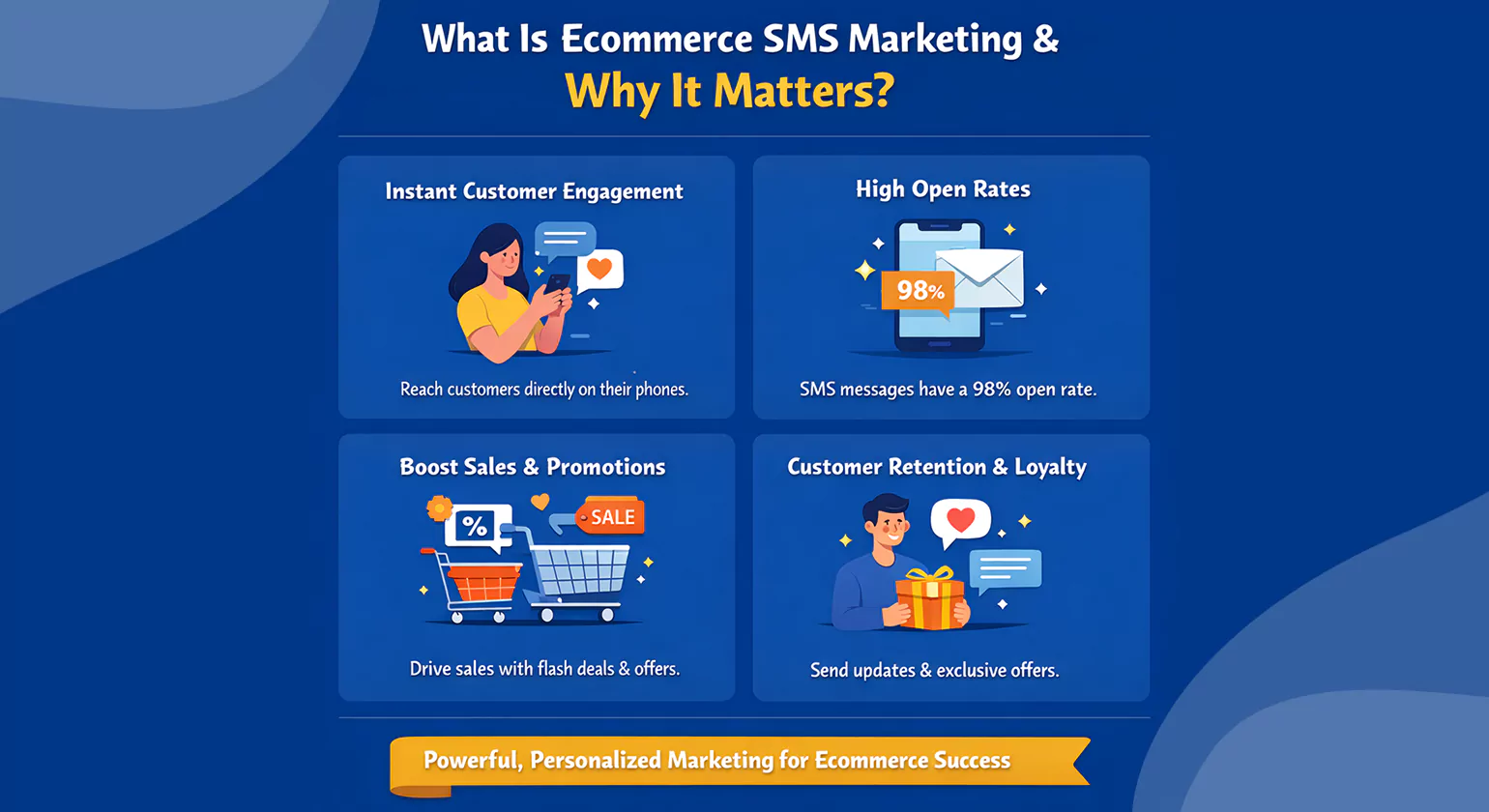
Ecommerce SMS marketing is a product- or service-related message sent by a brand to a customer or opted-in consumer with a couple of restrictions per the mobile services provider. It covers the entire range of awareness to retention processes with much higher open rate and faster conversions compared with email or social.
HubSpot reports that open rates for SMS campaigns could reach as high as 90%, with most of the messages being read within 3 minutes of being received. For example, by using a cart abandonment notification via SMS is proven to recover 10-20% of lost sales, and flash sale alerts generate instant sales that spike revenue.
Prioritize timing, segmentation and personalization to boost ROI. Send behavior-based messages such as cart reminders or reorder alerts. Be brief, add a clear CTA, and make sure the messaging is always relevant to the customer’s intent to boost engagement and conversions.
Types of Ecommerce SMS Campaigns & Their Key Benefits
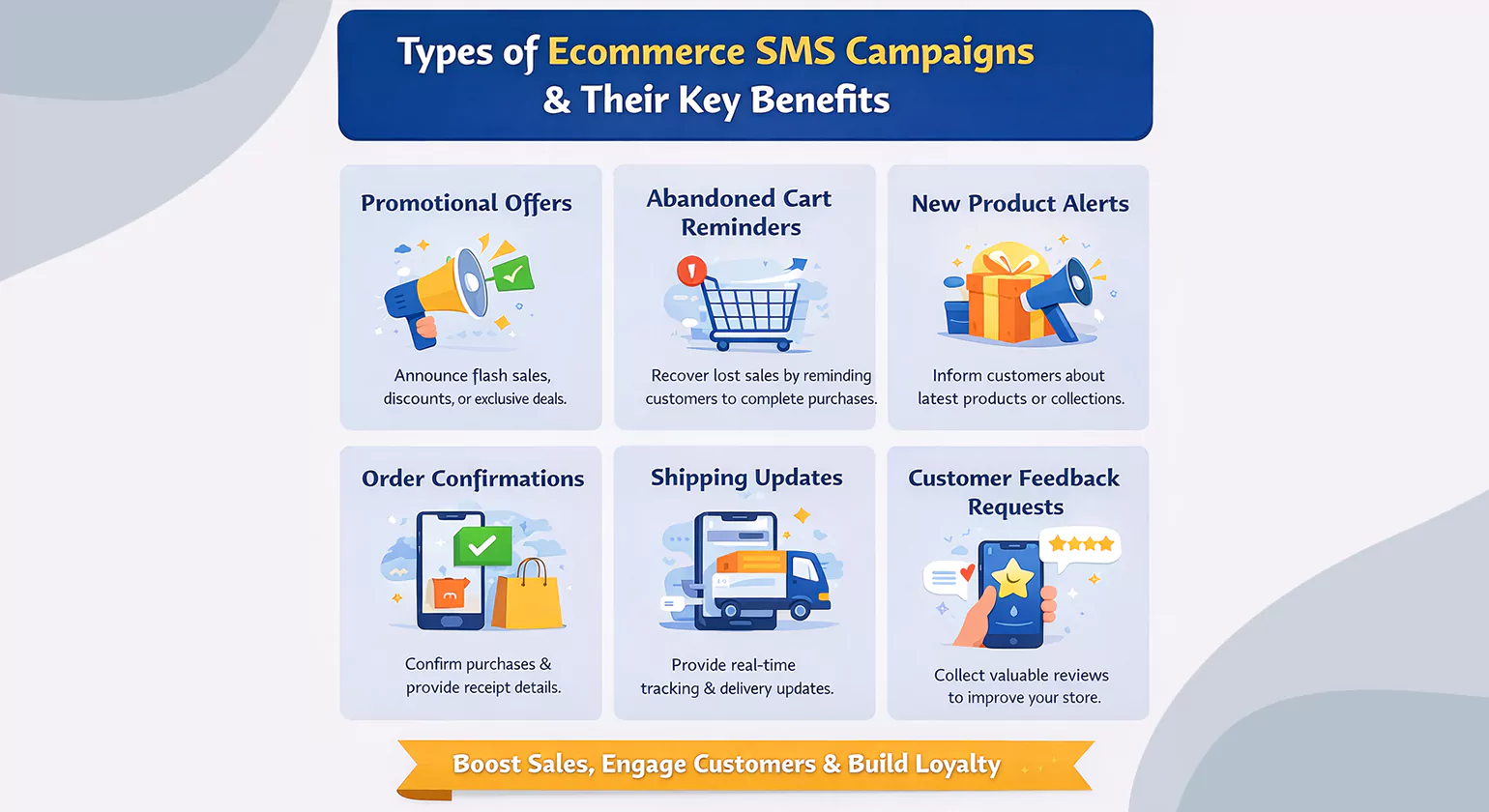
Promotional, transactional, behavioral, and conversational sales campaigns are all part of ecommerce sms marketing. Each has a unique goal to focus on—revenue, customer experience, cart recovery, and relationship building—SMS is a powerful, return on investment (ROI)-driven channel for ecommerce brands.
Promotional SMS (Sales, Product Launches)
Promotional SMS creates urgency and traffic through time-sensitive promotions. As HubSpot pointed out, SMS open rates are over 90%, which is perfect when you want to sell goods quickly. For instance, brands frequently experience a 20–30% increase in sales on the same day as an SMS campaign with a sense of urgency.
Transactional SMS (Order Updates, Confirmations)
Transactional SMS establishes trust with information such as order confirmations and shipping updates in real-time. Research that shows support calls/queries get reduced by up to 40% when users are notified in time. This not only enhances a customer’s happiness in following protocols but also smoothens the post-purchase track in ecom sms marketing workflows.
Behavioral SMS (Abandoned Cart, Back-in-Stock)
Behavioural SMS addresses behaviours including abandoned carts and product availability. Abandoned cart SMS can recover as much as 30% of lost sales, Omni send reports. These intent-based messages offer higher conversions as they capture users at the right time.
Conversational SMS (2-Way Engagement)
Conversational SMS allows customers and brands to interact in real time, leading to more personalized experiences and better retention. Brands using SMS chat have reported higher engagement and faster resolution times. It also provides a more immediate support and personalized suggestions, strengthening relationships.
How to Do SMS Marketing for Ecommerce Step by Step Guide
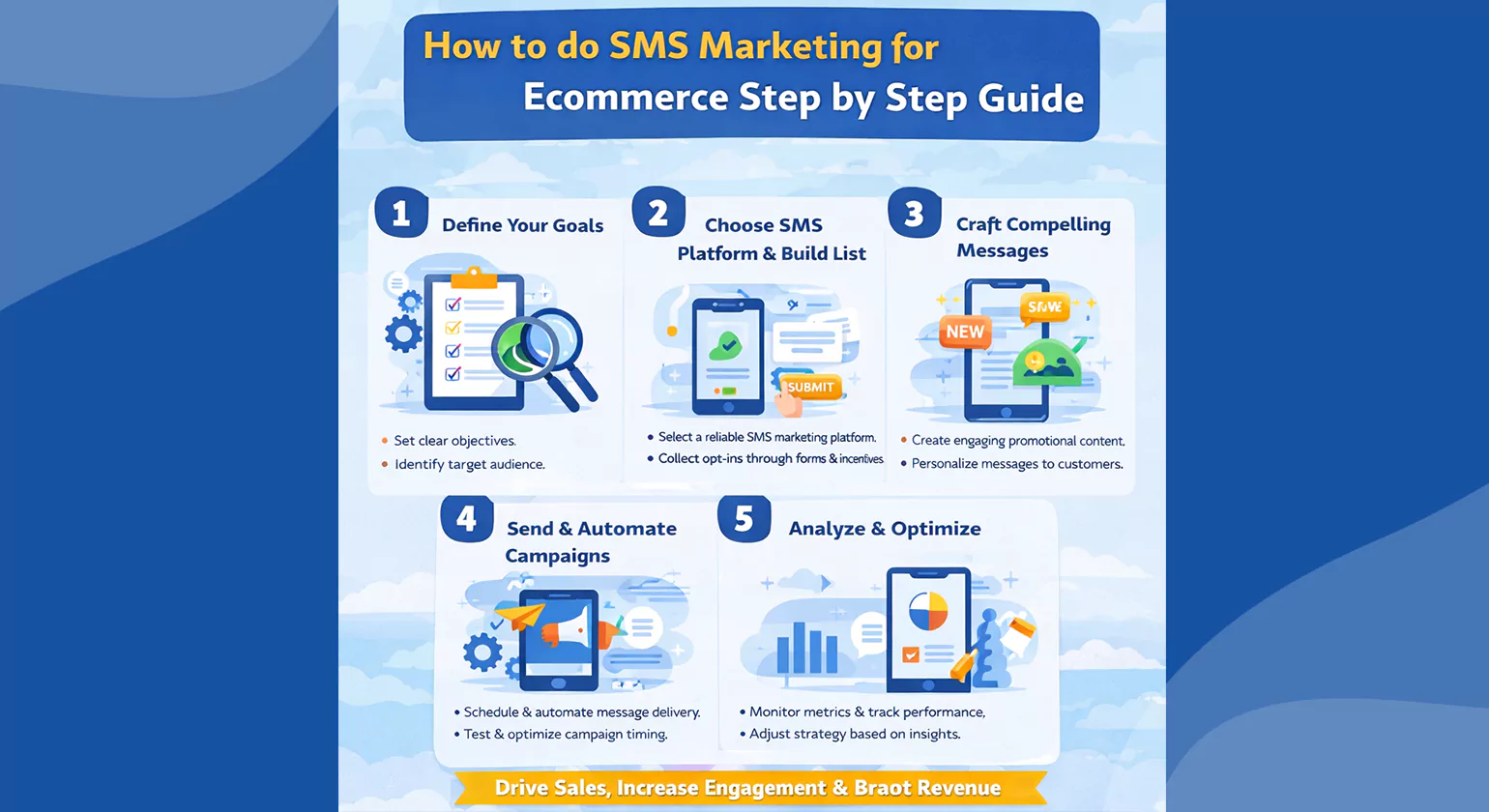
SMS marketing works because people actually read texts. Open rates sit above 90%, which no email campaign can touch. Here’s how to build it properly.
Get Permission Before Anything Else
You’re not allowed to text people who have not consented to it. Include an SMS opt-in during checkout, in a website pop-up, or on a specific landing page. Sweeten it— hrow in 10% off or free shipping. Keep the language simple: “Receive texts from us with sales and news. To opt out, reply STOP.” No consent, no campaign. That keeps you in compliance with the TCPA and GDPR as well.
Pick a Platform Built for Ecommerce
Don’t rely on a general SMS platform. Klaviyo, Postscript and Attentive integrate directly with Shopify and other stores, automatically importing purchase data. You need that data to properly segment and automate. Free trials are available — try one out before you buy.
Segment Your List Before You Send Anything
Split up your subscribers into groups: first time buyers, return buyers, people who haven’t purchased in 90 days, big spenders. Loyalty discounts to first-time buyers make no sense. Targeted campaigns have the potential to produce many orders, while advertising the same message to everyone is limited to one order at most.
Write Messages That Actually Convert
Keep it under 160 characters. Announce the deal right away. Add Urgency (“Ends tonight”). One clear link button in the end. Example: “Hey Sarah — your cart is waiting. Use SAVE15 to get 15% off. Expires at midnight. [link]” That’s it. Nothing else.
Set Up Three Automations First
Before you run any campaigns set up: (1) abandoned cart nudger – send 1 hour after they bounce, (2) order confirmation/shipping notification, (3) win-back for shoppers who’ve been dormant for 60+ days. You get the bounce backs that bring in real money.
Time Your Sends Correctly
Send from 10am–12pm or 5pm–7pm in the recipient’s time zone. Don’t ever text before 9am or after 8pm. Promotional messages max twice a week—add more and unsubscribes go through the roof.
Most Effective Ecommerce SMS Marketing Strategies
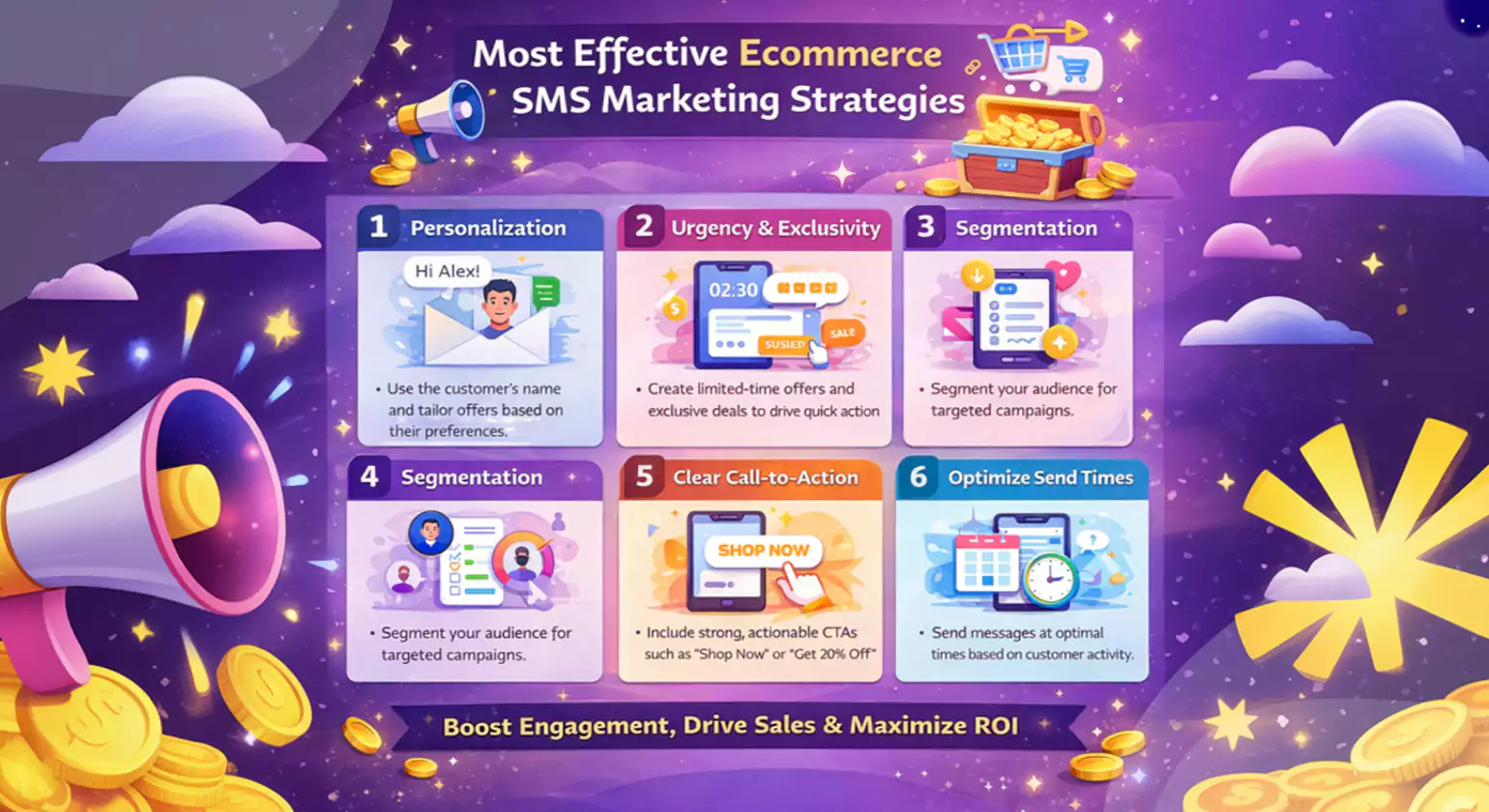
The best Ecommerce sms marketing tactics are those that apply segmentation, automation and timing to send personalized, high-intent messages that drive conversions. Along with email and loyalty programs, SMS is a high-ROI retention channel that drives repeat purchases.
Audience Segmentation And Personalization
Divide customers based on their behavior, purchase history and lifecycle stage to send relevant messages. Targeting repeat buyers with deals, for instance, enhances engagement. HubSpot states that personalized SMS Marketing Ecommerce campaigns increase the number of clicks by more than 20%, leading to a significant increase in conversion efficiency.
Automation Workflows (Cart Recovery, Winback)
Automated flows like abandoned cart reminders and winback campaigns recover lost revenue efficiently. Shopify data shows cart recovery SMS can convert up to 30% of users. Trigger messages based on user actions to ensure timely, relevant communication without manual intervention.
Timing, Frequency, And Compliance Best Practices
Send messages during optimal hours (10 AM–8 PM) and limit frequency to avoid fatigue. Compliance with regulations like TCPA or GDPR builds trust. Studies show properly timed SMS campaigns can increase open rates above 90%, maximizing visibility and response.
Multi-Channel Integration (SMS + Email + Loyalty)
Integrate SMS with email and loyalty programs to create cohesive customer journeys. For example, follow up email promotions with SMS reminders to boost conversions. Omnisend reports multi-channel campaigns can increase purchase rates by 250% compared to single-channel strategies.
Creating Urgency And High-Converting CTAs
Use urgency-driven language like “limited-time offer” or “only 2 hours left” to prompt immediate action. Clear CTAs such as “Shop Now” or “Claim Your Discount” improve conversions. Short, action-focused messages outperform generic promotional texts consistently.
Which Ecommerce SMS Marketing Metrics Should You Track?
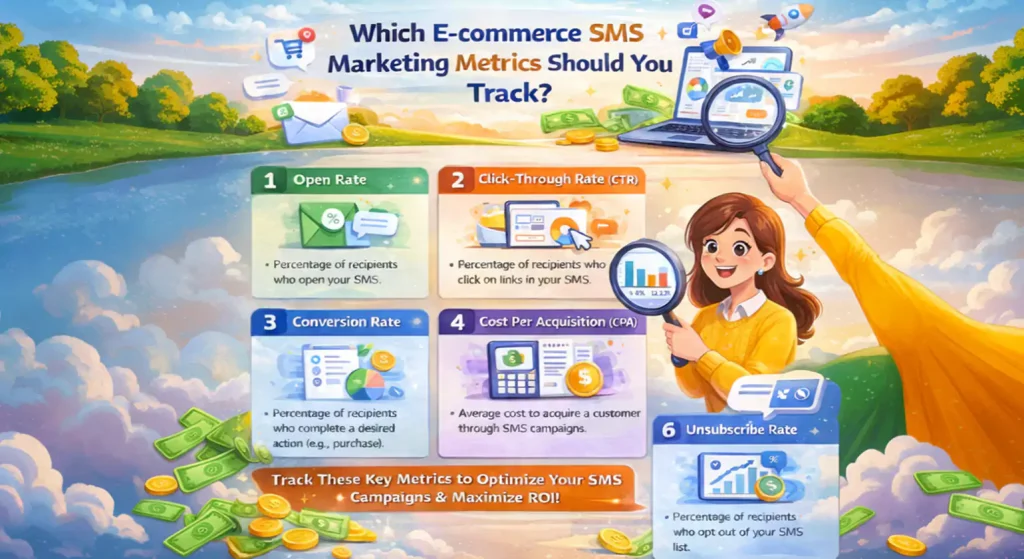
Measuring the essential metrics in Ecommerce sms marketing enables you to monitor your performance, fine-tune your campaigns, and boost your return on investment. Concentrate on the engagement, conversions, and revenue-related KPIs to gain insights into what is functioning well and evidencing opportunities for improvements to bring home better results.
SMS Open Rate and Read Rate
SMS open rates is the percentage of recipients who open your messages. In Ecommerce sms marketing, the rates are frequently over 90% (according to Gartner), which makes it a very visible channel. High open rates are a good sign of proper timing and audience targeting (for promotional SMS campaigns in particular).
Click-Through Rate CTR in SMS Campaigns
CTR is the number of users who click on links within your SMS. 10–20% CTR is the average (HubSpot data). For example, a flash sale SMS containing a shortened link can greatly increase website traffic and engagement in mobile marketing campaigns.
Conversion Rate from SMS Campaigns
The conversion rate tracks how many recipients take a desired action such as making a purchase. Abandoned cart SMS reminders can recover up to 15–30% of lost sales, for example. This metric serves as a straight indicator of how successful your campaigns are at generating revenue and customer activity.
Cost Per Conversion and ROI
Cost-per-conversion measures how much you spend in order to gain a customer. Compare it against return on investment to determine if it’s making you money. For instance, a spend of ₹2,000 to earn ₹10,000 in sales signifies a great return in SMS marketing for ecommerce campaigns.
Subscriber Growth and Opt-In Rate
This statistic illustrates how fast your SMS lists are expanding. A high opt-in rate means your offers and signs up incentives work. For instance, providing a 10% discount on signup can increase the rate of subscriber acquisition dramatically.
Unsubscribe Rate and Churn Analysis
Deseat rate shows how many users opt out. Rates above 2–3% could indicate message fatigue or irrelevance content. Tracking churn rate enables better targeting and frequency to keep a subscriber base healthy.
Revenue Per Message RPM
RPM measures how much revenue each SMS generates. For example, if 1,000 messages generate ₹50,000, your RPM is ₹50. This metric helps evaluate campaign efficiency and optimize messaging strategies.
Delivery Rate and Message Deliverability
Delivery rate shows how many messages successfully reach recipients. A rate below 95% may indicate issues with invalid numbers or carrier filtering. Maintaining clean lists improves deliverability and overall campaign performance.
Engagement Rate and Response Tracking
Engagement includes replies, clicks, and interactions. Two-way SMS campaigns, like surveys or support messages, often see higher engagement. Tracking responses helps improve personalization and customer experience in SMS Marketing Ecommerce campaigns.
Customer Lifetime Value CLV from SMS Campaigns
CLV measures total revenue generated from a customer over time. SMS campaigns that drive repeat purchases increase CLV. For example, loyalty program updates via SMS can significantly boost long-term customer retention and value.
Conclusion
2026 Ecommerce SMS Marketing Success Leverages First-Party Data, Consent-Driven Targeting and Google Core Updates-Aligned Real-Time Personalization. Focus on user intent, measurable ROI, and value-first messaging. Those that blend automation, segmentation, and compliance will be the ones that win, all while retaining consumer trust, engagement and long-term customer retention.
Related Blogs >> Fundamentals of Marketing: Core Concepts
FAQs
Can SMS marketing be integrated with CRM systems?
Yes, SMS marketing for Ecommerce integrates with CRM platforms to synchronize customer data, automate messaging, and customize campaigns. That means you can use real-time behavioral insights to enable more accurate segmenting, targeting, and engaging with customers.
How to automate SMS marketing for online stores?
Automated SMS marketing for triggers like abandoned carts, order updates and promotions. Leverage workflows, segmentation and scheduling capabilities to send timely, personalized communications that maximize conversions and customer experience.
How to set up SMS marketing on Shopify?
Download a Shopify SMS app, turn on opt-ins, and sync customer data. Build campaigns, segment audiences, and comply with consent regulations to run successful SMS campaigns.
How do I send a mass text?
Utilize a SMS marketing software to import your contacts, segment your list, and send messages end masse. Make sure they have opted in and personalize your messages to keep your audience engaged and compliance happy.
How does SMS marketing work?
SMS marketing is the sending of promotional or transactional messages to a mobile phone or a number directly in the customer’s mobile phone. It leverages opt-in lists, automation and personalization to provide timely, relevant communications that increase engagement, conversions and customer retention.