Table of Contents
Introduction to Customer Analytics Software
Customer Analytics Software is a powerful tool that helps businesses understand their customers better by analyzing data from various touchpoints. This software collects, processes, and interprets customer information such as purchasing behavior, preferences, demographics, and interactions across channels. By leveraging these insights, companies can personalize marketing strategies, improve customer experience analytics software, and boost retention rates. Customer analytics also enables segmentation, predictive modeling, and real-time decision-making, making it easier for businesses to anticipate customer needs and respond effectively. In today’s competitive market, using customer analytics is essential for organizations aiming to build stronger relationships, increase sales, and stay ahead of the competition. Whether you’re a small business or a large enterprise, this technology transforms raw data into actionable intelligence, driving growth and enhancing customer satisfaction.
What are Customer Analytics?
Customer analytics refers to the practice of gathering, measuring, and analyzing data about customers to understand their behaviors, preferences, and motivations. It combines quantitative and qualitative data from multiple sources—such as purchase history, website interactions, social media activity, and customer feedback—to build a comprehensive profile of each customer. Using techniques like segmentation, predictive analytics, and machine learning, businesses can identify patterns and trends that reveal how customers make decisions, what influences their loyalty, and where opportunities for upselling or cross-selling lie. Essentially, customer analytics transforms raw data into actionable insights, enabling organizations to tailor their marketing strategies, improve product development, and enhance overall customer experience.
Why Customer Analytics Matters in 2026
In 2026, the importance of customer analytics services has surged due to several converging factors. First, the sheer volume of customer data generated daily—from mobile apps, e-commerce, IoT devices, and social media—has made traditional intuition-based decision-making obsolete. customer analytics solutions empowers businesses to harness this data effectively, delivering personalized experiences that meet rising consumer expectations for relevance and immediacy.
Second, advancements in AI and automation allow companies to analyze customer data faster and with greater precision, enabling real-time marketing and customer service analytics software adjustments. Additionally, evolving privacy laws like GDPR and CCPA have increased transparency demands, making ethical data management a competitive advantage.
Lastly, in a saturated marketplace, customer analytics tools provide a critical edge by uncovering unmet needs and predicting future behaviors, helping businesses innovate and build long-term customer loyalty. For companies aiming to thrive in 2026 and beyond, investing in customer analytics services is no longer optional—it’s essential.
Who Uses Customer Analytics Software?
1. Marketing Teams
Marketing departments leverage customer analytics to better understand target audiences and design data-driven campaigns. By tracking user interactions across channels—email, social media, ads, and websites—marketers can segment audiences based on behavior, demographics, and preferences. This leads to highly personalized messaging, optimized ad spends, and improved campaign performance. Real-time analytics also allow for agile adjustments to marketing strategies.
2. Sales Departments
Sales teams use analytics software to identify high-potential leads and personalize their outreach based on behavioral data, previous interactions, and buying patterns. Analytics enables sales reps to anticipate objections, time follow-ups more effectively, and tailor product offerings. Forecasting models based on customer data improve pipeline accuracy and help sales leaders manage team performance with clarity.
3. Customer Support Teams
Customer service departments apply analytics to track key performance indicators like response times, resolution rates, and customer satisfaction (CSAT). By analyzing common issues and customer sentiment, teams can proactively address problems, reduce ticket volumes, and improve support workflows. Predictive analytics can even flag at-risk customers for early intervention.
4. Product Managers
Product teams use customer analytics software to understand how users interact with features, identify pain points, and prioritize updates. Behavioral data helps validate hypotheses, improve UX design, and align product development with actual user needs. Feedback loops powered by analytics ensure the product evolves in the right direction.
5. Executive Leadership
Executives and decision-makers use aggregated customer data for strategic insights. Analytics reveal trends in customer lifetime value, churn, satisfaction, and growth potential, helping guide investments and competitive positioning. It’s essential for aligning business goals with customer expectations.
6. E-commerce & Retail Businesses
E-commerce companies rely on analytics to track browsing behavior, purchase history, and abandoned carts. This helps deliver real-time product recommendations, dynamic pricing, and targeted promotions. Analytics also supports inventory management by predicting demand trends based on customer behavior.
7. Financial Services
Banks, credit unions, and insurers utilize customer analytics platforms for personalized financial product offerings, fraud detection, and risk scoring. Behavioral and transactional data enable financial institutions to tailor services to individual needs, while also complying with regulatory requirements and managing portfolio risk.
8. Telecom & Utility Providers
These service providers use customer analytics tools to enhance service quality, predict churn, and optimize pricing models. Data insights help in detecting service issues before customers complain and in delivering personalized offers based on usage patterns.
9. Healthcare Providers
Healthcare organizations analyze patient demographics, history, and behavioral data to personalize care, predict health risks, and improve clinical outcomes. Analytics supports operational efficiency, resource planning, and enhanced patient engagement through targeted wellness programs.
Key Features of Customer Analytics Software
Customer Analytics Software empowers businesses to understand their customers deeply, make data-driven decisions, and optimize experiences across every touchpoint. The right platform goes beyond basic reporting to deliver actionable insights that drive engagement, retention, and growth.
Unified Data Integration
A robust customer analytics solutions consolidates data from multiple sources—CRMs, e-commerce platforms, mobile apps, social media, and web interactions—into a single, centralized system. This eliminates data silos, ensures accuracy, and gives teams a complete view of customer behaviors and trends across channels.
Predictive and Prescriptive Analytics
Advanced platforms use predictive analytics to forecast customer actions, such as purchase likelihood, churn risk, or upsell opportunities. Prescriptive analytics goes further by recommending the most effective actions—like personalized offers or targeted messaging—helping businesses act proactively and maximize results.
Real-Time Customer Insights
Real-time tracking enables businesses to respond instantly to customer behaviors such as site navigation, cart activity, or app usage. With immediate insights, teams can deliver timely offers, resolve issues, and boost engagement while enhancing the overall customer experience analytics software.
Customer Segmentation and Cohort Analysis
Segmentation allows brands to group customers by demographics, purchase history, or behavior, enabling personalized campaigns that resonate. Cohort analysis measures how specific groups behave over time, revealing trends in retention, engagement, and campaign performance to guide smarter strategies.
Comprehensive Customer Journey Mapping
Customer journey mapping visualizes the entire lifecycle from initial contact to repeat purchases. By identifying friction points and critical interactions, businesses can optimize experiences, improve onboarding, and drive loyalty with targeted interventions.
Interactive Dashboards and Reporting
Customizable dashboards transform complex data into visual, actionable insights. Teams can track KPIs, monitor campaigns, and generate automated reports that keep all departments aligned with evolving customer trends and business goals.
AI and Machine Learning Enhancements
AI-powered analytics detect deep patterns in behavior that traditional methods often miss. Machine learning automates segmentation, predicts outcomes, and enables hyper-personalized experiences. As data grows, insights become increasingly precise, ensuring smarter marketing and more efficient decision-making.
Top 10 Customer Analytics Software for Data-Driven Decisions Making
1. Mixpanel
Overview
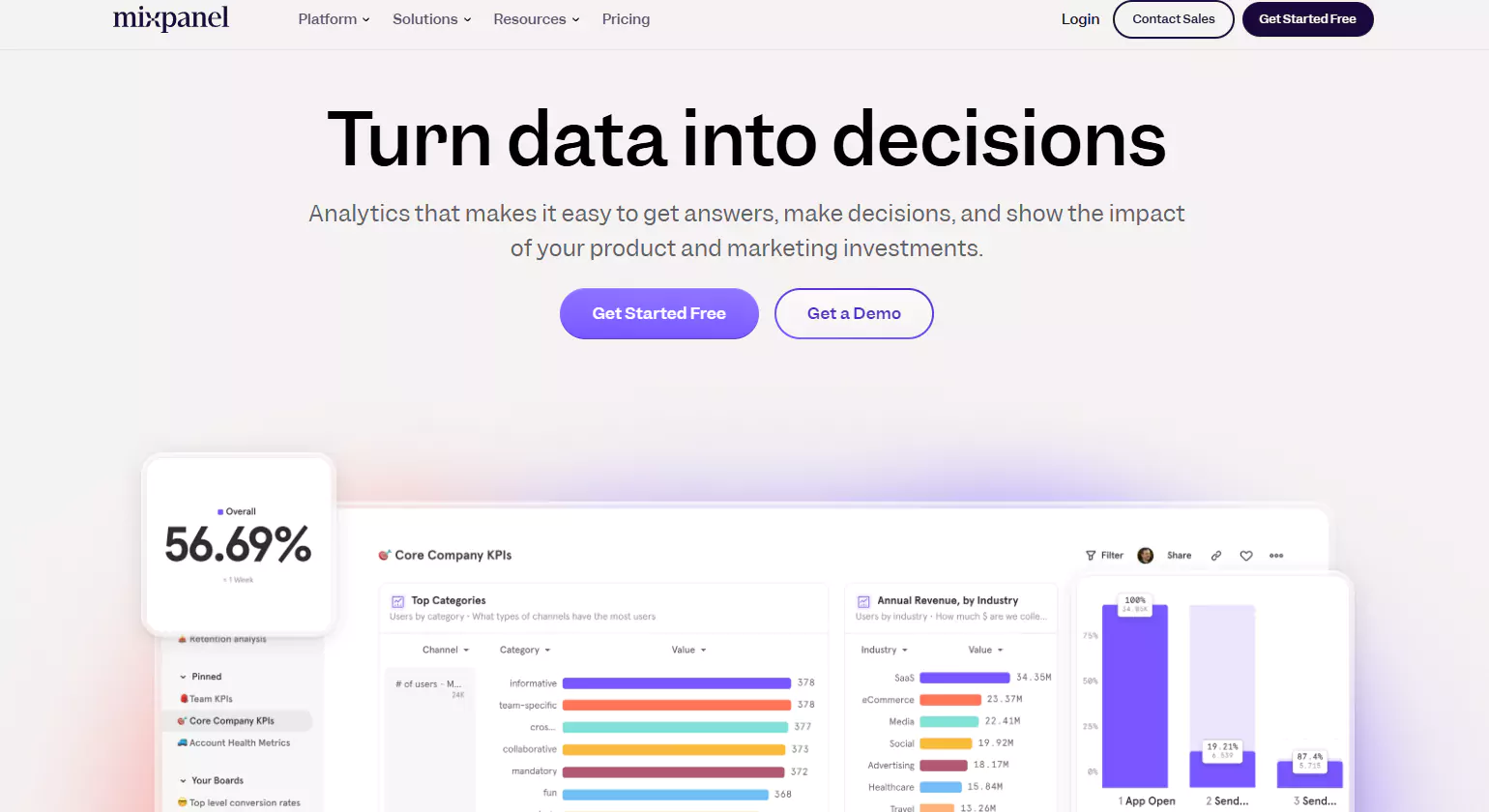
Mixpanel is a leading customer analysis software and product analytics platform designed to help businesses understand user behavior and drive product growth. It enables teams to analyze how users interact with digital products across web and mobile, allowing for data-driven decisions that improve engagement, retention, and conversion rates.
Key Features
- Event-Based Tracking: Monitor user actions in real time across platforms.
- Interactive Reports: Create customizable funnels, retention charts, and user journey visualizations.
- Segmentation & Cohorts: Break down data by user attributes and behaviors for targeted insights.
- A/B Testing Analysis: Evaluate experiments to optimize product features.
- Integrations: Seamless connections with tools like Amplitude, Segment, Snowflake, and more.
- Data Governance: Ensure accurate, reliable analytics with robust controls and privacy tools.
Why Choose Mixpanel
Mixpanel stands out for its powerful self-serve analytics, intuitive interface, and real-time data processing. It empowers teams—without needing data scientists—to uncover insights, test ideas, and iterate quickly. With flexible pricing, strong security, and scalability from startups to enterprises, Mixpanel helps companies build better products faster by making sense of complex user behavior data—making it an ideal choice for those seeking robust.
2. Hotjar
Overview
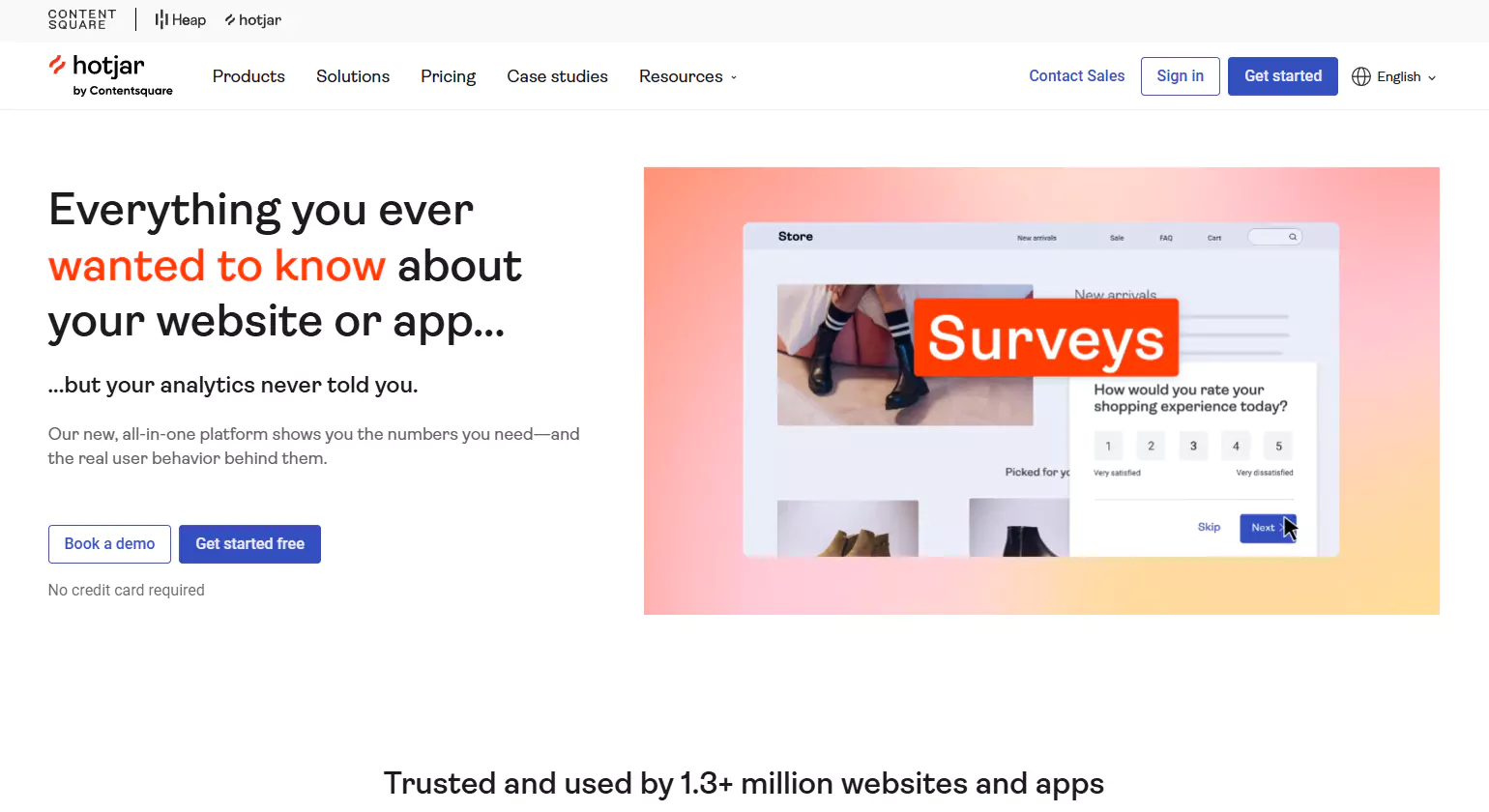
Hotjar is a powerful behavior customer analytics tools and user feedback tool that helps businesses understand how users interact with their websites. By combining features like heatmaps, session recordings, and user surveys, Hotjar provides deep insights into user behavior, enabling teams to optimize user experience and increase conversions.
Key Features
- Heatmaps: Visualize where users click, scroll, and move on your site.
- Session Recordings: Watch real-time replays of user sessions to identify friction points.
- Feedback Widgets: Collect direct user feedback through customizable polls and surveys.
- Surveys: Launch on-site or external surveys to gather insights at scale.
- Funnels & Form Analysis: Identify where users drop off in your conversion funnel or abandon forms.
Why Choose Hotjar?
Hotjar stands out for its ease of use, fast setup, and intuitive interface. It seamlessly integrates with popular platforms like Google Analytics, HubSpot, and Slack, providing context to quantitative data. Whether you’re a product manager, marketer, or UX designer, Hotjar helps you make data-backed decisions quickly. Trusted by over 1 million websites globally, it’s an essential tool for improving user experience and boosting engagement.
3. Tableau
Overview
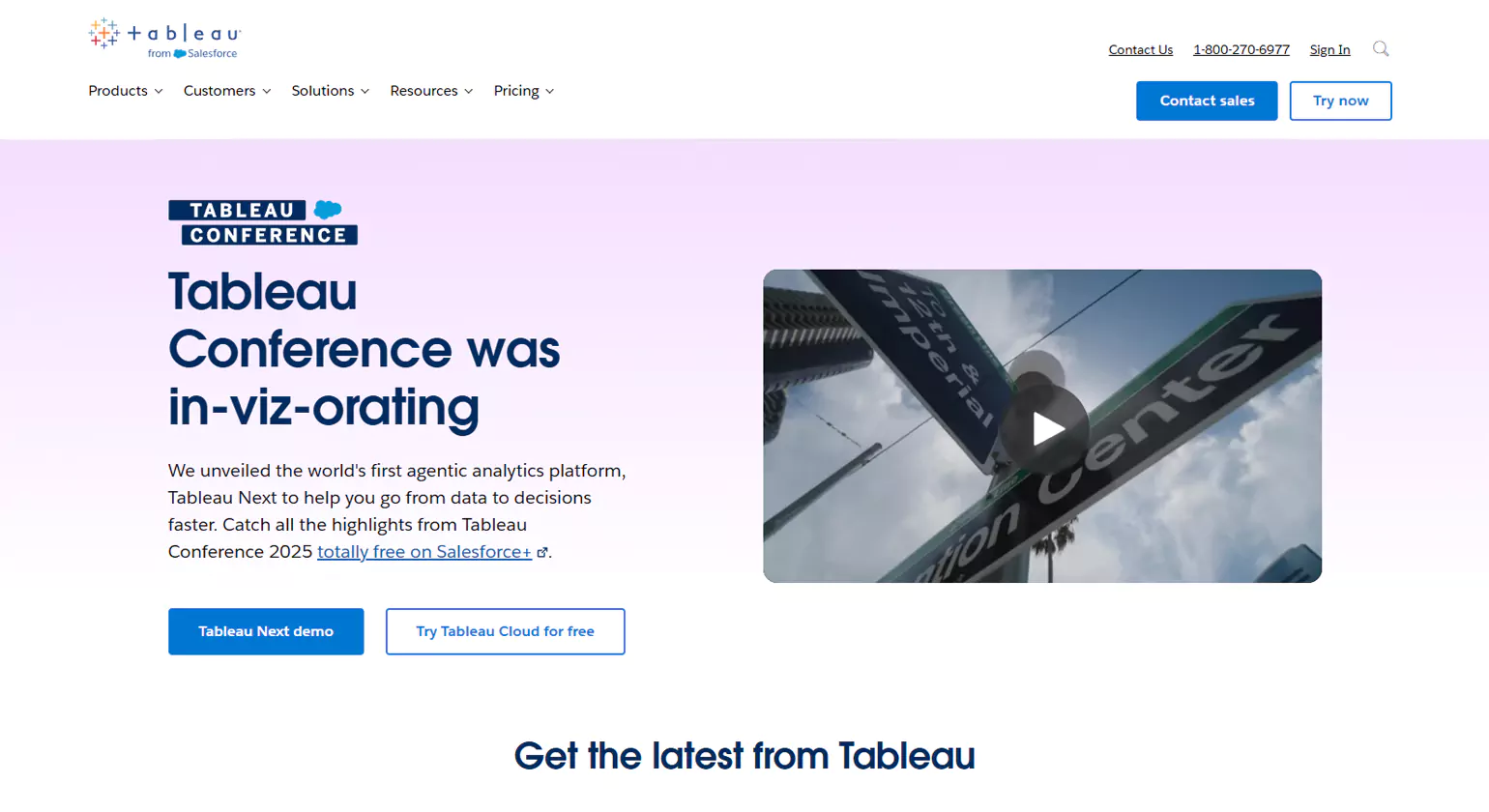
Tableau is a leading data visualization and business intelligence platform that empowers individuals and organizations to understand their data and make informed decisions. Owned by Salesforce, Tableau provides intuitive tools to connect, visualize, and share data in real time, without the need for technical expertise. As a powerful customer analytics software, Tableau helps businesses better understand customer behavior, preferences, and trends through insightful data visualizations.
Key Features
- Drag-and-Drop Interface: Easily create interactive dashboards and reports.
- Data Connectivity: Connects to hundreds of data sources including Excel, SQL, Google Analytics, and cloud platforms.
- Real-Time Analytics: Enables instant insights with live and in-memory data analysis.
- AI & Predictive Insights: Leverages Salesforce’s AI (Einstein) for smarter data discovery.
- Collaboration Tools: Share dashboards securely across teams and devices.
Why Choose Tableau
Tableau stands out for its user-friendly design, powerful analytics engine, and scalability across industries and data environments. Whether you’re a beginner or a data expert, Tableau helps translate complex data into meaningful stories through visuals. Its strong integration with Salesforce and enterprise-ready features make it ideal for both small businesses and large enterprises seeking to become more data-driven. With Tableau, decision-making becomes faster, smarter, and more collaborative making it a top choice among customer analytics platforms.
4. Brandwatch
Overview
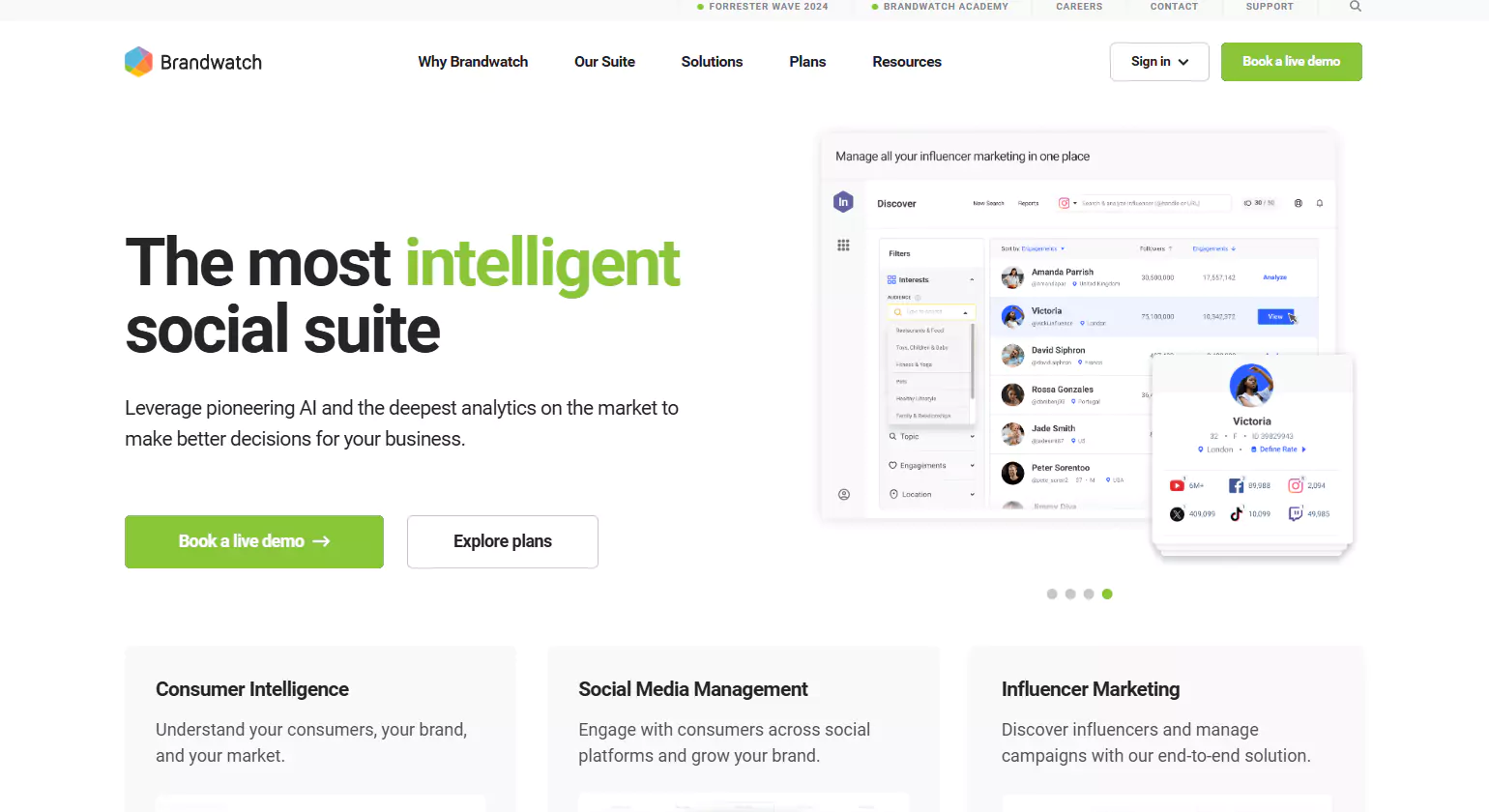
Brandwatch is a leading digital consumer intelligence and social media management platform, trusted by over 5,000 global brands. Founded in 2007 and now part of Cision, Brandwatch offers a comprehensive suite that combines AI-powered analytics, influencer marketing, and real-time social listening to help businesses understand and engage their audiences effectively.
Key Features:
- Extensive Data Coverage: Access to over 1.7 trillion historical conversations from more than 100 million online sources, including social media, blogs, forums, and news sites.
- AI-Powered Insights: Utilizes advanced AI and machine learning to uncover trends, sentiment, and key topics, with tools like Iris, the AI analyst, providing real-time insights.
- Social Media Management: Manage, schedule, and monitor posts across all major social networks from a unified dashboard, with features like a collaborative content calendar and real-time alerts.
- Influencer Marketing: Discover and manage relationships with over 30 million influencers, streamlining campaign management across platforms like YouTube, Instagram, and TikTok.
Why Choose Brandwatch
Brandwatch stands out for its unparalleled data depth, sophisticated AI capabilities, and comprehensive toolset that supports everything from consumer research to social media publishing. Its customizable dashboards and robust analytics empower organizations to make informed decisions, mitigate risks, and enhance customer engagement. With a dedicated customer success team and seamless integrations with platforms like Salesforce and Google Analytics, Brandwatch is designed to scale with your business needs.
5. Sprout Social
Overview
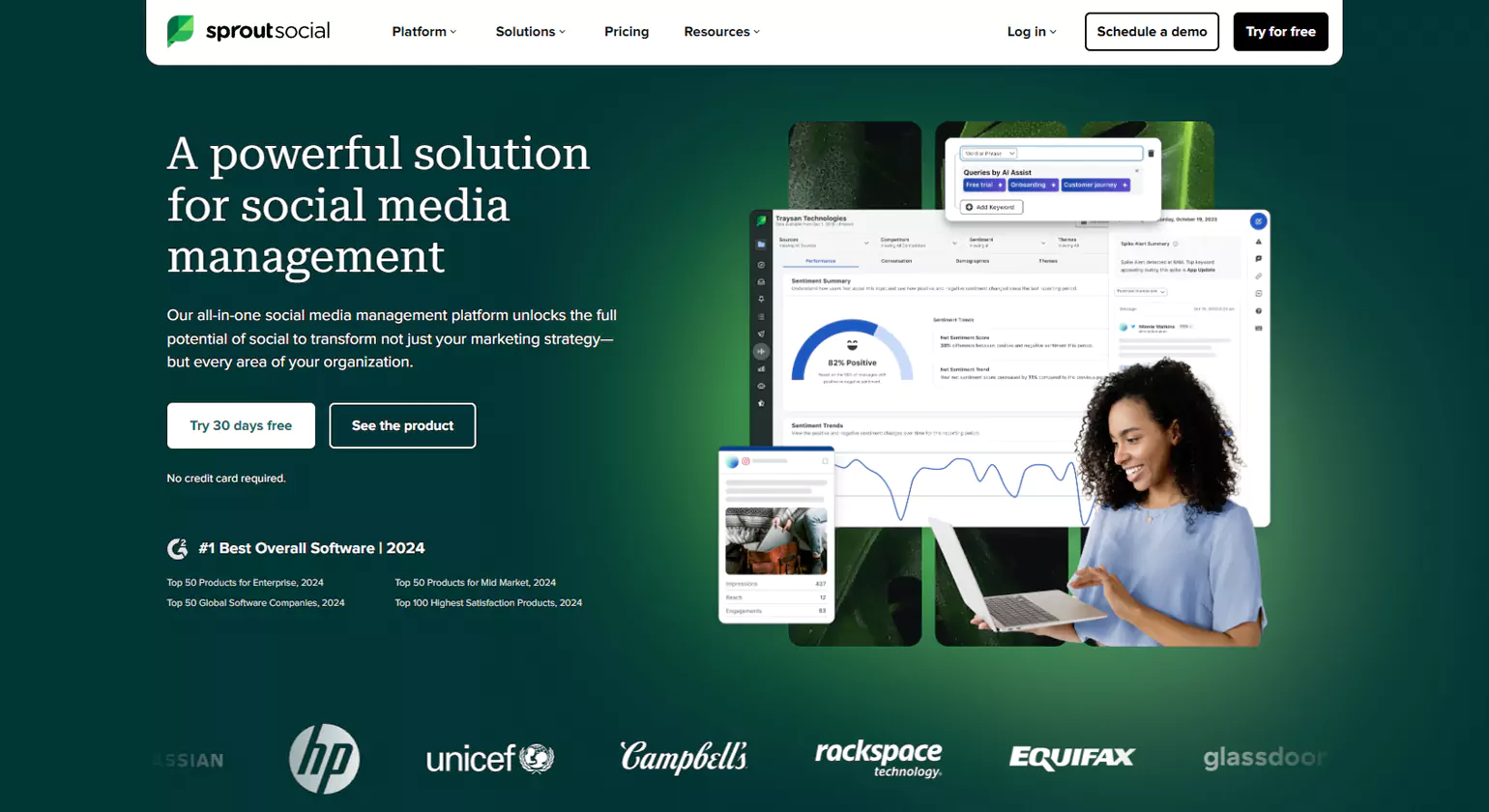
Sprout Social is a leading social media management platform designed to streamline and enhance digital engagement for businesses of all sizes. Founded in 2010 and headquartered in Chicago, it serves over 30,000 brands globally, offering tools that integrate publishing, analytics, customer care, and AI-driven automation into a unified interface. As a comprehensive customer analytics software, Sprout Social empowers businesses to better understand and engage with their audiences across social channels.
Key Features
- Smart Inbox: Consolidates messages from various social platforms, enabling efficient response management.
- Content Calendar: Facilitates scheduling and publishing across multiple channels with AI-optimized timing.
- Advanced Analytics: Provides in-depth insights into social media performance, aiding strategic decisions.
- Social Listening: Monitors brand mentions and industry trends to inform engagement strategies.
- AI & Automation: Enhances productivity through features like sentiment analysis and automated workflows.
Why Choose Sprout Social
Sprout Social stands out for its intuitive design, robust feature set, and commitment to innovation. Its AI capabilities not only streamline operations but also provide actionable insights, making it an asset for brands aiming to optimize their social media presence. With a focus on user experience and continuous improvement, Sprout Social empowers teams to connect with their audience effectively and drive meaningful results.
6. Woopra
Overview
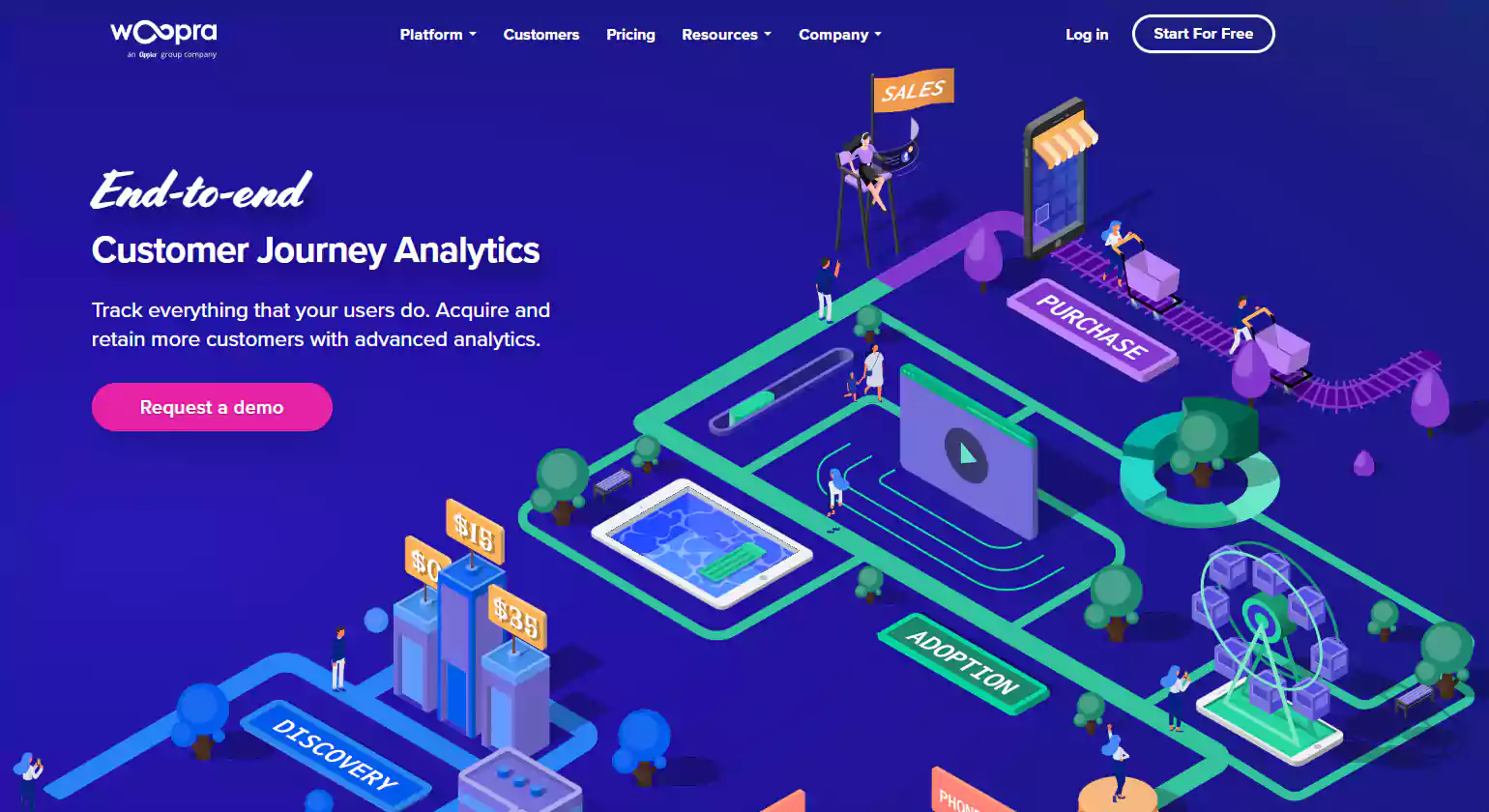
Woopra is a customer journey analytics platform designed to provide real-time insights into user behavior across various touchpoints. Founded in 2012, it enables businesses to track, analyze, and optimize the entire customer experience, from acquisition to retention. Curate
Key Features
- Customer Journey Analytics: Visualize user interactions across web, mobile, email, and support channels to understand and enhance the customer experience.
- Real-Time Individual-Level Analysis: Access live data on individual user activities, facilitating personalized engagement and support
- Automations & Triggers: Set up automated actions based on user behavior, such as sending targeted emails or updating CRM records.
- Integration with Multiple Platforms: Unify data by connecting with over 50 services, including databases and SaaS applications, for a holistic view of customer interactions.
- Customizable Dashboards & Reports: Create tailored dashboards to monitor key metrics and generate reports that align with specific business objectives.
Why Choose Woopra
Woopra stands out by offering a comprehensive, real-time view of the customer journey without requiring SQL knowledge. Its intuitive interface empowers teams across product, marketing, sales, and support to make data-driven decisions swiftly. With over 50 integrations, Woopra ensures that businesses can unify their data across tools and touchpoints, providing a single source of truth for customer interactions.
7. Kissmetrics
Overview
Kissmetrics is a comprehensive analytics platform designed to help businesses understand and optimize customer behavior. Unlike traditional tools that focus on page views or isolated events, Kissmetrics offers person-based analytics, tracking individual users across sessions and devices. This approach provides a holistic view of the customer’s journey, from initial interaction to conversion and beyond.
Key Features
- Customer Journey Tracking: Monitor user interactions across multiple touchpoints to gain insights into their behavior and preferences.
- Funnel Analysis: Visualize user paths to identify drop-off points and optimize conversion rates.
- Cohort Analysis: Group users based on shared characteristics to analyze retention and engagement over time.
- Behavioral Segmentation: Segment users by actions, demographics, and more to tailor marketing strategies.
- Custom Event Tracking: Define and track specific user actions critical to your business objectives.
- Revenue Attribution: Determine which channels and campaigns drive the most revenue, allowing for informed resource allocation.
- A/B Testing: Experiment with different strategies to determine the most effective approaches.
Why Choose Kissmetrics
Kissmetrics empowers businesses to make data-driven decisions by providing actionable insights into customer behavior. Its intuitive dashboard and real-time reporting enable teams to quickly identify trends and optimize strategies. Trusted by over 10,000 companies globally, Kissmetrics has a proven track record of helping businesses increase conversions and revenue.
8. InMoment
Overview
InMoment is a leading provider of Experience Improvement (XI) solutions, headquartered in Salt Lake City, Utah. Founded in 2002 as Mindshare Technologies, the company specializes in customer and employee experience management. InMoment offers a cloud-based customer analytics platform that integrates data from various sources, including surveys, social media, chat logs, and call transcripts, to provide actionable insights. The company’s solutions are utilized by over 3,000 brands across 95 countries.
Key Features
- Conversational Intelligence: Utilizes generative AI to analyze contact center interactions, emails, and chats, enhancing customer engagement and operational efficiency.
- Advanced Analytics & AI: Employs proprietary AI and natural language processing to interpret both structured and unstructured data, identifying trends and predicting customer behavior.
- Integrated Data Collection: Gathers feedback from multiple touchpoints, including surveys, social reviews, and digital interactions, providing a comprehensive view of the customer journey.
Why Choose InMoment:
InMoment’s integrated approach enables organizations to break down data silos and make informed decisions that enhance customer satisfaction and business performance. The platform’s AI-driven insights lead to faster ROI, with clients experiencing significant improvements in customer lifetime value and profitability. Recognized as a leader in the 2026 Gartner Magic Quadrant for Voice of the Customer Platforms, InMoment is trusted by industry leaders to drive experience improvement across various sectors.
9. Amplitude
Overview
Amplitude is a leading digital analytics platform designed to help businesses understand user behavior, optimize product experiences, and drive growth. Trusted by over 3,000 companies globally, including Atlassian, Dropbox, and Fender, Amplitude provides real-time insights across the entire customer journey.
Key Features
- Product & Web Analytics: Gain deep insights into user interactions, conversions, and retention across platforms.
- Session Replay & Heatmaps: Visualize user sessions to identify friction points and enhance UX.
- Feature Experimentation & A/B Testing: Test and iterate on features to determine what drives user engagement.
- Amplitude AI: Utilize AI-powered tools like “Ask Amplitude” for instant insights and automated data governance.
- Integrations: Connect seamlessly with tools like Snowflake, AWS, and HubSpot to unify your tech stack.
Why Choose Amplitude:
- Self-Service Analytics: Empower teams with intuitive tools that require minimal technical expertise.
- Scalability: Suitable for startups to enterprises, adapting to growing data needs.
- Actionable Insights: Turn data into decisions with predictive analytics and real-time alerts.
- Proven ROI: Users have reported significant revenue impacts and operational efficiencies.
10. Adobe Analytics
Overview
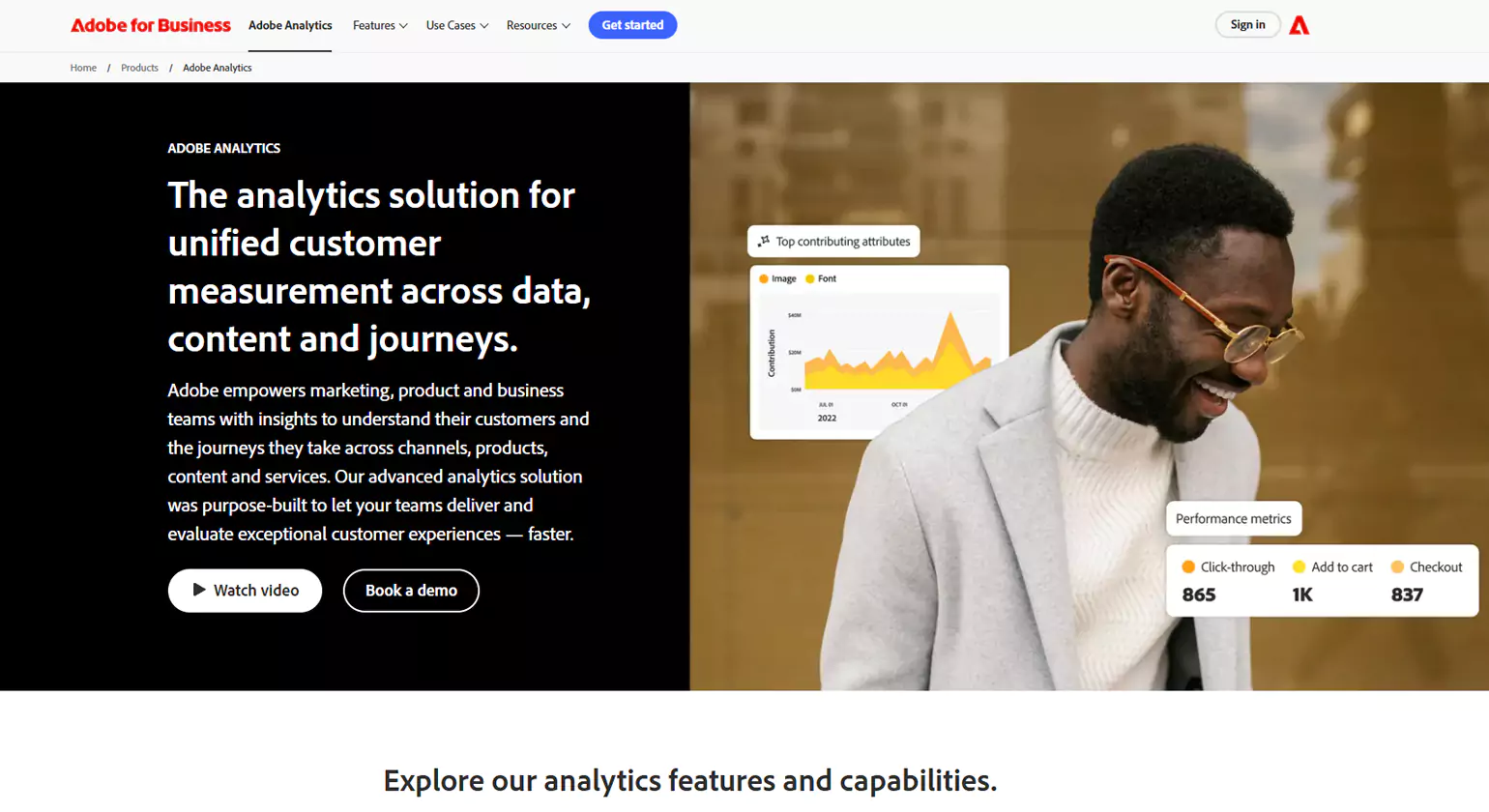
Adobe Analytics is a leading customer analytics tools solution that helps businesses understand customer behavior across multiple channels. It provides real-time data insights, enabling companies to optimize marketing strategies, improve customer experiences, and drive growth. Part of the Adobe Experience Cloud, Adobe Analytics integrates advanced AI and machine learning capabilities for predictive analytics and deep segmentation, making it a powerful tool for data-driven decision-making.
Key Features
- Real-Time Analytics: Access up-to-the-minute data to respond quickly to market trends and customer actions.
- Customer Journey Analysis: Track and analyze multi-channel customer interactions for a holistic view.
- Predictive Analytics & AI: Use Adobe Sensei’s AI to forecast trends and automate insights.
- Customizable Dashboards & Reports: Tailor reports and visualizations to meet specific business needs.
- Segmentation & Cohort Analysis: Deeply segment audiences to deliver personalized experiences.
- Integration: Seamlessly connects with other Adobe Experience Cloud products and third-party tools.
Why Choose Adobe Analytics?
Adobe Analytics empowers businesses with comprehensive, actionable insights backed by AI, helping them create personalized customer journeys and make smarter marketing decisions. Its robust integration capabilities and scalability suit businesses of all sizes, ensuring you stay ahead in a competitive digital landscape. Choose Adobe Analytics to transform raw data into growth opportunities.
Types of Customer Analytics Software
1. Behavioral Analytics Tools
Behavioral customer analysis software focus on tracking what users do within a digital environment. These tools capture data on clicks, navigation paths, time spent on features, and event triggers. They help identify usage patterns, optimize user flows, and detect friction points in real time. Product teams use tools like Mixpanel, Amplitude, or Heap to fine-tune engagement strategies and boost feature adoption based on actual user behavior—not just assumptions.
2. CRM Analytics Platforms
CRM analytics software, such as Salesforce Einstein or HubSpot CRM, delivers actionable insights by analyzing customer interactions, sales activity, and relationship history. These platforms help track customer lifecycle stages, pipeline health, deal velocity, and communication patterns. Sales and marketing teams rely on them to forecast revenue, identify high-value clients, and personalize outreach at scale.
3. Web & Mobile Analytics Tools
Tools like Google Analytics, Adobe Analytics, and Firebase Analytics provide comprehensive data on website and mobile app performance. They track metrics such as page load speed, traffic sources, user paths, and conversion funnels. These insights are critical for optimizing content strategy, improving SEO, and enhancing mobile responsiveness.
4. Social media & Sentiment Analysis Software
This category includes tools like Brandwatch, Sprinklr, and Hootsuite Insights. They analyze public conversations, reviews, and comments to detect sentiment, monitor brand mentions, and understand customer attitudes. Businesses use these tools to manage reputation, respond quickly to feedback, and adjust messaging based on audience sentiment.
5. Customer Feedback & Voice of Customer (VoC) Tools
VoC tools like Qualtrics, Medallia, and SurveyMonkey capture structured feedback through surveys, Net Promoter Score (NPS), and in-app questions. They analyze sentiment, detect satisfaction trends, and uncover unmet needs. These insights help organizations close the feedback loop, improve services, and increase customer loyalty.
10 Benefits of Using Customer Analytics Software
1. Enhanced Customer Segmentation
Customer analytics software allows companies to move past generic segmentation (like age or location) and dive into advanced behavioral and psychographic segmentation. For example, it can group users based on browsing habits, purchasing frequency, content consumption, or even customer journey stages. This precision enables businesses to send the right message to the right group at the right time—resulting in more efficient marketing and higher engagement.
2. Improved Retention and Loyalty
With predictive analytics, businesses can identify customers who are likely to churn before they actually leave. By tracking signals such as declining engagement, negative feedback, or reduced purchase frequency, companies can intervene with loyalty offers, personalized outreach, or support. Additionally, long-term satisfaction tracking helps in fostering loyalty programs tailored to specific user preferences, increasing customer lifetime value.
3. Higher Personalization and Targeting
Analytics tools help create 1:1 experience by leveraging individual data points such as past purchases, on-site behavior, and preferences. For example, an e-commerce platform can recommend products a customer is most likely to buy next. This hyper-personalization not only boosts conversion rates but also strengthens customer trust and satisfaction by delivering relevant, timely interactions.
4. Better Product and Service Development
By analyzing usage data and feedback, companies can uncover which features customers love, which are underused, and where pain points lie. This informs iterative product development and ensures new features align with actual customer needs—not assumptions. In service-based industries, analytics helps optimize workflows, refine customer experiences, and introduce new services based on proven demand.
5. Data-Driven Decision Making
Instead of relying on gut feelings, businesses can make strategic decisions based on real customer behavior and trends. Whether it’s adjusting pricing, reallocating marketing budgets, launching new features, or entering new markets—analytics provides the confidence that decisions are backed by facts. This leads to more predictable outcomes, reduced risk, and a stronger competitive edge.
6. Optimized Marketing ROI
By tracking the performance of every campaign and channel, customer analytics software helps marketers allocate budgets more effectively. You can identify which segments respond best to certain messages or platforms, allowing you to double down on high-performing strategies and cut wasteful spending—ultimately maximizing return on investment.
7. Increased Customer Lifetime Value (CLV)
Analytics reveals the behaviors and characteristics of high-value customers, enabling businesses to nurture similar profiles more effectively. With this knowledge, companies can create targeted retention strategies, upsell campaigns, and loyalty initiatives designed to increase the average revenue per customer over time.
8. Streamlined Customer Journeys
customer analytics platform helps map out the entire customer journey—from first touchpoint to post-purchase. Identifying friction points (e.g., cart abandonment, long support waits times) allows businesses to remove barriers, reduce dropout rates, and create seamless experiences that drive conversion and satisfaction.
9. Competitive Advantage
Companies using analytics gain a real-time understanding of evolving customer needs, preferences, and market trends. This agility allows them to innovate faster, anticipate demand, and respond more accurately than competitors relying on outdated methods or assumptions.
10. Enhanced Cross-Selling and Upselling
Customer behavior insights make it easier to identify complementary products or services a customer may need. This data-driven approach to upselling and cross-selling increases revenue without sacrificing customer trust, as recommendations are based on relevance and value.
How to Choose the Right Customer Analytics
Selecting the right Customer Analytics Software is critical to turning data into actionable insights that drive business growth. The ideal platform should align with your objectives, scale with your business, and provide intuitive, secure, and reliable tools to optimize customer experiences.
Align with Strategic Business Goals
Identify the key outcomes you want from your analytics platform, such as improving customer retention, boosting cross-sell opportunities, or enhancing digital engagement. Avoid generic tools that offer broad features without a measurable impact. Instead, select software that directly supports your KPIs, such as churn prediction for retention or cohort analysis for product optimization.
Scalability and Seamless Integration
As your business grows, your data volume and complexity will expand. Choose software that can scale across users, datasets, and touchpoints while maintaining performance. Integration is equally vital—look for platforms that connect effortlessly with CRMs, marketing automation tools, data warehouses, and BI solutions. Native integrations reduce manual work and provide a unified view of customer behavior.
User-Friendly Design and Accessibility
Even the most advanced analytics software fails if teams struggle to use it. Prioritize tools with intuitive dashboards, drag-and-drop report builders, and clear visualizations. Guided workflows, templates, and in-app tutorials can shorten the learning curve. Ensure the platform serves different user roles, from marketing managers to data analysts, without requiring specialized technical skills.
Security and Regulatory Compliance
Customer data is highly sensitive and must be protected. Look for software that complies with laws like GDPR, CCPA, or HIPAA and includes robust security features such as encryption, multi-factor authentication, and detailed access controls. Compliance certifications (e.g., SOC 2, ISO 27001) and data residency options are essential for legal adherence and risk mitigation.
Vendor Reliability and Ongoing Support
The vendor’s reputation and support structure are just as important as the software itself. Check reviews, case studies, and testimonials to gauge credibility. Evaluate their support offerings—24/7 assistance, dedicated account managers, onboarding, and documentation. A reliable vendor should provide a long-term partnership, continuous innovation, and responsiveness to customer feedback.
Choosing the right Customer Analytics Software ensures your team can extract meaningful insights, optimize strategies, and deliver exceptional experiences that drive growth and customer loyalty.
Challenges in Customer Analytics and How to Overcome Them
Customer analytics provides powerful insights, but businesses often face hurdles that can limit effectiveness. Identifying these challenges and implementing targeted solutions ensures accurate, actionable insights that drive growth and improve customer experiences.
1. Data Silos and Integration Issues
Fragmented data across multiple systems slows decision-making, prevents personalized marketing, and complicates customer service. Without centralization, teams lack a unified view of customers, leading to inconsistent experiences and missed growth opportunities.
Solution: Adopt a Customer Analytics Software or Customer Data Platform (CDP) to centralize and normalize data. Encourage cross-team collaboration to break silos and enable seamless access to real-time insights.
2. Inaccurate or Incomplete Data
Missing fields, duplicates, or outdated information can distort analytics results, causing poor decisions, unreliable reporting, and lost revenue. Data quality issues reduce customer trust and hinder strategic planning.
Solution: Implement data validation, cleansing routines, and real-time system synchronization. Establish governance protocols to maintain accuracy, consistency, and completeness of your data over time.
3. Interpreting Complex Analytics
Advanced analytics like predictive modeling or machine learning can be overwhelming for non-technical users. Complexity often results in underutilized insights, misinformed decisions, and a lack of trust in analytics outputs.
Solution: Use intuitive dashboards with clear visualizations and simplified reporting layers. Data storytelling techniques make insights actionable for all stakeholders, improving adoption and decision-making.
4. Lack of Internal Expertise
Organizations without skilled analysts or data scientists may struggle to extract value from analytics. This limits the ability to make data-driven decisions, optimize operations, or gain a competitive advantage.
Solution: Upskill existing teams with targeted training, hire external consultants, or leverage analytics platforms with built-in intelligence and automated recommendations.
5. Privacy & Regulatory Concerns (GDPR, CCPA)
Handling customer data comes with strict compliance requirements. Failure to comply can result in penalties, reputational damage, and loss of trust.
Solution: Ensure transparency in data practices, obtain explicit consent, and use tools that support anonymization, monitoring, and compliance auditing. Regularly review policies to stay aligned with changing regulations.
Effectively addressing these challenges allows businesses to leverage Customer Analytics Software to its full potential, transforming raw data into actionable insights that enhance customer experiences, optimize strategies, and drive measurable growth.
How Customer Analytics Services Improve Customer Understanding
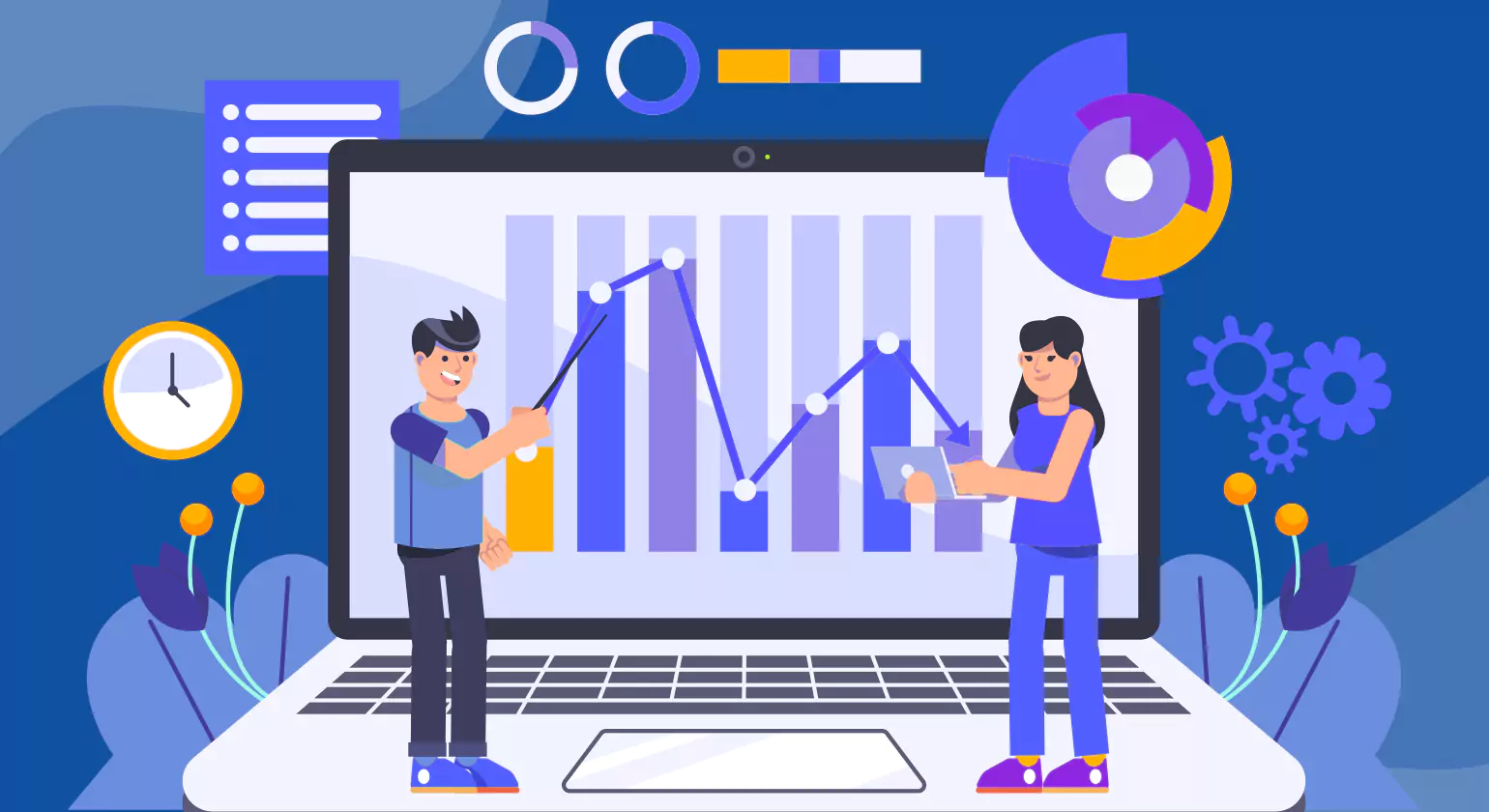
Customer Analytics Services empower businesses to gain a deeper understanding of their customers, enabling smarter decisions and more personalized experiences. By leveraging data from multiple sources, these services turn complex information into actionable insights that enhance engagement and drive growth.
1. Creating 360-Degree Customer Profiles
First, customer analytics services aggregate data from various touchpoints—such as purchases, website interactions, social media activity, and customer service support. As a result, businesses can build comprehensive 360-degree profiles. Consequently, teams gain a unified view of each customer’s preferences, behaviors, and history, which allows them to understand customers holistically rather than as isolated interactions.
2. Identifying Behavioral Patterns
Next, by analyzing large volumes of data, analytics tools detect recurring behavioral trends, including buying cycles, product preferences, and engagement habits. Therefore, companies can segment customers more accurately. Furthermore, recognizing these patterns helps create targeted marketing strategies that resonate with specific groups, ultimately improving campaign effectiveness and boosting customer retention.
3. Predicting Future Actions and Preferences
Moreover, advanced predictive analytics leverage historical data and machine learning models to forecast future customer behavior. For instance, businesses can anticipate likely purchases, identify churn risks, or predict product interests. Consequently, companies can act proactively, engaging customers with relevant offers before competitors do, which strengthens relationships and enhances loyalty.
4. Personalizing Customer Experiences
Finally, armed with detailed profiles, behavioral insights, and predicted preferences, companies can deliver highly personalized experiences across multiple channels. This includes customized product recommendations, tailored messaging, and targeted promotions. As a result, customer satisfaction increases, loyalty improves, and lifetime value grows.
The Road Ahead for Customer Analytics

The future of customer analytics is evolving rapidly, driven by AI, real-time insights, and advanced personalization. By adopting innovative technologies, businesses can transform raw data into actionable strategies that enhance customer experiences and drive growth.
1. AI-Driven Insights
First, advanced AI and machine learning algorithms are transforming customer analytics software. As a result, companies can identify complex behavioral patterns, forecast future actions, and automate decision-making across touchpoints. Consequently, businesses gain deeper insights, optimize strategies, and stay ahead of competitors.
2. Real-Time Decision Making
Moreover, real-time responsiveness significantly improves customer engagement and operational efficiency. By leveraging platforms like Apache Kafka and Flink, companies can detect trends instantly, automate decisions, and deliver personalized interactions at scale. Therefore, businesses turn data into immediate, actionable insights that drive loyalty and competitive advantage.
3. Unified Customer View
In addition, integrating CRM, social, web, and offline data into a single profile breaks down silos. This unified view allows brands to provide consistent, personalized experiences across channels. Furthermore, it supports smarter targeting, real-time insights, and improved lifetime value by delivering relevant messaging to each customer.
4. Ethical Data Use & Privacy Compliance
Simultaneously, businesses must prioritize transparency and consent-based tracking to maintain trust. By implementing secure data practices, robust encryption, and regular audits, companies comply with regulations like GDPR and CCPA. Therefore, ethical data management not only protects customers but also strengthens brand credibility.
5. Customer Journey Analytics
Next, journey analytics track interactions across multiple devices and channels, offering a holistic understanding of customer behavior. As a result, brands can identify pain points, personalize engagement, and optimize retention strategies. Consequently, businesses make data-driven decisions that enhance satisfaction and drive conversions effectively.
6. Hyper-Personalization at Scale
Finally, combining behavioral, contextual, and transactional data enables hyper-personalized experiences in real time. Therefore, businesses can anticipate customer needs, deliver tailored offers, and foster stronger loyalty. Ultimately, this integrated approach ensures deeper insights, higher engagement, and sustainable growth.
Conclusion
Customer analytics software has become an indispensable tool for businesses seeking to deepen their understanding of customer behavior and drive growth. By collecting and analyzing vast amounts of data from multiple touchpoints, these platforms enable companies to make informed decisions, personalize customer experiences, and improve overall satisfaction. From marketing and sales to product development and customer support, various teams benefit from the actionable insights provided by analytics software.
Know more >>> Digital Analytics Services – Strategies for Staying Competitive in 2026
15 Top eCommerce Analytics Tools to Grow Your Store in 2026
FAQs
1. What is customer analytics software?
Customer analytics software collects and analyzes data on customer behavior, preferences, and interactions. It helps businesses gain actionable insights to improve marketing, sales, and customer experience. By identifying trends and patterns, it supports data-driven decision-making to boost engagement, retention, and revenue growth.
2. How does customer analytics benefit businesses?
Customer analytics benefits businesses by delivering insights that improve customer segmentation, personalize marketing campaigns, and enhance product development. It increases customer retention, identifies upsell opportunities, and optimizes customer support, ultimately driving higher revenue and better overall customer satisfaction.
3. What types of data does customer analytics software analyze?
Customer analytics analyzes diverse data, including purchase history, website and app activity, social media interactions, demographic info, and customer feedback. Combining these data sources creates a comprehensive view of customer behavior to help tailor marketing, sales, and service strategies effectively.
4. Is customer analytics suitable for small businesses?
Yes, many customer analytics tools are designed for small businesses, offering scalable, user-friendly solutions. These platforms require minimal technical expertise and affordable pricing, enabling small companies to harness data insights, improve customer engagement, and compete effectively in the market.
5. How does customer analytics platform ensure data privacy?
Customer analytics tools ensure data privacy through features like data anonymization, secure storage, encryption, and consent management. It complies with regulations like GDPR and CCPA, protecting customer information while delivering valuable insights, helping businesses maintain trust and avoid legal risks.