Table of Contents
What You’ll Learn in This Complete Guide
AI infrastructure companies provide the core foundation needed to build, train, deploy, and scale AI models—covering compute, storage, networking, and orchestration.
Platforms from leaders like NVIDIA, Amazon Web Services, Google Cloud, and Microsoft Azure power most modern AI workloads with GPUs, cloud services, and developer tools.
These companies help businesses optimize resources, reduce infrastructure costs, and improve performance through automation, workload management, and scalable cloud or hybrid environments.
AI infrastructure makes advanced use cases—like machine learning, generative AI, and real-time analytics—accessible even to non-expert teams.
Key benefits include faster model training, reliable deployment, better security, and easier collaboration across data science and engineering teams.
In short, AI infrastructure companies remove technical complexity so organizations can focus on innovation and business outcomes, not hardware management.
Introduction
AI infrastructure companies are becoming pivotal in 2026 as enterprises race to unlock the power of artificial intelligence. These companies are not just providing hardware—they’re enabling scalable systems that allow machine learning, data analytics, and automation to thrive. In today’s hyper-competitive environment, AI infrastructure is no longer optional—it’s essential.
Why AI Infrastructure Is Critical in 2026
As digital transformation accelerates, businesses across industries are investing in AI infrastructure to remain competitive. The volume of data generated daily, combined with the need for rapid decision-making, demands systems capable of processing and analyzing data at scale. Artificial intelligence infrastructure companies provide these foundational technologies ensuring everything from training complex AI models to real-time data processing is achievable.
The Market Shift Toward Scalable, Intelligent Architecture
Enterprise demands have shifted. Instead of monolithic, one-size-fits-all solutions, companies now look for modular, scalable, and intelligent architectures that grow alongside their business. AI infrastructure companies cater to this need, offering systems that support hybrid cloud environments, containerized deployments, and scalable GPU clusters making infrastructure smarter and more adaptive.
What Is AI Infrastructure?
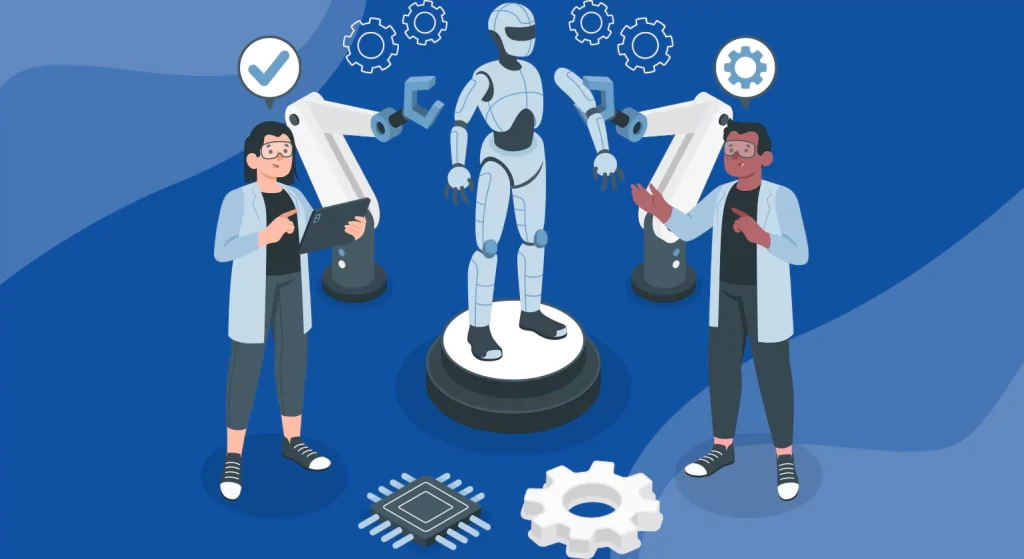
AI Infrastructure Companies are the entities that develop and deliver the underlying technology required to build, train, and deploy artificial intelligence models.
In short, they provide the underlying infrastructure of AI—high-performance computing hardware (such as GPUs and chips), cloud infrastructure, storage, networking, and MLOps solutions that enable the development of AI.
These companies allow organizations to execute complex models like large language models, computer vision models, and predictive analytics without having to develop all the infrastructure from scratch. For instance, hardware giants like NVIDIA develop high-performance computing GPUs for AI applications, and cloud infrastructure providers like Amazon Web Services, Microsoft Azure, and Google Cloud offer scalable infrastructure, AI services, and deployment solutions.
How AI Infrastructure Powers Modern Business Operations
AI infrastructure powers everything from chatbots and recommendation engines to fraud detection systems and predictive analytics. It forms the backbone of many core business processes by:
- Accelerating model training with high-performance computing
- Enabling real-time data ingestion and analysis
- Supporting model deployment and monitoring
These systems make it possible for companies to react to data insights instantly, helping them stay agile and competitive.
The Relationship Between AI and IT Infrastructure
The relationship between AI and IT infrastructure is foundational, as AI relies on robust IT systems for data storage, processing power, and networking. Efficient IT infrastructure enables seamless AI model deployment, scaling, and real-time data analysis, driving business innovation.
Aspect | Traditional IT Infrastructure | AI Infrastructure |
Purpose | Supports routine business operations like storage, computing, and communication with general-purpose systems. | Built for demanding AI tasks like model training, inference, and advanced analytics. |
Compute Resources | Uses standard CPUs adequate for everyday applications, not optimized for parallel computing. | Leverages GPUs/TPUs designed for massive parallel processing and fast computation. |
Data Handling | Primarily structured data with basic storage and retrieval systems. | Handles unstructured, high-volume, and real-time data for complex AI processes. |
Scalability | Typically scales vertically by upgrading single servers, limited flexibility. | Scales horizontally across clusters or cloud for dynamic AI workloads. |
Software Stack | Relies on legacy enterprise applications and relational databases. | Runs modern frameworks like PyTorch, TensorFlow, and containerized AI services. |
Networking Needs | Requires moderate bandwidth suitable for regular applications. | Demands high-speed, low-latency connections for training models across nodes. |
Automation & Orchestration | Offers basic task scheduling and limited automation features. | Provides end-to-end automation for data pipelines, model lifecycle, and deployment. |
Support & Services | Managed by traditional IT support teams or outsourced services. | Backed by artificial intelligence infrastructure companies and IT infrastructure consulting services. |
Use Cases | Handles emails, ERP systems, office tools, and web hosting. | Powers AI-driven tasks like image recognition, NLP, and predictive analytics. |
Integration Requirements | Easily integrates with existing legacy and enterprise systems. | Requires complex setups with cloud, edge, and hybrid infrastructure. |
Why AI Infrastructure Matters for Enterprises

AI infrastructure is critical for enterprises as it supports the scalable deployment of AI technologies, enhancing operational efficiency and innovation. It enables businesses to process large data sets, run complex machine learning models, and achieve faster insights. By leveraging AI infrastructure, enterprises can transform their business models, stay competitive, and unlock new revenue opportunities across industries.
AI in Professional Services: Legal, Finance, and Consulting
The adoption of AI in professional services is rising rapidly. Legal firms are leveraging natural language processing for document review. Financial institutions use AI models for fraud detection and algorithmic trading. Consulting companies depend on data analytics and generative AI to offer deeper client insights. These industries require robust ai infrastructure solutions to support their data-heavy operations.
Business Transformation Through Advanced Infrastructure
Organizations that embrace AI infrastructure are witnessing rapid transformation. They automate routine tasks, uncover hidden patterns, and deliver personalized experiences. By working with AI infrastructure companies, they gain access to cutting-edge technologies like distributed training, parallel processing, and real-time data visualization. Such transformation also extends to internal efficiency, cost optimization, and innovation speed turning ai infrastructure solutions into a strategic asset.
Case Studies: AI Deployment in Professional Service Firms
- Law Firm: A multinational legal services firm used AI infrastructure to automate due diligence, cutting research time by 60%.
- Accounting Agency: Deployed AI models on GPU clusters for real-time audit analysis.
- Management Consultancy: Integrated AI-driven data lakes to consolidate and visualize enterprise data across clients.
In all these cases, partnering with Artificial intelligence infrastructure companies and leveraging IT infrastructure consulting was key to successful deployment.
Core Components of Enterprise AI Infrastructure
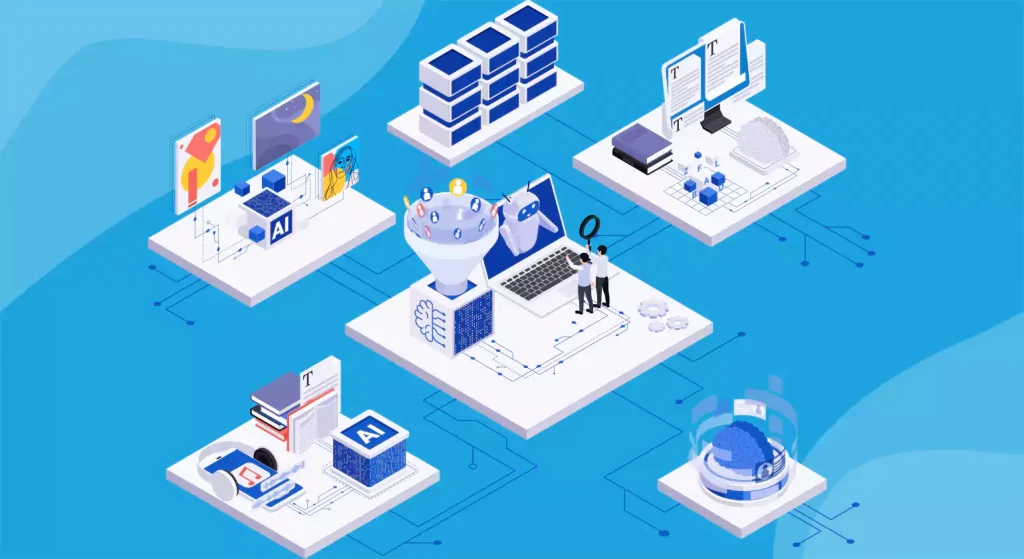
Core components of enterprise AI infrastructure include high-performance computing systems, scalable storage solutions, and AI-optimized networking. These components are crucial for handling vast amounts of data, enabling efficient machine learning, and ensuring seamless AI application deployment. They provide the foundation for AI workflows, helping businesses integrate advanced AI technologies into their operations for better performance and scalability.
High-Performance Compute & Scalable Storage Systems
AI workloads require immense computing power and flexible storage. GPUs and TPUs accelerate training, while scalable, distributed storage systems support large datasets. AI infrastructure companies offer end-to-end systems optimized for high I/O throughput and latency-free performance.
AI-Optimized Networking and Data Pipelines
A strong network backbone is crucial. Low-latency, high-bandwidth networks ensure seamless data flow between compute clusters and storage. AI-optimized data pipelines automate ingestion, cleaning, and transformation—improving the quality and speed of model development.
Machine Learning Frameworks & Deployment Software
ai infrastructure services includes integration with frameworks like TensorFlow, PyTorch, and ONNX. Container orchestration platforms (like Kubernetes) and model deployment tools enable businesses to scale and monitor AI services in production environments.
Artificial intelligence infrastructure companies are increasingly bundling these tools into unified platforms to streamline workflows and reduce time-to-market.
Data Management for Large-Scale AI Workflows
Effective data management is vital. Companies need to ingest, label, store, and query massive datasets efficiently. Features like data versioning, lineage tracking, and role-based access controls are essential. Here, IT infrastructure consulting services help tailor the architecture to meet governance and compliance requirements.
Role of IT Infrastructure Consulting Services in AI Deployment
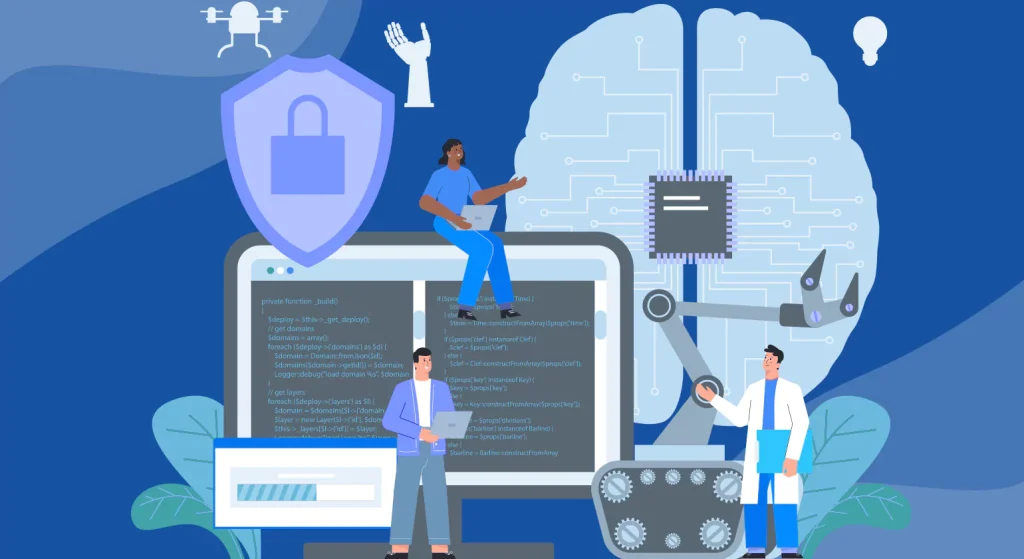
IT infrastructure consulting services play a crucial role in AI deployment by designing scalable architectures, integrating cloud and edge solutions, optimizing performance, ensuring data security, and guiding enterprises through the complexities of AI implementation and lifecycle management.
How IT Infrastructure Consulting Services Enable Scalable AI
- Strategic Assessment: Consultants evaluate existing IT landscapes to identify gaps and opportunities for AI integration.
- Customized Roadmaps: They develop tailored strategies aligning AI initiatives with business objectives.
- Technology Selection: Advisors recommend appropriate tools and platforms from leading Artificial intelligence infrastructure companies to meet specific needs.
- Implementation Support: They assist in deploying AI solutions, ensuring minimal disruption to operations.
- Training & Change Management: Consultants provide training to staff and manage organizational changes associated with AI adoption.
Security, Compliance, and Governance in AI Architectures
- Risk Assessment: Identifying potential security vulnerabilities in AI systems.
- Compliance Alignment: Ensuring AI deployments adhere to regulations like GDPR and HIPAA.
- Data Governance: Establishing policies for data quality, privacy, and ethical AI use.
- Monitoring & Auditing: Implementing tools to continuously monitor AI systems for compliance and performance.
Choosing the Right Infrastructure Consulting Partner
- Expertise Evaluation: Assess the consultant’s experience with AI in professional services.
- Client References: Review case studies and client testimonials.
- Service Offerings: Ensure they provide end-to-end services from strategy to implementation.
- Cultural Fit: Choose a partner whose working style aligns with your organization’s culture.
Top 15 AI Infrastructure Companies to Watch in 2026

As AI continues to transform industries, the demand for robust AI infrastructure grows. Leading AI infrastructure companies are at the forefront of providing innovative hardware, software, and cloud solutions to support the development, deployment, and scaling of AI applications. This list highlights the top 15 Artificial intelligence infrastructure companies to watch in 2026, driving the future of artificial intelligence.
1. NVIDIA
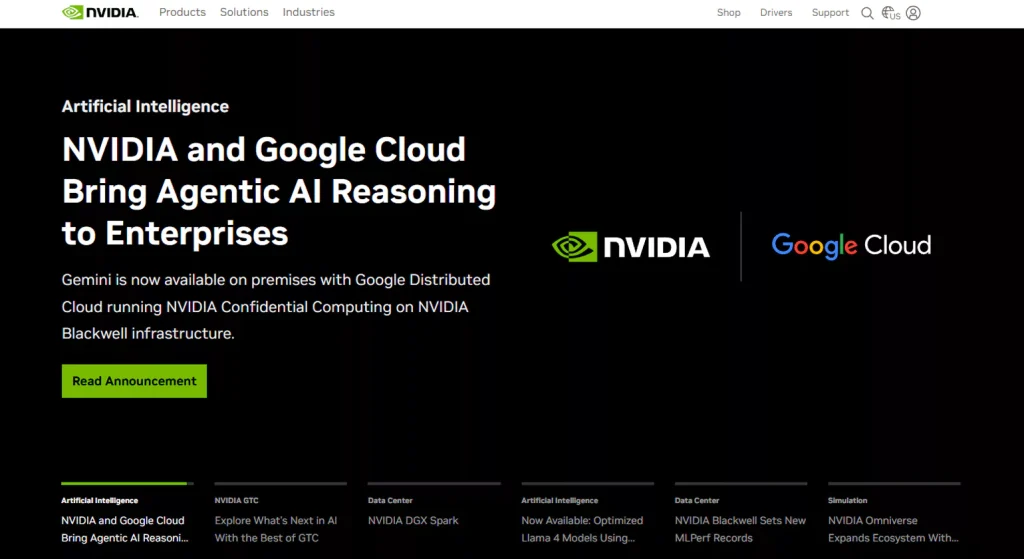
A global leader in AI hardware, NVIDIA provides high-performance GPUs and AI platforms for data-intensive applications and machine learning model training. Known for revolutionizing AI processing with specialized hardware, NVIDIA also supports developers with robust software ecosystems, CUDA libraries, and scalable cloud-ready solutions—powering breakthroughs in deep learning, autonomous systems, data centers, and advanced analytics across industries worldwide.
USP:
- AI Infrastructure Companies offer industry-leading GPUs designed for AI workloads.
- Optimized for deep learning and high-performance computing.
- NVIDIA DGX Systems provide enterprise-grade AI solutions.
Key Features:
Industry-Leading GPUs – High-performance GPUs for gaming, AI, and data centers
AI & Deep Learning Platforms – Tools and libraries for training and deploying AI models
Data Center Solutions – DGX systems and networking for enterprise-grade workloads
CUDA Ecosystem – Developer platform enabling GPU-accelerated applications
Omniverse – Real-time 3D collaboration and simulation platform
Automotive AI – Drive platforms for autonomous and smart vehicles
Strong Software Stack – From drivers to AI frameworks and cloud integrations
Pricing
| Category | Typical Price Range (USD) |
|---|---|
| Consumer GPUs (GeForce RTX) | $299 – $1,600+ |
| Workstation GPUs (RTX / Quadro) | $900 – $5,000+ |
| Data Center GPUs (A100 / H100 class) | $10,000 – $40,000+ per unit |
| DGX AI Systems | $100,000+ |
| Cloud AI (via partners) | Pay-as-you-go / subscription |
2. Google Cloud AI
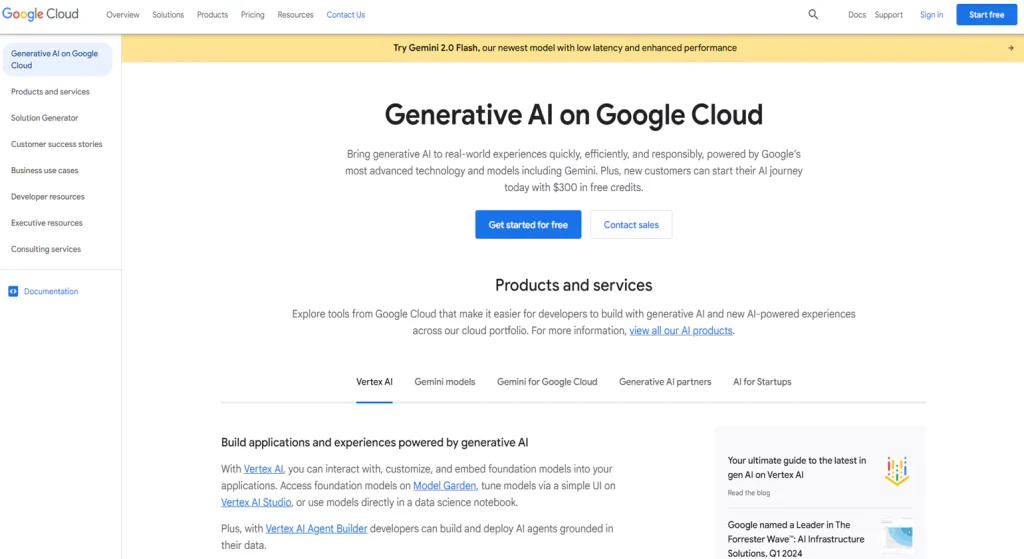
Google Cloud AI offers a comprehensive suite of AI services, including scalable machine learning models, tools, and APIs for developers, enabling organizations to build, train, and deploy AI applications with ease. It supports end-to-end workflows—from data preparation to model monitoring—while integrating seamlessly with existing cloud infrastructure. Businesses can accelerate innovation, improve decision-making, and create intelligent solutions using pre-trained models or custom pipelines, all backed by enterprise-grade security, reliability, and global scalability.
USP:
- AI Infrastructure Companies integrate TensorFlow and other open-source AI frameworks.
- Scalable cloud infrastructure for global AI deployment.
- Pre-trained models and APIs for faster integration.
Key Features:
Vertex AI Platform – End-to-end platform for building, training, and deploying machine learning and generative AI models.
Pre-trained AI APIs – Ready-to-use APIs for vision, language, speech, translation, and more.
AutoML – Simple automated machine learning for users with minimal ML expertise (data preparation to model deployment).
Model Garden – Access to over 200+ foundation and partner models, including Google-built and open models
Pricing
| Service Category | Approx. Pricing (USD) |
|---|---|
| AI API Calls (Vision/NLP/Speech) | ~$0.001–$1.50 per 1,000 units |
| Vertex AI Training | ~$0.10–$30+ per training hour |
| Model Deployment (Inference) | ~$0.05–$10+ per deployed hour |
| AutoML | Charged per training and evaluation usage |
| Custom MLOps & Enterprise | Custom pricing (usage + support) |
3. Amazon Web Services (AWS) AI
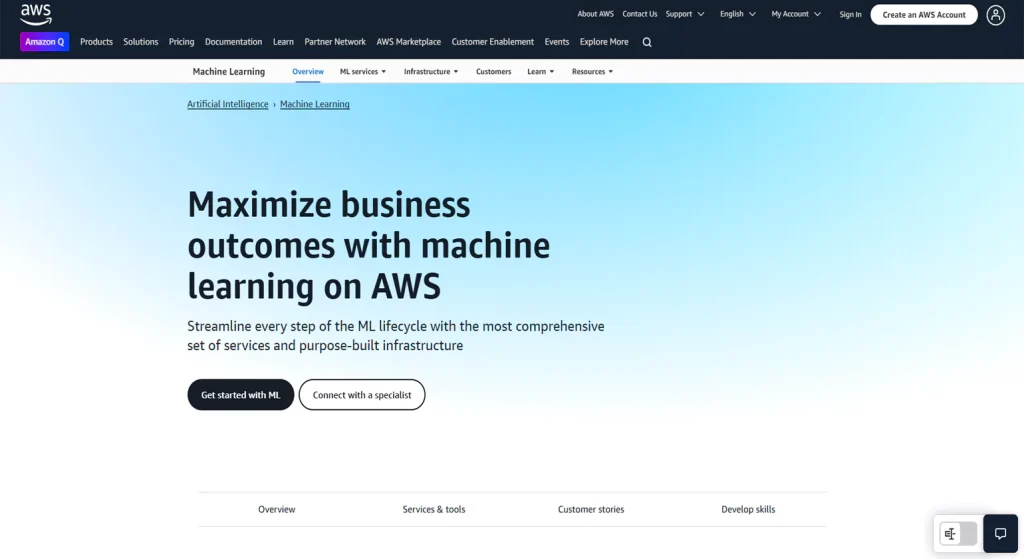
AWS AI offers a vast range of machine learning and artificial intelligence services, enabling businesses to quickly build, train, and deploy sophisticated AI models using AWS’s scalable infrastructure and advanced services. From pre-built APIs to fully customizable frameworks, AWS supports every stage of the AI lifecycle. Organizations can leverage powerful analytics, automation, and data processing tools to improve decision-making, enhance customer experiences, optimize operations, and accelerate innovation across industries—while maintaining security, reliability, and cost efficiency at scale.
USP:
- AI Infrastructure Companies provide Amazon SageMaker to simplify the machine learning workflow.
- Broad AI services, including chatbots, image recognition, and NLP.
- Scalable and flexible cloud architecture for AI projects.
Key Features:
- AWS offers pre-built models for rapid deployment.
- Managed AI services for both beginners and experts.
- Secure cloud infrastructure supporting large-scale AI applications.
Pricing
| Service | Starting Price |
|---|---|
| Cloud Server (EC2) | ~$0.01/hour |
| Storage (S3) | ~$0.02 per GB/month |
| Databases | From ~$15/month |
| AI / ML | Based on usage |
| Free Tier | Limited free services for beginners |
4. Microsoft Azure AI
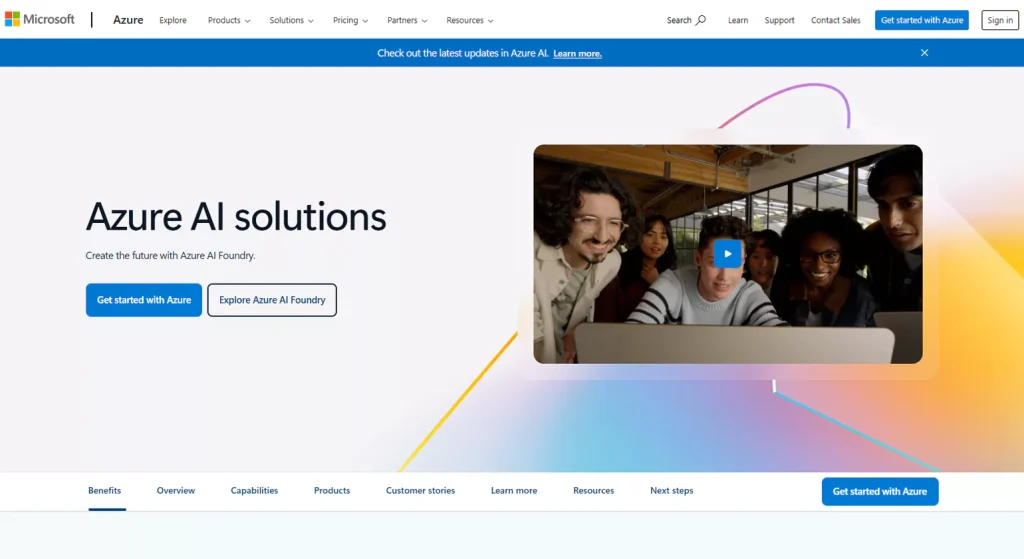
Microsoft Azure AI integrates powerful artificial intelligence capabilities within its cloud services, offering enterprises a seamless AI experience with advanced analytics, machine learning, and cognitive services across industries. It empowers organizations to build, deploy, and scale intelligent applications using secure, enterprise-grade infrastructure. With built-in data integration, automation tools, and customizable AI models, businesses can streamline operations, enhance customer experiences, and drive innovation faster. Azure AI supports everything from predictive analytics and natural language processing to computer vision and responsible AI governance, enabling companies to transform data into actionable insights while maintaining compliance, security, and performance at scale.
USP:
- AI Infrastructure Companies help integrate Azure Machine Learning for end-to-end AI development.
- Cognitive Services offer out-of-the-box APIs for AI tasks.
- Strong integration with Microsoft’s enterprise software stack.
Key Features:
- Azure AI provides a unified platform for AI model development.
- AI-enhanced tools for data analysis and visualization.
- Pre-built cognitive APIs for text, speech, and vision.
Pricing
| Service Type | Starting Price (Approx) |
|---|---|
| AI APIs (Vision / Language / Speech) | ~$1–$2 per 1,000 requests |
| Azure ML Compute | ~$0.10/hour and up |
| Model Hosting | ~$0.05/hour and up |
| Azure OpenAI | Based on tokens & usage |
| Free Tier | Limited free credits for new users |
5. Innowise
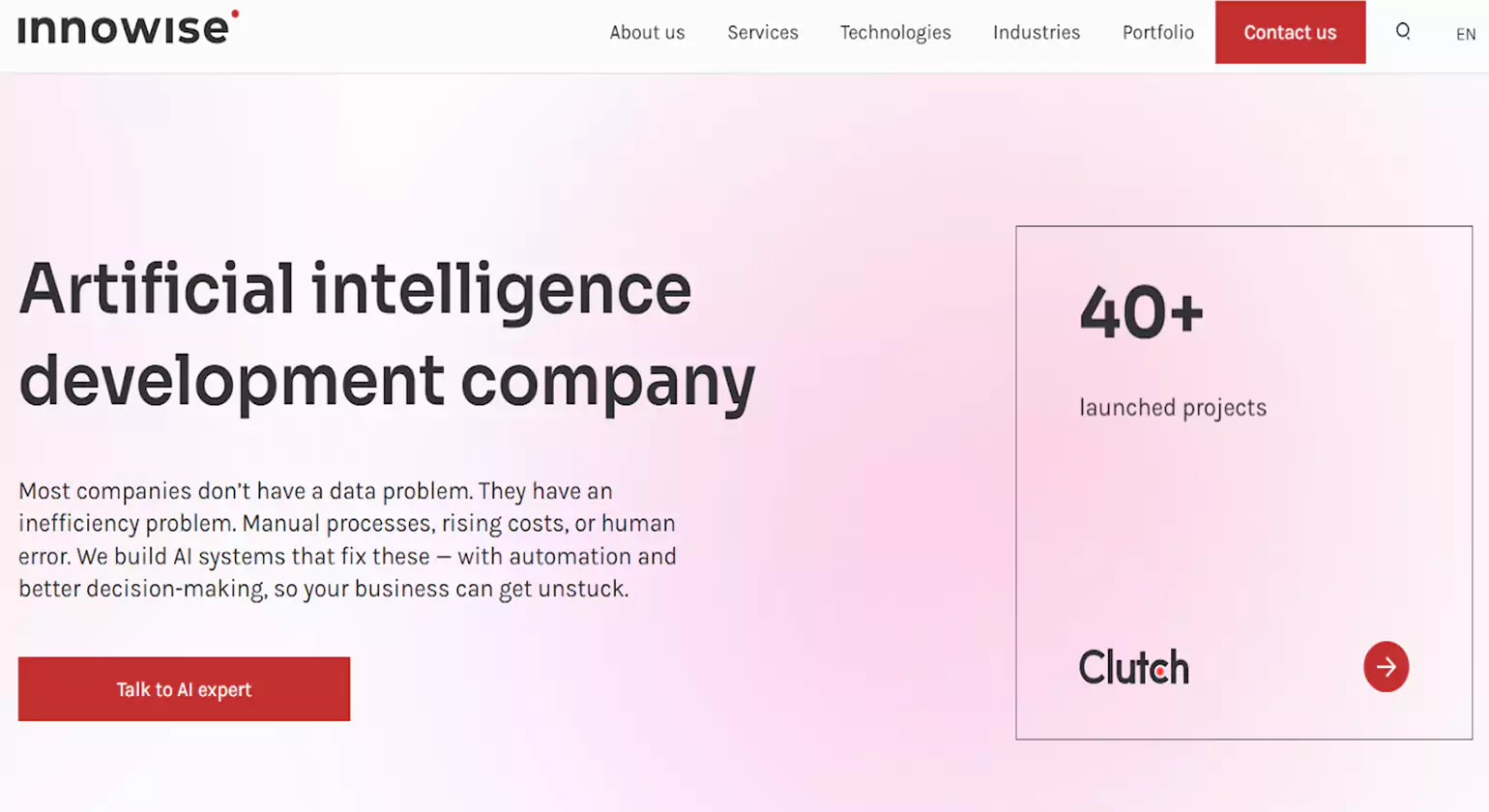
Innowise delivers AI-driven solutions designed to automate business processes, enhance customer interactions, and optimize system performance across industries. They provide end-to-end AI services, including custom AI software development, AI-powered mobile and web applications, and expert AI consulting tailored to business goals.
Their skilled team also specializes in MLOps and AIOps to improve operational efficiency, scalability, and deployment reliability, along with comprehensive AI audits to ensure models remain accurate, secure, and high-performing over time. From strategy to implementation, Innowise helps organizations maximize AI ROI and accelerate digital transformation.
USP
- Specializes in AI-driven automation to streamline operations and improve efficiency.
- Provides custom AI chatbots to enhance customer support and engagement.
- Expertise in AIOps for maintaining and improving AI system performance.
- Focuses on generative AI for creating personalized content and intelligent recommendations.
Key features
- Custom AI solutions tailored to your industry.
- AI-powered apps integrating NLP, computer vision, and machine learning.
- MLOps and AI infrastructure for real-time monitoring and seamless scaling.
- End-to-end service from consulting to full-scale deployment.
- AI audits to ensure accuracy, minimize bias, and optimize model performance.
Pricing
| Service Type | Estimated Cost |
|---|---|
| Dedicated Developer | ~$30–$70 per hour |
| Small Project | $10,000+ |
| Medium Project | $25,000–$100,000 |
| Large Enterprise Project | $100,000+ |
6. IBM Watson
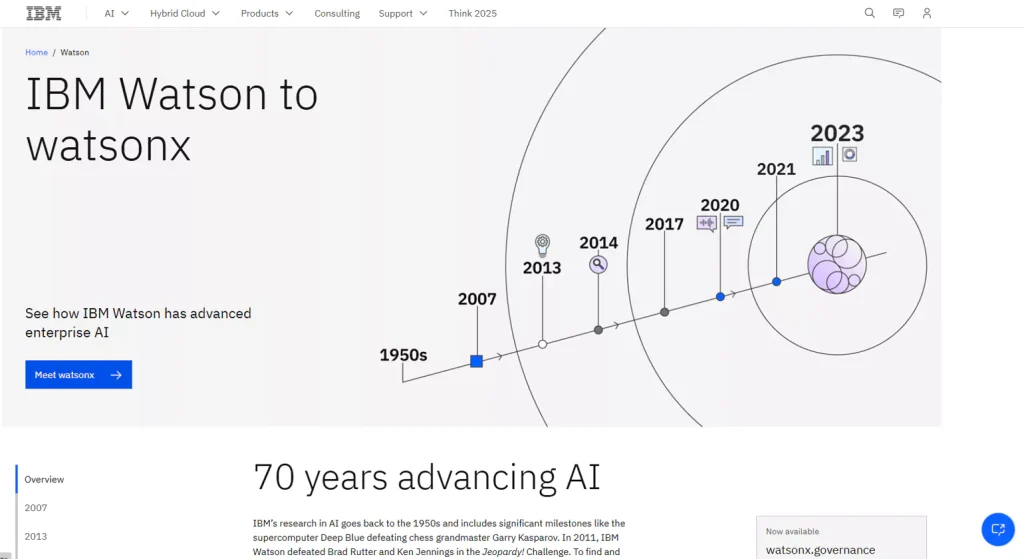
IBM Watson is an AI platform built for business applications, delivering industry-specific tools that help organizations improve decision-making, automation, and operational efficiency. It supports sectors like healthcare, finance, and customer service by analyzing large datasets, generating actionable insights, and enabling smarter workflows.
With capabilities such as natural language processing, machine learning, and predictive analytics, IBM Watson helps enterprises streamline operations, personalize customer experiences, reduce manual effort, and drive data-backed strategies for long-term growth and innovation.
USP:
- AI Infrastructure Companies specialize in NLP and AI-powered cognitive applications.
- Industry-specific solutions for healthcare, finance, and more.
- Strong analytics and data management tools.
Key Features:
- Watson Studio enables enterprise-level AI model development.
- Advanced NLP for processing unstructured data.
- AI solutions for automating workflows and improving decision-making.
Pricing
| Service | Starting Price (Approx) |
|---|---|
| Watson Assistant | ~$140/month |
| Watson Studio | Free tier + paid plans |
| Document Processing | Pay per page |
| Enterprise AI | Custom pricing |
7. Hewlett Packard Enterprise (HPE)
Hewlett Packard Enterprise (HPE) is a global technology company that provides enterprise-grade solutions for cloud computing, edge services, data management, and IT infrastructure. Designed to support modern businesses, HPE helps organizations accelerate digital transformation, optimize operations, and improve performance across hybrid environments.
Its portfolio spans servers, storage, networking, and AI-driven platforms, enabling companies in industries like healthcare, finance, manufacturing, and telecom to securely manage data, scale workloads, and drive innovation while reducing complexity and operational costs.
USP:
- Artificial intelligence infrastructure companies provide AI-optimized hardware for scalable infrastructure Scalable infrastructure supporting diverse AI applications.
- HPE Apollo systems tailored for deep learning tasks.
Key Features :
- Scalable systems that support large-scale AI workloads.
- Optimized for running complex AI models in high-performance environments.
- Integrated solutions that enhance AI deployment in enterprises.
Pricing
| Service Type | Estimated Cost |
|---|---|
| Servers / Hardware | $3,000+ per unit |
| Storage Systems | $5,000+ |
| HPE GreenLake | Usage-based (monthly billing) |
| AI / Enterprise Solutions | Custom quote |
8. Oracle Cloud Infrastructure (OCI)

Oracle Cloud Infrastructure (OCI) combines AI and machine learning services with cloud-based enterprise solutions, offering powerful capabilities for data processing, storage, and AI model deployment. It provides a secure, scalable, and high-performance cloud environment designed to support modern business applications and data-driven strategies. With integrated analytics, automation tools, and advanced computing resources, OCI enables organizations to build, train, and deploy intelligent models efficiently.
OCI also supports hybrid and multi-cloud architectures, ensuring flexibility and seamless integration with existing systems. Its robust infrastructure enhances workload performance, strengthens security controls, and optimizes operational efficiency, helping enterprises accelerate innovation while maintaining reliability and cost-effectiveness across diverse business operations.
USP
- Advanced AI and ML tools embedded within Oracle Cloud.
- Cloud-based infrastructure designed for secure and scalable AI applications.
- Focused on autonomous databases that utilize AI for self-management.
Key Features
- Robust AI services for various enterprise functions.
- Secure cloud infrastructure with strong compliance and governance.
- Scalable and flexible cloud platform to handle AI data workloads.
Pricing
| Service | Starting Price (Approx) |
|---|---|
| Compute (VMs) | ~$0.01/hour |
| Object Storage | ~$0.02 per GB/month |
| Databases | From ~$15–$20/month |
| AI Services | Based on usage |
| Free Tier | Always-free resources + trial credits |
9. Intel AI

Intel provides specialized AI hardware solutions, including processors and accelerators, designed to enhance the performance of AI applications across a range of industries. These technologies support faster data processing, efficient model training, and scalable inference at the edge and in data centers.
Intel’s AI-focused architecture helps organizations optimize workloads, reduce latency, and improve energy efficiency, enabling businesses to deploy intelligent solutions for analytics, automation, and real-time decision-making while maintaining reliability and enterprise-grade performance.
USP
- High-performance AI processors for deep learning applications.
- OpenVINO toolkit enhances AI performance across devices.
- Tailored solutions for both AI training and inference.
Key Features
- Intel Nervana accelerates AI workloads with optimized hardware.
- Versatile hardware for edge and cloud-based AI solutions.
- Seamless integration with AI frameworks for efficient model deployment.
Pricing
| Product Type | Approx Price |
|---|---|
| Intel Xeon CPUs | $500 – $5,000+ |
| Intel Gaudi Accelerators | $10,000+ |
| AI-enabled Laptops (Intel Core Ultra) | $800+ |
| Enterprise AI Systems | Custom pricing |
10. Meta AI (FAIR)
Meta AI (FAIR) is dedicated to advancing AI research, driving innovation, and delivering impactful contributions to the global AI community. Through cutting-edge research, open collaboration, and real-world applications, FAIR empowers developers and researchers with open-source models and tools. Its mission is to accelerate responsible AI adoption, foster transparency, and enable broader access to state-of-the-art technologies that shape the future of artificial intelligence.
USP
- Leading AI research and development in machine learning.
- Open-source models and contributions for the AI community.
- PyTorch, one of the most popular frameworks for deep learning.
Key Features
- Specialize in machine learning research and model creation.
- Contributions to the AI community through open-source tools.
- High-performance AI models for both research and application.
Pricing
| Use Case | Estimated Cost |
|---|---|
| Small AI server | $1,000+ setup |
| Cloud GPU hosting | $1–$5+ per hour |
| Enterprise AI deployment | Custom pricing |
11. DataRobot
DataRobot is an automated machine learning platform that simplifies the process of building, deploying, and maintaining AI models—even for organizations with limited AI expertise. It enables teams to rapidly create accurate predictive models, streamline workflows, and operationalize AI at scale while ensuring governance, monitoring, and performance optimization across the entire model lifecycle.
USP
- Fully automated AI model-building process.
- Customizable solutions for diverse machine learning applications.
- Enterprise-focused platform for AI deployment and scaling.
Key Features
- Automated end-to-end machine learning capabilities.
- Easy integration with existing enterprise data systems.
- Scalable platform designed to work with large datasets.
Pricing
| Plan Type | Estimated Cost |
|---|---|
| Starter / Small Teams | Custom quote |
| Enterprise AI Platform | $50,000+ per year |
| Large Enterprise Deployment | Custom enterprise pricing |
12. C3 AI
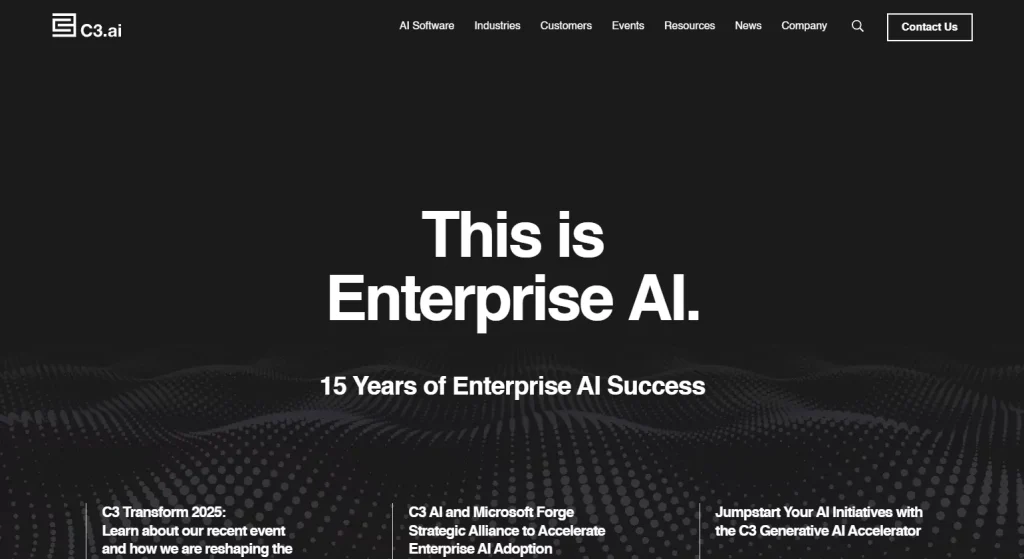
C3 AI offers enterprise AI software solutions that help businesses streamline operations, reduce costs, and generate more accurate predictions through artificial intelligence. Its platform enables organizations to develop, deploy, and scale AI applications quickly, improving decision-making, optimizing workflows, and unlocking data-driven insights across industries such as manufacturing, energy, healthcare, and finance.
USP
- AI solutions tailored to industry-specific needs.
- Enterprise-grade software for AI deployment at scale.
- Real-time predictive analytics and data insights.
Key Features
- C3 AI Suite helps businesses deploy AI solutions efficiently.
- Powerful predictive analytics to inform decision-making.
- Seamless integration with existing enterprise systems.
Pricing
| Service Type | Estimated Cost |
|---|---|
| Pilot / Small Deployment | $25,000+ |
| Enterprise Platform | $100,000+ per year |
| Large Enterprise Rollout | Custom pricing |
13. Cohere
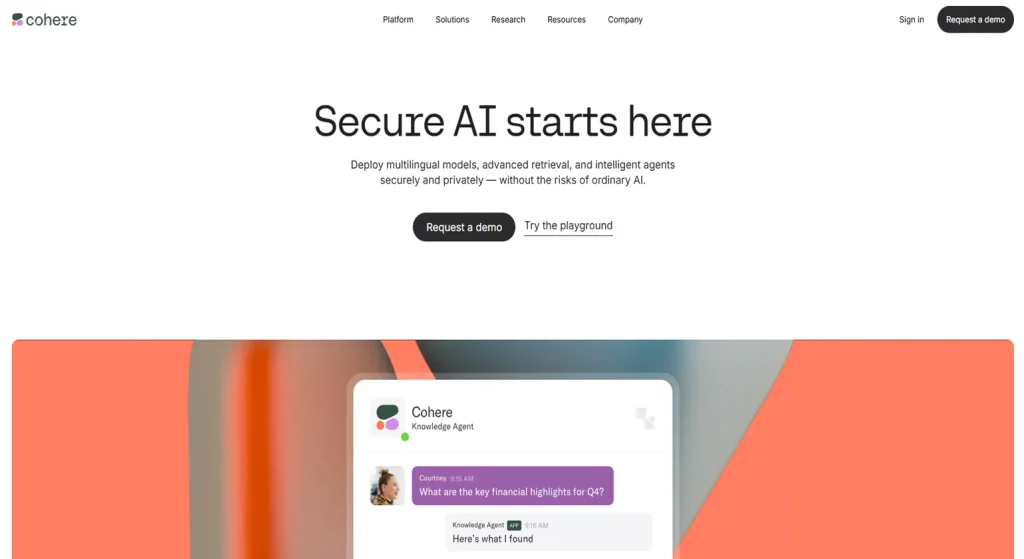
Cohere focuses on natural language processing, delivering powerful AI models for tasks like text generation, summarization, and sentiment analysis to enhance user interaction and automation. Its scalable APIs help businesses integrate language intelligence into applications, improve customer experiences, automate content workflows, and extract meaningful insights from unstructured data—making advanced NLP accessible for real-world enterprise use.
USP
- Specializes in NLP, transforming text data into actionable insights.
- Offers highly customizable NLP models for diverse applications.
- Focus on scalable AI solutions for business-level NLP tasks.
Key Features
- Natural language processing models for understanding and generating text.
- Easy integration into enterprise systems for NLP tasks.
- Customizable AI models designed for different industries.
Pricing
| Plan Type | Approx Cost |
|---|---|
| Free / Trial | Limited free usage |
| Starter | From ~$0.002 per 1K tokens |
| Production | Based on usage |
| Enterprise | Custom pricing |
14. Scale AI
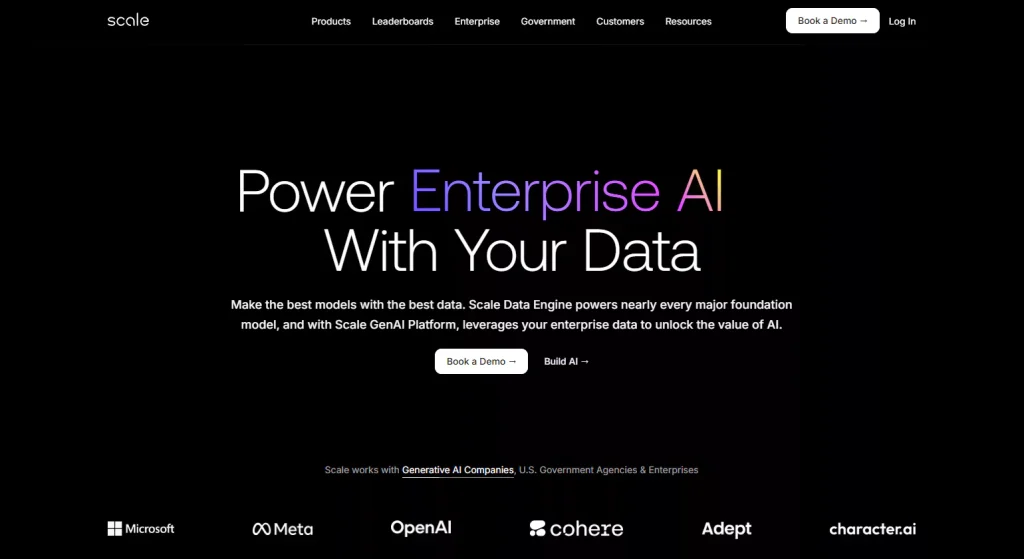
Scale AI provides high-quality data labeling services and AI training data solutions, enabling companies to train machine learning models with accurate, structured, and comprehensive datasets. By combining advanced tooling, human expertise, and scalable workflows, it supports industries such as autonomous vehicles, defense, e-commerce, and robotics, ensuring reliable model performance, faster development cycles, and improved AI accuracy across real-world applications.
USP
- Scalable data labeling services for large AI projects.
- High-quality, annotated datasets for training AI models.
- Specialization in autonomous vehicles and computer vision datasets.
Key Features
- Automated and manual data labeling for machine learning models.
- Fast and efficient data annotation for large-scale projects.
- Customizable solutions based on AI model needs.
Pricing
| Service | Estimated Cost |
|---|---|
| Data Labeling Projects | Custom quote |
| Autonomous Vehicle Sensor Labeling | High-volume pricing |
| Enterprise Platform | Custom annual pricing |
15. Run.ai
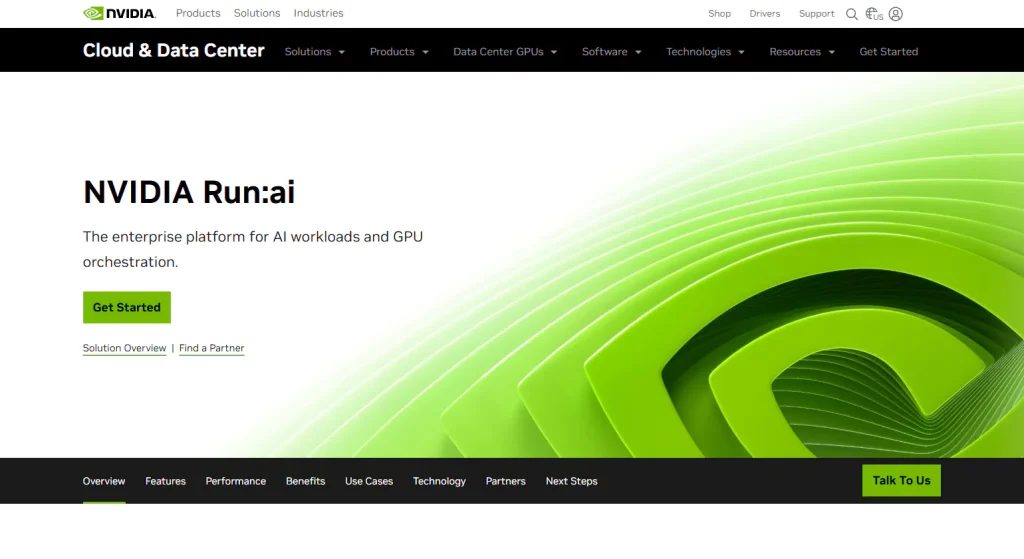
Run.ai provides AI workload orchestration and virtualization tools that help organizations optimize resource allocation, improve scalability, and boost the efficiency of AI infrastructure management. Its platform enables teams to share GPU resources intelligently, prioritize critical workloads, and accelerate model training while reducing infrastructure costs—making it easier to run AI projects at scale across hybrid and on-prem environments.
USP
- Resource orchestration tools that optimize AI workload distribution.
- Virtualization of AI tasks for better resource utilization.
- Platform designed to manage complex AI workloads at scale.
Key Features
- Scalable AI infrastructure management for enterprise-level workloads.
- Efficient AI orchestration that boosts performance and reduces costs.
- Automated resource allocation for optimized task handling.
Pricing
| Service Type | Typical Cost |
|---|---|
| Base Platform | Custom enterprise pricing |
| GPU Scheduling | Part of license bundle |
| Enterprise Support | Additional quote |
How to Evaluate and Choose the Right AI Infrastructure Provider

Evaluating and choosing the right AI infrastructure provider involves assessing use case fit, technical capabilities, and alignment with business needs. It’s crucial to consider total cost of ownership, ROI, and support services, ensuring the provider meets performance and scalability requirements.
Use Case Fit: Industry and Application Relevance
- Sector Experience: Ensure the provider has experience with AI in professional services.
- Solution Alignment: Their offerings should match your specific AI application needs.
Technical Capabilities vs. Business Needs
- Scalability: Can the infrastructure grow with your business?
- Integration: Assess compatibility with existing systems.
- Performance: Evaluate the provider’s ability to meet performance requirements.
Total Cost of Ownership (TCO) and ROI Metrics
- Cost Analysis: Consider initial investment, maintenance, and operational costs.
- ROI Estimation: Project potential returns from AI investments.
Consulting Support, SLAs, and Customer Success
- Support Services: Availability of IT infrastructure consulting service.
- Service Level Agreements (SLAs): Clear terms on uptime, support, and issue resolution.
- Customer Success Programs: Proactive engagement to ensure successful AI deployment.
Emerging Technologies in the AI Infrastructure Space
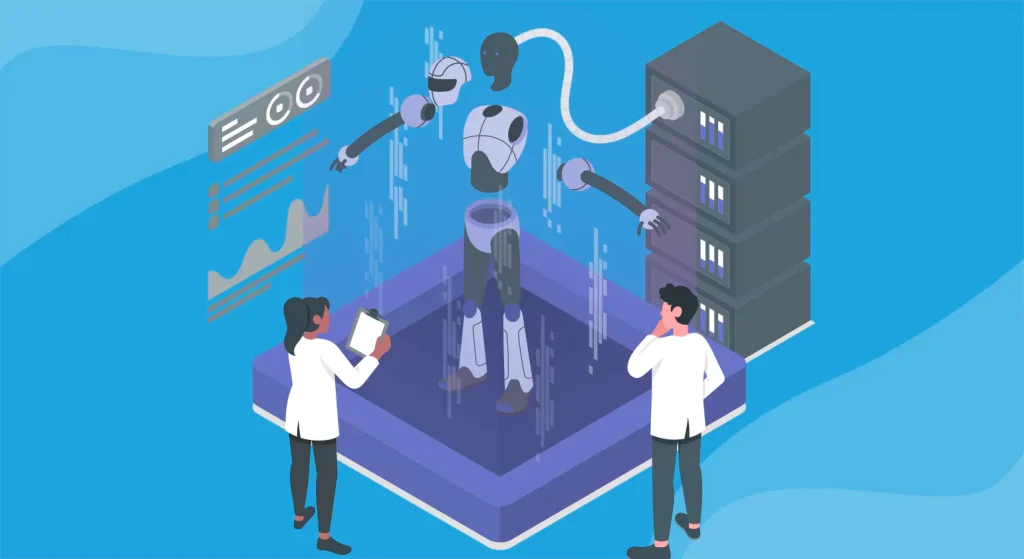
Emerging technologies in AI infrastructure include AI-accelerated silicon and neuromorphic computing, which enhance processing efficiency. Cross-cloud and hybrid AI models enable flexible deployment, while self-optimizing infrastructure through reinforcement learning promises to improve resource allocation and system performance autonomously.
AI-Accelerated Silicon and Neuromorphic Computing
- Custom Chips: Development of AI-specific processors for enhanced performance.
- Neuromorphic Computing: Mimics human brain functionality for efficient AI processing.
Cross-Cloud and Hybrid AI Models
- Multi-Cloud Strategies: Leveraging multiple cloud providers for flexibility and resilience.
- Hybrid Deployments: Combining on-premises and cloud resources for optimized AI workloads.
Self-Optimizing Infrastructure via Reinforcement Learning
- Adaptive Systems: Infrastructure that learns and adapts to optimize performance.
- Automation: Reduced human intervention through intelligent automation.
Top AI Infrastructure Trends for 2026: Cloud, Edge & Automation
Emerging technologies in AI infrastructure include AI-accelerated silicon and neuromorphic computing, which enhance processing efficiency. Cross-cloud and hybrid AI models enable flexible deployment, while self-optimizing infrastructure through reinforcement learning promises to improve resource allocation and system performance autonomously.
1. Specialized Hardware Takes Center Stage
General-purpose CPUs are no longer enough for advanced AI. In 2026, GPUs, TPUs, and custom accelerators will dominate training and inference workloads. Companies like NVIDIA continue to lead with high-performance AI chips, while cloud providers invest heavily in purpose-built silicon to improve performance per watt and reduce costs.
2. Hybrid & Multi-Cloud Become the Default
Enterprises are moving away from single-cloud dependency. Instead, hybrid and multi-cloud architectures—spanning on-prem systems and platforms like Amazon Web Services, Microsoft Azure, and Google Cloud—are becoming standard. This approach offers better resilience, workload flexibility, and vendor independence while allowing sensitive data to stay on-prem.
3. Edge AI Expands for Real-Time Use Cases
By 2026, more AI processing will happen closer to where data is generated. Edge AI enables real-time decision-making in manufacturing, retail, healthcare, and autonomous systems. This reduces latency, lowers bandwidth costs, and supports applications that can’t rely solely on centralized cloud resources.
4. Sustainability Drives Infrastructure Design
Power consumption is becoming a critical concern as AI models grow larger. Data centers are adopting liquid cooling, energy-efficient chips, and renewable energy sources. Green AI initiatives will influence hardware selection, data center locations, and workload scheduling to minimize carbon footprints while maintaining performance.
5. Modular, Composable Infrastructure Rises
Organizations are shifting toward composable infrastructure—where compute, storage, and networking are dynamically allocated based on workload needs. This modular approach improves utilization, speeds deployment, and helps teams scale AI environments without overprovisioning expensive resources.
Conclusion
The conclusion emphasizes the growing importance of AI infrastructure companies in providing scalable and efficient solutions for businesses. With the help of IT infrastructure consulting services, organizations, particularly in professional services, can effectively implement AI technologies. By selecting the right consulting partner, businesses ensure better performance, a higher return on investment, and preparedness for the evolving AI-driven landscape.
Read More >>>
Top 10 Types of Virtual Managed Service
IT Management Support for Your Business Success Today
FAQS
1.What do AI infrastructure companies provide?
AI infrastructure companies provide the hardware, software, and cloud platforms needed to develop, deploy, and scale AI applications. They offer GPUs, data storage, networking, and AI frameworks, enabling businesses to run machine learning models efficiently and support large-scale AI workloads.
2.Who are the top AI infrastructure companies?
Top AI infrastructure companies include NVIDIA, Intel, AMD, Google Cloud, Amazon Web Services (AWS), Microsoft Azure, IBM, and Oracle. These companies provide GPUs, cloud platforms, AI frameworks, and hardware solutions that support machine learning, deep learning, and large-scale AI deployment for businesses worldwide.
3.What role does Nvidia play in AI infrastructure?
NVIDIA plays a key role in AI infrastructure by providing high-performance GPUs and AI computing platforms. Its hardware accelerates machine learning and deep learning workloads, powering data centers, AI research, and enterprise applications. NVIDIA also offers AI software frameworks and tools to optimize model training and deployment.
4.How do cloud services support AI infrastructure?
Cloud services support ai infrastructure services by providing scalable computing power, storage, and networking on demand. They offer pre-configured AI platforms, machine learning frameworks, and APIs, enabling businesses to train, deploy, and manage AI models efficiently without heavy upfront investment in physical hardware.
5.What are the key components of AI infrastructure?
The key components of AI infrastructure include high-performance GPUs or specialized processors, large-scale storage systems, high-speed networking, AI software frameworks, and cloud or on-premises platforms. These elements work together to enable efficient training, deployment, and management of machine learning and deep learning models.
6.What industries benefit from AI infrastructure?
Industries that benefit from AI infrastructure include technology, healthcare, finance, automotive, manufacturing, retail, and telecommunications. AI infrastructure enables these sectors to deploy machine learning and deep learning models for data analysis, predictive analytics, automation, personalized services, and innovation-driven decision-making.
7.What challenges do companies face in using AI infrastructure?
Companies face challenges in using AI infrastructure such as high costs of hardware and cloud services, complex integration with existing systems, data security and privacy concerns, talent shortages in AI expertise, and scalability issues when handling large datasets or deploying advanced machine learning and deep learning models.
8.How is edge computing relevant to AI infrastructure?
Edge computing is relevant to AI infrastructure because it processes data closer to the source, reducing latency and bandwidth usage. By enabling real-time analytics and AI decision-making at the edge, it supports applications like autonomous vehicles, IoT devices, and industrial automation, enhancing speed, efficiency, and responsiveness.