Table of Contents
Digital signage has moved well past looping slide decks. What used to be a “screen on a wall” is now often part of an intelligent, connected network—capable of updating in real time, adapting messaging to context, and supporting measurable business outcomes. The next phase of digital signage will be defined by interactivity, automation, AI-assisted decisioning, and tighter integration with the systems businesses already rely on.
Providers such as Look Digital Signage are helping organizations migrate from traditional setups to more scalable, centrally managed platforms—often built around a cloud-based digital signage platform that lets teams manage screens remotely and keep content consistent across locations.
Interactive displays become the default
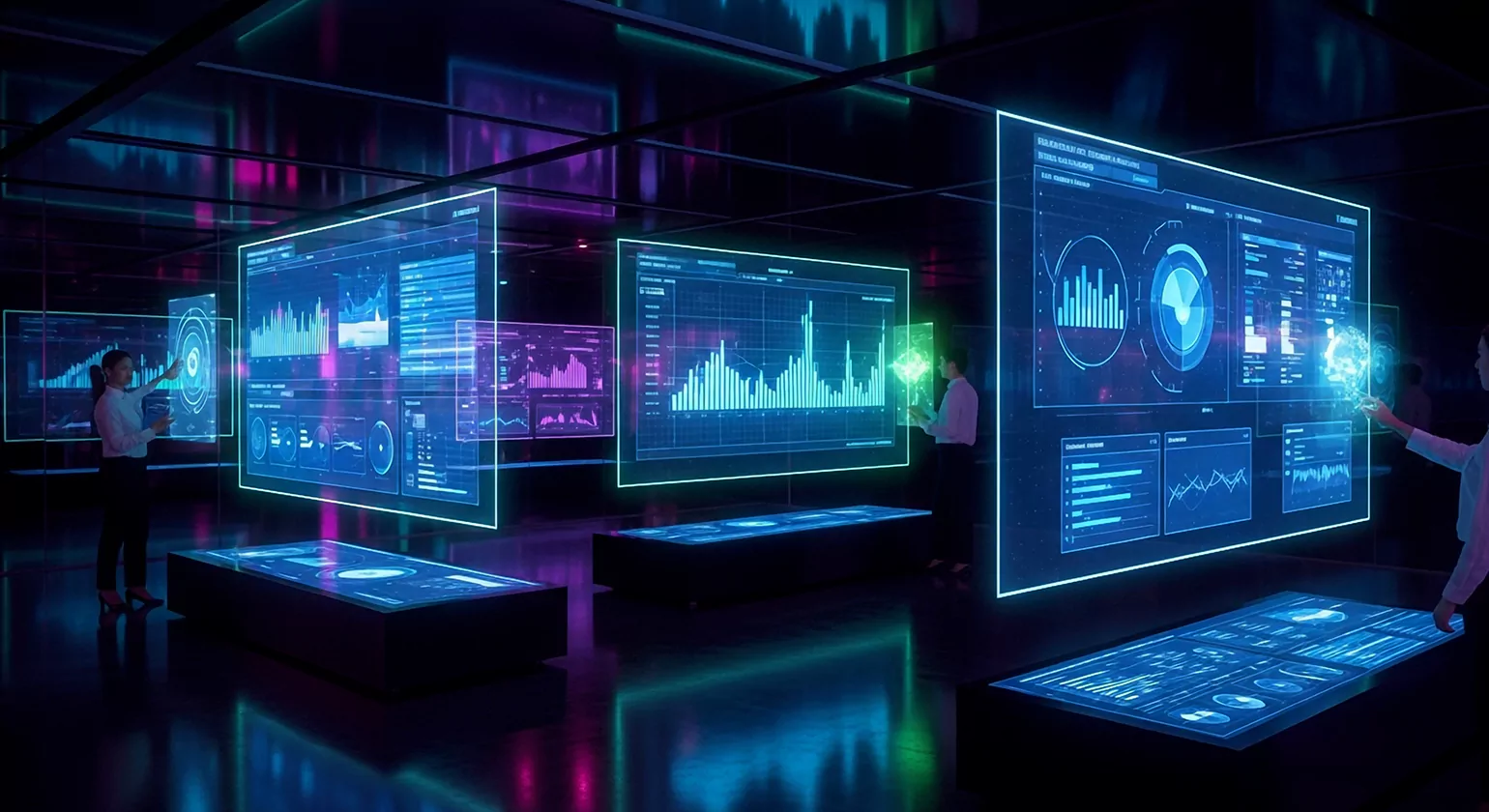
The clearest shift is from passive viewing to active participation. Touchscreens, QR codes, mobile handoffs, NFC, and even gesture-based controls are turning screens into service points, not just media players.
In retail, interactive kiosks are increasingly used to:
- Browse extended product catalogues
- Check inventory in real time
- Get recommendations (based on intent, not just category)
- Complete self-checkout or “reserve in store” flows
In hospitality, interactive displays reduce friction: guests can explore amenities, book services, and navigate properties without waiting for staff.
This change tracks a broader expectation: people don’t just want information—they want control. Interactivity tends to increase dwell time, improve satisfaction, and (when paired with clear UX) push conversion upward.
AI-driven personalization replaces manual scheduling
AI isn’t just generating content; it’s also optimizing when and where content should run. Instead of relying on static playlists, many organizations are moving toward systems that react to context.
AI-enabled signage can:
- Rotate messaging by time of day or day of week
- Adjust promotions based on weather or local events
- Trigger location-specific content by store/zone
- Use audience estimation (when compliant) to tailor what’s shown
A restaurant, for example, can automatically emphasize breakfast in the morning and shift to dinner offers later—without staff touching a schedule. A retailer can promote rain gear when conditions change, then revert when they don’t.
The point isn’t novelty. It’s relevance. More relevant messages get noticed more often, which improves the economics of the screen network.
Cloud platforms take over the infrastructure layer

The largest operational change in signage is the move to cloud-based management. Instead of maintaining on-site servers and complex local configurations, teams increasingly manage displays through centralized dashboards.
A cloud platform can help organizations:
- Control multiple locations from one interface
- Update content remotely (fast, consistent, low effort)
- Scale campaigns across regions in minutes
- Maintain brand consistency across franchises and branches
- Monitor device health and playback performance centrally
For multi-location retailers, transportation hubs, clinics, and campus environments, the value is straightforward: fewer moving parts, less IT overhead, and faster iteration.
Integration with IoT makes signage responsive, not scheduled
As sensors and connected systems become common, signage stops behaving like a “playlist player” and starts acting like a responsive layer in a physical environment.
What this looks like in practice:
- Foot-traffic sensors detect congestion → screens switch to faster, high-visibility messaging
- Inventory systems detect overstock → signage promotes clearance automatically
- Queue metrics rise → screens redirect customers or recommend alternatives
- Engagement signals change → content rotates based on performance
This is most impactful in high-volume environments such as airports, large retail, corporate campuses, and “smart city” deployments—places where conditions change continuously and static schedules break down.
Analytics turns signage into a measurable channel
Modern signage platforms, such as a cloud-based digital signage platform, increasingly provide analytics beyond “proof of play.” Common metrics include:
- Engagement and dwell time
- Touch/interaction events
- Content performance comparisons
- Location-by-location results
- Conversion proxies (when tied to POS/CRM or QR flows)
That data enables real optimization: A/B testing creative variations, tailoring messaging by location, and reallocating spend based on performance. Over time, signage becomes less of a brand accessory and more of an operational channel with feedback loops.
Programmatic advertising expands into physical screens
Programmatic buying—standard online—is spreading into digital out-of-home and private screen networks. This opens up monetization for businesses that control premium foot-traffic locations.
Common beneficiaries:
- Malls and retail complexes
- Airports and transit stations
- Stadiums and arenas
- Gas stations and convenience chains
Advertisers get geo-targeted reach. Screen owners get a more efficient way to sell inventory. As tooling improves, physical screens will increasingly resemble a bridge between online ad infrastructure and in-store influence.
Sustainability and efficiency move from “nice-to-have” to baseline
Sustainability is becoming a real selection factor, especially for large deployments. Screens, players, and operations are trending toward lower waste and lower power use.
Expect continued growth in:
- More energy-efficient LED display tech
- Automated brightness controls based on ambient light
- Remote diagnostics that reduce maintenance trips
- Replacing print collateral to cut paper waste and recurring costs
This is one of the few trends that reliably improves both optics and financials.
Security and compliance stop being optional

As signage becomes more connected, security becomes part of basic competence. Screens can be an attack surface if devices are unmanaged, credentials are shared, or updates lag.
Leading platforms increasingly emphasize:
- Encryption in transit and at rest
- Role-based access control (RBAC)
- Strong authentication and audit trails
- Centralized patching and device health monitoring
This matters most in regulated environments—healthcare, finance, and government—but it’s quickly becoming standard practice everywhere.
5G and faster connectivity unlock richer, more reliable deployment
Higher bandwidth and lower latency make signage less fragile and more capable—especially for high-resolution video, real-time updates, and synchronized multi-site rollouts.
5G improves:
- Real-time video and live content delivery
- Faster updates across distributed networks
- Reliability in dense or high-traffic environments
This is particularly relevant in transit hubs and other locations where connectivity is inconsistent or demand spikes.
Experience-centric environments become the goal

The “why” behind signage is shifting. Businesses aren’t just broadcasting promotions—they’re shaping environments.
Common examples:
- Interactive product walls in retail
- Immersive video backdrops in hospitality
- AI-driven menu boards that adjust to demand and time
- Wayfinding systems that reduce confusion in hospitals and campuses
As AR, mobile, and social experiences mature, signage becomes one touchpoint in a unified experience—not a standalone channel.
How to prepare now
Organizations that get the most from digital signage tend to focus on fundamentals first, then layer in sophistication:
- Move toward cloud-managed infrastructure for scale
- Treat AI as an optimization layer (not a gimmick)
- Connect signage to CRM/POS/inventory where it drives outcomes
- Use analytics to run experiments and iterate
- Build security and permissions into your operating model
- Consider sustainability as part of total cost of ownership
Digital signage is increasingly a core customer-experience and operations tool—not an optional display system.
Conclusion
Digital signage is entering an era where screens behave less like “digital posters” and more like adaptive communication systems. Interactivity, AI-driven personalization, IoT integration, cloud scalability, and measurable analytics are pushing the channel toward real-time relevance and operational value.
Teams that modernize their infrastructure and build feedback loops—rather than treating signage as a static marketing surface—will be better positioned to improve engagement, consistency, and ROI. In practice, that means investing in platforms that scale cleanly, integrate with business data, and support secure, performance-driven execution.
Know more >>> Why Web Migration Services Matter for Modern Websites Today