Table of Contents
Key Takeaways
The SEO funnel is a structured process guiding websites from crawlability to rankings, traffic, and conversions for measurable business growth.
- Explore a structured SEO strategy funnel that connects technical SEO, content, user intent, and conversion paths into one unified search journey.
- Learn how to turn rankings into real business outcomes by aligning your SEO marketing funnel with measurable performance and ROI.
- Discover the key metrics, implementation steps, and optimization opportunities required to build a scalable, long-term organic growth framework.
Most marketers are familiar with the traditional marketing funnel — a structured journey where buyers move from awareness to consideration and finally to a decision. At each stage, progress depends on completing the step before it.
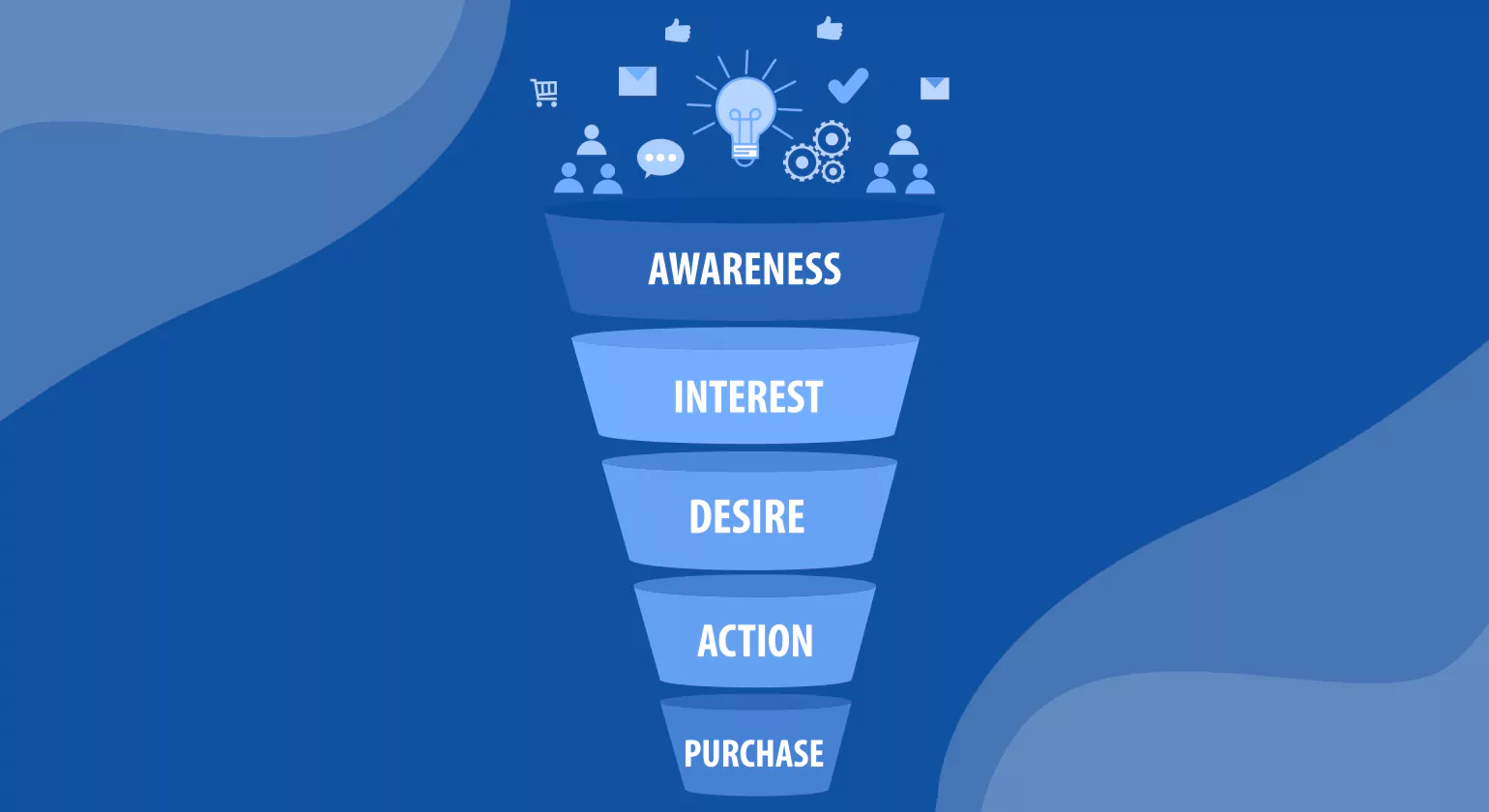
The same principle applies to search. Organic growth doesn’t begin with rankings or traffic; it starts with how search engines access and process your website. That’s why SEO also follows a funnel — but one built around crawlability, indexation, visibility, and conversion rather than audience nurturing alone.
Understanding this shift in perspective is the key to turning search performance into measurable business outcomes.
What Is the SEO Funnel?
The SEO funnel is an approach to structured search, which reveals the process through which websites transition from crawlability to conversion. This is an alternative approach to the traditional focus on traffic.
The Search engine optimization funnel integrates the process of search engine processing, ranking, and outcomes.
Key differences between the SEO funnel and the marketing funnel
Unlike the marketing funnel, the Search Engine Optimization funnel begins with how search engines access and process your website — making crawlability the foundation of sustainable organic performance.
Aspect | SEO Funnel | Marketing Funnel |
Definition | Focuses on how search engines discover, process, rank, and convert website traffic | Focuses on guiding users from awareness to purchase |
Starting Point | Crawlability and technical accessibility | Audience awareness |
Primary Focus | Organic visibility in search engines | Customer journey and lead nurturing |
Key Stages | Crawl → Render → Index → Rank → Convert | Awareness → Consideration → Decision → Action |
Core Objective | Turn search visibility into measurable organic growth | Turn prospects into paying customers |
Dependency | Requires strong technical SEO and content alignment | Requires messaging, targeting, and marketing channels |
Success Metric | Rankings, organic traffic, and conversions | Leads, sales, and customer acquisition |
Foundation | Search engine accessibility and indexation | User psychology and buyer behavior |
The SEO Funnel Framework: From Crawlability to Conversion
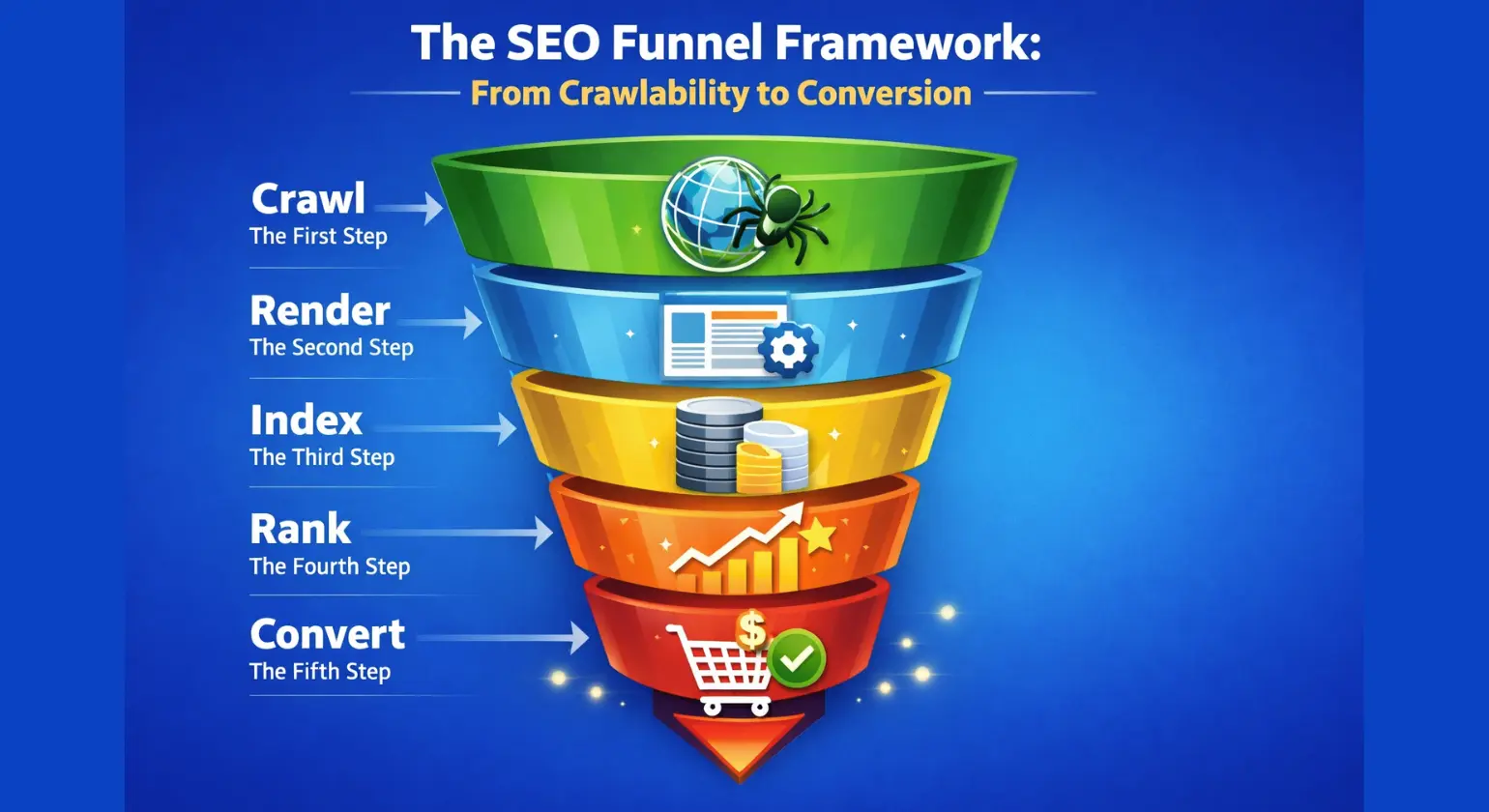
The Search Engine Optimization funnel framework describes the journey of search engines and users from discovery to conversion, thereby transforming the concept of technical accessibility into a business growth strategy through a systematic approach to organic SEO.
Crawl – The First Step in the SEO Funnel
Crawl is the initial step in the search engine optimization funnel, in which search engine crawlers access a particular website to explore the pages, resources, and changes, thereby establishing the importance of technical accessibility as the basis of all search engine rankings, traffic, and conversions resulting from organic search results.
If a particular page is not crawled, it will not be indexed or ranked, thereby remaining invisible to users seeking solutions or services from the same, even if the content is of high quality.
Key crawlability optimization elements include:
- Clean internal linking structure
- XML sitemaps with priority URLs
- Optimized robots.txt configuration
- Fast server response time
- Fixing broken links and redirect chains
A well-optimized crawl stage ensures search engines consistently discover your most valuable pages, helping large and growing websites maintain visibility while scaling their content and technical architecture efficiently.
Render – The Second Step in the SEO Funnel
Rendering takes place when the search engine processes your page’s code, executes JavaScript, etc., which plays a crucial role in the accurate interpretation of your content. Today’s websites heavily depend on dynamic elements, so a poorly executed rendering might cause your content to go unnoticed.
To efficiently render your website, the key areas to be considered are:
- Server-side/hybrid rendering strategies
- Elimination of unused JavaScript/CSS
- Improvement of page speed/core web vitals
- Loading of content without the need to interact
When a page is completely rendered, the search engine essentially gets the same content as the user, which makes the SEO process aligned with the user.
Index – The Third Step in the SEO Funnel
Indexing is the step where search engines store and organize the web pages of your website within their database, making them eligible to show up for search queries based on user intent.
A website would not be able to produce organic traffic even with high-quality content, backlinks, and optimization techniques implemented across the digital marketing strategy without proper indexing.
Strong indexation depends on:
- High-quality, unique content
- Proper canonical implementation
- Controlled use of noindex tags
- Optimized crawl budget allocation
- Logical site architecture
By indexing valuable and intent-based web pages, businesses can improve topical authority and minimize content dilution.
Rank – The Fourth Step in the SEO Funnel
A SaaS website was experiencing low visibility and decided to improve the technical SEO by enhancing crawl efficiency, internal linking, and high-intent content. The results saw multiple priority keywords improve their ranking positions from page two to the top five positions within three months.
This shows the potential of technical SEO in improving keyword ranking positions, which can help drive qualified organic traffic and reduce the need for paid advertising.
To strengthen ranking performance, focus on:
- Intent-driven keyword mapping
- Contextual internal linking
- Content freshness and depth
- Authoritative backlink acquisition
- Engagement and dwell-time optimization
Real Example: How Technical Fixes Improved Keyword Rankings
A SaaS website struggling with low visibility resolved crawl inefficiencies, improved internal linking, and refreshed high-intent content, resulting in multiple priority keywords moving from page two to top five positions within three months. This shows the potential of technical SEO in improving keyword ranking positions, which can help drive qualified organic traffic and reduce the need for paid advertising.
Convert – The Fifth Step in the SEO Funnel
Conversion is the stage where organic visibility turns into measurable business outcomes, connecting search performance with lead generation, inquiries, sign-ups, or sales through intent-matched landing experiences and frictionless user journeys.
High rankings alone do not generate revenue unless pages guide users toward meaningful actions, which requires clear messaging, strong value propositions, trust signals, and conversion paths aligned with the original search intent.
To improve organic conversion performance, focus on:
- Intent-aligned landing page structure
- Clear and compelling calls-to-action
- Mobile-first and fast-loading design
- Trust badges, testimonials, and social proof
- Simplified navigation and form optimization
Real Example: Turning Organic Traffic into Qualified Leads
An eCommerce service provider optimized its high-traffic informational pages with contextual CTAs, internal links to service pages, and trust elements, increasing organic lead conversions by more than forty percent within one quarter.
By aligning content with user intent and reducing conversion friction, the brand transformed passive visitors into high-quality inquiries, proving that SEO success is defined by revenue impact, not traffic volume alone.
How the SEO Funnel Connects Organic Visibility with Business Outcomes

Overcoming Technical Limitations to Leverage Traffic Potential
Overcoming crawl issues, speeding up the site, and improving the site’s indexability enables the business to surface high-value pages in search results, allowing the business to tap into the existing traffic potential rather than relying on paid channels.
Aligning Search Performance with User Intent
Mapping keywords to intent-driven content ensures visitors find exactly what they need, increasing engagement, reducing bounce rates, and moving users naturally through a meaningful journey toward action and conversion.
Turning Rankings into Measurable Conversions
By including value propositions and frictionless navigation within the SEO landing pages, the conversion process is transformed into qualified inquiries, showcasing the direct relationship between organic search and scalability.
How to Implement an SEO Strategy Funnel for Long-Term Growth
Combining Technical SEO and Content Strategy
A unified approach means crawlable SEO architecture supports intent-driven content strategy, enabling search engines to crawl and index priority content while users can find relevant solutions via structured internal linking and topical authority development.
Focus on:
- Scalable site architecture
- Keyword-to-content mapping
- Core Web Vitals optimization
- Structured internal linking
Creating Search Journeys That Move Users Forward
By structuring content in a way that creates search journeys, users are directed towards solutions while establishing trust at every turn. This is done by creating content that addresses the needs of users.
Designing Conversion Paths for Organic Visitors
High-performing funnels connect blog content to service pages using contextual CTAs, persuasive messaging, and frictionless navigation, ensuring organic users transition smoothly from discovery to inquiry without disrupting their search experience.
Measuring Search Engine Optimization Funnel Performance Across Every Stage

Crawl and Indexation Visibility Metrics
By tracking the crawl status, index coverage, and discovered pages, it is possible to determine if the search engines are able to crawl the content efficiently.
Key metrics include:
- Crawl frequency and errors
- Index coverage trends
- XML sitemap validity
- Server response time
Ranking and Engagement Performance Indicators
Tracking keyword positions, impressions, click-through rates, and dwell time shows how effectively your content satisfies search intent while signaling relevance, authority, and experience quality to search engines and users.
Conversion and ROI Attribution from Organic Search
Attribution models connect organic sessions with leads, pipeline value, and revenue, proving SEO’s business impact and enabling smarter investment decisions based on measurable growth rather than isolated traffic improvements.
Conclusion
The SEO funnel provides a complete framework for turning search visibility into measurable business growth by connecting technical performance, intent-driven content, and conversion optimization. When every stage is aligned and continuously measured, organic traffic becomes a predictable revenue channel rather than a vanity metric. Businesses that implement and refine this structured approach gain sustainable rankings, qualified leads, and long-term competitive advantage.
Read More >>>
Mastering Digital Marketing Sales Funnel for Business Growth
FAQs
What is funnel in seo?
An SEO funnel is a structured process that shows how a website moves from search engine discovery to conversion. It includes stages like crawlability, indexation, rankings, and user actions, helping transform organic visibility into measurable business outcomes.
How seo supports sales funnel?
SEO supports the sales funnel by attracting users at every stage through intent-driven content. Informational pages build awareness, solution-focused content drives consideration, and optimized landing pages generate qualified leads and conversions from organic search.
How to use funnel metrics for seo optimization?
Funnel metrics help identify performance gaps at each stage. Tracking crawl status, index coverage, rankings, engagement, and conversions allows businesses to fix technical issues, improve content relevance, and optimize landing pages for higher ROI from organic traffic.
How does the seo funnel improve conversion rates?
The SEO funnel improves conversion rates by aligning search intent with optimized landing pages, guiding users from discovery to action through relevant content, strong internal linking, and clear calls-to-action.
What are the stages of the search engine optimization funnel?
The main stages of the Search engine Optimization funnel are crawl, render, index, rank, and convert, which together explain how search engines process content and how organic visibility turns into traffic and revenue.