Table of Contents
Key Takeaways
A Link Management Tool is software that helps create, shorten, organize, and track URLs from one dashboard.
Provides click analytics, location, device, and traffic source data.
Enables branded short links to increase trust and CTR.
Replaces long URLs with clean, shareable links.
Supports UTM tracking for accurate campaign measurement.
Allows team collaboration with folders, permissions, and automation.
Centralizes links to save time and eliminate spreadsheets.
Improves SEO and conversions through data-driven link optimization.
Commonly Used Link Management Platforms
Bitly – Smart short links with analytics
Rebrandly – Custom branded URLs
Pretty Links – Affiliate + internal link tracking
ClickMeter – Conversion-focused tracking
What Is a Link Management Tool?
A link management tool can be described as a technology application which allows people to manage their online links. By using the link management, you will be able to shorten your URLs if they are long and also monitor the click-through rates. You can also use the link management as they are important for social media marketing. They are helpful for creating memorable URLs as they are essential for any digital marketing business. The tools examples include Bitly, tinyurl, and Rebrandly. They can be used for any digital marketing strategy because they are important in creating professional links. Additionally, the tools can be used for monitoring return on investment. They are used for creating memorable URLs.
How Link Management Differs from Basic URL Shortening
Link management goes far beyond simple URL shortening by offering comprehensive digital asset control and performance insights.
Basic URL shortening merely condenses long web addresses into shorter formats. Services like TinyURL create compact links without additional functionality or tracking capabilities.
Link management platforms provide enterprise-level features including:
- Advanced analytics: Track clicks, geographic data, device types, and conversion metrics in real-time
- Custom branding: Create branded short domains that reinforce company identity
- Link editing: Update destination URLs without changing the short link
- Team collaboration: Manage multiple users, campaigns, and workspaces
- Integration capabilities: Connect with marketing tools, CRM systems, and automation platforms
- Retargeting pixels: Add tracking pixels for remarketing campaigns
- A/B testing: Compare link performance across different audiences
How Does Link Management Software Work
Link management software operates through a sophisticated yet streamlined process that transforms, tracks, and optimizes URLs for enhanced digital marketing performance.
The Core Mechanism
When you use an input tool to enter a URL, the link management platform will shorten it by creating an identifier and matching the two in its database. When someone clicks on the shortened link, the server captures the click, retrieves the originating URL, and redirects them within milliseconds using 301 and 302 redirects.
Database and Redirect Technology
In the background, there are various management tools used for the management of links, which store billions of mappings. Every shortened URL will be assigned with a unique code as a key for fetching the original URL. The redirect happens at the server level for efficient performance regardless of the traffic.
Tracking and Analytics
The magic happens during that brief redirect moment. Before sending users to their destination, the software captures valuable data including timestamp, geographic location, device type, browser, referral source, and IP address. This information gets logged and aggregated into comprehensive analytics dashboards, providing insights into audience behavior and campaign performance.
Advanced Features Implementation
Modern platforms layer additional functionality onto this foundation. Custom domain branding works by configuring DNS records to point branded domains to the link management server. Link editing capabilities allow administrators to update destination URLs in the database without changing the shortened link. Retargeting pixels execute JavaScript code during the redirect, dropping cookies for remarketing campaigns.
Why Marketers Need Link Management

The digital marketing landscape in 2026 demands precision, agility, and data-driven decision-making. Link management tools have evolved from convenience features into essential marketing infrastructure that directly impacts campaign performance and ROI.
1. Multi-Channel Attribution Complexity
Today’s audience engages brands across many touchpoints, be it social media, email, SMS, podcasts, QR codes, or other newly created avenues. With link management software, it’s now possible for marketers to track the audience’s journey across all these different ways. Guessing without the required data is futile, which is why link management is important.
2. Privacy-First Marketing Environment
With the rise of different privacy regulations and the deprecation of third-party cookies, first-party data collection is now vital. Link management platforms are capable of collecting enriching click-through data, thereby allowing marketers to leverage compliant data insights. The platforms assist in accumulating proprietary data assets in an effective manner.
3. Real-Time Campaign Optimization
Today’s fast-moving digital landscape requires instant responsiveness. That’s where link management software come in, enabling marketers to make edits to the destination URL without adjusting the already-published link for real-time pivots in campaigns. If a landing page isn’t performing or an offer has changed, then one can route traffic much faster and doesn’t have to reprint or repost materials and content.
4. Consistency & Building Brand Trust
Generic shortened links will more than often appear suspicious, lowering click-through rates. A custom branded domain, created on link management platforms, strengthens brand identity and fosters consumer trust, thus improving engagement rates by 34% compared to generic shorteners. In the day and age when security awareness is high, professional-looking links are not up for debate.
5. Advanced Audience Segmentation
Modern link management boast sophisticated targeting capabilities. Marketers can route users to different destinations based on device type, geographic location, language preference, or even the time of day. All this personalization significantly enhances user experience and conversion rates.
6. Marketing Technology Stack Integration
Now, the link management platforms provide smooth integration with CRM systems, marketing automation facilities, analytics platforms, and social media management software. This integrated space removes all chances of data silos, creates holistic performance dashboards, and drives strategy based on insightful decisions.
Key Benefits of Using Link Management Tools

Link management tools have become essential for businesses navigating the digital landscape in 2026. These platforms transform simple URLs into powerful marketing assets that drive measurable results and enhance brand presence.
1. Enhanced Brand Recognition and Trust
Custom branded links replace ugly generic shortened URLs with your company domain, thus creating instant credibility. In instances where users see “yourbrand.link/offer” instead of random character chains, they’re more likely to click on it. It instills consistent branding at every digital touchpoint; strong recall and a sense of professionalism.
Deep analytics and insights.
2. Comprehensive Analytics and Insights
With modern link management platforms, you are able to get very granular data on what your audience does with these links. You’ll get click-through rates, geographic locations, device types, referrers, and best times of engagement. Now, these analytics help to fine-tune your overall marketing strategy by focusing on top-performing content and knowing customer tastes. Real-time dashboards let users make fast, point-in-time decisions to optimize their campaigns.
3. Improved Campaign Performance
The links can be grouped according to the campaign, channels used for communication, or product offered. Furthermore, A/B testing of various types of messages and determining the source of maximum conversions occurs. The exact ROI is achieved as well. link management software often integrate with marketing automation tools, CRM technology, and analytics platforms to create an ecosystem.
4. Flexibility and Control
Edit destination URLs without changing the short link—crucial when fixing errors or updating expired content. Set expiration dates for time-sensitive promotions, implement geographic targeting to show different content based on location, and add UTM parameters automatically for consistent tracking.
5. Enhanced Security and Compliance
Enterprise-level link management security features include malware scanning, SSL encryption, and link validation. Broken links are scanned for, as well as phishing attempts on your domain, while staying in compliance with data privacy regulations via transparent disclosures of tracking.
5.Better User Experience
Well-designed clean and memorable clicks increase click rates across different channels such as social media, email campaigns, printed materials, and SMS promotions. With qr code generator tools, it is easy to execute seamless offline to online transitions.
7. Competitive Advantage
Attributed insight provided by link management tools helps marketers show the value of marketing efforts, justify marketing budgets, and find opportunities for growth. As more marketers compete in a crowded digital world, successful marketing campaigns are driven by such insight, rather than guesswork.
Key Features of a Modern Link Management Tool

Choosing the right link management platform requires understanding which features deliver real value for your digital strategy. Here are the essential capabilities every robust link management should offer.
1. Custom Branded Links
Your links represent your brand. Quality link management tools allow you to create custom short domains that reinforce brand identity and build trust. Instead of generic shortened URLs, you can use branded domains like “yourbrand.link/offer” that increase click-through rates and credibility.
2. Comprehensive Analytics Dashboard
Data-driven decision-making starts with accurate tracking. Essential analytics include click counts, geographic location data, device types, referral sources, and time-based performance metrics. Real-time reporting helps you understand audience behavior and optimize campaigns instantly.
3. Link Editing and Redirects
Flexibility matters. The ability to edit destination URLs after creation saves time and prevents broken links. This feature is invaluable when running long-term campaigns or updating seasonal promotions without needing to redistribute new links.
4. QR Code Generation
Bridge offline and online marketing with integrated QR code creation. Modern consumers expect seamless transitions from physical materials to digital experiences. Built-in QR functionality eliminates the need for separate tools.
5. Team Collaboration Features
For organizations, multi-user access with role-based permissions ensures smooth workflow management. Team workspaces, shared link libraries, and activity logs keep everyone aligned while maintaining security and accountability.
6. API and Integration Capabilities
Your link management tool should integrate seamlessly with existing marketing stack components. API access enables automation, while native integrations with platforms like Google Analytics, social media schedulers, and CRM systems streamline workflows.
Top Link Management Tools for Businesses in 2026

As businesses increasingly rely on digital marketing to reach their audiences, the importance of effective link management cannot be overstated. In 2025, several link tools stand out for their features, usability, and impact on link management tool strategies. Here’s a look at some of the top management tools that can help businesses optimize their online presence.
1. Bitly
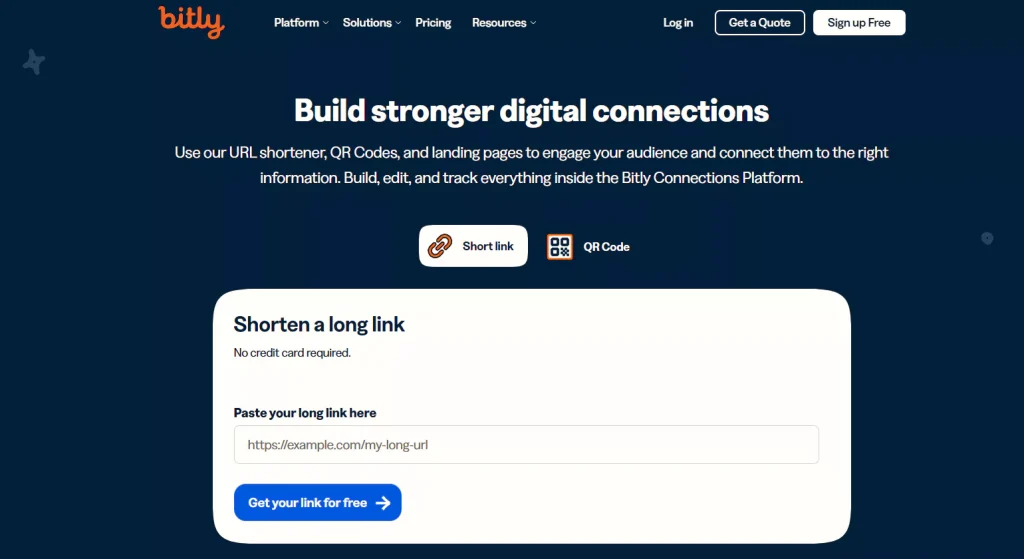
Bitly is among the most well-recognized and utilized link management platforms in the world, with service to millions of users ranging from the single creator to Fortune 500 companies. Founded in 2008, Bitly has grown from a simple URL shortener into a leading link management solution that helps businesses create, share, and analyze their digital links. The platform processes billions of clicks every month, providing extensive insights into audience engagement and content performance. Bitly helps marketers, social media managers, and businesses of all sizes optimize their digital presence with its user-friendly interface and enterprise features.
Key Features
- Custom Branded Links: Create memorable short links using your own domain to strengthen brand recognition and increase trust.
- Advanced Analytics: Access detailed click data, geographic insights, referrer tracking, and real-time performance metrics.
- QR Code Generation: Instantly create dynamic QR codes that connect offline experiences to digital destinations.
- Link-in-Bio Tool: Optimize social media profiles with customizable landing pages for multiple links.
- Mobile Apps: Manage links on-the-go with iOS and Android applications.
- Team Collaboration: Organize workspaces, manage user permissions, and share campaign resources.
2. Rebrandly
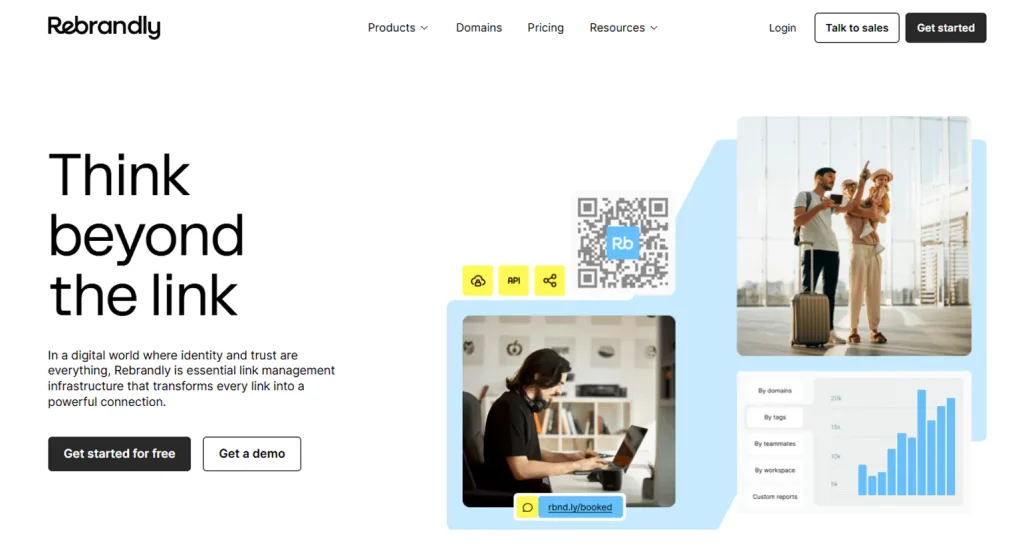
Rebrandly is a premium link management platform specifically designed for businesses and marketers who prioritize brand consistency and professional link presentation. Launched in 2015, Rebrandly distinguishes itself through its focus on custom branded short links, allowing users to create memorable URLs using their own domain names. The platform serves over 500,000 users worldwide, including major brands and agencies that require sophisticated link branding capabilities. Rebrandly’s infrastructure supports high-volume link creation while maintaining reliability and speed. With its emphasis on white-label solutions and enterprise-grade features, Rebrandly has become the go-to choice for organizations seeking complete control over their link branding strategy and comprehensive tracking capabilities.
Key Features
- Custom Domain Branding: Connect unlimited custom domains to create fully branded short links that reinforce your identity.
- Deep Linking: Create smart links that direct users to specific app content or web pages based on their device.
- UTM Builder: Automatically add UTM parameters for seamless Google Analytics integration and campaign tracking.
- Link Retargeting: Add retargeting pixels to shortened links for remarketing campaigns across advertising platforms.
- Branded QR Codes: Generate customizable QR codes with your branding elements and colors.
- Team Workspaces: Collaborate efficiently with role-based access controls and shared link libraries.
3. TinyURL
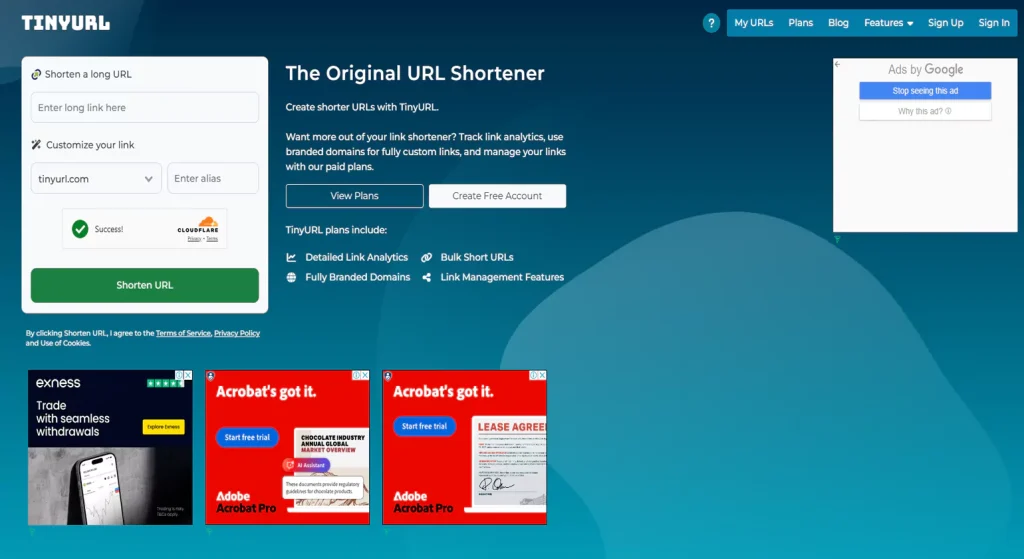
TinyURL is one of the internet’s oldest and most straightforward URL shortening services, established in 2002 by Kevin Gilbertson. As a pioneer in the link shortening space, TinyURL built its reputation on simplicity, reliability, and ease of use without requiring user registration. The platform has shortened billions of URLs over two decades, maintaining a minimalist approach that appeals to users seeking quick, no-frills link shortening. While TinyURL lacks the advanced analytics and enterprise features of modern competitors, its longevity and straightforward functionality make it a trusted choice for casual users, educators, and anyone needing simple URL reduction. The service remains free for basic use, with premium options available for users requiring additional features and customization.
Key Features
- No Registration Required: Create shortened links instantly without creating an account or signing up.
- Custom Aliases: Personalize your shortened URLs with memorable custom endings for easier sharing and recall.
- Permanent Links: TinyURL links never expire, ensuring long-term reliability for your shortened URLs.
- Browser Toolbar: Quick-access browser extension for instant link shortening while browsing.
- API Access: Simple API integration for developers wanting to incorporate URL shortening into applications.
4. Linktree
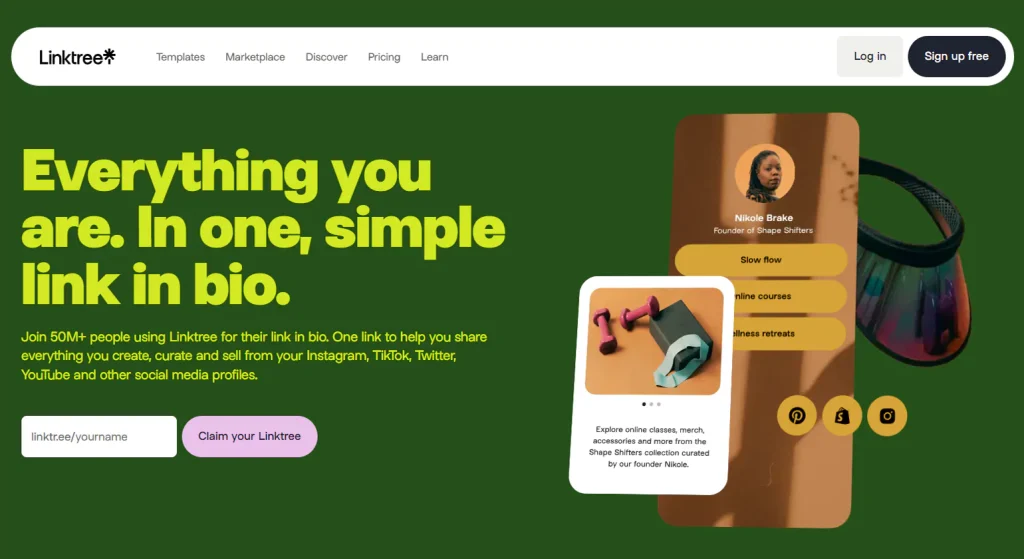
Linktree revolutionized social media marketing when it launched in 2016 by solving a critical limitation: the single-link restriction in Instagram and TikTok bios. The Australian-based platform enables creators, businesses, and influencers to share multiple links through one customizable landing page. With over 50 million users worldwide, Linktree has become synonymous with “link-in-bio” solutions, processing billions of clicks annually. The platform empowers users to consolidate their entire online presence—websites, products, content, and social profiles—into one accessible hub. Linktree’s intuitive interface requires no coding knowledge, making it ideal for content creators, small businesses, and enterprises alike. Beyond simple link aggregation, Linktree has evolved into a comprehensive digital marketing tool with analytics, monetization features, and extensive customization options.
Key Features
- Unlimited Links: Add as many links as needed to your landing page, organizing your entire digital ecosystem in one place.
- Customizable Themes: Personalize your Linktree with custom backgrounds, fonts, colors, and button styles matching your brand identity.
- Analytics Dashboard: Track link clicks, traffic sources, audience demographics, and engagement patterns with detailed performance metrics.
- Social Icons: Integrate direct links to all social media profiles for comprehensive online presence management.
- Video Links: Embed video content directly within your Linktree for enhanced engagement.
- Priority Links: Highlight important content by pinning specific links to the top of your page.
5. Semrush
Semrush is recognized as one of the most complete digital marketing tools on the market, providing services to over 10 million users globally, including top agencies and Fortune 500 enterprises. Since its founding in 2008, Semrush has evolved from being merely an SEO tool to become one of the most comprehensive digital marketing solutions currently available. Its functionality includes SEO marketing, content marketing tools, competitor analysis tool, and social media management tools. This platform has access to infinitely powerful tools concerning keywords, containing 25 billion keywords and 43 trillion backlinks within its database of market information. Despite it not being strictly a link management tool per se, Semrush provides critical link building and/or backlink tools for businesses to formulate informed SEO strategies.
Key Features
- Backlink Analytics: Analyze your backlink profile and competitors’ link strategies with detailed authority metrics and toxic link identification.
- Link Building Tool: Discover new link opportunities, manage outreach campaigns, and track relationship-building efforts systematically.
- Competitive Analysis: Uncover competitors’ top-performing content, keywords, and backlink sources to inform your strategy.
- Keyword Research: Access extensive keyword databases with search volume, difficulty scores, and SERP feature analysis.
- Site Audit: Identify technical SEO issues, broken links, and optimization opportunities with comprehensive website crawling.
- Position Tracking: Monitor keyword rankings across locations and devices with daily updates and competitor comparison.
6. BuzzStream

BuzzStream is a specialized tool used for outreach and Ecommerce Link Building activities, developed specifically for digital marketers, SEO professionals, and PR teams engaged in relationship-based marketing campaigns. Since its development in 2008, BuzzStream has become the golden standard of link building and outreach management systems. The tool is all about integration and can be used for contact discovery and management, along with outreach automation, to build quality backlinks through personalized campaigns. BuzzStream aims to remove the mess associated with using spreadsheets to conduct business outreach and endeavors to bring everything under one umbrella for increased convenience and effectiveness. The tool is used by top agencies and marketers and is best for handling complex campaigns involving multiple persons while maintaining the quality of personalized communications, which is extremely practical and useful for link building.
Key Features
- Contact Discovery: Research and identify influencers, bloggers, and publishers with integrated tools that extract contact information from websites automatically.
- Relationship CRM: Manage all outreach relationships in one centralized database with detailed contact histories and interaction tracking.
- Email Outreach Automation: Send personalized email campaigns at scale with customizable templates, merge tags, and scheduled follow-ups.
- Email Tracking: Monitor opens, clicks, and replies in real-time to understand engagement and optimize outreach effectiveness.
- Link Monitoring: Track acquired backlinks automatically and receive alerts when links are removed or modified.
7. Hootsuite
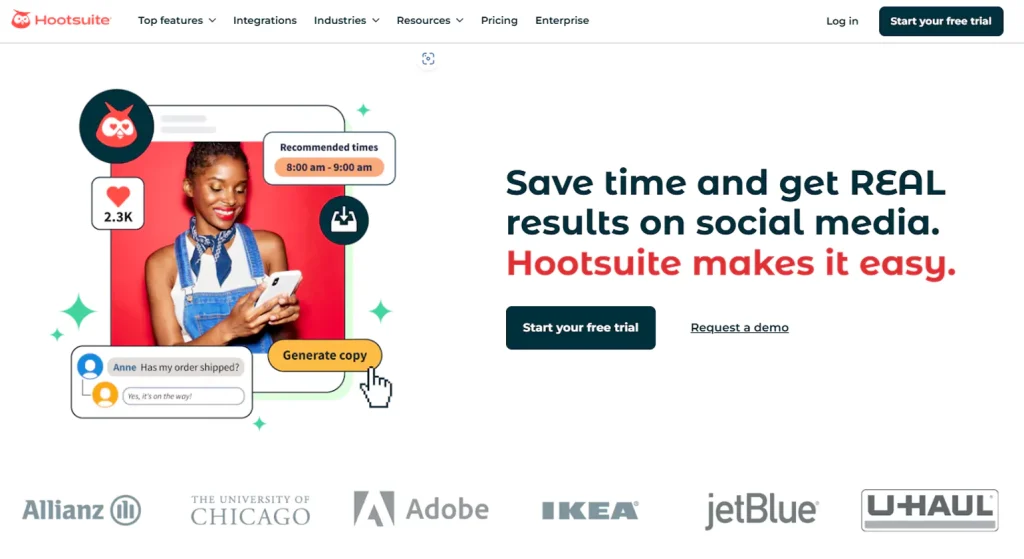
Hootsuite is a renowned social media management tool. It has been enabling businesses around the world to effectively manage their social media presence since 2008. Currently, Hootsuite serves over 200,000 customers, ranging from small businesses to Fortune 1000 enterprises. It has become a household name, synonymous with effective social media management. Hootsuite, a company based in Canada, allows businesses to effectively manage multiple social media channels such as Facebook, Instagram, Twitter, LinkedIn, YouTube backlink services , and Pinterest, from a single dashboard. Although it is popularly used as a tool for scheduling and monitoring social media content, Hootsuite can be used as an effective tool for link management, thanks to its integration with Ow.ly, a tool for URL shortening developed by Hootsuite.
Key Features
- Ow.ly Link Shortener: Create shortened, trackable links integrated directly into social posts with built-in analytics for click measurement.
- Multi-Platform Scheduling: Plan and publish content across all major social networks from one centralized calendar interface.
- Social Listening: Monitor brand mentions, keywords, and industry conversations across social channels in real-time.
- Analytics and Reporting: Access comprehensive performance metrics including link clicks, engagement rates, and ROI across all social platforms.
- Team Collaboration: Manage workflows with approval processes, task assignments, and role-based permissions for large teams.
8. RocketLink
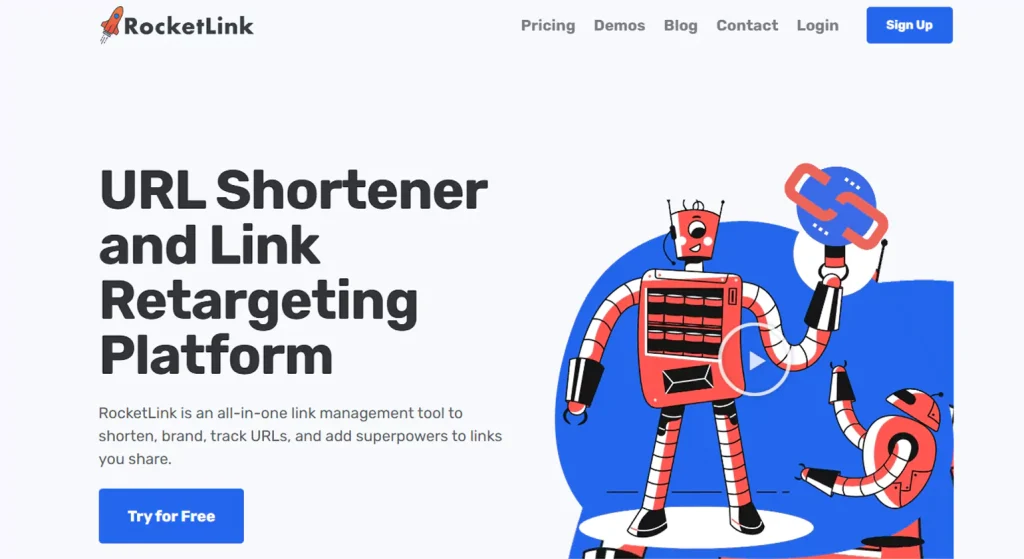
RocketLink is an innovative link management and monetization platform that goes beyond traditional URL shortening by enabling users to generate revenue from every link they share. Founded to help content creators, influencers, and marketers maximize the value of their shared content, RocketLink transforms ordinary links into smart marketing assets. The platform allows users to add custom call-to-action overlays, retargeting pixels, and promotional messages to any destination URL, creating additional engagement opportunities without altering the final destination. RocketLink’s unique approach appeals particularly to affiliate marketers, bloggers, and social media influencers seeking to monetize their traffic while maintaining user experience. With its focus on conversion optimization and revenue generation, RocketLink positions itself as more than a link shortener—it’s a comprehensive link monetization solution.
Key Features
- Link Monetization: Add customizable call-to-action overlays to links, promoting offers, collecting emails, or displaying advertisements before users reach their destination.
- Retargeting Pixels: Automatically attach Facebook, Google, and other retargeting pixels to all shortened links for building remarketing audiences.
- Custom Branding: Create branded short links using your own domain to maintain professionalism and increase click-through rates.
- A/B Testing: Test different call-to-action messages, designs, and offers to optimize conversion rates and revenue generation.
- Link Rotation: Distribute traffic across multiple destination URLs using weighted rotation for split testing or load balancing.
- Geographic Targeting: Direct users to different destinations based on their location for localized campaigns and offers.
9. Linkly

Linkly is a modern, feature-rich link management platform designed for businesses, marketers, and agencies seeking professional-grade URL shortening with comprehensive branding and analytics capabilities. Launched as a robust alternative to basic shortening services, Linkly emphasizes custom domain integration, advanced tracking, and team collaboration features. The platform serves users who require more than simple link shortening—offering sophisticated tools for campaign management, conversion tracking, and performance optimization. Linkly’s clean, intuitive interface makes enterprise-level features accessible to businesses of all sizes, from solo entrepreneurs to large marketing teams. With competitive pricing and no link expiration policies, Linkly has carved out a strong position in the link management market by balancing powerful functionality with user-friendly design and reliable infrastructure.
Key Features
- Custom Domain Branding: Connect unlimited custom domains to create fully branded short links that strengthen brand identity and trust.
- Link Cloaking: Hide affiliate links and create clean, professional URLs that improve click-through rates and reduce link skepticism.
- Advanced Analytics: Access detailed click data including geographic location, devices, browsers, referrers, and time-based performance metrics.
- UTM Parameter Builder: Automatically add UTM tracking codes to links for seamless Google Analytics integration and campaign attribution.
- QR Code Generator: Create dynamic, scannable QR codes for each shortened link, bridging offline and online marketing.
- Link Expiration: Set automatic expiration dates for time-sensitive campaigns and limited-time offers.
10. CampaignTrackly

CampaignTrackly is a link management and UTM tracking tool that is designed for marketers. The tool is designed for marketers who need accurate campaign attribution and data-driven decision-making. The platform is designed to remove the complexities and inconsistencies of UTM parameter management. A significant pain point in the marketing industry is the need for a consistent naming standard and tracking parameters between team members and campaigns. The platform enables the needs of marketers to be fulfilled in the areas of URL shortening and UTM building and link management. Proper data tracking and attribution are ensured through the tool. CampaignTrackly is a tool for marketers which makes it significant in the marketing industry.
Key Features
- UTM Template Builder: Create and save standardized UTM templates ensuring consistent naming conventions across all campaigns and team members.
- Automated UTM Generation: Automatically apply correct UTM parameters to links based on predefined templates, eliminating manual errors and inconsistencies.
- Link Shortening: Generate clean, shortened URLs with proper tracking parameters already embedded for easy sharing and professional appearance.
- Team Collaboration: Share UTM templates and naming conventions across marketing teams to maintain data consistency organization-wide.
- Campaign Organization: Group related links by campaign, channel, or project for streamlined management and comprehensive performance tracking.
11. Short.io
Short.io is a sophisticated and developer-friendly link management tool that offers robust features while providing exceptional customization opportunities and API-based development. Initially designed to cater to the needs of businesses required to have robust and customizable link shortening services, Short.io is now a prominent tool for SaaS businesses, agencies, and enterprises often required to integrate robust link management services within their systems and applications. The platform differentiates itself from others through robust APIs, customization opportunities, and high-volume link generation without compromising performance. In addition, the platform is compatible with an unlimited number of custom domains, which is highly suitable for businesses required to handle multiple brands and clients. The tool is now a bridge between simple and complex link management systems, focusing on robustness, security, and developer experience while offering professional-grade infrastructure through simple and intuitive systems and documents.
Key Features
- Unlimited Custom Domains: Connect and manage unlimited branded domains across different brands, clients, or campaigns without restrictions.
- Powerful API: Access comprehensive RESTful API with detailed documentation for seamless integration into applications, websites, and automated workflows.
- Link Redirects Management: Create custom redirect rules based on geographic location, device type, language, or time for personalized user experiences.
- Advanced Analytics: Track detailed metrics including clicks, unique visitors, geographic data, referrers, devices, and conversion tracking.
- Team Workspaces: Organize multiple users, brands, and clients into separate workspaces with isolated data and custom permissions.
- White-Label Solution: Completely rebrand the platform interface and remove Short.io branding for seamless client or internal deployment.
12. Taplink
Taplink is a comprehensive link-in-bio and micro-landing page platform designed specifically for content creators, influencers, e-commerce businesses, and social media marketers seeking to maximize conversion opportunities from social media traffic. Originating from Europe and gaining global traction, Taplink goes beyond simple link aggregation by offering an all-in-one digital storefront that enables direct sales, appointment booking, messaging integration, and lead generation—all from a single customizable page. The platform addresses the critical challenge of converting social media followers into customers by removing friction from the buyer’s journey. With its focus on mobile optimization and conversion-oriented design, Taplink transforms the limited real estate of social media bios into powerful revenue-generating tools. The platform serves diverse users from individual creators to established businesses seeking professional, conversion-focused alternatives to basic link-in-bio solutions.
Key Features
- Customizable Micro-Landing Pages: Create visually stunning, mobile-optimized landing pages with drag-and-drop builders requiring no coding knowledge.
- Built-in Payment Processing: Sell products, services, and digital goods directly through integrated payment gateways without external e-commerce platforms.
- Appointment Booking: Enable customers to schedule consultations, services, or meetings directly through embedded calendar integration.
- Messaging Integration: Connect multiple messaging apps including WhatsApp, Telegram, Messenger, and email for instant customer communication.
13. GoLinks
GoLinks is an innovative internal link management platform purpose-built for workplace productivity and knowledge sharing at organizations. Unlike traditional URL shorteners focused on external marketing, GoLinks creates intuitive, memorable shortcuts that transform the way teams access internal resources, documents, tools, and applications. It was founded on the premise that employees waste significant time searching for frequently used links. GoLinks lets teams create simple, human-readable shortcuts like “go/benefits” or “go/roadmap” that instantly route to complex internal URLs. This greatly reduces friction in everyday workflows and ensures consistent access to critical resources throughout the organization. GoLinks is trusted by thousands of companies, including Spotify, LinkedIn, and Netflix. This turns GoLinks into essential infrastructure in the modern workplace, especially in those where remote and distributed teams require seamless knowledge sharing and resource discovery.
Key Features
- Intuitive Link Shortcuts: Create memorable, easy-to-type shortcuts using simple keywords that instantly redirect to complex internal URLs and resources.
- Browser Extension: Access go links directly from the browser address bar without opening separate applications or bookmarking systems.
- Centralized Knowledge Base: Build a searchable directory of all company resources, making institutional knowledge accessible to everyone.
- Analytics and Insights: Track link usage, identify popular resources, and discover underutilized content to optimize knowledge management strategies.
- Team Collaboration: Enable any team member to create and share go links, democratizing knowledge sharing across the organization.
14. Dub.co
Dub.co is a modern, open-source link management platform that combines powerful enterprise features with developer-friendly architecture and transparent pricing. Launched as a contemporary alternative to legacy link shorteners, Dub.co has rapidly gained popularity among startups, SaaS companies, and development teams seeking a performant, customizable solution with no vendor lock-in. Built with Next.js and designed for scale, Dub.co offers lightning-fast redirects, comprehensive analytics, and extensive API capabilities while maintaining an elegant, intuitive user interface. The platform’s open-source foundation allows technical teams to self-host or contribute to its development, while its managed cloud service provides enterprise reliability without complexity. Dub.co’s focus on performance, transparency, and modern development practices has attracted a growing community of users who value both functionality and the freedom that open-source software provides.
Key Features
- Open-Source Platform: Access complete source code on GitHub, enabling self-hosting, customization, and community-driven development without vendor restrictions.
- Custom Domain Branding: Connect unlimited custom domains with automatic SSL certificate provisioning for secure, branded short links.
- Advanced Analytics: Track detailed metrics including clicks, geographic locations, devices, browsers, referrers, and real-time performance data.
- QR Code Generation: Create dynamic, customizable QR codes for each link with logo embedding and color customization options.
- Link Expiration: Set automatic expiration dates with custom redirect destinations for time-sensitive campaigns and limited offers.
15. Pretty Links
Pretty Links is a popular WordPress plugin that transforms long, cumbersome URLs into clean, memorable links directly within your WordPress site. Launched to serve the vast WordPress ecosystem, Pretty Links has become one of the most trusted link management solutions for bloggers, affiliate marketers, and WordPress site owners seeking to maintain control over their links without relying on external link building services. The plugin enables users to create branded short links using their own domain, manage affiliate links effectively, track click-through performance, and organize links efficiently—all within the familiar WordPress dashboard. With over 300,000 active installations, Pretty Links addresses the specific needs of WordPress users who want seamless integration with their existing content management system. Its combination of simplicity and powerful features makes it ideal for everyone from individual bloggers monetizing through affiliate marketing to agencies managing multiple client sites.
Key Features
- WordPress Integration: Create and manage shortened links directly within your WordPress dashboard without external platforms or monthly subscriptions.
- Custom Slug Creation: Generate clean, SEO-friendly URLs using your own domain with memorable slugs that reflect your content.
- Link Cloaking: Hide affiliate links and tracking parameters behind clean URLs to improve aesthetics and protect commission integrity.
- Click Tracking: Monitor link performance with detailed analytics including clicks, unique visitors, and click-through rates over time.
- Link Categories: Organize links into categories for efficient management of large link libraries across multiple campaigns or topics.
Free vs Paid Link Management Tools
| Tool | Best For | Price | Standout Feature | Limitation |
|---|---|---|---|---|
| Bitly | All-around marketing | Free–$8/mo | Industry standard, proven reliability | Premium features costly |
| Rebrandly | Brand building | Free–$29/mo | Unlimited custom domains | Higher price point |
| Short.io | Developers & SaaS | Free–$20/mo | Powerful API, white-label ready | Technical learning curve |
| Dub.co | Modern startups | Free–$24/mo | Open-source, cutting-edge tech | Newer platform |
| Linkly | Professional teams | $19/mo | No link expiration, reliable | No free tier |
| Pretty Links | WordPress users | Free–$79/yr | Self-hosted, no external service | WordPress only |
| Linktree | Content creators | Free–$5/mo | #1 link-in-bio solution | Not for URL shortening |
| RocketLink | Affiliate marketers | Free–$19/mo | Revenue generation, CTA overlays | May reduce click-through |
| Taplink | E-commerce sellers | Free–$5/mo | Built-in payments & bookings | Landing page focused |
| GoLinks | Enterprise teams | $7/user/mo | Internal knowledge sharing | Internal use only |
| CampaignTrackly | Data-driven marketers | $19/mo | UTM template consistency | Narrow focus |
| TinyURL | Quick & simple tasks | Free–$10/mo | Zero setup, permanent links | Minimal features |
| Hootsuite | Social media teams | Free–$99/mo | Complete social management | Link tool is secondary |
| BuzzStream | SEO & PR outreach | $24/mo | Relationship management CRM | Not for general shortening |
| Semrush | SEO professionals | $140/mo | Complete SEO & marketing suite | Expensive, feature-heavy |
Link Management for Effective Campaign Tracking and Analytics

Successful digital marketing relies on accurate data, and effective link management serves as the foundation for comprehensive campaign tracking and analytics. Without proper link management, marketers operate blindly, unable to attribute conversions or measure true ROI across channels.
The Foundation of Data-Driven Marketing
With link management platforms, plain URLs come alive through their intelligent usage. With their help, structured naming standards, and automated use of UTM parameters, every single click can generate maximum information. Here, there is no room for guesswork, and everything is crystal clear.
Multi-Channel Attribution Made Simple
Interacting with brands on various touch points before making the actual purchase is a characteristic modern consumers display. Realizing this helps marketers successfully track the entire process via correctly connected links. Also, with the help of advanced and effective link management, marketers get to see the whole picture.
Real-Time Performance Insights
Link management platforms allow immediate access to key statistics like click-through rates, geographical data, devices, and referring sources. Marketers can easily identify non-performing campaigns and reinvest in successful strategies using real-time data. No waiting is required for end-of-month reports.
Team Alignment and Consistency
The centralization of the management of links makes sure that all members of the team use the same tracking systems. The use of UTM templates, naming conventions, and workspaces helps in addressing the issue of fragmented data, which may arise when team members use personal links. This is a reflection of the organizational culture and can affect the analytics used.
Optimizing Budget Allocation
For instance, link analytics helps to identify marketing efforts that actually bring a return. Cost per click, conversion rates, and customer acquisition cost can be measured at a detailed level for the appropriate link, allowing marketers to make adjustments with full confidence and redirecting budgets from unsuccessful marketing efforts to profitable ones for superior marketing campaign efficiency.
The Competitive Advantage
Organizations that have established effective systems for managing links are achieving concrete benefits over their competitors, who either do not have or have access to basic tracking systems. As more reliable information is made readily available, decision-making, forecasts, and eventually marketing campaigns are enabled, creating a more effective marketing program that promotes business growth.
Integrating Link Management Tools with Marketing Automation
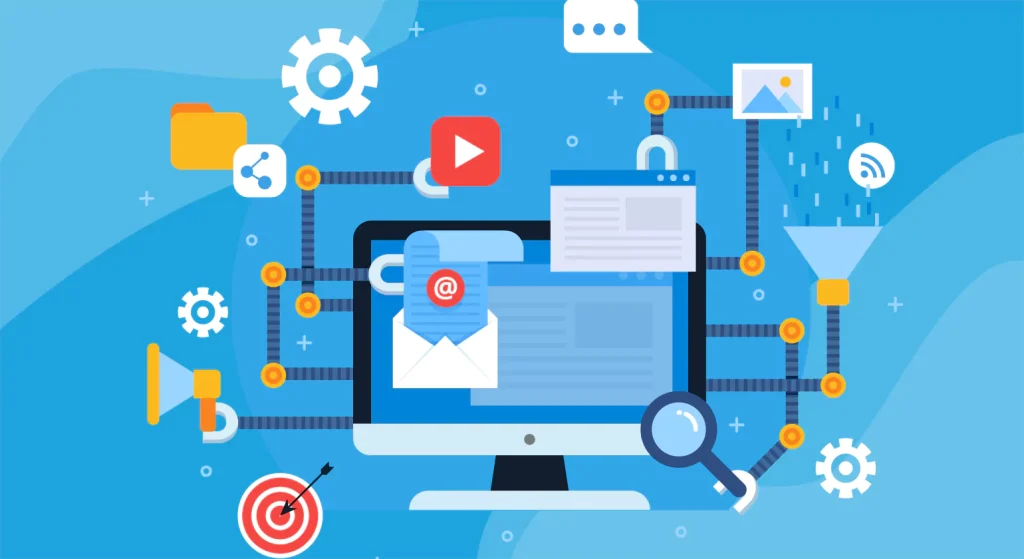
Integrating link management tools with marketing automation platforms creates a powerful synergy that streamlines workflows, enhances tracking accuracy, and delivers actionable insights across your entire marketing ecosystem.
1. Seamless Workflow Automation
With modern link management software now providing native integrations or strong APIs for seamless integration with many popular marketing automation tools like HubSpot, Marketo, Salesforce, and ActiveCampaign, it is now possible to automate link creation and the assignment of tracking parameters whenever required by launching specific campaign workflows. The users will now be able to automate shortened branded links according to campaign workflows to enable consistency throughout all campaigns and interactions with the customers.
2. Enhanced Attribution & Analytics
It can also create a seamless data stream from link clicks to customers’ activities across the entire sales funnel. By linking up link management solutions with marketing automation solutions, the performance of each click can be tracked down to individual contacts or campaigns. Marketers are then able to identify the links with the highest conversion potential without speculation.
3. Personalized Link Distribution
Marketing automation has strong capabilities in the segmentation of audiences and communication. With marketing automation integrated with link management, it is possible to dynamically generate customized links for targeted audiences or geographic regions using automated systems. Everyone receives customized links according to their interests or stages in the process.
4. Retargeting Pixel Automation
Automated pixel attachment allows all links to become retargeting opportunities. By using technology that allows systems to automatically add retargeting pixels to shortened links, advertisers can build qualified audiences across platforms for the most effective advertising.
5. Centralized Reporting
Integration gathers link performance data, as well as email opens, form submissions, and conversions, into a unified platform. With such comprehensive data, it is easier for marketers to track customer journeys, identify content needs, and measure clear ROI from link-based marketing efforts.
How to Choose the Best Link Management Tool

Selecting the right link management tool requires careful evaluation of your specific needs, budget, and long-term marketing objectives. Here’s a comprehensive guide to making an informed decision.
Define Your Primary Use Case
First, you should identify your needs. Do your needs lie in social media marketing, affiliate links, team collaboration for businesses, or even campaign tracking? Keep in mind that content creators would befall more on features such as link in bio, whereas team collaboration businesses would befall more on analytics and user features.
Assessing Essential Features
Compare the options in terms of ‘must-have’ capabilities and ‘nice-to-have’ additions. Some key areas of functionality to evaluate include custom domain name support, analytics tools, flexibility in link editing, the ability to create QR codes, collaboration, and API access. It is also important to make sure that the platform can integrate with the required tools, like other marketing tools, as part of the overall operation.
Consider Scalability and Pricing
Examine pricing tiers relative to your link volume, team size, and feature requirements. Some tools charge based on clicks, while others offer unlimited usage at fixed rates. Calculate long-term costs as your needs grow. Free tiers work for basic needs, but professional campaigns typically require paid features. Avoid platforms with restrictive limits that you’ll quickly outgrow.
Assess Analytics Capabilities
Data quality determines decision quality. Evaluate whether platforms provide real-time tracking, geographic insights, device breakdowns, referrer sources, and conversion tracking. Advanced users should verify UTM parameter support, custom event tracking, and export capabilities for deeper analysis.
Review Integration Ecosystem
Your link management software shouldn’t exist in isolation. Check for native integrations with your existing marketing stack including email platforms, social media tools, advertising platforms, and automation software. Robust API documentation indicates flexibility for custom integrations.
Test User Experience
Interface complexity directly impacts adoption and efficiency. Request demos or trials to evaluate dashboard usability, link creation speed, and mobile accessibility. Intuitive platforms reduce training time and increase team adoption rates.
Use Cases: Who Uses Link Management Tools?
Link management tools serve diverse professionals and organizations, each leveraging these platforms to solve unique challenges and achieve specific business objectives. Understanding how different users benefit reveals the versatility and value of robust link management solutions.
Digital Marketers
As such, digital marketers use link management to track the performance of their multi-channel campaigns with utmost precision. Digital marketers use link management to create branded links that can be used for email marketing campaigns, social media campaigns, paid ads, and content marketing campaigns. The use of UTM parameter automation can be traced to its capability to track the click-through rate of different campaigns. Link management involves streamlining the use of A/B testing, retargeting audience, and cross-platform analysis.
SEO Professionals
Ecommerce SEO Audit specialists make use of link management platforms for the sole purpose of monitoring the acquired backlinks, for organizing outreach campaigns, and for building link relationships. Branded links allow one to look professional during the pursuit of partnerships for business, showcase content with acquired backlinks, and understand the type of content with the maximum chance of acquiring backlinks naturally. Statistics show which types of outreach result in the greatest outcomes.
E-commerce Brands
E-commerce companies use link management to trace product promotions on many touchpoints, run affiliate marketing campaigns, and make shoppable links to social media. The use of shortened links with UTM parameters identifies which platforms, influencers, or campaigns drive actual sales, not just traffic. QR codes bridge offline experiences on packaging and print materials to online stores. Link rotation allows for split testing different product landing pages, while retargeting pixels recover abandoned carts and re-engage potential customers.
SaaS Companies
SaaS businesses use link management to run product launch campaigns, new feature announcements, customer onboarding, and free trial conversions. They create branded links for documentation, tutorial content, and support resources that enhance user experience. Deep linking directs users to specific in-app features or dashboard sections. Analytics show which marketing channel drives the highest quality in trial sign-ups and conversions to optimize customer acquisition cost and lifetime value strategies.
Content Creators & Influencers
Influencers and content creators maximize their link management through link-in-bio solutions that aggregate multiple monetization streams, sponsored links, and content platforms into single accessible pages. They identify the content types driving the most engagement, manage affiliate marketing links across disparate platforms, and monetize their audience via strategic link placement. Analytics prove value to prospective sponsors through audience engagement and conversion capabilities, outwards from vanity metrics like follower count.
Agencies & Enterprises
Marketing agencies and large enterprises require enterprise-grade link management for client campaign organization, team collaboration, and white-label solutions. Multi-workspace features enable separate client accounts with isolated analytics and custom branding. Role-based permissions ensure appropriate access control across departments and external partners. Comprehensive reporting demonstrates campaign effectiveness to stakeholders and clients. API integrations automate workflows and connect link data with CRM systems, marketing automation platforms, and business intelligence tools for holistic performance visibility.
Best Practices for Link Management to Maximize ROI

Effective link management extends far beyond simple URL shortening. Implementing strategic best practices transforms links into powerful assets that drive measurable business results and marketing ROI.
Establish Consistent Naming Conventions
Various standardized structures should be designed for all abbreviated links for proper organization and search. This includes creating meaningful slugs that indicate which campaign, channel, and content they are referring to, instead of just using random characters. For example, “brand.link/spring24-email-promo” shows what kind of content and campaign it is.
Leverage Custom Branded Domains
Invest in custom short domains that can help in the promotion of brand identity and trust. Branded domains are known to have considerably higher click-through rates than generic short domains. Since users tend to be comfortable and trusting of familiar domains, these can be utilized to segment different products, campaigns, and businesses.
Implement Comprehensive Tracking Parameters
Always add UTM parameters so that you can track campaign performance correctly in analytics. Normalize UTM naming across teams to ensure consistency in data. Use source, medium, campaign, content, and term parameters for granular analysis on which channel, message, and placement is yielding the best results.
Organize Links by Campaign Structure
Group related links into campaigns, folders, or workspaces based on marketing initiatives. This organization enables aggregate performance analysis, simplifies reporting, and helps identify successful strategies across similar campaigns. Proper categorization becomes invaluable when managing hundreds or thousands of links simultaneously.
Monitor and Optimize Performance
Analyze the link analytics to identify popular content, best times to post, and effective channels. With A/B testing, compare different call-to-action copy, link placement, or landing page options. Data-driven optimization based on actual clickstream data is the key to continuous optimization and prioritizing the best-performing approaches.
Implement Link Retargeting
Attach retargeting pixels to shortened links to build remarketing audiences automatically. Every click becomes an opportunity to re-engage interested prospects across advertising platforms, significantly improving conversion rates and advertising ROI without additional manual audience building.
Maintain Link Hygiene
Audit link libraries regularly to remove expired campaigns, update outdated destinations, and identify broken links. Redirect old links to current offers rather than creating dead ends that frustrate users and damage brand credibility. Clean link management prevents customer confusion and maintains seamless user experiences.
Secure Sensitive Links
Use password protection and expiration dates for exclusive content, limited-time offers, or confidential materials. Security features prevent unauthorized access and create urgency for time-sensitive campaigns while protecting valuable content from premature public exposure.
Document Link Strategy
Create internal documentation outlining link creation processes, naming conventions, and approval workflows. Clear guidelines ensure consistency as teams grow and prevent confusion when multiple people manage link creation across departments or campaigns.
Conclusion
ink management tools no longer involve just URL shorteners but are an essential marketing tool that contributes significantly to business results. Whether you are an individual or own a business or an organization, link management tools make all the difference for you and your business. As the online marketing space is becoming highly competitive, investing in an effective link management l is no longer a choice but a necessity. Consider investing in a link management that suits your business requirements and helps you increase ROI and connect better with your customers.
FAQs
1. What is a link management tool?
link management is a software platform that helps you create, organize, track, and optimize shortened URLs. It goes beyond basic URL shortening by providing analytics, custom branding, team collaboration features, and marketing capabilities to improve your digital campaigns.
2. How is a link management tool different from a URL shortener?
While URL shorteners simply create shorter links, link management offer comprehensive features including detailed analytics, custom branded domains, link editing, QR code generation, retargeting pixels, team workspaces, and integration with marketing platforms for strategic campaign management.
3. Will shortened links affect SEO?
Shortened links using 301 redirects pass link equity similar to regular links. However, when linking internally within your site, use full URLs. Shortened links are SEO-neutral while providing valuable tracking capabilities.
4. Can link management tools with other marketing platforms?
Yes, professional link management offer API access and native integrations with Google Analytics, social media schedulers, CRM systems, email marketing platforms, and advertising tools for seamless workflow automation.
5. Can I edit a link after creating it
Most link management platforms allow you to update the destination URL after creation without changing the shortened link, enabling you to fix mistakes or update campaigns without redistributing new links.